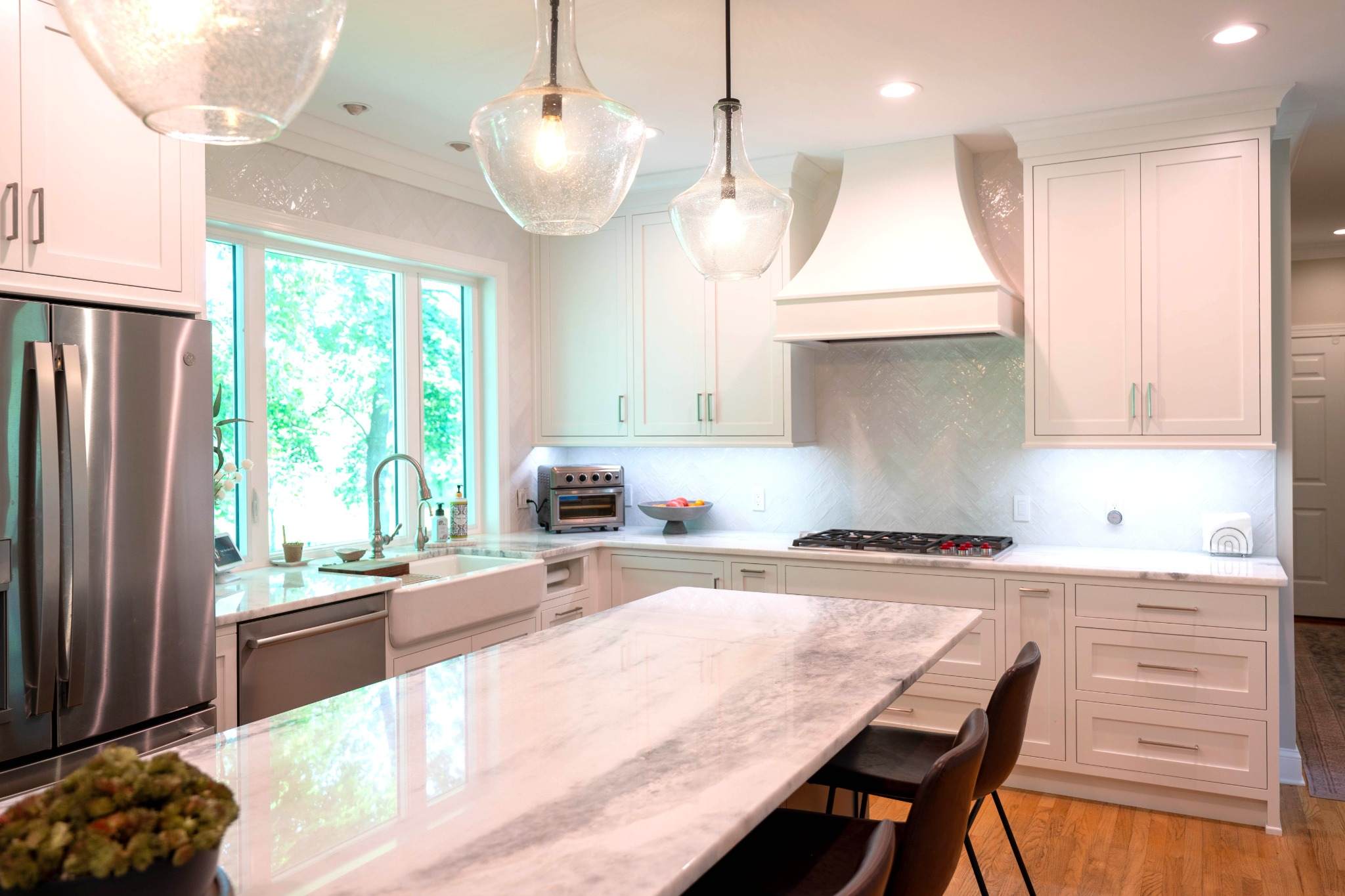
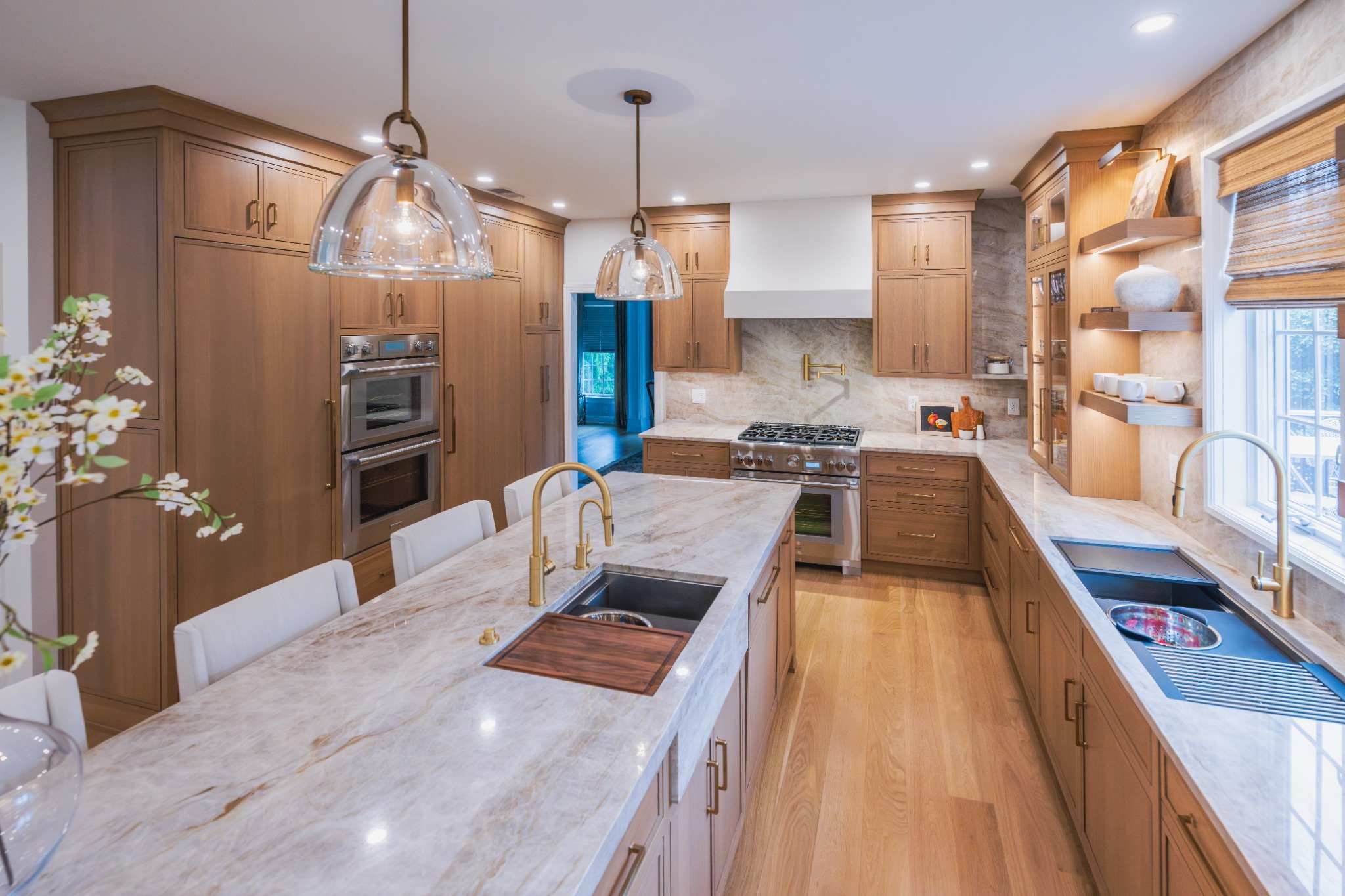
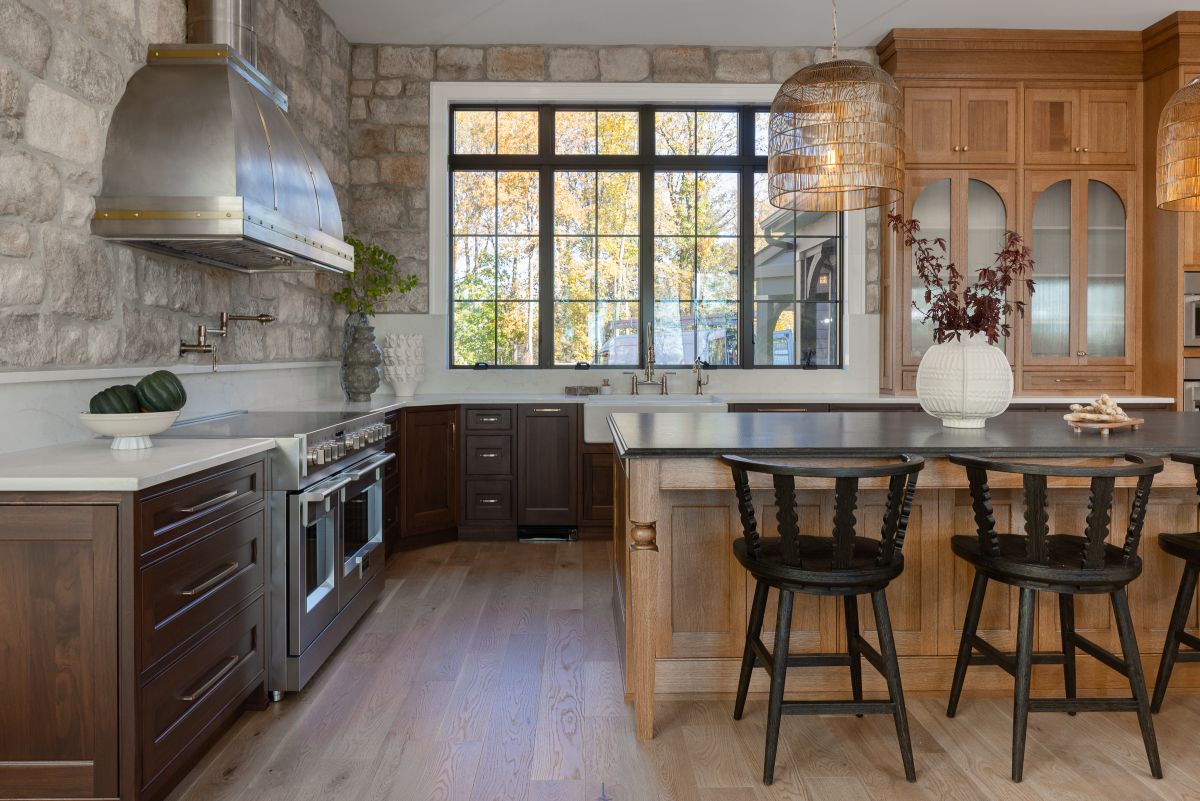
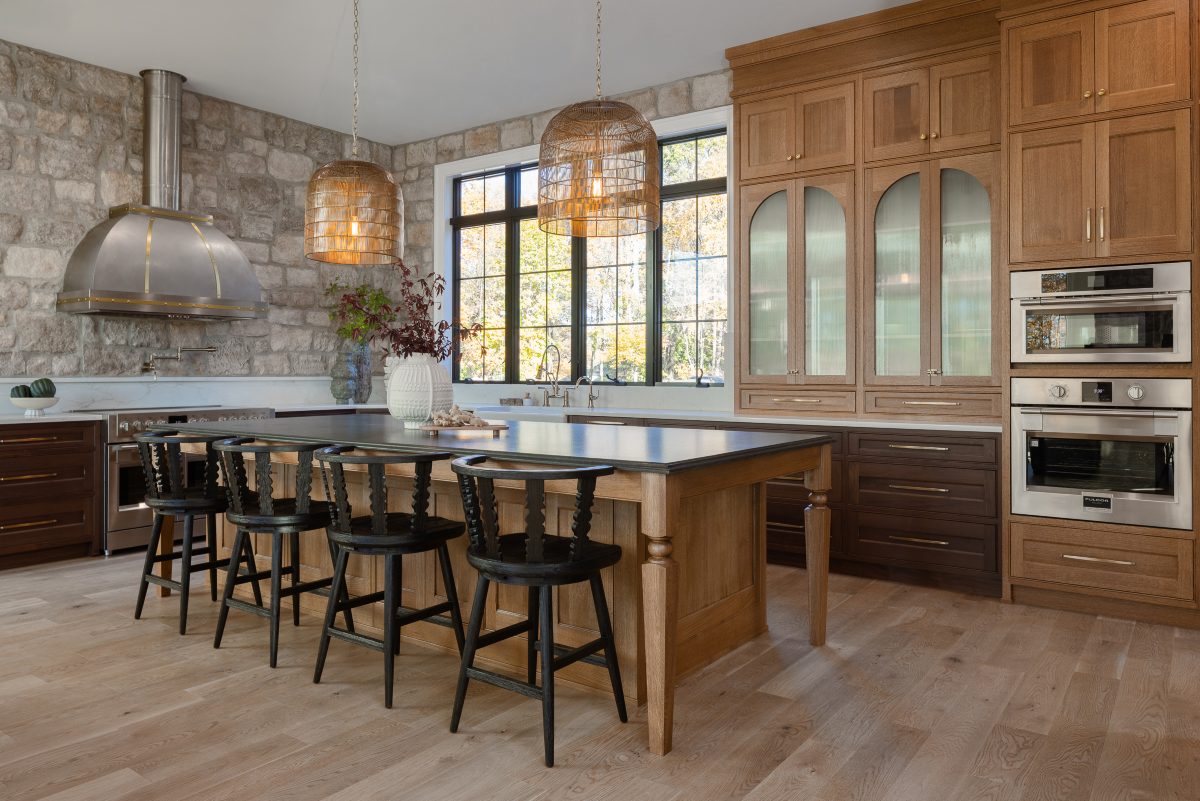
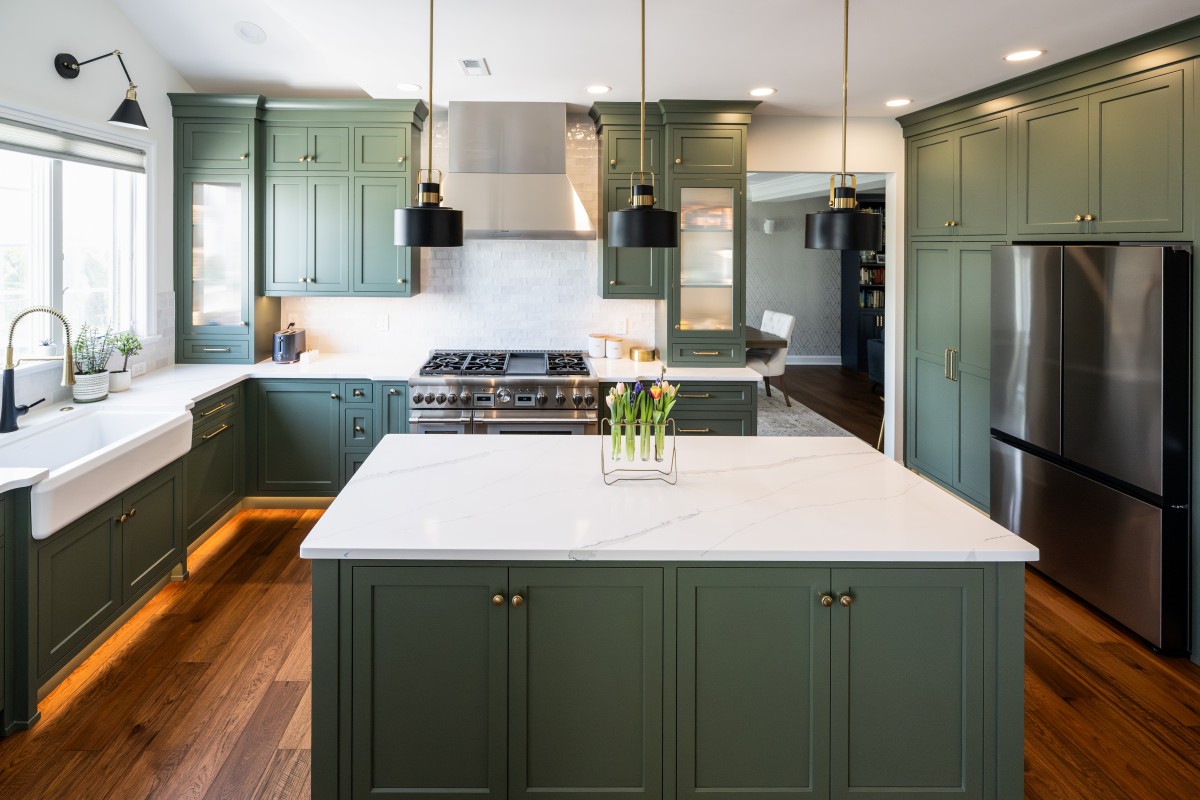
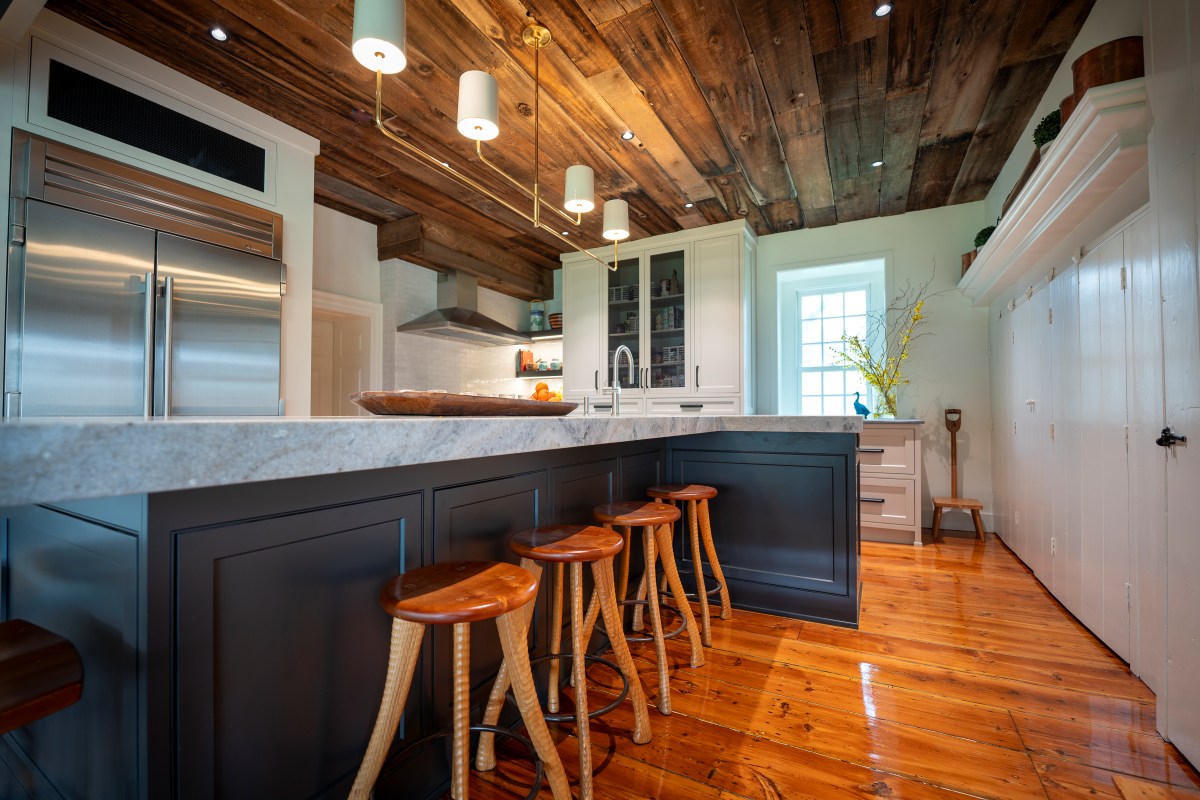
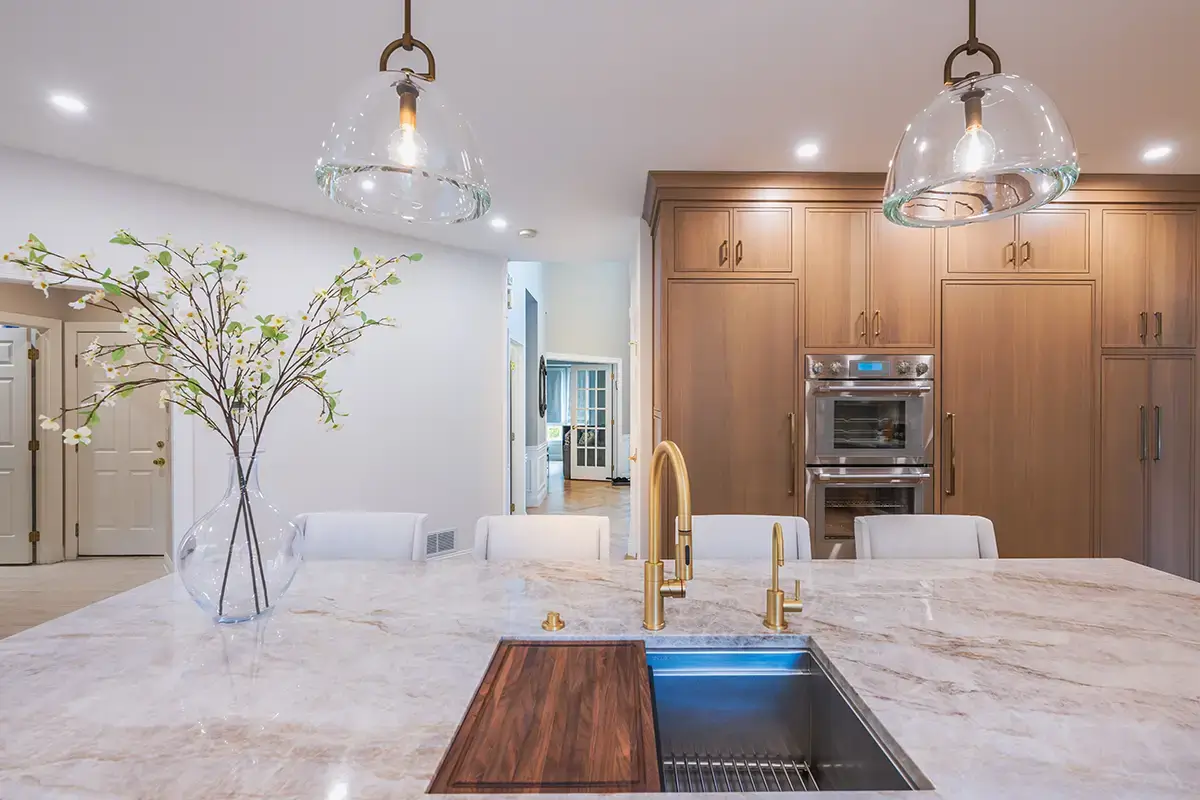
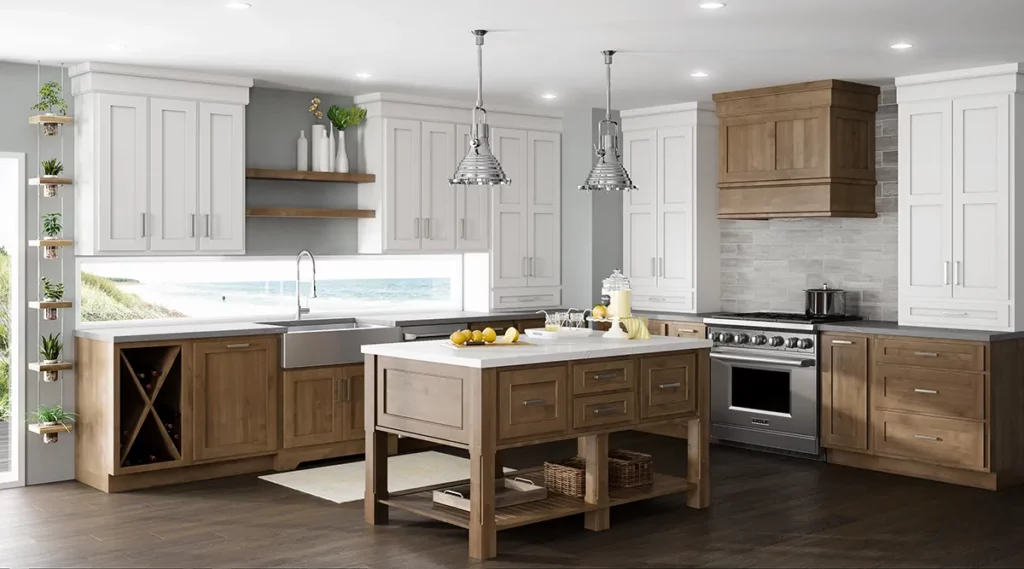
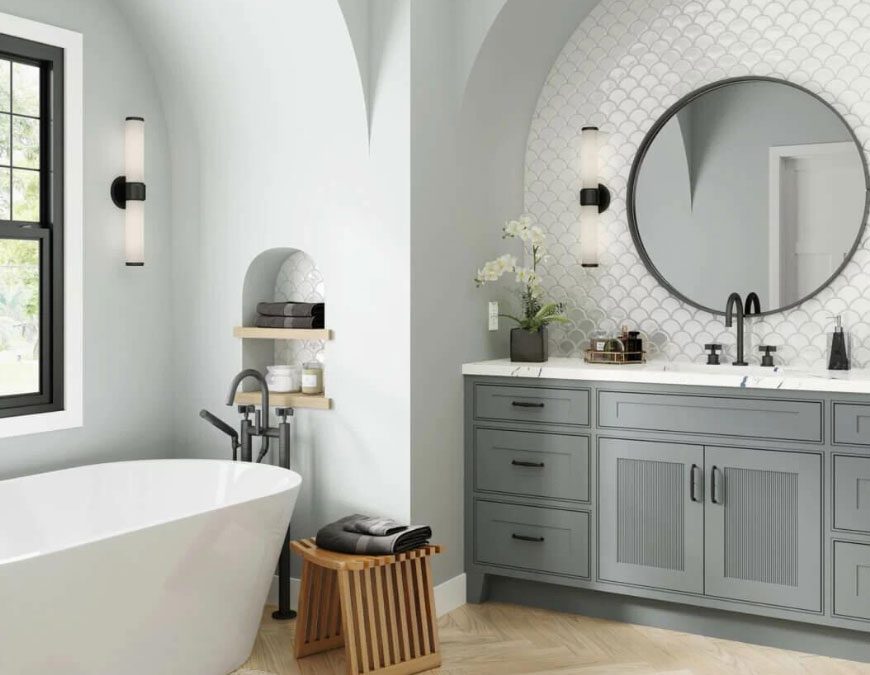
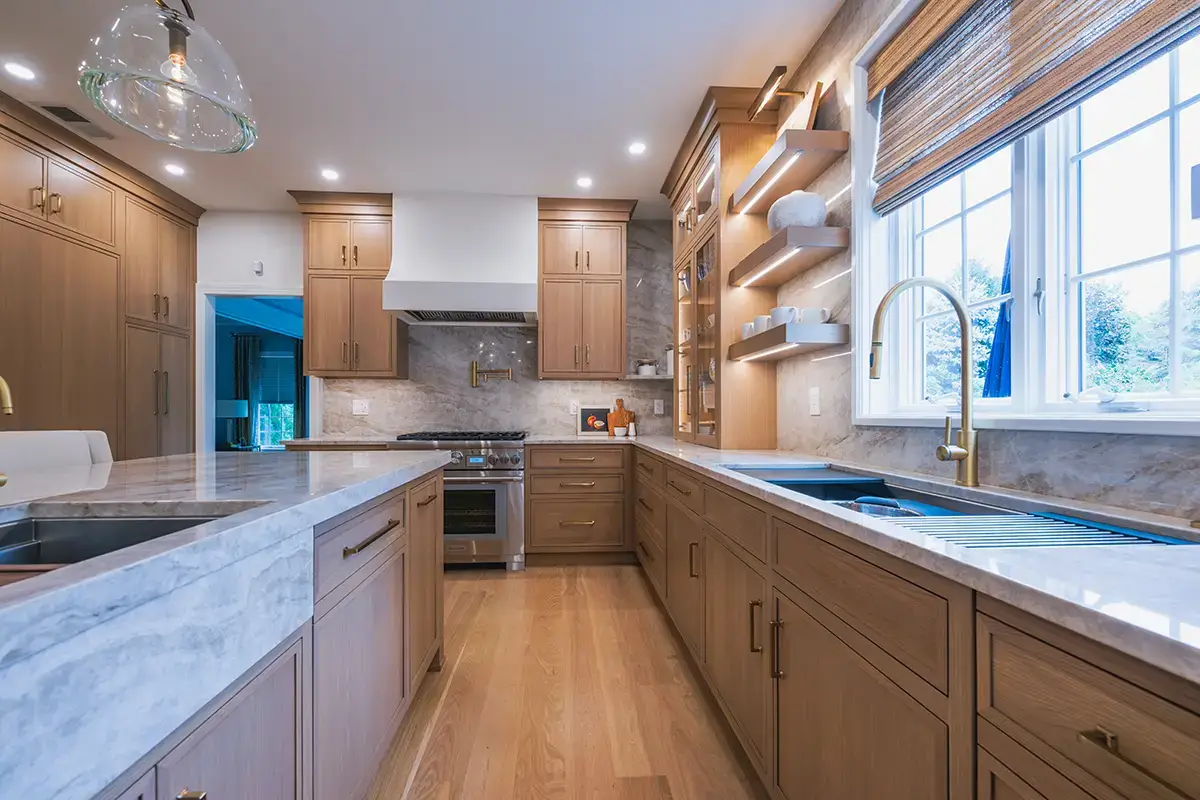
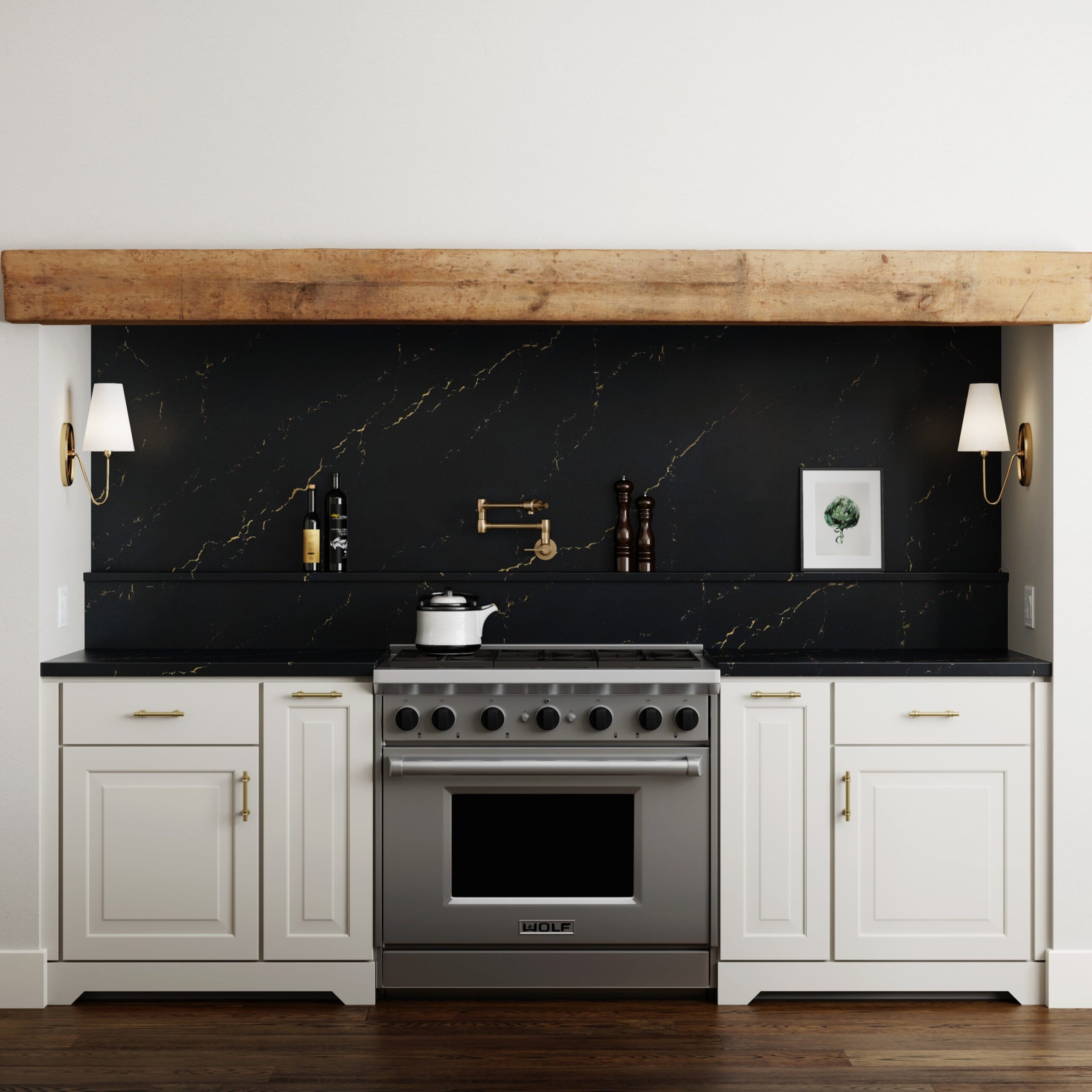
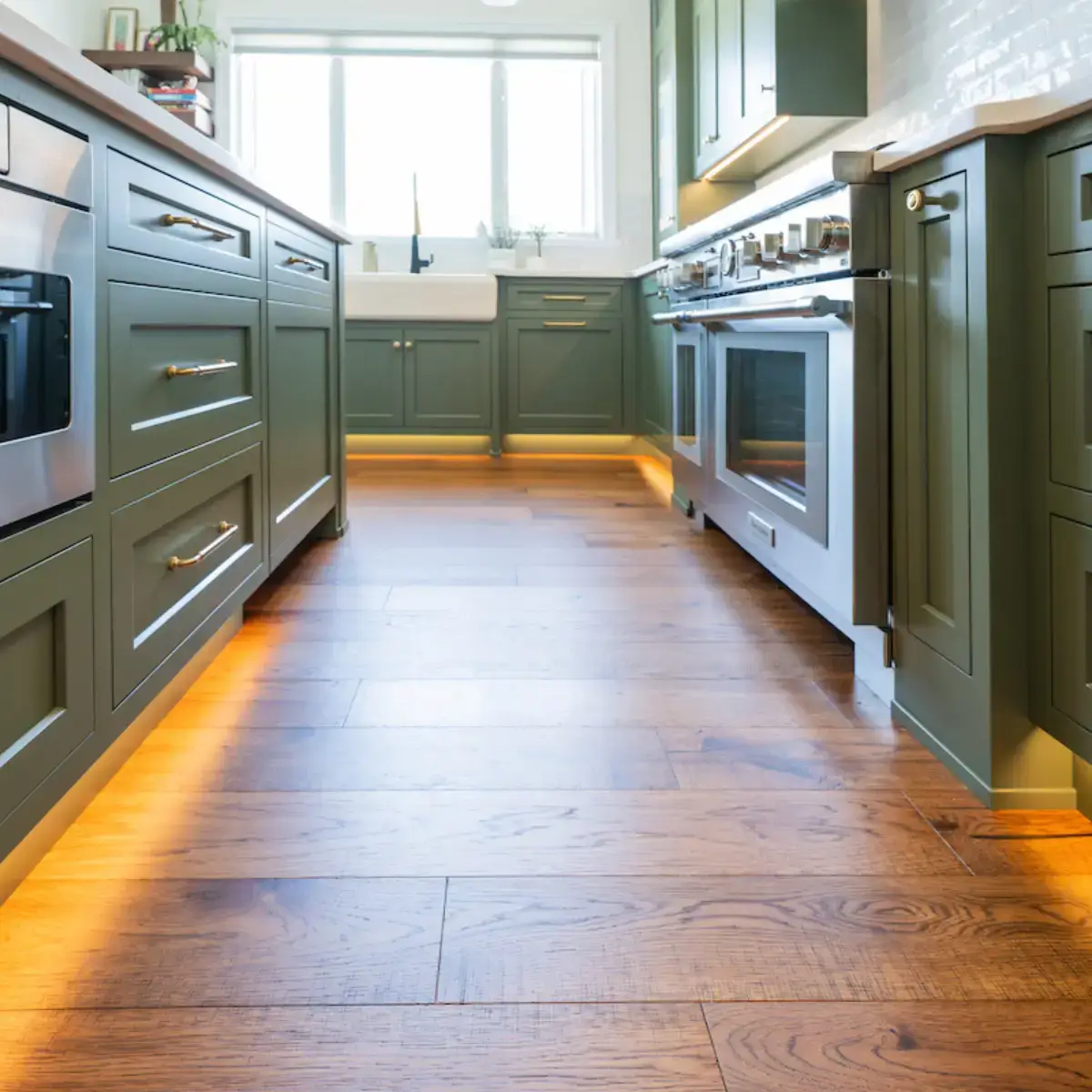
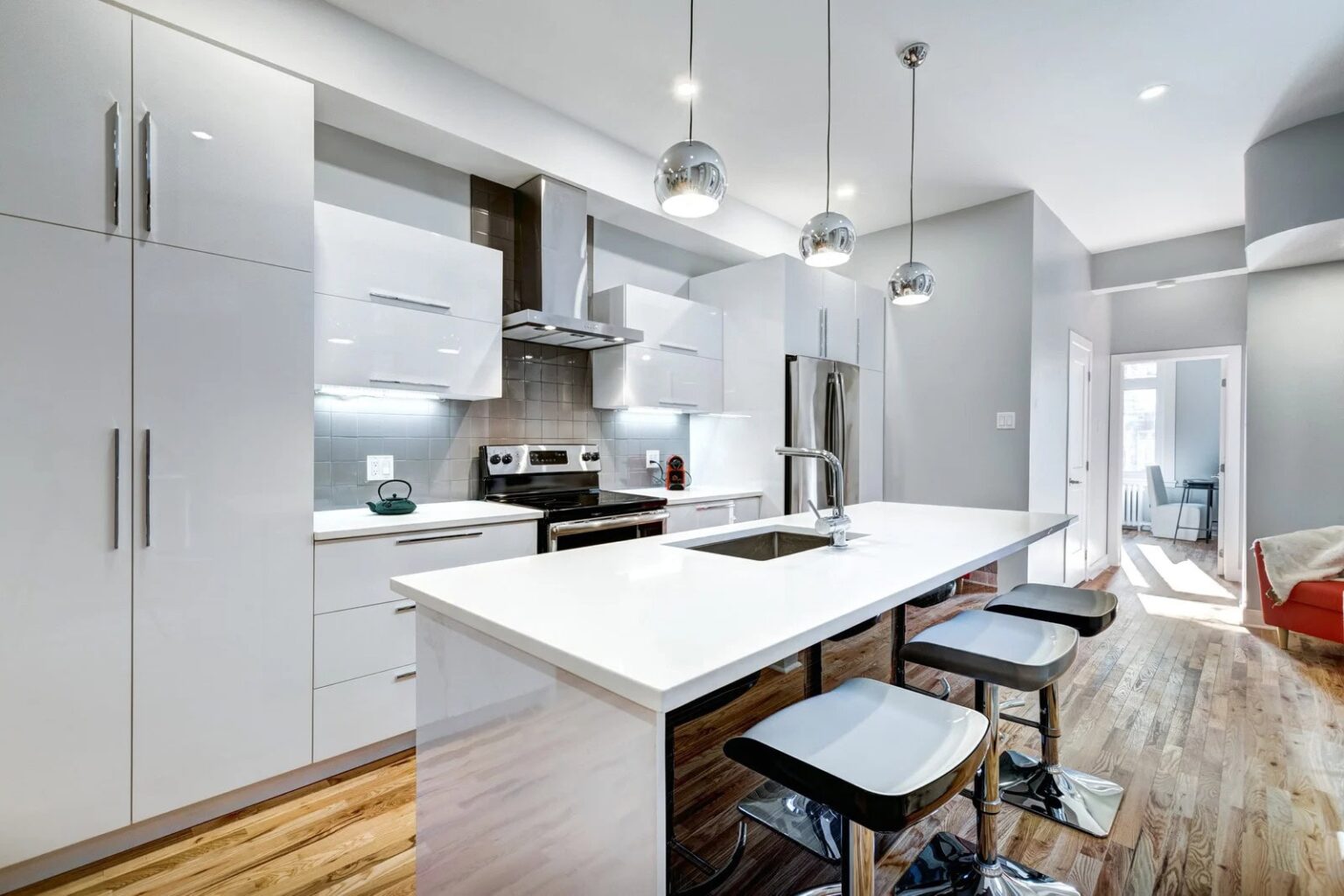
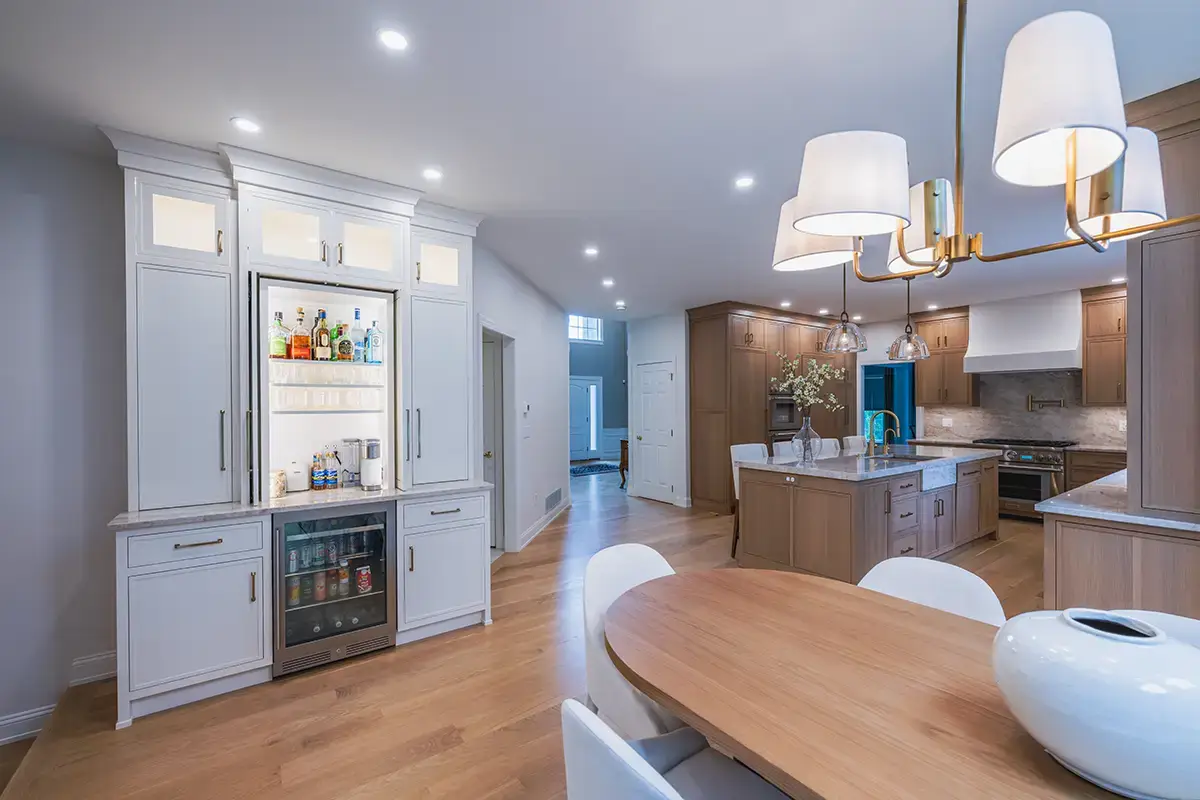
Designing a new kitchen that feels original to your home requires balancing modern function with historic charm. Homeowners achieve this by drawing inspiration from existing architectural details, choosing period-appropriate cabinetry construction, matching original moldings, and integrating professional-grade appliances that blend seamlessly into custom-built cabinetry designs.
When embarking on a kitchen remodel, the greatest challenge is creating a space that feels like a natural extension of your home rather than an anachronistic new build. In the Lehigh Valley, our homes have distinct historic roots, spanning from early 20th-century Victorians to mid-century ranches and classic colonial properties. Partnering with a designer who knows how to honor these eras is key to achieving a stunning, cohesive result that elevates both beauty and function.
Design by Swine Design, LLC
Draw Inspiration from the Home’s Architecture
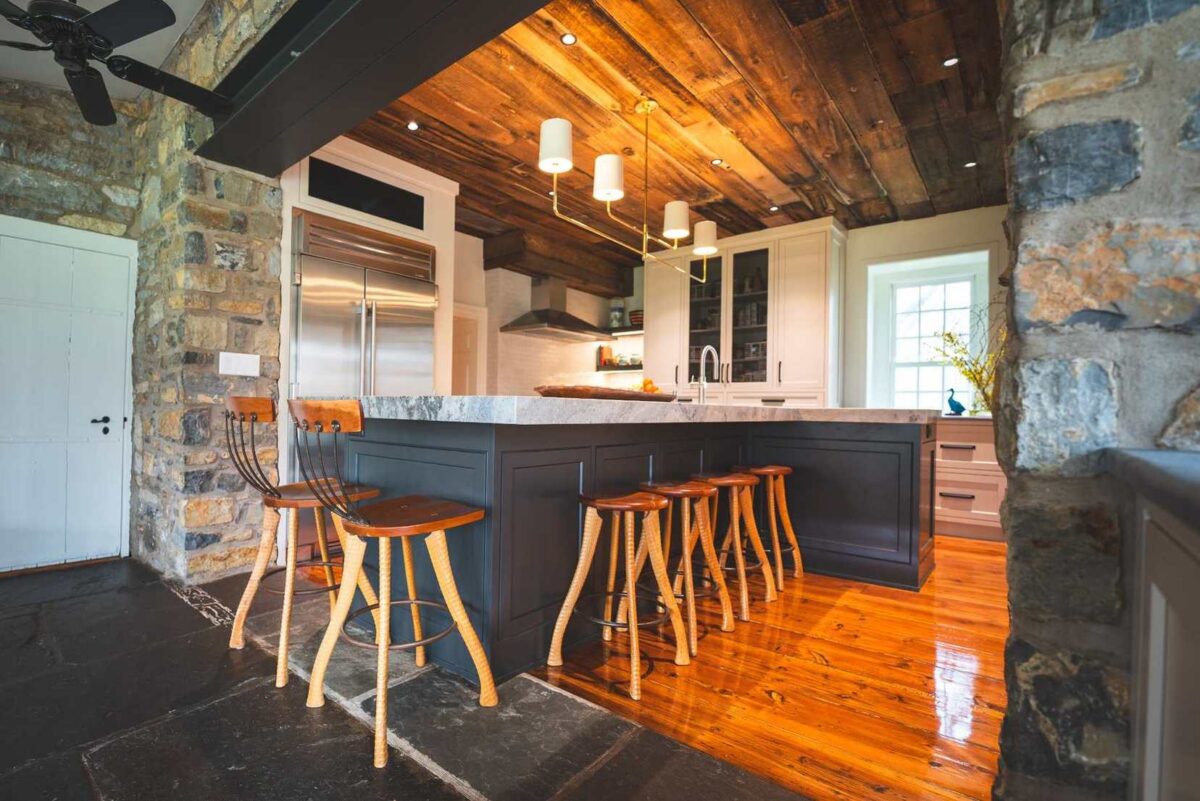
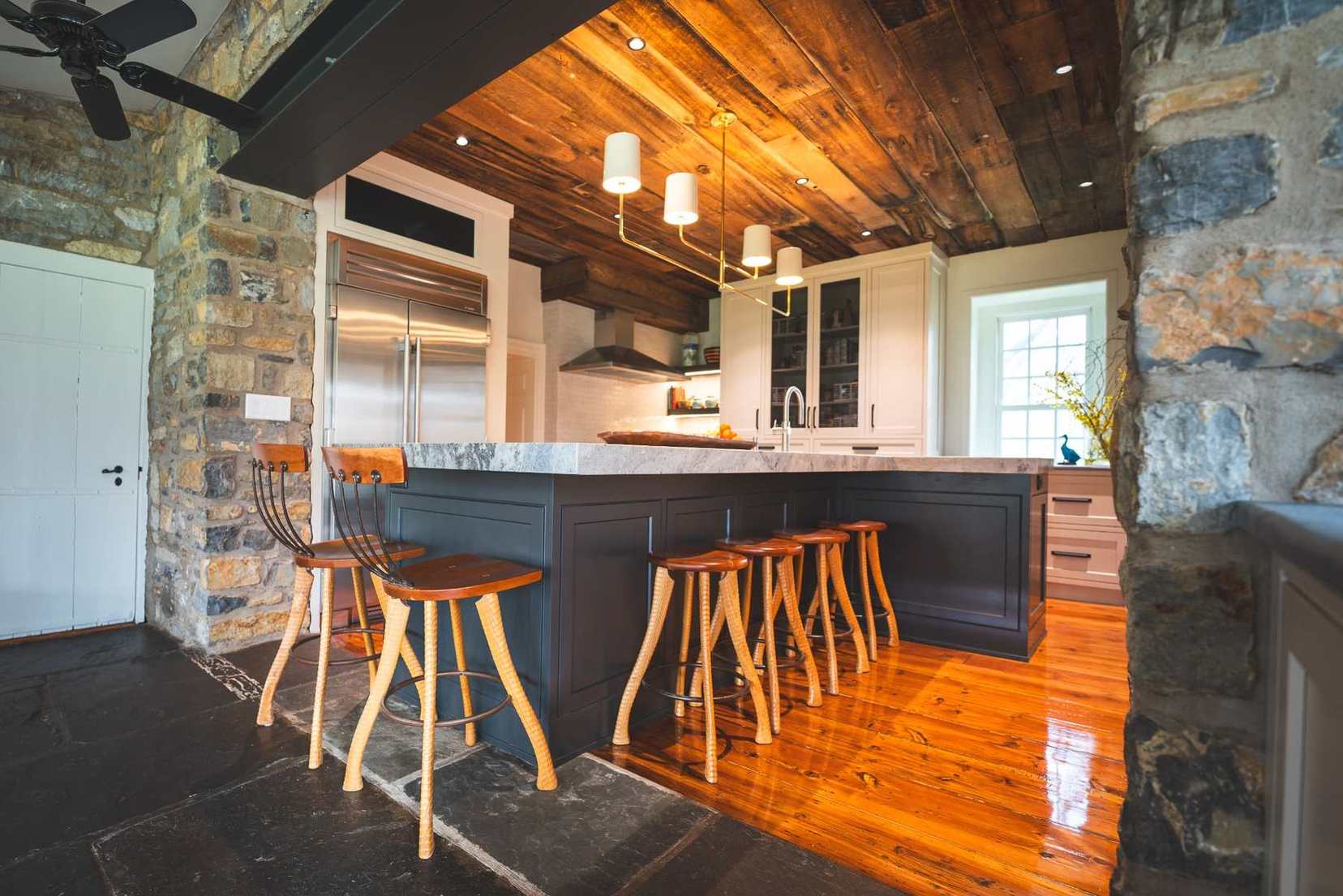
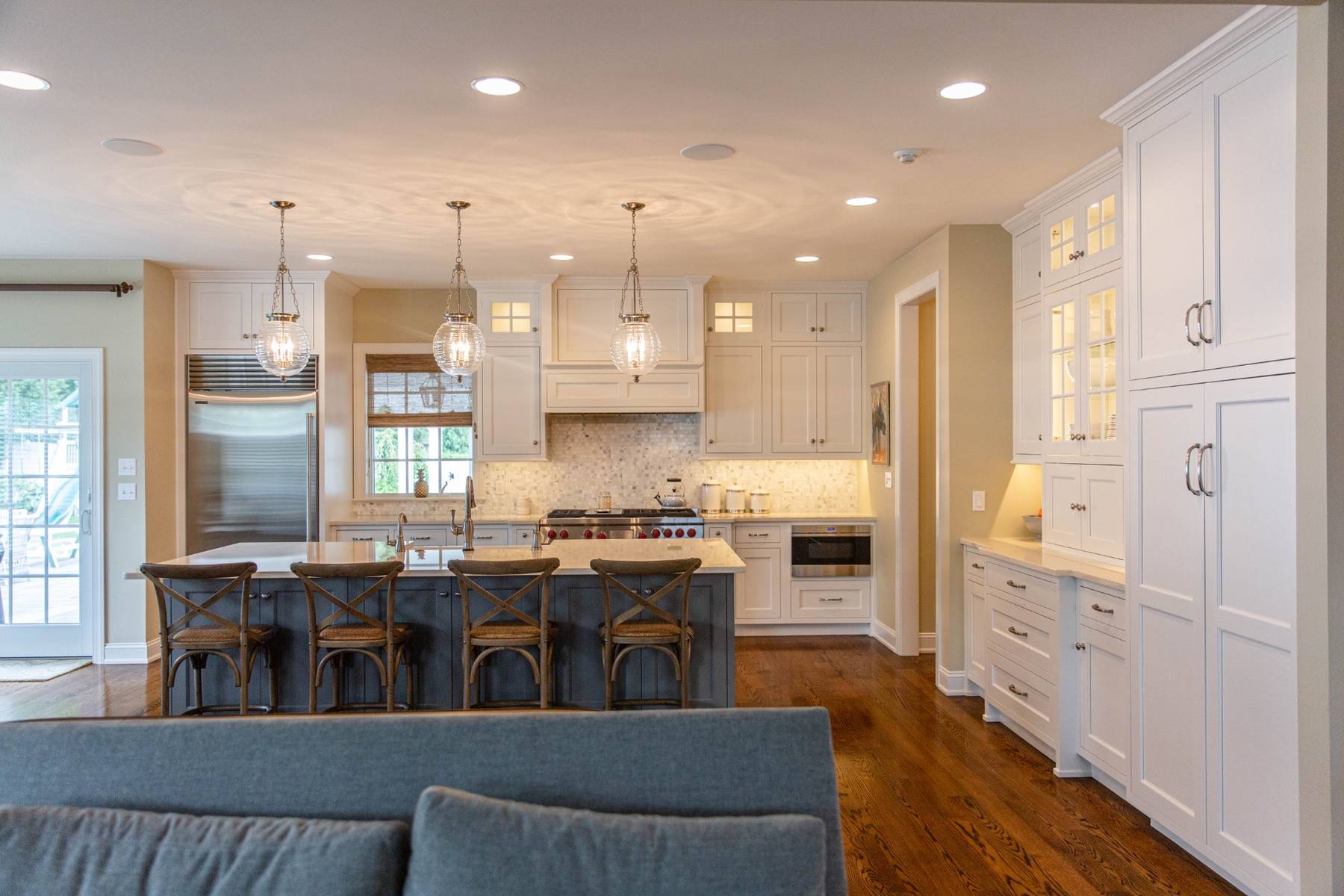
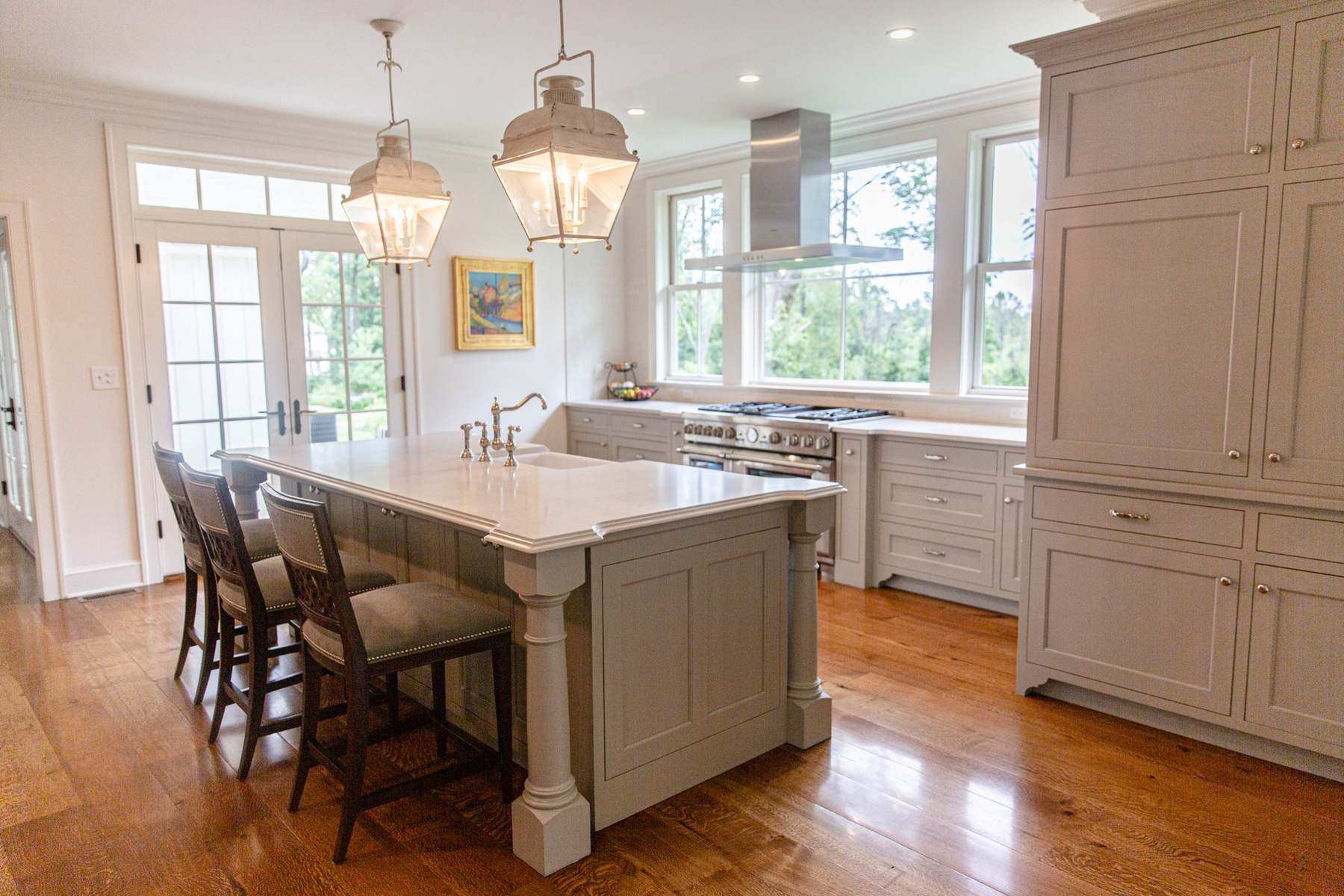
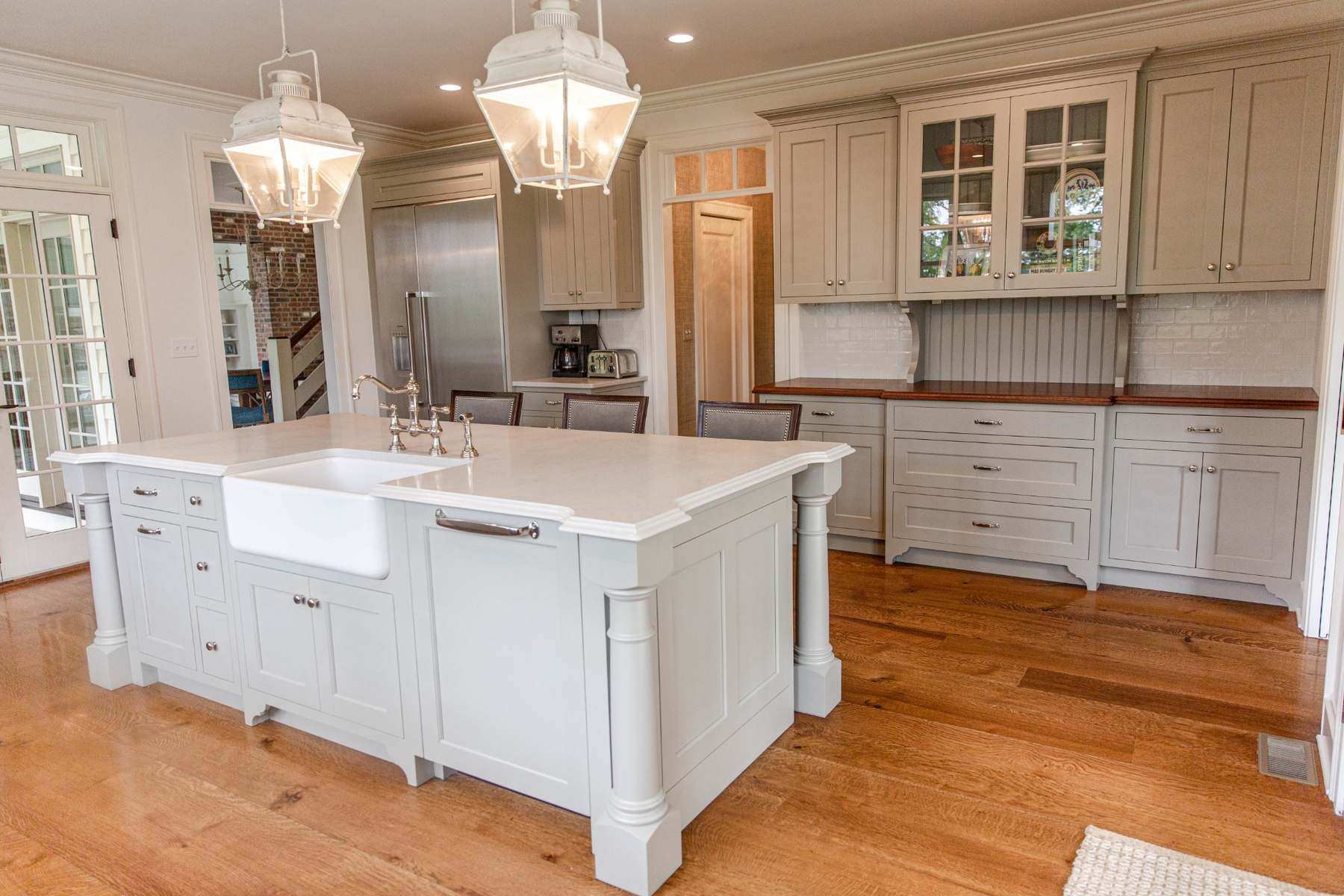
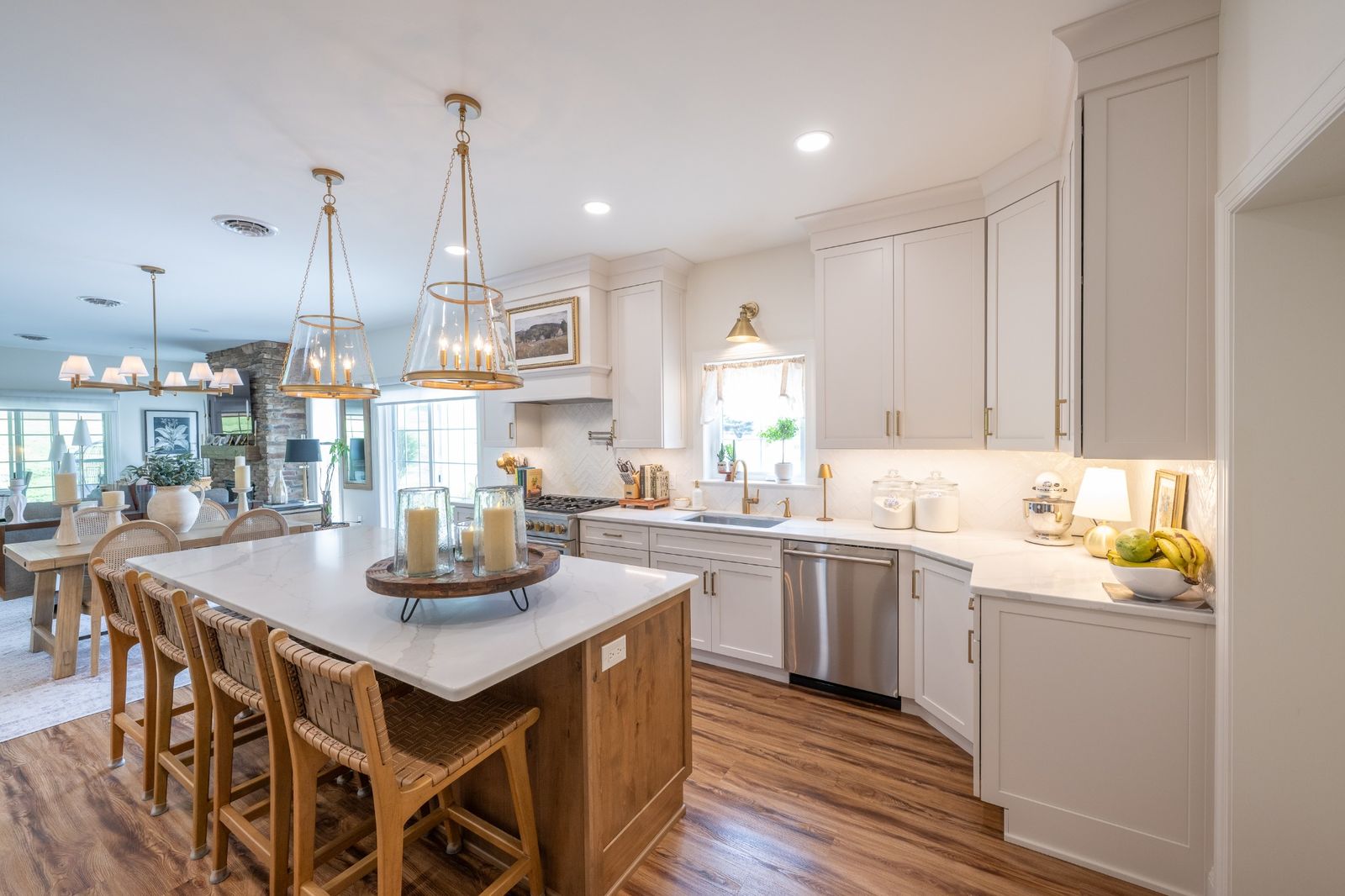
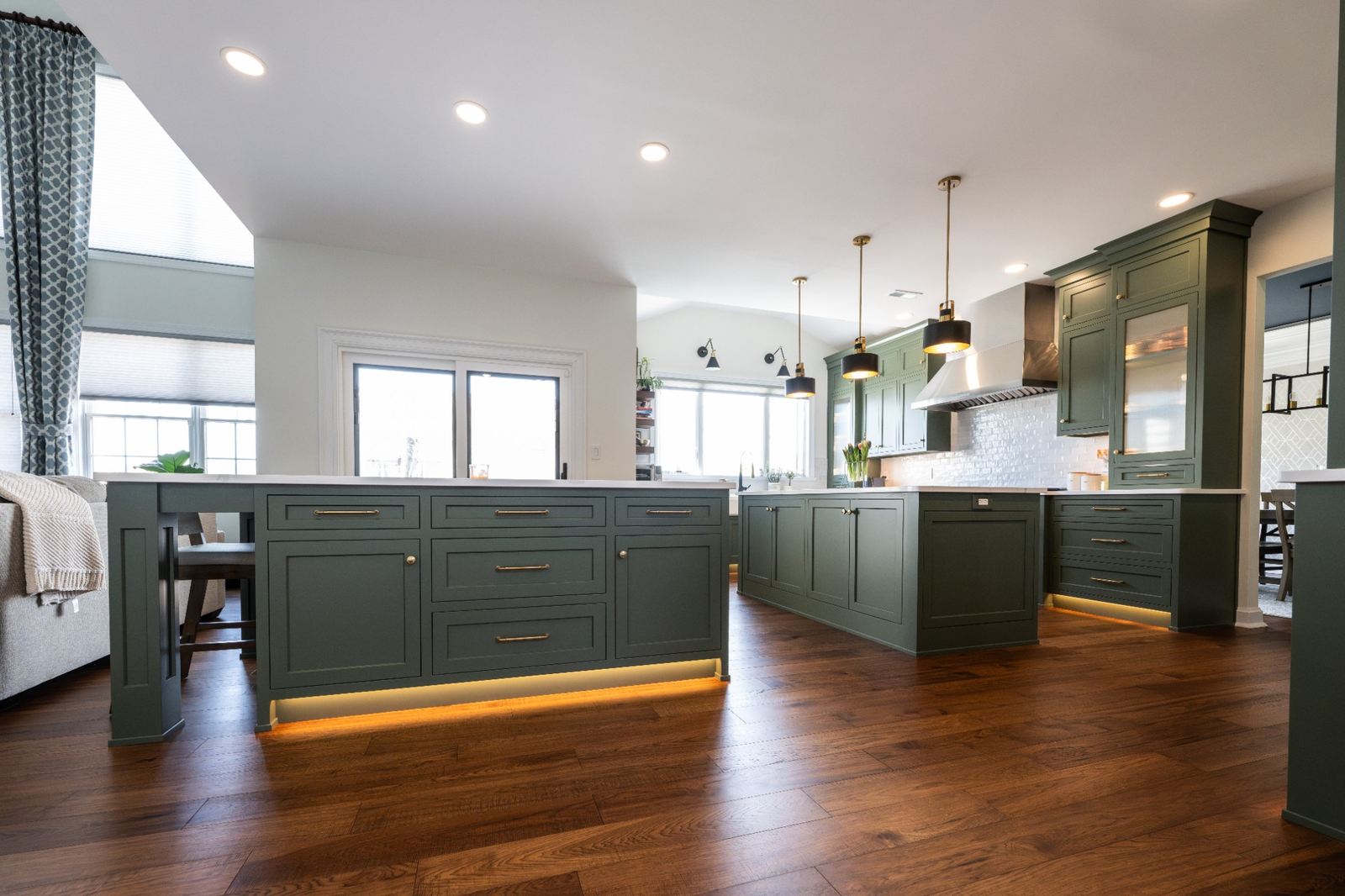
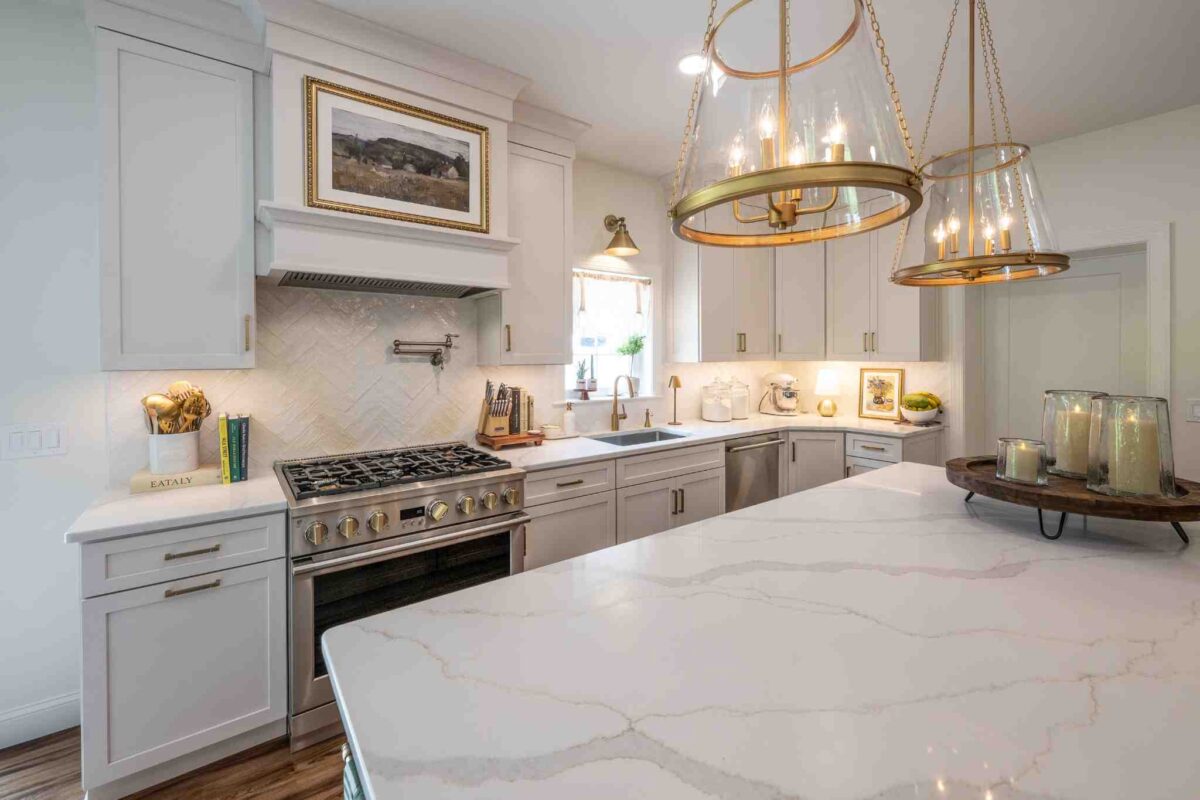
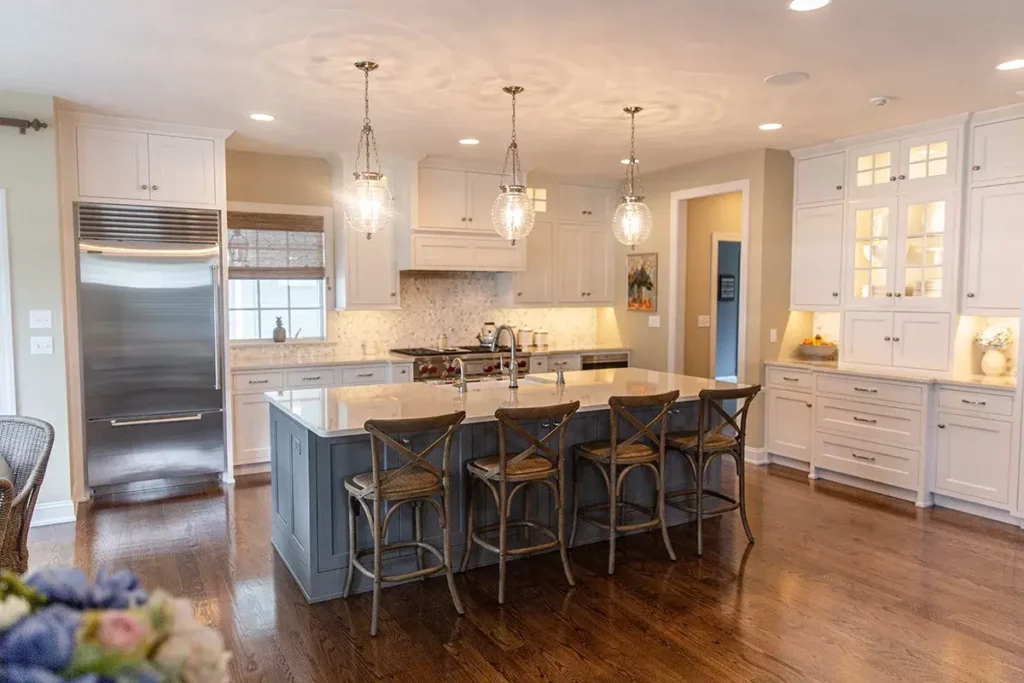
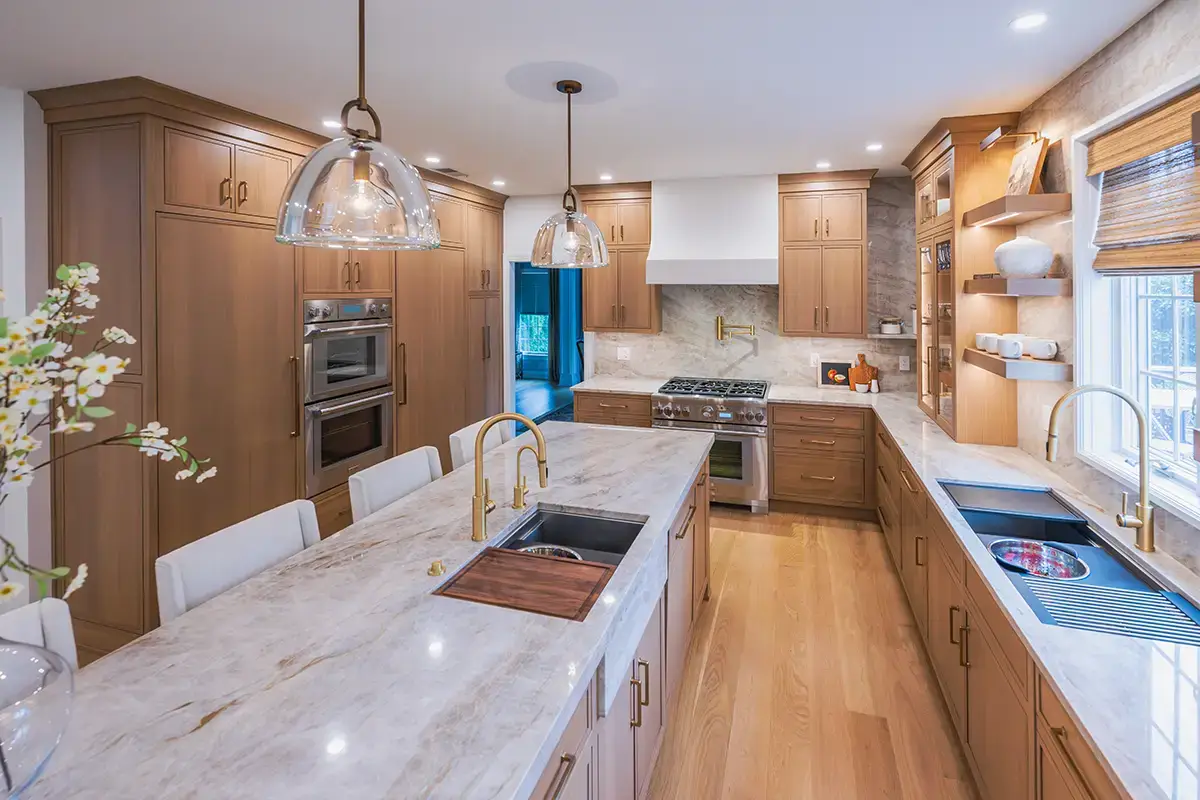
Study the architecture before selecting cabinet colors or countertops. Window proportions, ceiling height, trim profiles, flooring, door styles, fireplaces, and adjoining rooms all provide clues about what belongs. A new kitchen should feel connected to those details even when the room is substantially changed. For a historic kitchen remodel, that can mean preserving cues such as inset doors, traditional molding, warm wood, or furniture-like cabinetry while improving the layout. Laslo’s custom kitchen remodel cleverly blends modern and colonial styles in Allentown PA is a strong example. Flush inset cabinetry, beehive pendants, and colonial references sit comfortably beside a Sub-Zero refrigerator, Wolf range, concealed hood, and hidden television.
Use Cabinetry Proportions That Suit the Room
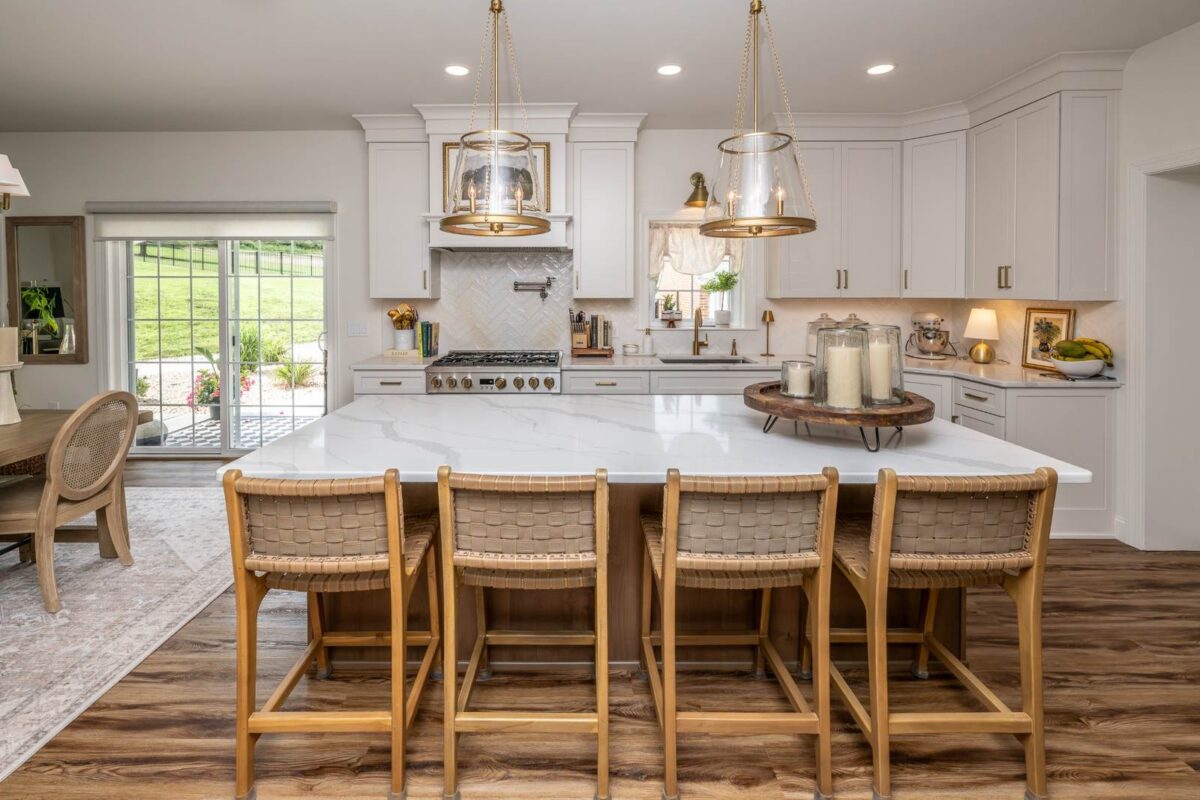
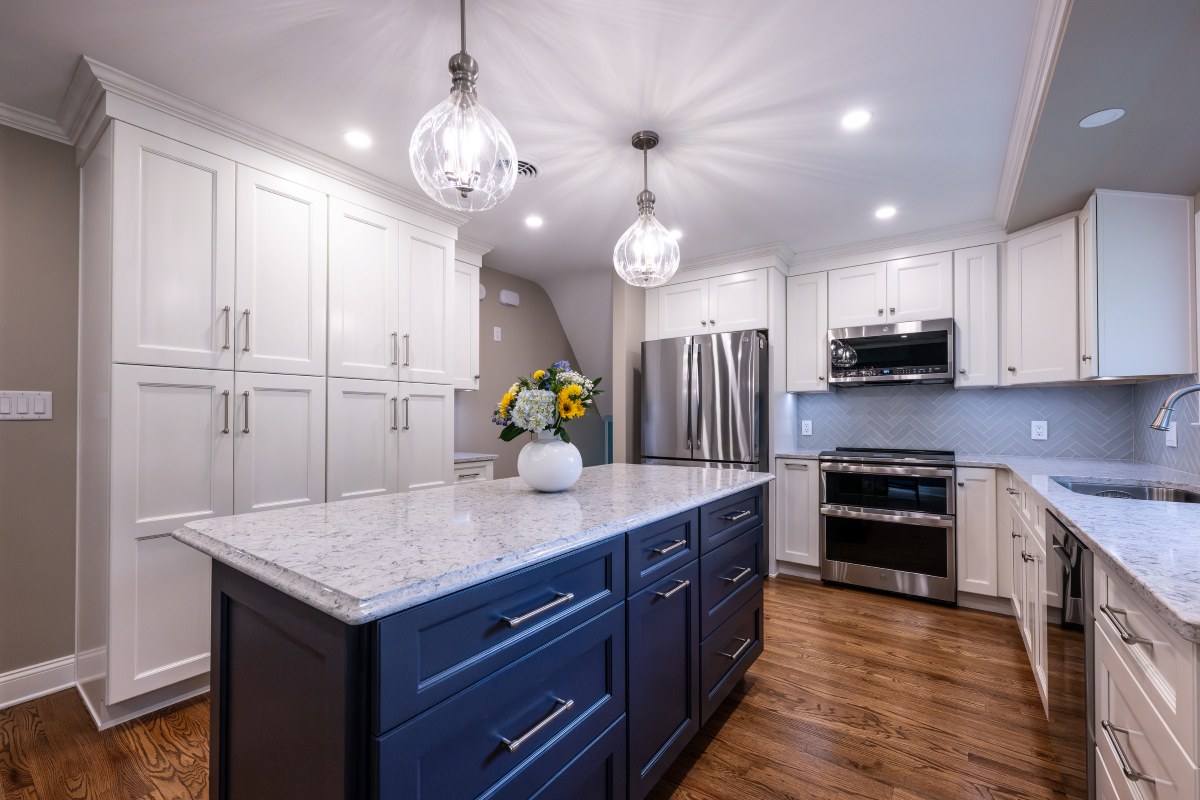
Proportions are the quiet foundation of an elegant interior. When designing a new kitchen, many homeowners make the mistake of using standard, off-the-shelf cabinetry that ignores the room’s actual scale. For a truly timeless kitchen design, cabinetry must be scaled to the room’s specific proportions. In high-ceilinged homes, utilizing stacked moldings or floor-to-ceiling custom cabinets draws the eye upward and emphasizes vertical height, while low-ceilinged spaces require horizontal orientations and clean lines to maximize visual openness.
Design by Swine Design, LLC
Select Inset, Framed, or Overlay Construction
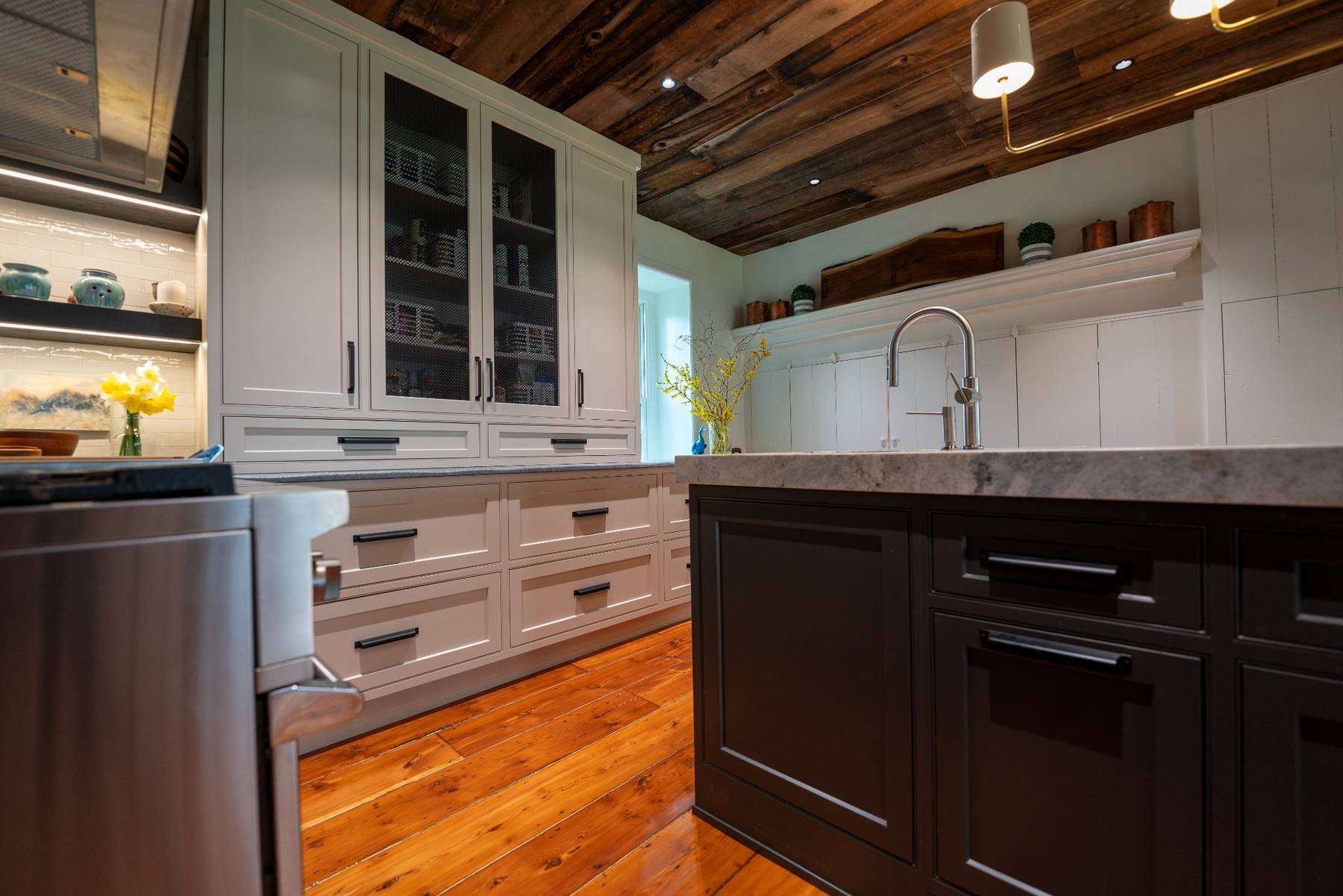
The construction style you select for your cabinet doors sets the stylistic timeline for your home. While overlay cabinets offer a modern appearance, inset cabinetry represents the peak of traditional, high-end millwork. A spectacular real-world example of this is the walnut and white oak kitchen remodel in Emmaus, PA, where Swine Design and Laslo Custom Kitchens utilized 3/8-inch beaded inset construction with Blum hinges. This choice allowed the custom kitchen cabinetry to behave like fine, permanent woodwork. Walnut base cabinets ground the working perimeter, while white oak uppers add a lighter vertical presence. Choosing this framed construction style when planning your new kitchen ensures a clean, elegant look.
Match Moldings and Millwork to Existing Details
One of the quickest ways to disrupt the visual flow of an older home is to install standard, generic trim. To ensure your new kitchen matches the rest of your home, your cabinet crown moldings, window trim, and baseboards must replicate the profiles found in the original living areas. In a thoughtful architectural kitchen design, designers stack moldings and use custom bell routs or flat reveals to bridge the cabinet-to-ceiling transition. This meticulous replication of detail ensures your cabinetry feels integrated into the home’s original woodwork rather than appearing as a modern addition.
Introduce Natural Wood, Painted Finishes, and Furniture-Style Elements
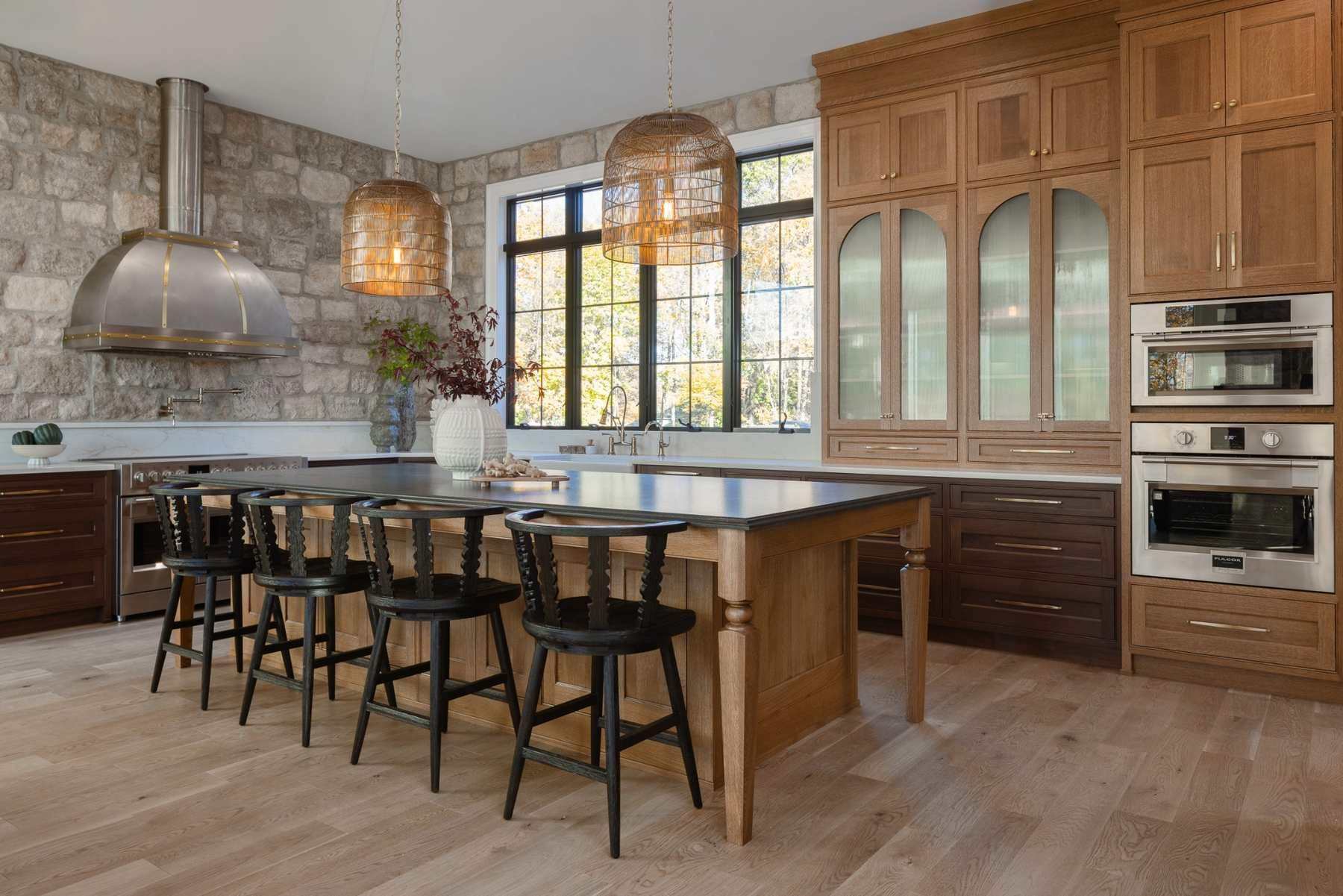
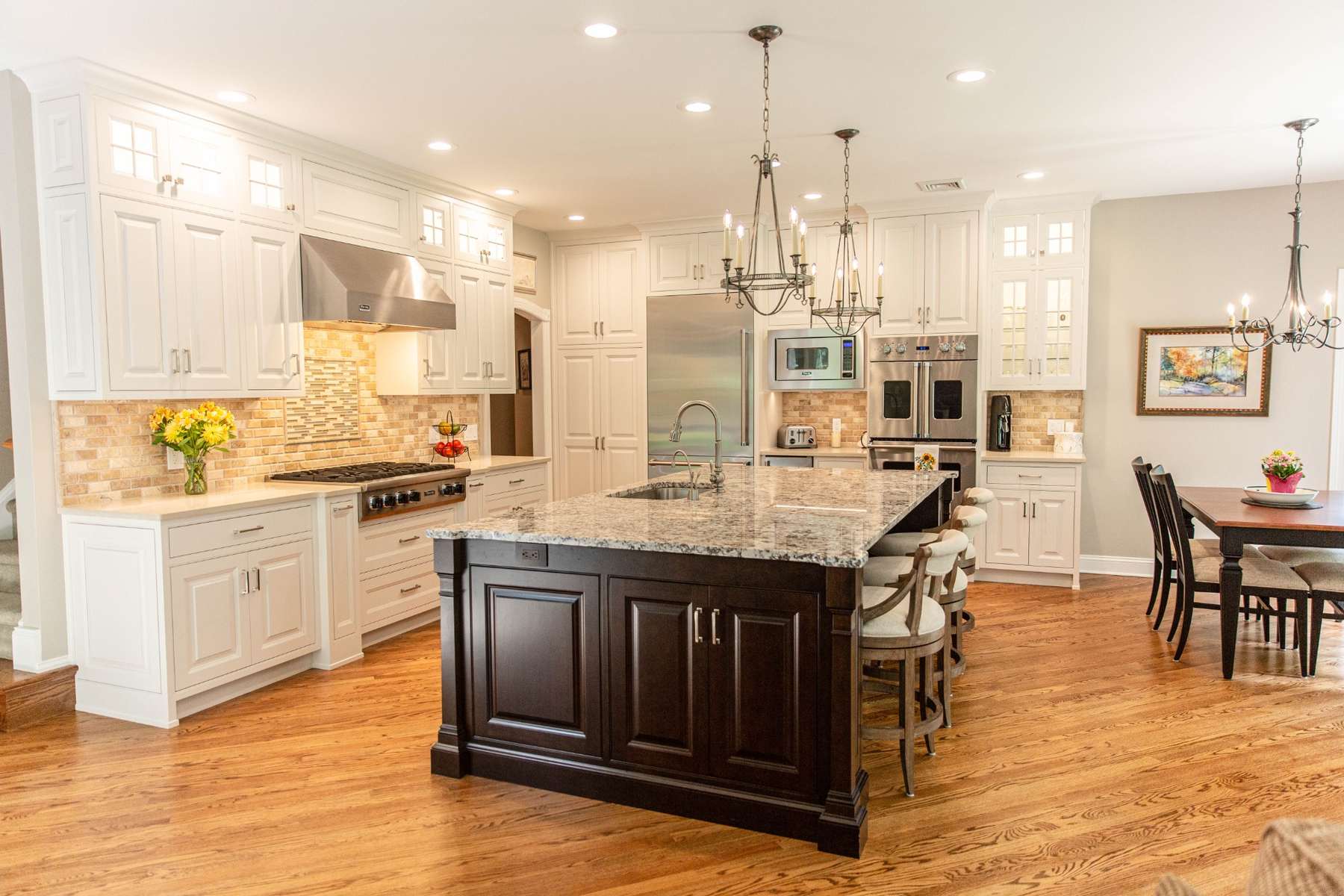
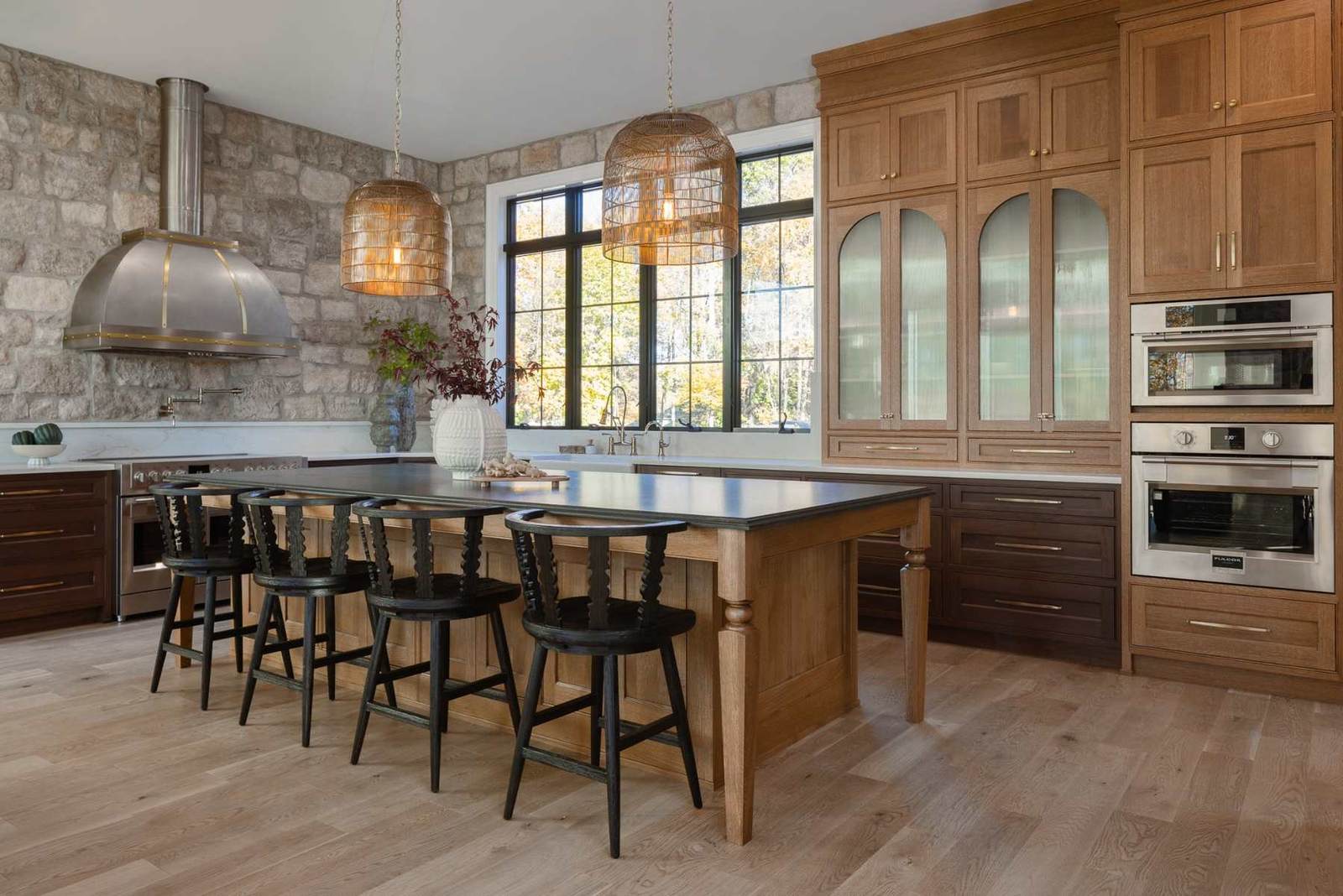
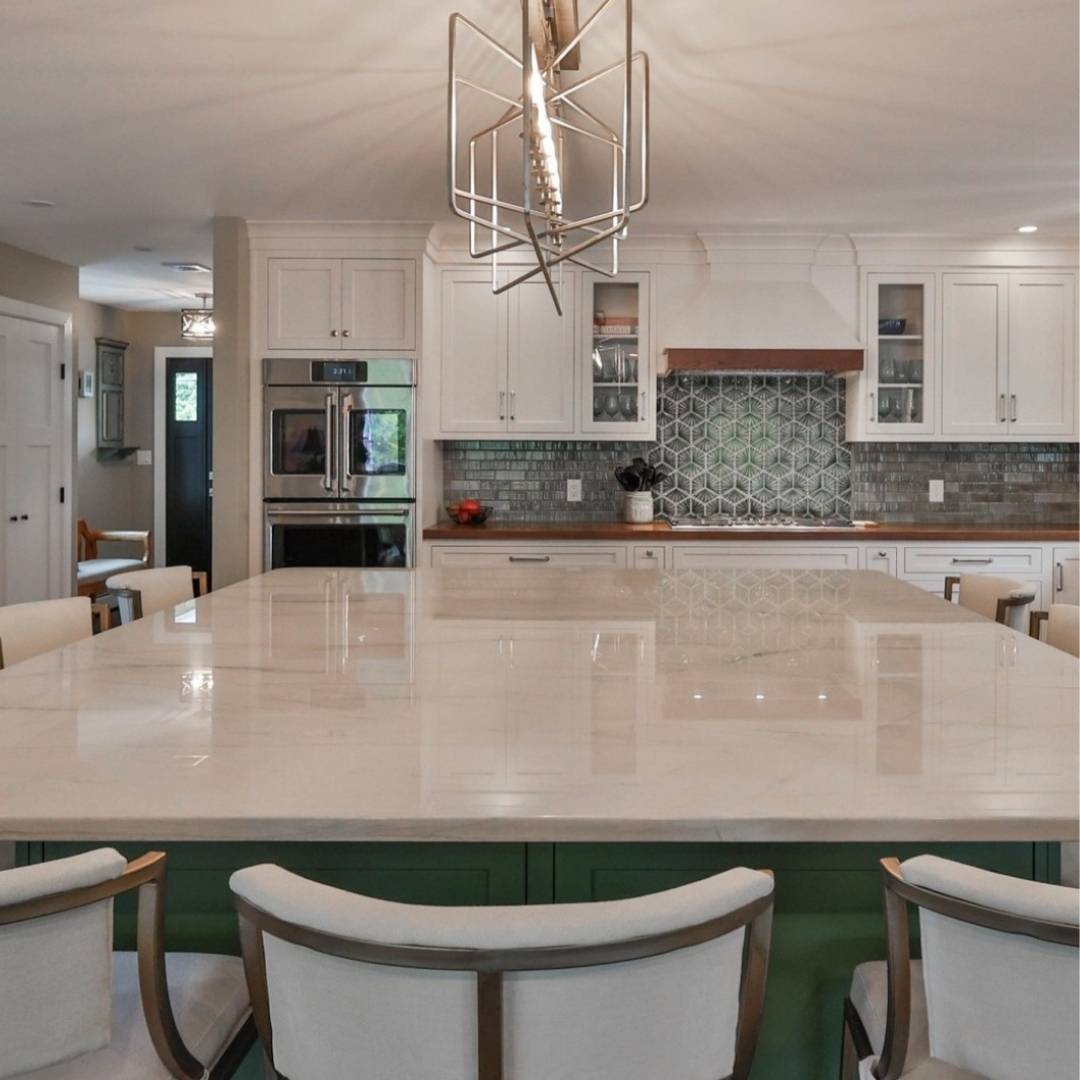
One cabinet finish throughout is not the only way to create cohesion. Introducing mixed wood species, hand-applied stains, and furniture-style elements brings immediate depth to your space. This approach is highly effective in transitional kitchen design, where you want to balance classic and modern styles. For inspiration, explore the modern Tuscan kitchen designed for gathering, which uses a weathered “E” finish on Cherry for the Hawthorne door style on the kitchen island, wood range hood, and hutch. These rich wood textures are paired with Classic White painted cabinets on the perimeter, preventing the new kitchen from feeling flat. Adding elements like brushed steel chandeliers completes the warm, curated look.
Integrate Modern Appliances Without Disrupting the Design
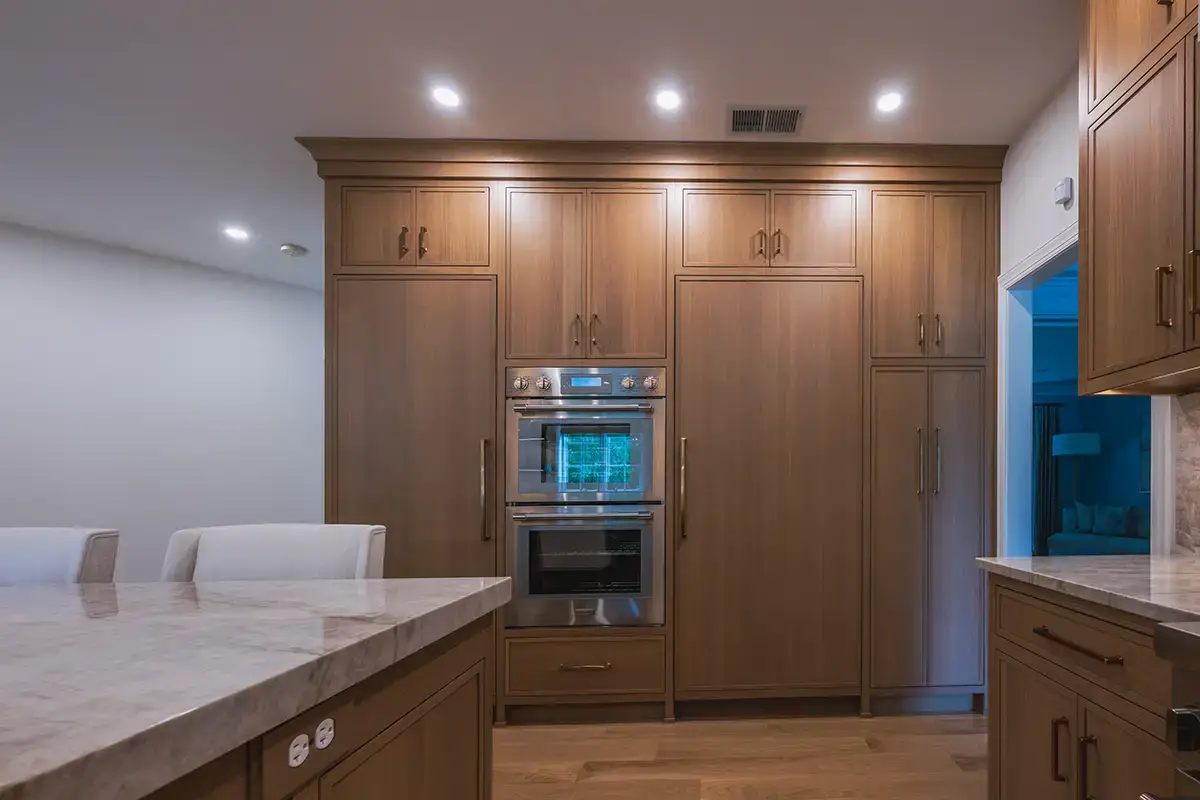
Large refrigerators, professional-style ranges, wall ovens, beverage centers, microwave drawers, and multiple dishwashers can improve kitchen performance, but they can dominate the room if they’re not considered early in the cabinetry plan. A new kitchen can achieve a period appropriate kitchen design by treating appliances as part of the architecture. Paneled refrigeration, built-in microwave placement, flush appliance surrounds, coordinated hood cabinetry, and properly proportioned tall cabinets help large equipment sit comfortably within the room.
Improve Storage and Function While Preserving Character
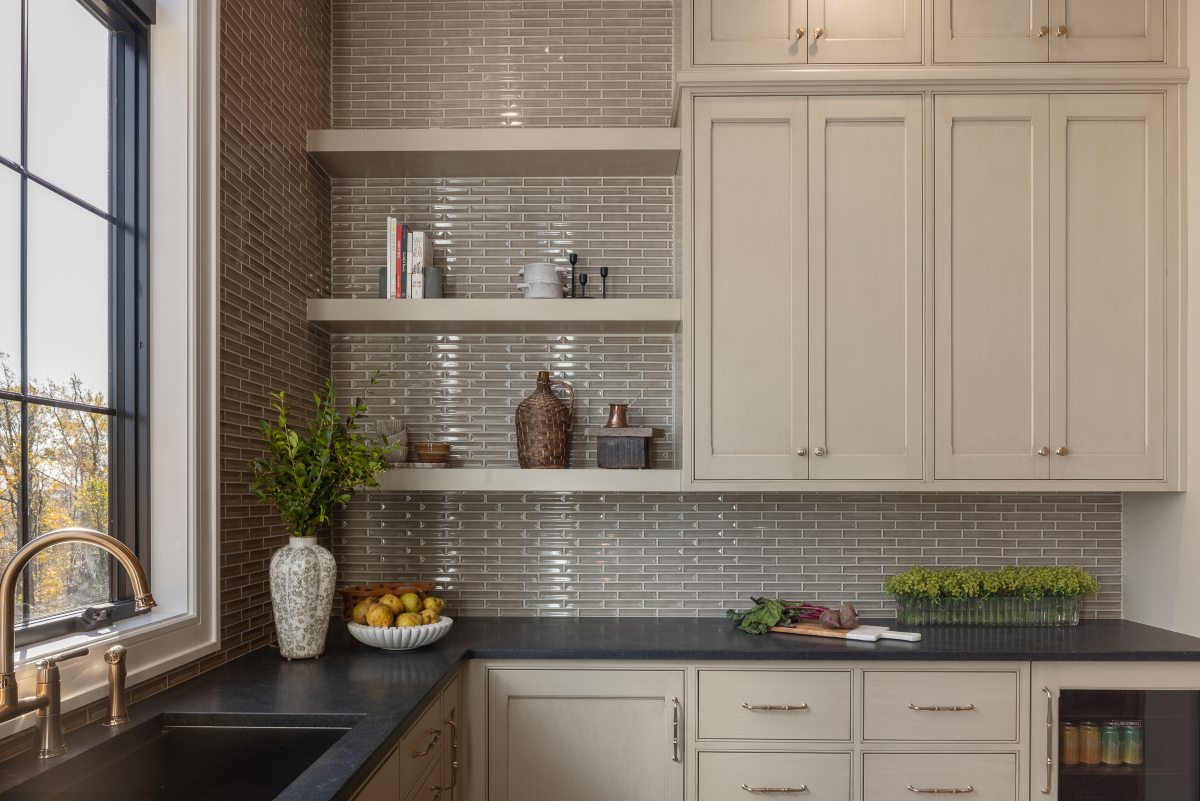
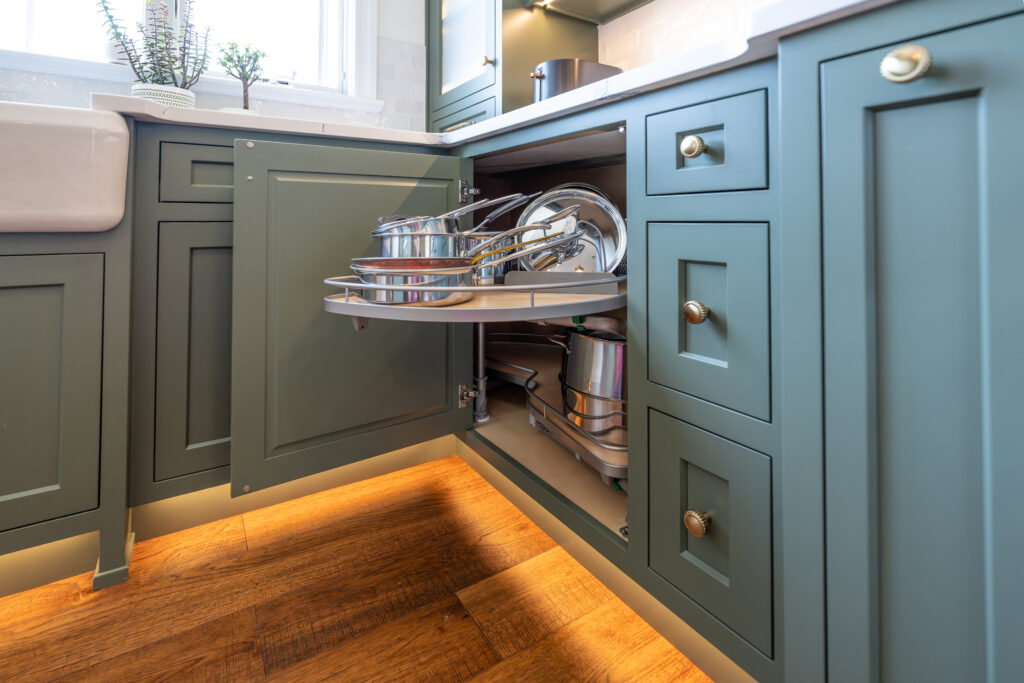
Older kitchens often have tight footprints and minimal storage, but modernizing your workflow doesn’t mean you have to lose your home’s historic charm. When planning a kitchen remodel for an older home, the goal is to pack the cabinetry interiors with high-performance storage solutions. By utilizing custom pull-outs, deep drawers, and Magic Corner fittings, your new kitchen will achieve modern efficiency while keeping its exterior classically styled. To learn more about balancing modern convenience with historic preservation, explore keeping a period-style kitchen. Creating supporting spaces, like a coordinated butler’s kitchen, further expands your storage and cleanup zones.
Design by Swine Design, LLC
Use Custom Cabinetry Where Exact Dimensions Matter Most
Older homes in the Lehigh Valley are famous for uneven floors, plaster walls, and out-of-square corners. Standard modular cabinets require filler panels to fit these irregular spaces, which instantly ruins a kitchen’s built-in look. This is why investing in custom construction is essential. When executing a timeless kitchen renovation, every cabinet must be built to the exact dimensions of your walls. Custom builders can adjust cabinet depths and stiles to the precise quarter-inch, ensuring a wall-to-wall fit. This precise craftsmanship ensures your new kitchen operates smoothly.
Frequently Asked Questions (FAQ)
How do I make a new kitchen blend with an older home’s architecture?
To make a new kitchen blend with an older home’s architecture, you should match the home’s original moldings, casing profiles, and baseboard details. Incorporating period-appropriate cabinetry constructions like beaded inset doors and using a natural, warm wood palette will ensure the space feels native to your home’s historic style.
What is the best cabinet construction for a historic kitchen remodel?
The best cabinet construction for a historic kitchen remodel is beaded inset cabinetry. Beaded inset styling features cabinet doors that fit flush inside the cabinet face frame, surrounded by a delicate wooden bead. This construction provides traditional shadow lines and a built-in, furniture-grade look that respects historic craftsmanship.
How can I integrate modern appliances into a transitional kitchen design?
You can integrate modern appliances into a transitional kitchen design by utilizing panel-ready refrigerators and dishwashers that match your custom cabinetry. Additionally, minor appliances like microwave drawers can be tucked away beneath countertops, while range hoods can be cleverly concealed behind custom wood enclosures to preserve clean sightlines.
Take the Next Step with Laslo Custom Kitchens
Ready to transform your home with a stunning new kitchen that respects its historic roots? At Laslo Custom Kitchens, our experienced design and install team specializes in crafting custom cabinetry and millwork that seamlessly blends modern luxury with your home’s existing character. Schedule a consultation, visit our local showroom in Easton, PA, or call us directly at 610-600-9528 to speak with our design experts today!
Adding custom kitchen islands in Allentown homes is the perfect way to maximize space and usability. These custom configurations expand prep surfaces, optimize storage with specialized features, streamline foot traffic, and establish a comfortable, central gathering hub tailored to your family’s daily routine.
If you’re planning a kitchen remodel in Allentown, Bethlehem, Easton, or elsewhere in the Lehigh Valley, investing in beautiful custom kitchen cabinets allows you to maximize your space, personalize your storage, and showcase your unique style.
Design by Swine Design LLC
Why Kitchen Islands and Peninsulas Remain One of the Most Requested Kitchen Features
Few design elements have made a greater impact over the last decade than custom kitchen islands in Allentown, which serve as the ultimate hub for the modern family. As residential architecture has shifted decisively toward open-concept spaces, homeowners want kitchens that function as gathering places and work stations just as effortlessly as they function for meal prep and cooking.
By partnering with a local design firm to build high-quality custom kitchen cabinets, you can ensure that your island or peninsula provides the structural support, expansive countertop space, and comfortable seating needed to seamlessly tie your open-concept living areas together.
Photography by Lisa Lake Creative
Island vs. Peninsula: Which Is Right for Your Kitchen?
Although they often serve similar utility purposes, kitchen islands and peninsulas are not interchangeable. The right choice depends on the size and layout of your kitchen, as well as your personal preferences.
A kitchen island is a freestanding cabinet installation surrounded by open walkways on all sides, making it a natural choice for spacious layouts. When planning custom kitchen islands in Allentown, keep in mind that they create excellent circulation, provide generous seating opportunities, and make entertaining guests a breeze.
A peninsula, by comparison, extends directly from existing cabinetry or a perimeter wall. It offers many of the same visual and functional benefits as an island while requiring considerably less floor space. Peninsulas are often the ideal solution for L-shaped or U-shaped kitchens where homeowners want additional workspace but don’t have the clearance for a freestanding unit.
Choosing between the two requires careful planning. Proper walkway clearances are especially critical, as a beautiful island that creates cramped pathways quickly becomes frustrating to use. Professional designers follow established guidelines for kitchen island functionality to ensure there’s adequate room for cabinet doors, appliance swings, and multiple cooks to work comfortably side by side.
Design by Swine Design, LLC
Different Kitchen Layouts with Islands
The most successful custom kitchen islands in Allentown are never designed purely around passing trends; instead, they’re designed around how your family cooks, dines, and entertains for lasting performance.
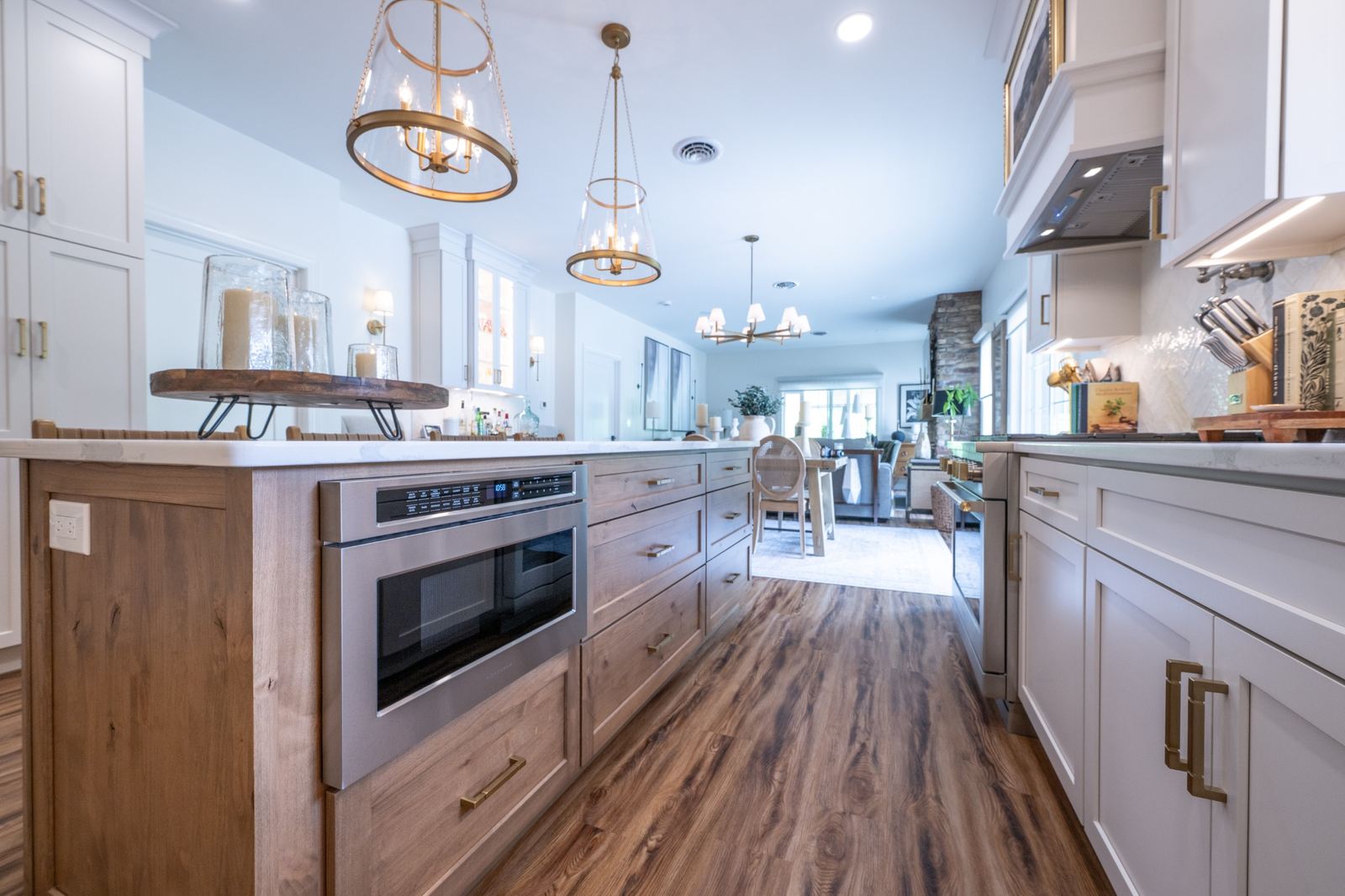
One of the first decisions you’ll make is determining the primary use of the space. Some families want a clear, uninterrupted countertop surface for baking and food prep, while others want to integrate appliances directly into the center of the room. For instance, incorporating a sink or a cooktop allows you to face your guests and hold conversations while preparing meals rather than facing a perimeter wall. Adding specialized appliance integrations, such as microwave drawers or under-counter beverage centers, can further customize the layout.
Photography by Lisa Lake Creative
Custom Cabinet Features for Islands or Peninsulas
When investing in custom kitchen islands in Allentown, you aren’t limited to standard dimensions or box store configurations. The greatest advantage of custom cabinetry is the ability to design highly personalized storage around your family’s exact needs.
To maximize efficiency and organization, the most functional custom islands integrate these specialized storage features:
Deep drawer storage: Provides easy, ergonomic access to heavy pots, pans, and serving dishes.
Pull-out trash and recycling centers: Keeps waste organized and hidden neatly within the cabinetry footprint.
Decorative enhancements: Furniture-style end panels, custom display shelving, and elegant waterfall countertops.
Photography by Lisa Lake Creative
Designing a Bespoke Kitchen Island in Allentown
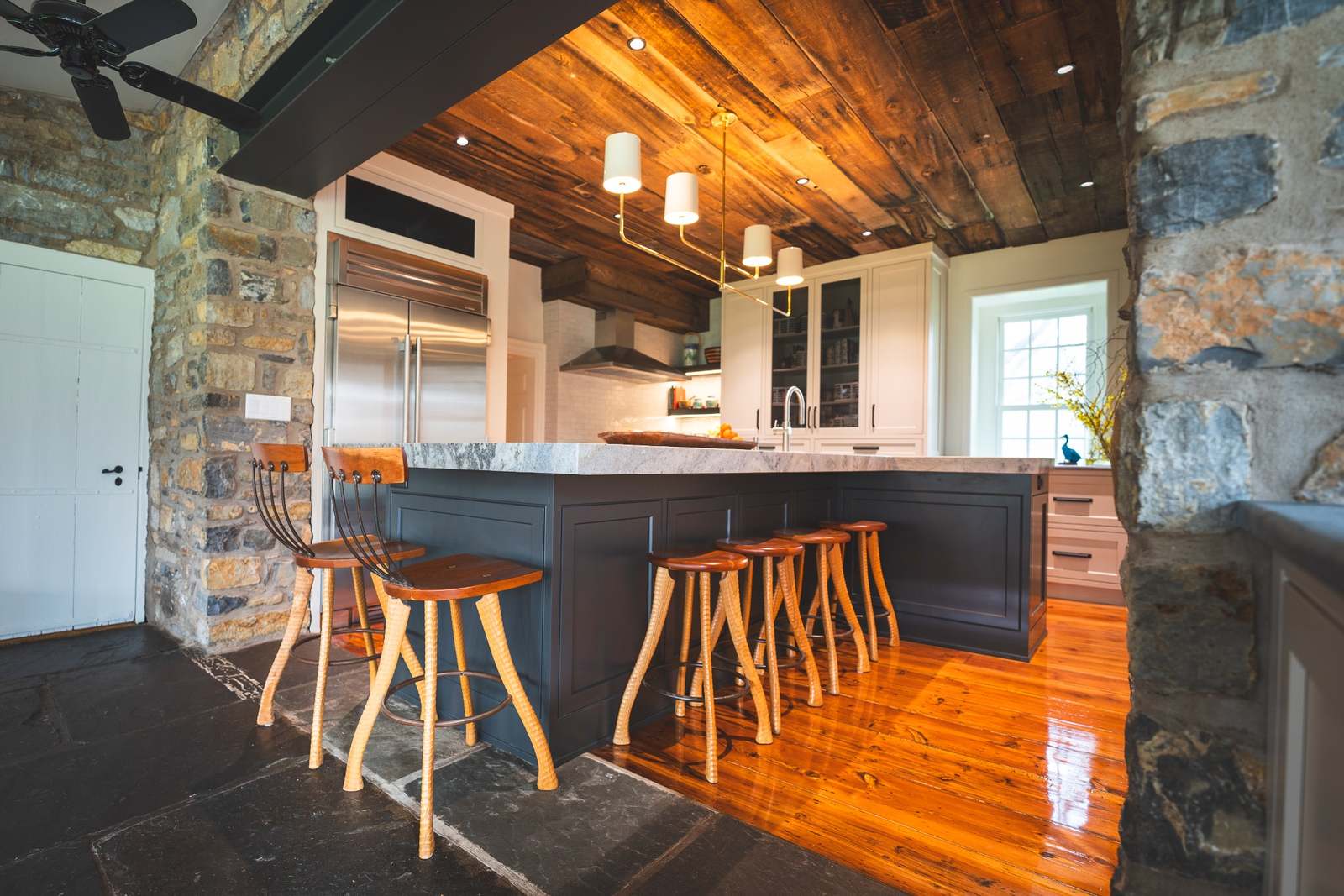
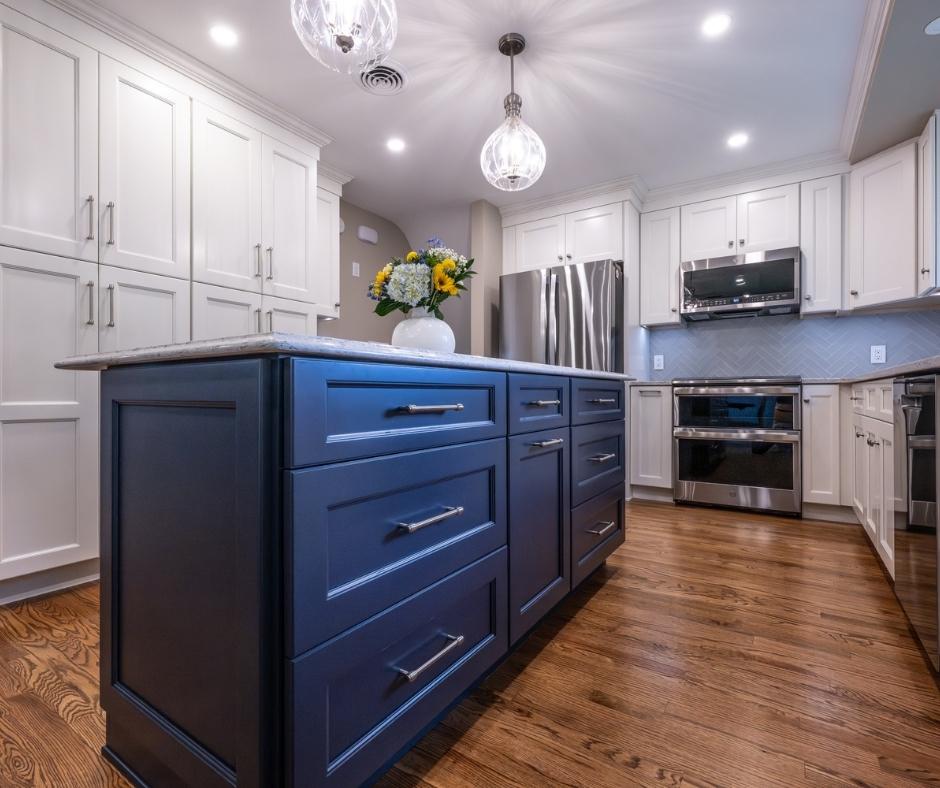
For those designing custom kitchen islands in Allentown, the center island should feel like a highly intentional architectural feature. Many homeowners choose contrasting finishes to create rich visual interest, pairing painted perimeter cabinetry with a stained wood island.
These unique, contrasting pairings can include multi-step paints and hand-applied stains, which are the hallmark of our custom made cabinetry in the Lehigh Valley. By utilizing custom millwork, decorative furniture legs, integrated accent lighting, and premium hardware, you can craft a stunning focal point that perfectly reflects your personal style.
At Laslo Custom Kitchens, every kitchen island and peninsula is thoughtfully designed around the homeowner’s lifestyle while balancing aesthetics, storage, workflow, and craftsmanship. Because we offer semi-custom cabinets, custom cabinetry, and custom millwork, homeowners can achieve a highly personalized design while selecting options that best fit their goals and budget.
Photography by Lisa Lake Creative
Frequently Asked Questions (FAQ)
Is a kitchen island or peninsula better?
Neither is universally better. A kitchen island works best in larger, open-concept kitchens with enough space for walkways on all sides. A peninsula is often the better choice for smaller kitchens because it provides additional storage, countertop space, and seating while requiring less floor space.
How much space do you need around a kitchen island?
According to National Kitchen & Bath Association guidelines, you need a minimum of 36 inches for general walkways around a kitchen island. For active cooking zones, allow 42 inches for a single cook and 48 inches for multiple cooks to ensure safe movement and proper appliance clearance.
Can a sink or cooktop be integrated into custom kitchen islands in Allentown?
Yes, integrating a sink or cooktop is highly common for custom kitchen islands in Allentown, PA. This creates a functional prep zone, allowing you to face guests while cooking. Our experienced design and install team ensures proper plumbing and electrical routing are seamlessly integrated into your custom cabinetry.
Your Source for Custom Kitchen Islands in Allentown, PA
Ready to transform your home with a stunning new kitchen island or peninsula? At Laslo Custom Kitchens, our experienced design and install team is ready to help you bring your vision to life. For further reading, explore our comprehensive guide on islands & peninsulas cabinets in Allentown. Schedule a consultation, visit our local showroom in Easton, PA, or call us directly at 610-600-9528 to speak with one of our experts!
When searching for the best kitchen remodeling companies in Allentown PA, homeowners must prioritize verified credentials over the lowest bid. Always demand proof of state registration, comprehensive liability insurance, itemized estimates, and an extensive portfolio showcasing flawless custom cabinetry installation to guarantee a successful renovation.
Whether you reside in the heart of Allentown or the surrounding Lehigh Valley, embarking on a major home renovation is a significant investment of both your time and financial resources. Entrusting your home to the right professionals is the most critical decision you will make in the entire process.
To ensure a seamless, stress-free experience that yields breathtaking results, it’s imperative to know exactly how to evaluate your options. Here’s your comprehensive guide on what to look for when researching the market for a trusted partner.
1. Verify Licensing and State Registration
The foundation of a reputable business is proper legal documentation. You must ensure that any professional stepping foot into your home is legally permitted to operate in your municipality. In Pennsylvania, home improvement contractors who perform over $5,000 of work annually are required by law to register with the state. They should proudly display their official Home Improvement Contractor (HIC) number on their website, business cards, and vehicles. Before signing any agreements, verify this number through the Pennsylvania Attorney General’s online portal to ensure their registration is active and in good standing.
2. Demand Comprehensive Insurance and Bonding
Never allow an uninsured team to begin demolition in your home. A legitimate, high-end firm will readily produce a current Certificate of Insurance (COI) upon request. This coverage must include robust general liability insurance to safeguard your property against accidental damage during construction. Furthermore, they must carry worker’s compensation to protect you from any financial liability should an installer be injured on your property. Finally, hiring a bonded contractor provides an essential layer of financial security, ensuring that you’re protected if the company fails to complete the agreed-upon work or neglects to pay their local suppliers.
Design by Swine Design, LLC
3. Insist on Detailed, Itemized Written Estimates
A vague, one-page quote is one of the most prominent red flags in the renovation industry. When evaluating bids from different firms, demand an itemized estimate of the entire scope of work. This document should clearly separate the precise costs of raw materials, labor, municipal permits, and taxes. This level of transparency prevents unexpected fees from surfacing mid-project and allows you to compare multiple bids accurately.
To maximize your return on investment and create a beautiful space, ensure your estimate includes provisions for the following premium materials and custom cabinetry features:
Solid wood, dovetail drawer boxes for superior longevity
Heavy-duty, soft-close hardware on all doors and drawers
Custom wood-paneled range hood that acts as an architectural focal point
Continuous waterfall edges using top-tier natural stone or quartz
4. Review a Strong Portfolio of Similar Projects
A contractor who excels at roofing or building outdoor decks may not possess the refined carpentry skills required for luxury interior spaces. When vetting candidates, ask to review a portfolio specifically focused on kitchen renovations that align with your desired aesthetic. If you’re envisioning an intricate, highly technical smart kitchen, their past work should demonstrate their ability to execute that exact level of detail.
5. Check Verifiable References and Local Reputation
While browsing online reviews on platforms such as Houzz or Google is an excellent starting point, you must dig deeper to find the top kitchen remodeling companies. Request references from their last three completed projects. When speaking with these past clients, ask targeted questions: Did the installation crew arrive promptly each day? Did the final invoice closely match the original itemized estimate? How efficiently did the team navigate unexpected plumbing or electrical hurdles?
6. Establish a Clear Project Timeline and Communication Plan
A major home renovation will inevitably disrupt your daily routine. Because of this, securing a realistic, detailed timeline is non-negotiable. A professional, local kitchen remodeling contractor will provide you with solid estimated start and completion dates before any work begins. Equally important is establishing a clear communication protocol. You must know exactly who your daily point of contact will be and the preferred method for receiving regular progress updates.
7. Look for Transparent Payment Schedules
Be highly suspicious of any individual who demands a 50% or larger deposit upfront. A fair and standard payment schedule is always tied to specific project milestones. You should pay an initial deposit to secure your place in their schedule and order raw materials, followed by subsequent payments triggered only when specific phases of the construction (such as drywall completion, cabinet installation, and final walkthrough) are successfully completed.
8. Confirm Warranty and Post-Completion Support
Reputable, high-end kitchen contractors will proudly stand behind their craftsmanship. During the interview phase, ask detailed questions about the warranties provided on their labor, which should be distinctly separate from the manufacturer warranties covering your new appliances and fixtures. You need to know exactly who to contact if a cabinet hinge requires adjustment or if a plumbing issue arises six months after the final sign-off.
Design by Swine Design, LLC
9. Inquire About Subcontractor Management
The best kitchen remodeling companies in Allentown PA rarely work alone; they typically partner with highly specialized subcontractors for complex plumbing and electrical rough-ins. Ask your general contractor exactly who will be entering your home. It is your right to ensure that any subcontractors they employ are also fully vetted, licensed, and carrying their own robust insurance policies.
10. Clarify the Handling of Permits and Inspections
Comprehensive custom kitchen renovation projects usually require local municipal permits, particularly if structural, electrical, or plumbing alterations are involved. Your chosen contractor is responsible for pulling these permits and scheduling the required city inspections. If a prospective builder asks you to pull the permits as a “homeowner,” consider it a massive warning sign that they likely lack the proper state licensing to handle it themselves.
Frequently Asked Questions (FAQ)
How do I verify a kitchen remodeling contractor’s credentials in Pennsylvania?
Search the official Pennsylvania Attorney General’s online portal using the contractor’s Home Improvement Contractor (HIC) number. By law, any contractor performing over $5,000 of home improvement work annually must register and remain in good standing.
What should be included in a professional kitchen remodel estimate?
A professional estimate must be highly detailed and itemized. It should clearly separate the precise costs of raw materials, labor, specialized subcontractor fees, municipal permits, and taxes to guarantee complete transparency and prevent hidden surprise charges.
Who is responsible for pulling permits during an Allentown kitchen renovation?
The hired remodeling company is entirely responsible for pulling all necessary municipal permits and scheduling local inspections. If a builder asks you to pull them as a “homeowner,” it strongly indicates they lack the proper state licensing to handle the job.
Take the Next Step with Laslo Custom Kitchens
Laslo Custom Kitchens is proud to be considered one of the best kitchen remodeling companies in Allentown PA. If you’re ready to collaborate with a trustworthy, highly-experienced team that prioritizes exceptional craftsmanship and clear communication, we’re here to help. To learn more about planning a kitchen renovation with Laslo, explore our comprehensive guide to kitchen remodeling in Allentown PA. When you’re ready, schedule a consultation, visit our Lehigh Valley showroom, or call 610-600-9528 to speak with our design and install experts today!
Navigating kitchen remodel financing in Pennsylvania doesn’t have to be overwhelming. Homeowners have excellent options to fund their dream spaces, including GreenSky promotional plans, home equity loans, and renovation mortgages. Choosing the right plan ensures your luxury cabinetry and premium upgrades perfectly fit within your financial goals.
Design by Swine Design LLC
Understanding Different Options for Kitchen Remodel Financing in Pennsylvania
Embarking on a home renovation is one of the most exciting and rewarding investments you can make. Whether you’re upgrading your kitchen or investing in bathroom remodeling, securing the right capital is the foundational step of the entire process. Understanding the different types of kitchen remodel financing available in Pennsylvania empowers you to determine which kitchen loan or funding option is best suited to you and your project.
When you plan your funding strategy early, you give yourself the freedom to select exactly what your home needs. Instead of settling for builder-grade stock cabinets that leave awkward filler spaces, Pennsylvania home improvement loans allow you to invest in fully bespoke, custom-tailored millwork that’s built exclusively for your home’s unique footprint. This carefully considered approach not only improves your daily workflow and household organization, but also provides an incredible kitchen remodel return on investment (ROI) by significantly boosting your overall property value.
Design by Swine Design LLC
Financing Options If You Already Own Your Home
For homeowners who are already settled into their property and are ready to upgrade, the most streamlined route for kitchen remodel financing in Pennsylvania often comes through trusted contractor partnership options or tapping into your home’s existing equity.
At Laslo Custom Kitchens, we understand that flexibility is key. That’s why we partner with GreenSky to offer our customers two exceptional, highly popular financing plans tailored to different financial strategies.
No Interest If Paid in Full (Option Number 4158)
This type of plan is appealing to homeowners who want to complete their comprehensive renovation immediately while entirely avoiding interest charges by paying the balance within the 15 month promotional term. If you’re searching for a 0 finance kitchen strategy, this is a strong fit. It’s perfect for homeowners who want to utilize their future bonuses, tax returns, or incoming liquid assets to cover the cost of the project shortly after the remodel is complete.
Long Term Fixed Rate Financing Plan (Option Number 9991)
This option is the ideal form of kitchen remodel financing in Pennsylvania if you prefer lower monthly payments and want highly predictable budgeting. This plan offers fixed rates ranging from 9.99% to 29.99% APR spread across 120 months (based on creditworthiness). Lower monthly payments mean you can start living in your dream space immediately while paying comfortably over time.
To learn more about applying for these exact plans, you can review our dedicated kitchen remodel financing page.
Home Equity Loans and HELOCs
Beyond local contractor financing options, many homeowners choose to utilize a Home Equity Loan or a PA Home Equity Line of Credit (HELOC). Because real estate typically appreciates over time, you can borrow against the value you’ve already built into your property. Tapping into your home’s existing equity can be one of the smartest ways to guarantee affordable kitchen and bathroom remodeling financing for your luxury upgrade.
To explore this financing option, we highly recommend reaching out to a local lender. Working with a local lender for a Home Equity Loan or HELOC can offer a more personal, relationship-based experience than working with a large national lender. Local lenders often have a stronger understanding of the area’s housing market, provide more responsive service, and may offer more flexible guidance throughout the borrowing process. For homeowners, that can mean clearer communication, local expertise, and support from people who know the community.
Photography by Lisa Lake Creative
Funding Your Renovation While Buying a Home
If you’ve found the perfect property in the perfect neighborhood, but the interior styling is outdated or poorly laid out, you don’t have to wait years to renovate. Combining your mortgage and your renovation costs into a single loan simplifies kitchen remodel financing in Pennsylvania immensely.
Renovation mortgages allow homebuyers to borrow based on the future anticipated value of the home after the remodeling work is complete. The most common government-backed option is the FHA Single Family 203k Rehab Loan, which is highly popular for primary residences that need significant structural or aesthetic upgrades. For conventional borrowers, the Fannie Mae HomeStyle Renovation Loan and the Freddie Mac CHOICERenovation Loan offer incredible flexibility, allowing buyers to roll the costs of high-end custom cabinetry, appliance upgrades, and structural changes directly into their 30-year fixed mortgage.
This unified approach requires only one closing process, one set of closing costs, and one monthly payment, making it an incredibly efficient way to achieve your dream aesthetic the moment you move in.
Photography by Lisa Lake Creative
Exploring Funding When Building a New Home
For those choosing to construct their dream property from the ground up, kitchen remodel financing in Pennsylvania takes a slightly different form. Instead of traditional home equity or renovation loans, new home builds are typically funded through New Build or Construction-to-Permanent Loans.
These specialized loans provide short-term capital specifically meant to cover the cost of the land, the labor, and the building materials. As your contractor reaches specific milestones—such as pouring the foundation, framing the house, and finally installing your bespoke kitchen and bathroom cabinetry—the lender releases funds in “draws.” During this construction phase, borrowers generally only pay interest on the funds that have been drawn. Once the house is fully completed and ready for move-in, the loan automatically converts into a standard permanent mortgage.
This structure is perfect for ensuring that top-tier, site-specific woodwork can be seamlessly integrated into the architectural plans from day one.
Design by Swine Design LLC
Maximizing the ROI of Your Kitchen Remodel Financing in Pennsylvania
When you successfully secure your ideal kitchen remodel financing in Pennsylvania, the next critical step is ensuring those funds are allocated toward elements that guarantee longevity, durability, and a seamless daily experience. Investing in the highest quality materials ensures your space will not only look incredible, but will also stand up to a lifetime of heavy entertaining and everyday routines.
When maximizing the ROI of your kitchen remodel financing in Pennsylvania, you should guarantee a lifetime finish by investing in the following premium materials and custom cabinetry features:
Dovetail Drawer Boxes: Essential for unmatched structural integrity, these joints prevent your drawers from separating or degrading under the weight of heavy pots and cast-iron pans.
Soft-Close Hardware: Premium hinges and undermount glides provide a silent, seamless, and luxurious feel every time you interact with your cabinetry.
Natural Stone and Quartz Surfaces: Top-tier materials like Cambria Quartz are ideal for sweeping, full-height backsplashes and striking, continuous waterfall island edges that resist scratching and staining.
On-Site Custom Millwork: Utilizing fully custom cabinetry delivers exceptional, furniture-grade finishes and eliminates the need for unsightly filler panels, ensuring a perfect, wall-to-wall fit.
You can see the difference these premium materials make by exploring examples of high-end kitchen remodeling in Allentown, PA in our Portfolio. Furthermore, extending these design principles into customized entertaining zones, such as dedicated bar cabinetry, ensures that your home’s architecture flows cohesively from room to room, maximizing your overall investment.
Frequently Asked Questions (FAQ)
What is the best way to secure kitchen remodel financing in Pennsylvania?
The best approach depends entirely on your financial goals. Partnering with your remodeling contractor to use promotional plans (like GreenSky) is often the fastest and most convenient method. Alternatively, tapping into your home’s equity through a HELOC can provide low-interest capital for comprehensive, luxury upgrades.
How do renovation mortgages work when buying a home?
Renovation mortgages, such as the FHA 203(k) or Fannie Mae HomeStyle loan, allow you to combine the purchase price of the home and the estimated cost of your custom renovations into one single 30-year mortgage. The loan is based on the future appraised value of the home after the remodeling is complete.
Does Laslo Custom Kitchens offer financing plans directly to homeowners?
Yes. Laslo Custom Kitchens proudly partners with GreenSky to offer homeowners highly flexible kitchen remodel financing in Pennsylvania. We offer a “No Interest If Paid in Full” option—which serves as a smart zero percent financing kitchen remodel strategy if the balance is paid within the promotional window—as well as a “Long Term Fixed Rate Financing” plan to provide you with comfortable, predictable monthly payments.
Take the Next Step with Laslo Custom Kitchens
Ready to start planning your dream space with confidence? Understanding your financial options is the first step toward a breathtaking, custom-tailored home. At Laslo Custom Kitchens, our experienced design and install team creates flawless, high-end environments built exactly for how you live. Schedule a consultation, visit our Lehigh Valley showroom, or call 610-600-9528 to speak with our experts today and discover which financing path is right for your next project.
The recent closure of Wren Kitchens in Bethlehem has left many homeowners in the Lehigh Valley with unfinished kitchen and bath projects. Laslo Custom Kitchens in Easton, PA provides a clear path forward and a kitchen altenative through a complimentary Project Recovery Consultation. Our team reviews existing plans and delivers practical guidance so you can continue your renovation.
What Happened with Wren Kitchens in Bethlehem
Wren Kitchens filed for Chapter 7 bankruptcy and closed its Bethlehem showroom. This change has affected customers who had placed orders, paid deposits, or were actively designing projects at the location.
Homeowners throughout Easton, Bethlehem, and the rest of the Lehigh Valley now need reliable options to move their kitchen or bath renovations ahead.
Local Custom Kitchen Alternatives in Easton PA
At Laslo Custom Kitchens we build furniture-grade cabinetry in our own workshop in Easton, PA. We also offer stock cabinet systems designed for your space at an affordable price. Every kitchen is designed and made to the exact dimensions and architectural details of your home using quality construction and customized by our in house team when necessary.
This local approach gives homeowners in the Lehigh Valley a level of accountability and quality that mass-market options cannot match. We serve Easton, Bethlehem, Allentown, and surrounding communities in Northampton and Lehigh counties.
Our Project Recovery Consultation
Laslo Custom Kitchens offers a no-obligation Project Recovery Consultation specifically for homeowners whose projects were affected by retailer closures.
During the session our design team will:
Review your current plans, drawings, and specifications
Identify which elements need to be carried forward into your kitchen or bath remodel project
Provide clear recommendations and timeline information
Outline the full process of working with a local builder if needed
You receive the information you need to make informed decisions about your kitchen or bath renovation.
Why Choose Laslo Custom Kitchens
Laslo Custom Kitchens is a family-owned business with more than 50 years of service in Easton, PA. We manage every project from our local workshop and coordinate with trusted tradespeople throughout the Lehigh Valley for plumbing, electrical, flooring, and professional installation.
Our full-service model ensures your custom cabinetry integrates properly with the rest of your home and renovation.
Frequently Asked Questions (FAQ)
Is Wren Kitchens closed in Bethlehem PA?
Yes. The Bethlehem showroom closed following the company’s Chapter 7 bankruptcy filing.
What alternatives exist for Wren Kitchens customers in the Lehigh Valley?
Laslo Custom Kitchens in Easton, PA offers a direct local solution. We provide custom cabinetry and a Project Recovery Consultation to help transition interrupted projects.
Can I reuse my Wren Kitchens plans?
In many cases yes. Our Project Recovery Consultation examines your existing plans and identifies what can be adapted for true custom cabinetry built in Easton, PA.
What is the difference between custom cabinets and modular cabinets?
Custom cabinets are built to the exact specifications of your home in a local workshop. Modular cabinets often utilized by Wren Kitchens are pre-made units designed for standard spaces and often require filler panels.
Where is Laslo Custom Kitchens located?
Our showroom is located at 3609 Nicholas Street Easton, Pennsylvania 18045. We serve the entire Lehigh Valley including Bethlehem, Allentown, and surrounding areas in Pennsylvania.
How long does it take to get custom kitchen cabinets in Easton PA?
Production timelines depend on current workshop schedule and project details. We provide specific information during your Project Recovery Consultation.
Does Laslo Custom Kitchens serve homeowners in Bethlehem PA?
Yes. We have provided custom kitchen and bath solutions to homeowners throughout the Lehigh Valley, including Bethlehem, for more than 50 years.
Lehigh Valley’s Trusted Partner for High-End Kitchen Design
Ready to bring these exceptional kitchen design ideas to life? At Laslo Custom Kitchens, our experienced design and install team creates breathtaking spaces tailored exactly to how you live. Schedule a consultation, visit our Lehigh Valley showroom, or call 610-600-9528 to speak with our experts today.
When planning a high-end renovation, top kitchen design ideas combine stunning aesthetics with flawless daily function. Discerning homeowners elevate their culinary spaces using custom cabinetry, multi-function kitchen islands, and professional-grade appliances. Thoughtful execution guarantees a tailored, luxurious environment built for everyday living and entertaining.
The Foundation of Elevated Kitchen Design
Achieving a masterpiece in your home requires an intentional approach to layout, organization, and highly personalized features. Here are 10 highly sought-after concepts to consider when planning your next luxury renovation.
1. Perfectly Tailored Custom Cabinetry
At the heart of any luxury remodel is custom cabinetry. By designing cabinets precisely for your home’s unique layout, you maximize storage and eliminate awkward filler spaces, creating a flawless, built-in look that defines high-end craftsmanship.
Design-wise, the applications are limitless: you can incorporate floor-to-ceiling cabinetry to accentuate room height, utilize hidden appliance panels for a completely seamless aesthetic, or mix natural wood finishes on an island with painted perimeters for striking visual contrast.
Today, multi-function kitchen islands completely elevate the utility of a luxury space by serving as the central hub for food prep, dining, and social gathering. A high-end island anchors the room both visually and functionally.
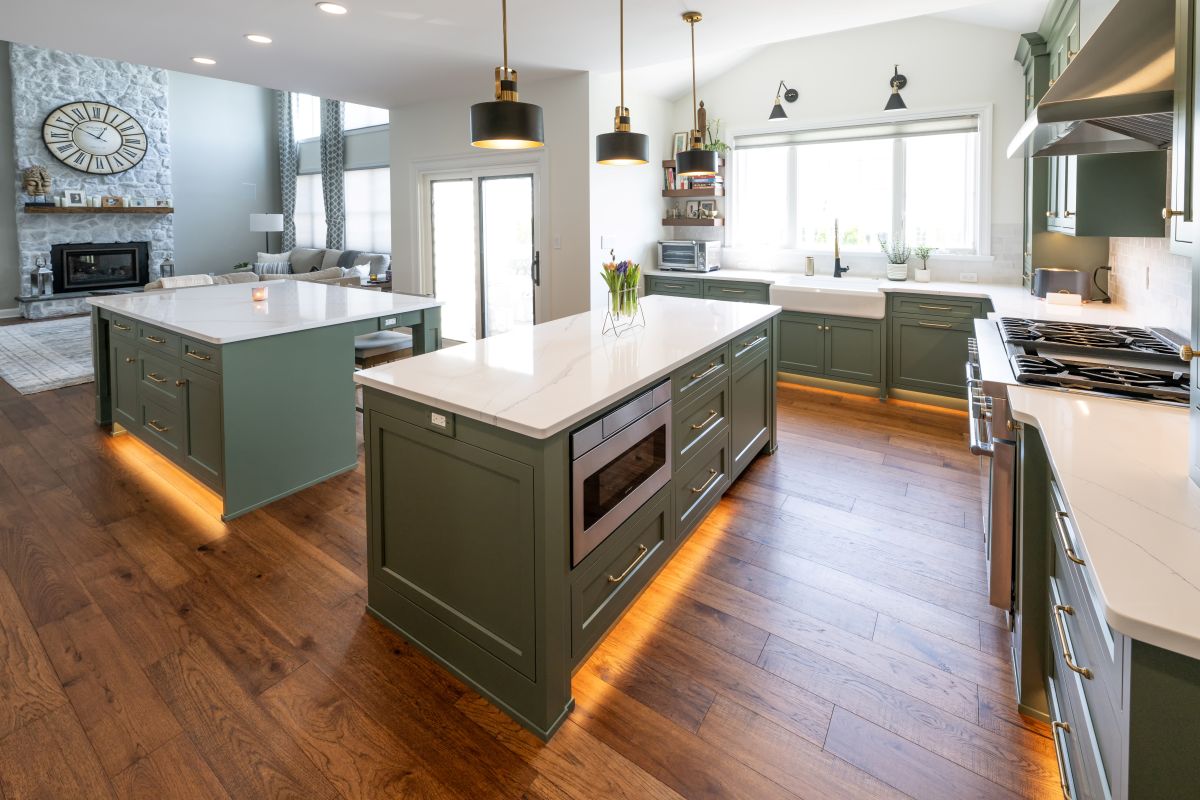
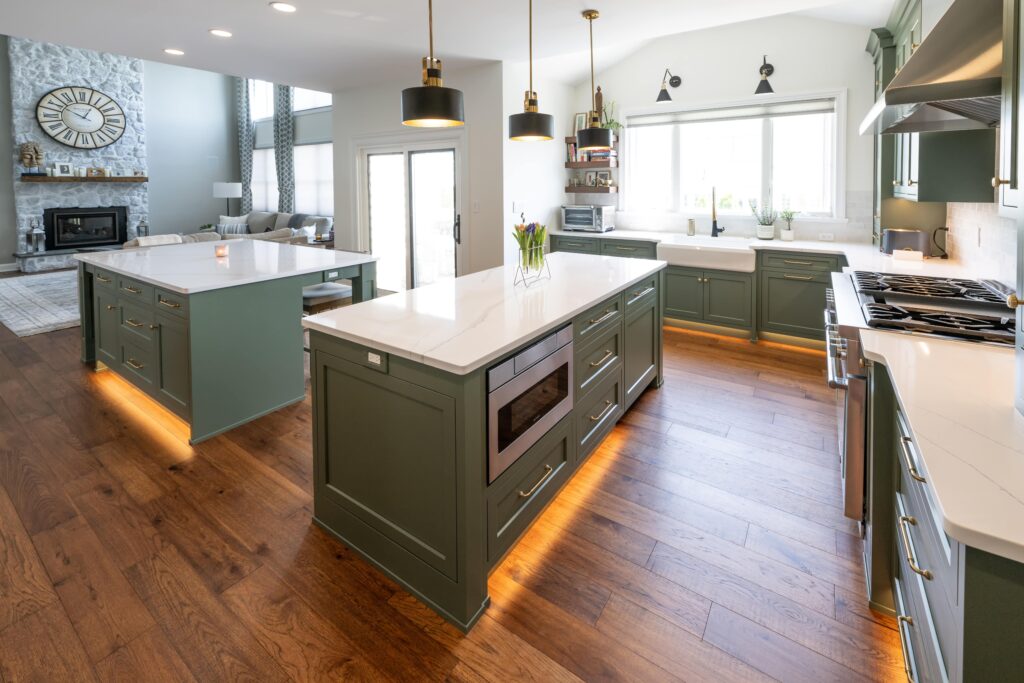
There are numerous ways to apply this concept: homeowners can opt for double kitchen islands (one dedicated to prep and one to dining), striking cascading waterfall edges in natural stone, deep drawer storage for oversized cookware, or built-in wine refrigeration.
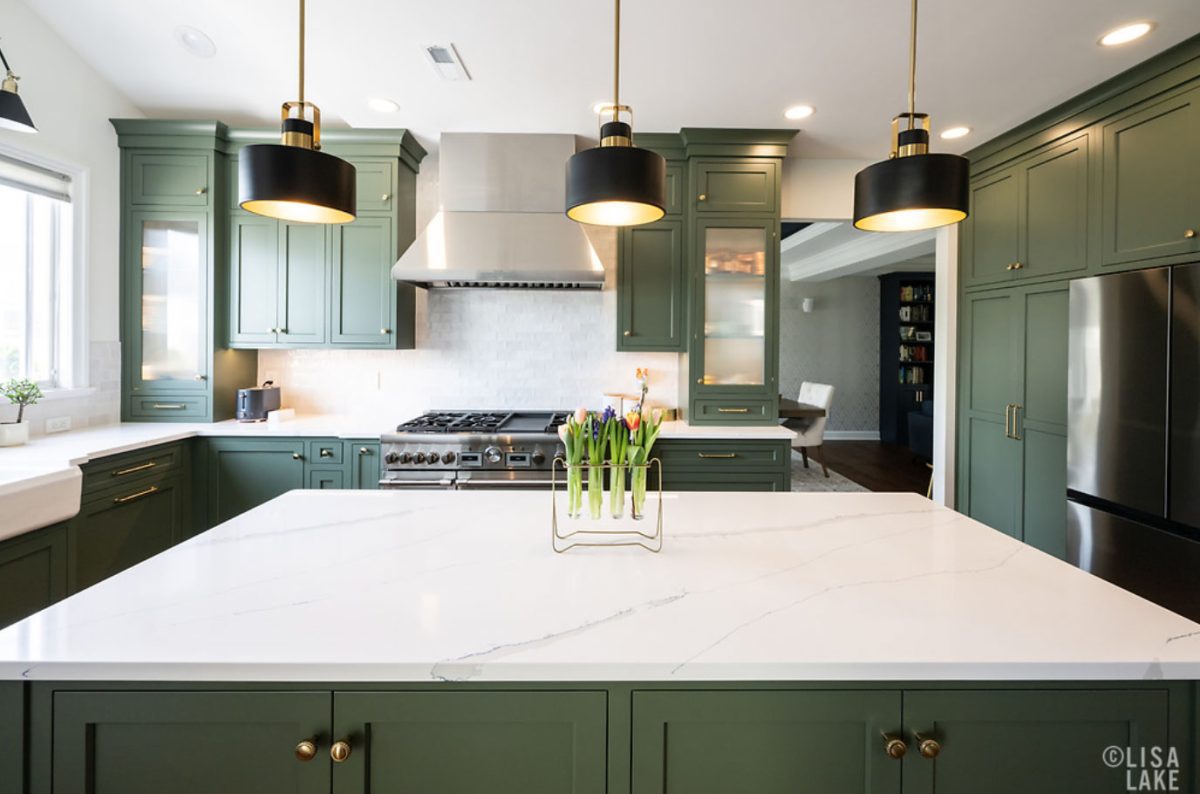
A high-end space requires layered luxury lighting to set the perfect mood and showcase fine millwork. Blending ambient overhead lights, under-cabinet task lighting, and striking pendant fixtures creates a warm, inviting atmosphere while properly illuminating your culinary workspaces.
Some popular options include in-cabinet LED strips to highlight glass-front displays of fine china, oversized statement pendants above the island to draw the eye, or subtle toe-kick lighting along the baseboards to give your lower cabinets an elegant, floating effect.
4. Highly Efficient Bespoke Sinks
Elevating the sink from a basic utility feature into a stunning, multi-functional focal point is a hallmark of high-end kitchen design. A bespoke sink transforms an otherwise ordinary wash area into an all-in-one culinary workstation, vastly improving your daily workflow while perfectly complementing your custom cabinetry and premium surfaces.
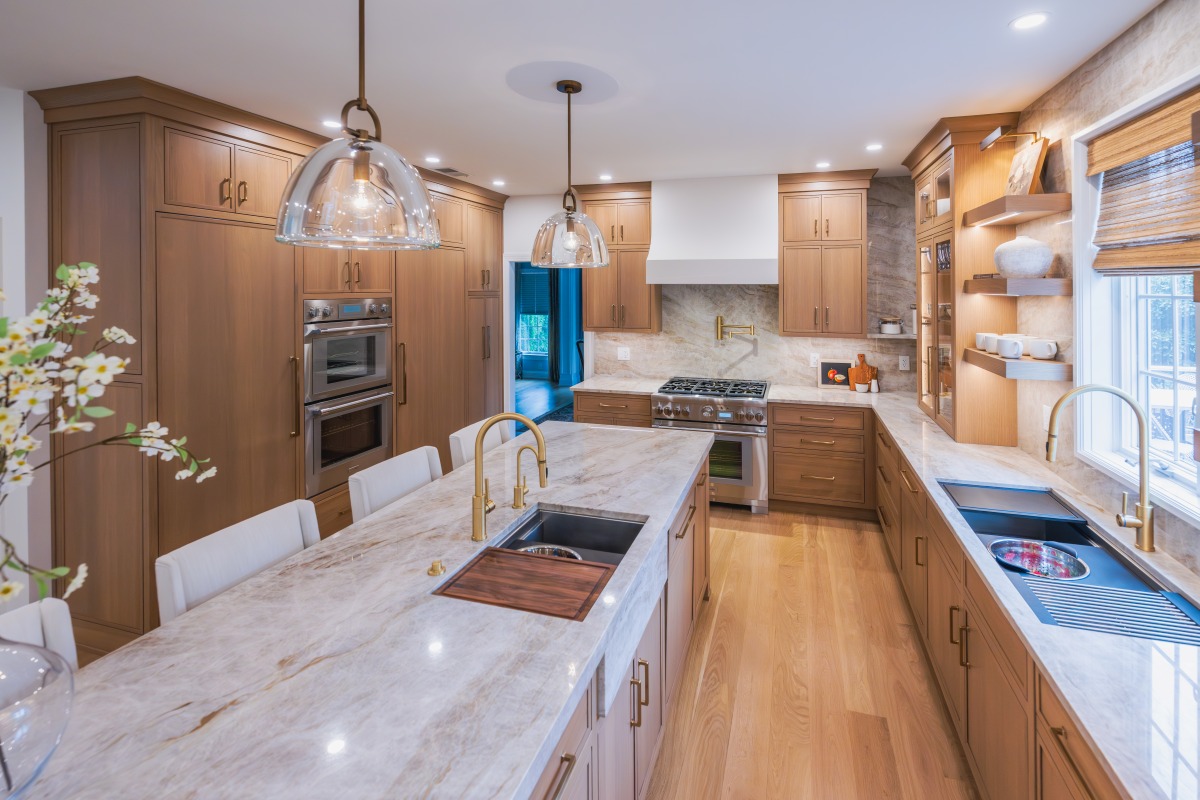
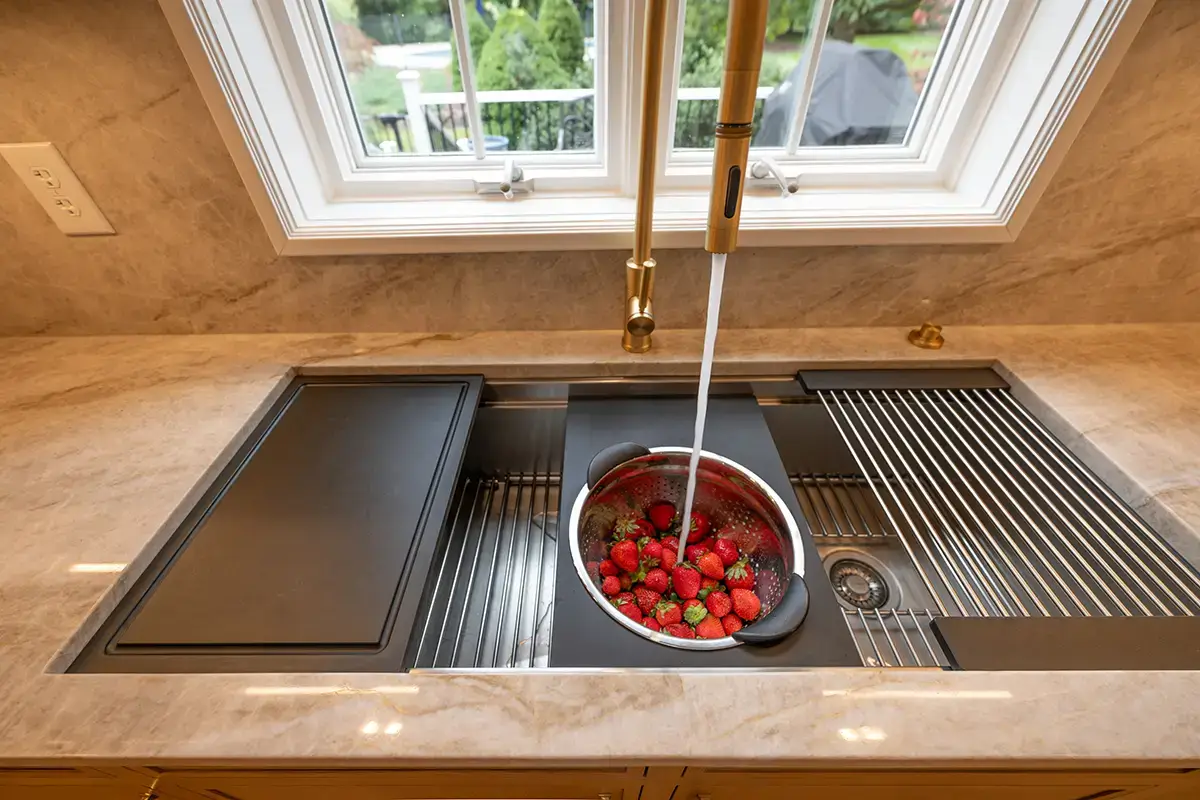
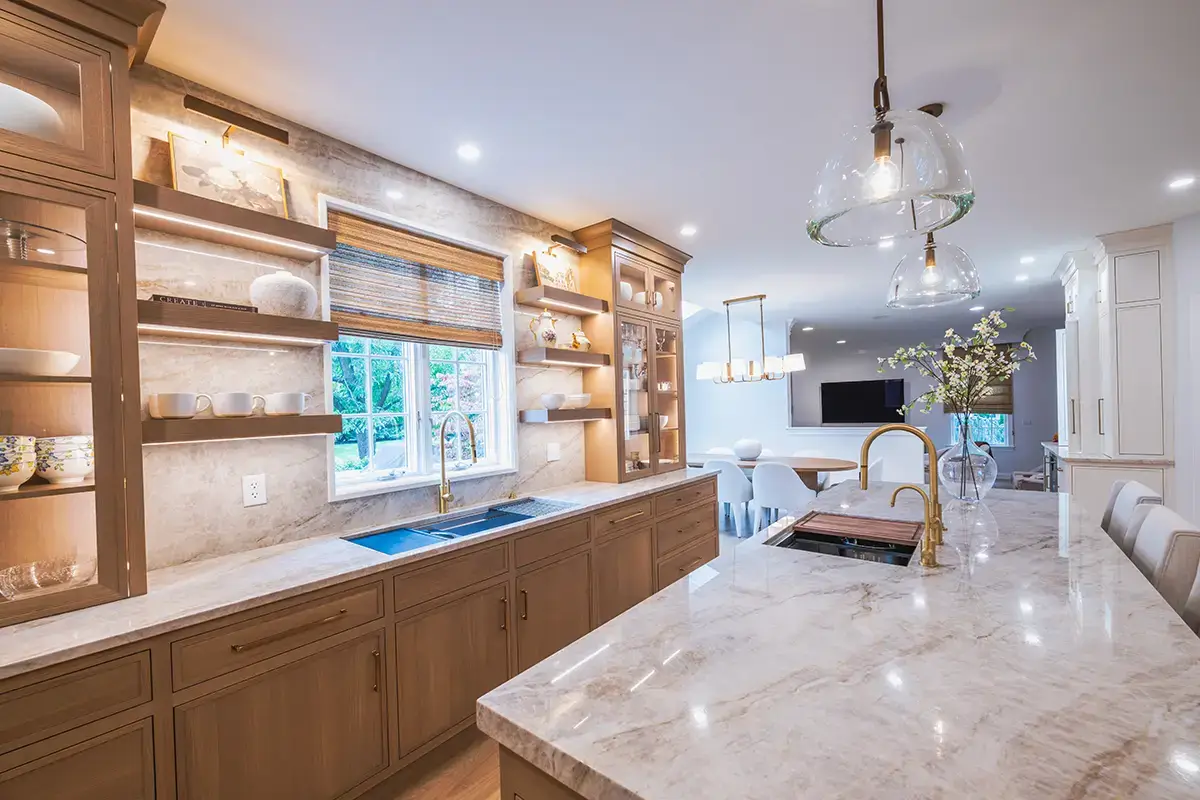
For unmatched efficiency, the innovative Galley Kitchen Sink revolutionizes the way you cook and entertain. Engineered as a complete, highly customizable workstation system, it utilizes integrated, sliding cutting boards, colanders, bowls, and drying racks. This allows you to prep ingredients, serve hors d’oeuvres, and clean up all in one centralized location, keeping your surrounding countertops completely clear and pristine for guests.
Beyond workstation functionality, bespoke sinks offer incredible design versatility tailored entirely to your home’s aesthetic. Design-wise, the possibilities are vast:
Seamless Stone Integration: For an ultra-minimalist, sleek look, consider a custom-integrated sink fabricated entirely from your exact countertop material (like quartz or marble), creating a flawless, continuous flow of stone with no visible edges.
Artisan Metals: Incorporating a custom-hammered copper, brass, or blackened steel apron-front sink serves as a striking, artisan centerpiece that adds immediate warmth, texture, and architectural character to a transitional or classic space.
Trough Sinks: Adding a long, slender custom trough sink to your kitchen island or wet bar creates a highly functional secondary prep zone that can be filled with ice to chill wine and beverages during large gatherings.
5. Professional Sub-Zero Wolf Appliances
Discerning homeowners expect elite performance and absolute reliability in the kitchen, which is why integrating professional Sub-Zero and Wolf appliances is a defining feature of a high-end remodel. These industry-leading appliances offer unmatched temperature control, longevity, and culinary excellence, ensuring your kitchen functions as flawlessly as it looks.
Beyond their superior cooking and cooling capabilities, Sub-Zero Wolf appliances offer incredible design versatility tailored entirely to your specific aesthetic. Depending on your style, you can seamlessly blend them into your cabinetry or highlight them as a striking focal point:
Flush-Inset Integration: For a minimalist, highly cohesive look, designers often utilize panel-ready, flush-inset refrigerators and dishwashers that completely disappear into your custom millwork, creating a continuous wall of cabinetry.
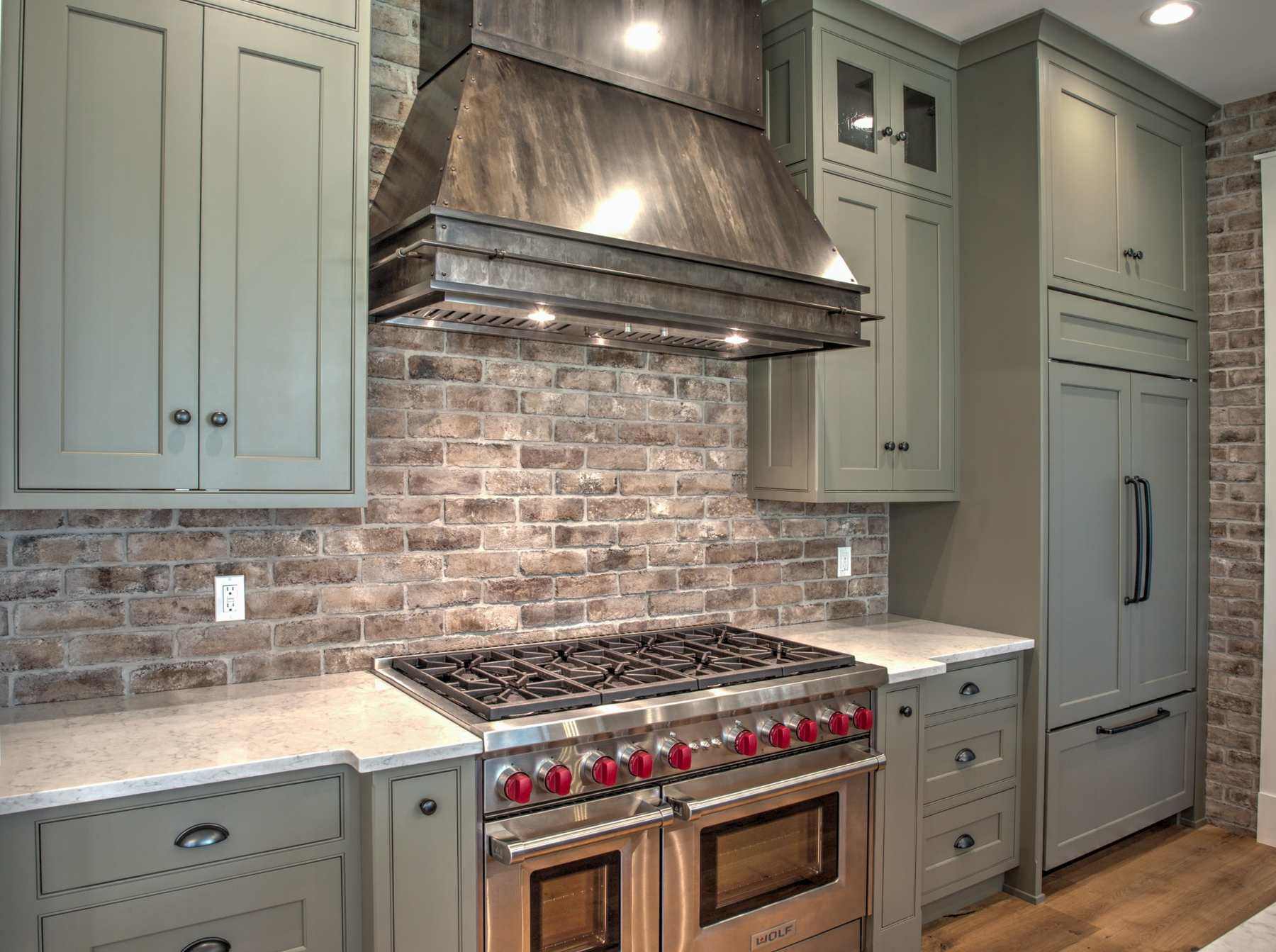
Statement Cooking Stations: A professional-grade Wolf gas range featuring their iconic artisan-crafted red knobs acts as a brilliant, heavy-duty centerpiece when framed by a custom-built range hood and a beautiful stone backsplash.
Discreet Zonal Refrigeration: To maximize efficiency without cluttering the main refrigerator, you can incorporate under-counter refrigerator and freezer drawers directly into prep zones, multi-function islands, or customized wet bars, keeping ingredients and drinks perfectly chilled exactly where you need them.
Advanced Features and Premium Materials
Executing an impeccable kitchen remodel requires sourcing the finest materials and implementing advanced, personalized design concepts.
6. Dedicated Beverage Centers and Wet Bars
Creating a customized zone for morning coffee or evening cocktails is a must-have for frequent hosts, adding a layer of tailored hospitality to the home. By integrating custom bar cabinetry, you create a dedicated entertaining area that elevates your daily routine and keeps guests out of the primary cooking zone.
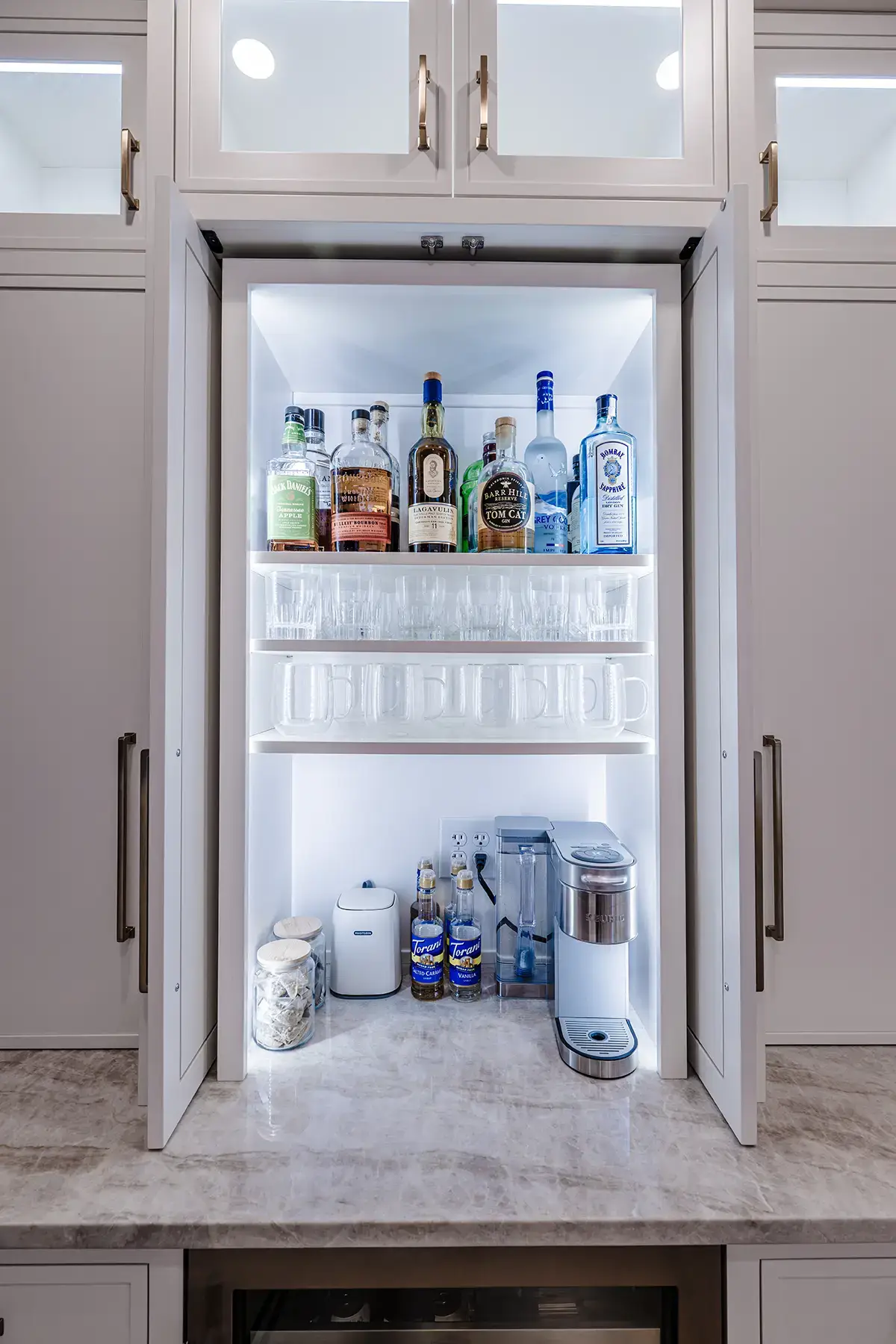
This concept can be incorporated through dedicated coffee stations concealed behind pocket doors, or sophisticated evening wet bars featuring mirrored backsplashes, built-in espresso machines, and glass-front cabinetry to display fine glassware.
A defining characteristic of a truly high-end kitchen is that it never feels isolated or disconnected from the rest of the house. Instead, it’s designed as a thoughtful, cohesive extension of the home’s existing architecture. When your kitchen perfectly reflects the surrounding aesthetic, it creates a seamless, natural flow that elevates the entire property rather than just a single room. This intentional approach ensures the new space feels both organic and timeless, rather than like a trendy afterthought.
Design-wise, there are several ways to achieve this level of architectural harmony across your home:
Continuous Millwork: Extend the custom crown molding, baseboards, and window casings from your living and dining areas directly into the kitchen cabinetry to visually unite the floorplan.
Complementary Materials: Echo elements of the home’s structure by matching the wood species or stain of your kitchen island to the exposed architectural beams, staircases, or hardwood flooring found in adjoining rooms.
Honoring the Home’s Era: Rather than forcing an ultra-contemporary aesthetic into a historic property, a high-end approach integrates state-of-the-art amenities and efficient layouts within a classic, architecturally appropriate shell.
To maintain a visually calm and pristine entertaining space, many modern layouts include a hidden butler’s pantry or scullery. These secondary rooms elevate the kitchen by hiding small appliances, prep messes, and extra refrigeration entirely out of sight.
Design-wise, you can access these spaces through a secret door that perfectly matches the main wall cabinetry. Inside, the pantry can be outfitted with durable prep countertops, open shelving for easy access to dry goods, and even a secondary dishwasher for seamless cleanup after dinner parties.
9. Statement Range Hoods
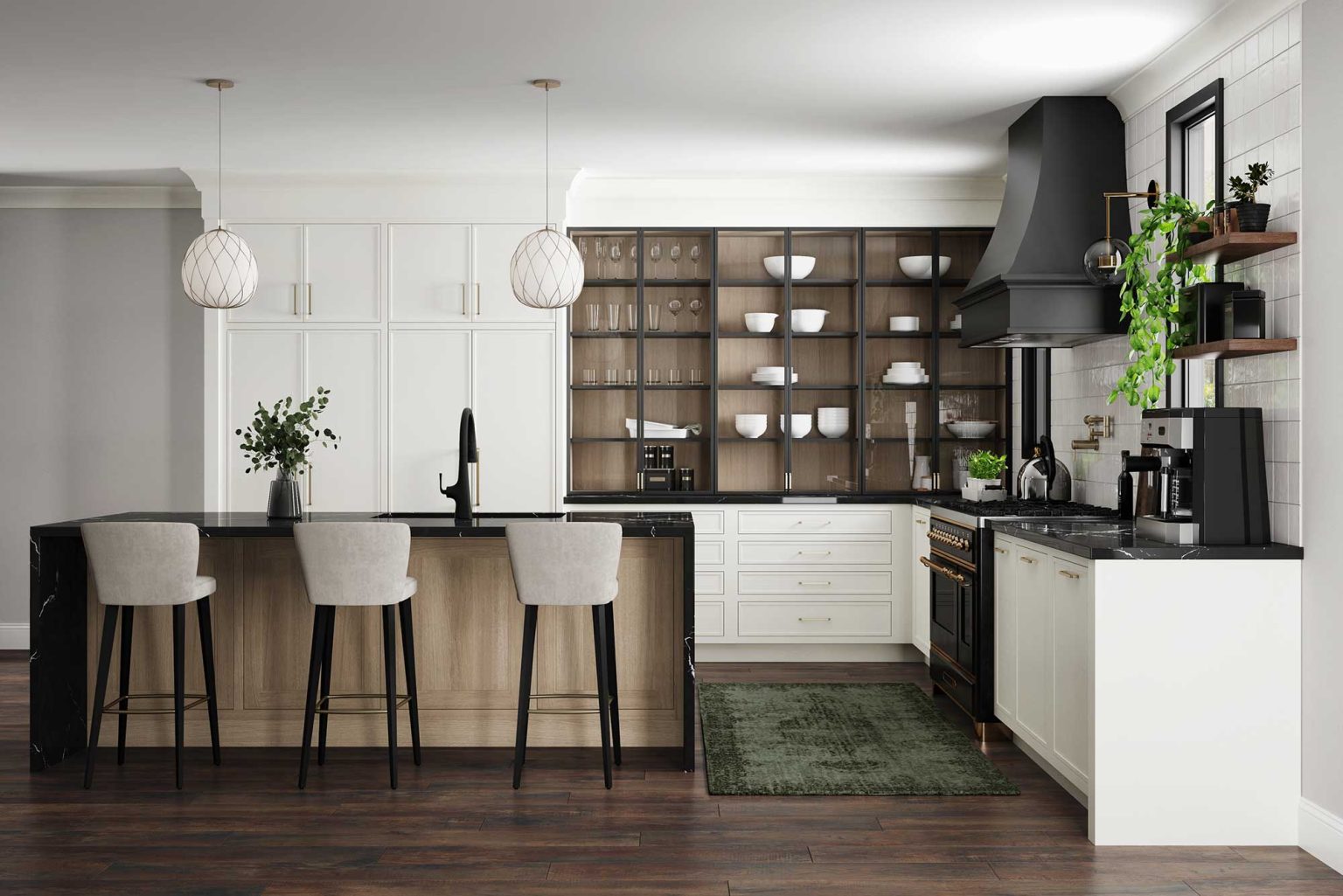
Rather than hiding the ventilation, treating the range hood as a structural piece acts as a striking focal point that anchors the cooking station and adds immediate grandeur. A custom hood draws the eye upward and emphasizes the room’s height.
Statement range hoods can be applied in several ways depending on your style: you might choose an artisan-crafted plaster hood for a smooth, Mediterranean feel, a custom wood-paneled hood that seamlessly matches your surrounding cabinetry, or a mixed-metal brass and stainless steel design for a sophisticated, soft industrial aesthetic.
10. Integrating Premium Materials & Features
Ensuring durability is just as important as aesthetics. Utilizing top-tier materials and superior structural features is essential for a space that seamlessly handles everyday living.
To guarantee an incredible finish that lasts a lifetime, the best high-end kitchen remodels integrate the following premium materials and features:
Dovetail Drawer Boxes: For unmatched structural integrity and longevity.
Soft-Close Hardware: Premium hinges and glides that provide a silent, seamless feel.
Natural Stone and Quartz Surfaces: Designed to withstand heavy daily use, these highly durable surfaces offer a low-maintenance, easy-to-clean solution that prevents lingering messes without sacrificing high-end style.
Furniture-Grade Finishes: Multi-step paints and stains that protect the wood while delivering a flawless, luxurious touch.
Frequently Asked Questions (FAQ)
What are the most popular kitchen design ideas right now?
The most popular kitchen design ideas focus on seamlessly blending form and function. Top trends include integrating multi-function kitchen islands, concealed walk-in pantries, layered luxury lighting, and highly efficient bespoke sinks.
How do I choose the right custom cabinetry for my home?
Selecting the right custom cabinetry involves matching the wood species, door style, and finish to your home’s existing architecture. Partnering with an experienced design-build team ensures a perfect, filler-free fit tailored entirely to your exact space.
Are luxury materials worth the investment during a remodel?
Yes. Integrating professional Sub-Zero Wolf appliances and premium structural features like craftsman custom cabinetry provides exceptional durability, preventing wear and tear from daily use while drastically elevating the overall long-term value of your home.
Lehigh Valley’s Trusted Partner for High-End Kitchen Design
Ready to bring these exceptional kitchen design ideas to life? At Laslo Custom Kitchens, our experienced design and install team creates breathtaking spaces tailored exactly to how you live. Schedule a consultation, visit our Lehigh Valley showroom, or call 610-600-9528 to speak with our experts today.
When it comes to kitchen and bathroom remodeling, today’s homeowners are making decisions that go far beyond surface updates. They’re investing in spaces that feel tailored, functional, and designed for how they actually live. The latest kitchen and bath remodel trends reflect a shift toward warmth, thoughtful storage, and elevated details that hold long-term value.
Rather than chasing fleeting styles, homeowners are focusing on materials, layouts, and features that improve daily routines while creating a sense of comfort. From custom cabinetry trends to spa-inspired layouts, homeowners are seeking kitchen and bath renovation ideas that feel personal, practical, and built to last.
Top 5 Kitchen Remodeling Trends
The most notable kitchen remodeling trends center around creating spaces that feel inviting while working harder behind the scenes. Kitchens are no longer just places to cook; they’re gathering spaces, workspaces, and design statements all in one.
Here are the top 5 kitchen remodeling trends shaping current design choices:
1. Warm Wood Tones and Mixed Materials
One of the most noticeable shifts in modern kitchens is the move away from stark, all-white designs toward warmer, more natural palettes. Wood kitchen cabinets, especially in white oak and walnut tones, are being paired with painted finishes to create contrast and depth.
These custom cabinetry trends reflect a desire for kitchens that feel grounded and timeless. A common approach includes perimeter cabinetry in a soft neutral tone with a wood island that anchors the space. This combination adds visual interest without overwhelming the design.
Homeowners are also embracing texture through natural finishes and subtle grain patterns, creating kitchens that feel lived-in rather than overly polished.
2. Statement Range Hoods
Range hoods have evolved into one of the most important visual elements in a kitchen. Instead of blending into the cabinetry, they’re now designed to stand out.
Custom range hood design often incorporates plaster, wood, or metal, shaped into architectural forms that draw the eye. Whether curved, tapered, or framed with trim details, the hood becomes a focal point that defines the entire cooking area.
This trend reflects a broader shift toward intentional design choices where each element contributes to the overall composition of the space.
3. Larger, Multi-Functional Islands
Among the most searched 2026 kitchen island design trends, larger islands continue to dominate. Today’s islands are designed to do more than provide prep space. They serve as the center of the home.
A large kitchen island with seating allows for casual dining, entertaining, and everyday gathering. Storage is often integrated below, along with appliances such as microwave drawers or beverage refrigerators.
In higher-end designs with ample square footage, double islands are becoming more common, offering dedicated zones for preparation and social interaction. This layout supports both functionality and flow, making the kitchen more versatile.
4. Hidden Storage and Seamless Appliance Integration
Clean lines and uncluttered surfaces are driving demand for hidden kitchen storage solutions. Appliance garages, concealed pantries, and panel ready appliances allow kitchens to maintain a streamlined appearance without sacrificing usability.
Appliance garage ideas are especially popular for housing coffee stations, small appliances, and charging areas. In custom kitchens, floor to ceiling kitchen cabinets are also being used to maximize storage while maintaining a clean, tailored look. These features keep countertops clear while ensuring everything remains easily accessible.
This approach aligns with the growing preference for kitchens that feel calm and organized, even when used heavily throughout the day.
5. Layered Lighting
Lighting has become one of the most important elements in modern kitchen design. Current kitchen lighting trends emphasize layering different types of light to support both function and atmosphere.
Under cabinet lighting provides essential task illumination, while pendant lighting over the island adds a decorative element. Accent lighting, including toe kick or interior cabinet lighting, introduces warmth and depth.
This layered approach ensures that the kitchen feels inviting at all times of day, while also improving visibility for cooking and preparation.
Top 5 Bathroom Remodeling Trends
While kitchens are becoming more social and dynamic, bathroom remodeling trends are moving in a different direction. Bathrooms are being designed as places to unwind, with a focus on simplicity, comfort, and a spa-like experience.
Here are the top 5 bathroom remodeling trends currently driving design philosophy:
1. Spa-Like Layouts and Wet Room Concepts
The concept of a spa-inspired bathroom remodel continues to gain traction. Homeowners are prioritizing layouts that feel open and relaxing, often incorporating wet room bathroom design principles.
Wet rooms combine a walk-in shower and freestanding tub within a single, open space. These bathroom shower design trends reflect a growing preference for open layouts that feel calm, spacious, and easy to maintain. By reducing visual barriers, these designs create a sense of calm and continuity.
Luxury bathroom remodel projects often include features such as rainfall showerheads, built-in niches, and minimal glass enclosures, all contributing to a clean and uncluttered look.
2. Natural Stone and Textured Surfaces
Material selection plays a significant role in shaping 2026 modern bathrooms. Stone bathroom design elements—including marble, travertine, and large format tile—are being used to create a cohesive and elevated environment.
Large format tile shower installations reduce grout lines, resulting in a more seamless appearance. Textured tile bathroom features, such as fluted or dimensional surfaces, add subtle interest without overwhelming the space.
These materials not only enhance the visual appeal but also contribute to a sense of durability and permanence.
3. Floating Vanities and Streamlined Storage
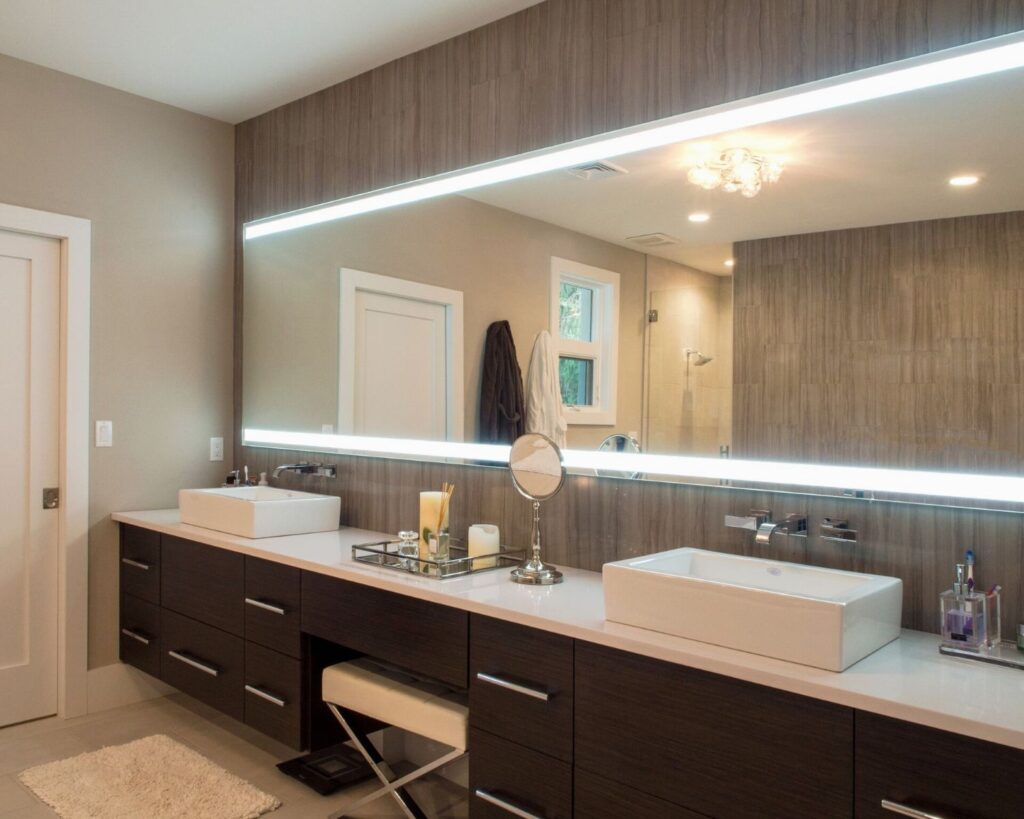
Floating vanities are a defining feature of contemporary bathrooms. By mounting the vanity to the wall, the space feels more open and visually lighter.
These designs often incorporate smart bathroom vanity storage ideas, including integrated drawers, hidden compartments, and built-in organizers. The goal is to maintain a clean aesthetic while ensuring that everything has a place.
Modern bathroom storage solutions are designed to support daily routines without adding clutter, reinforcing the overall sense of calm and serenity.
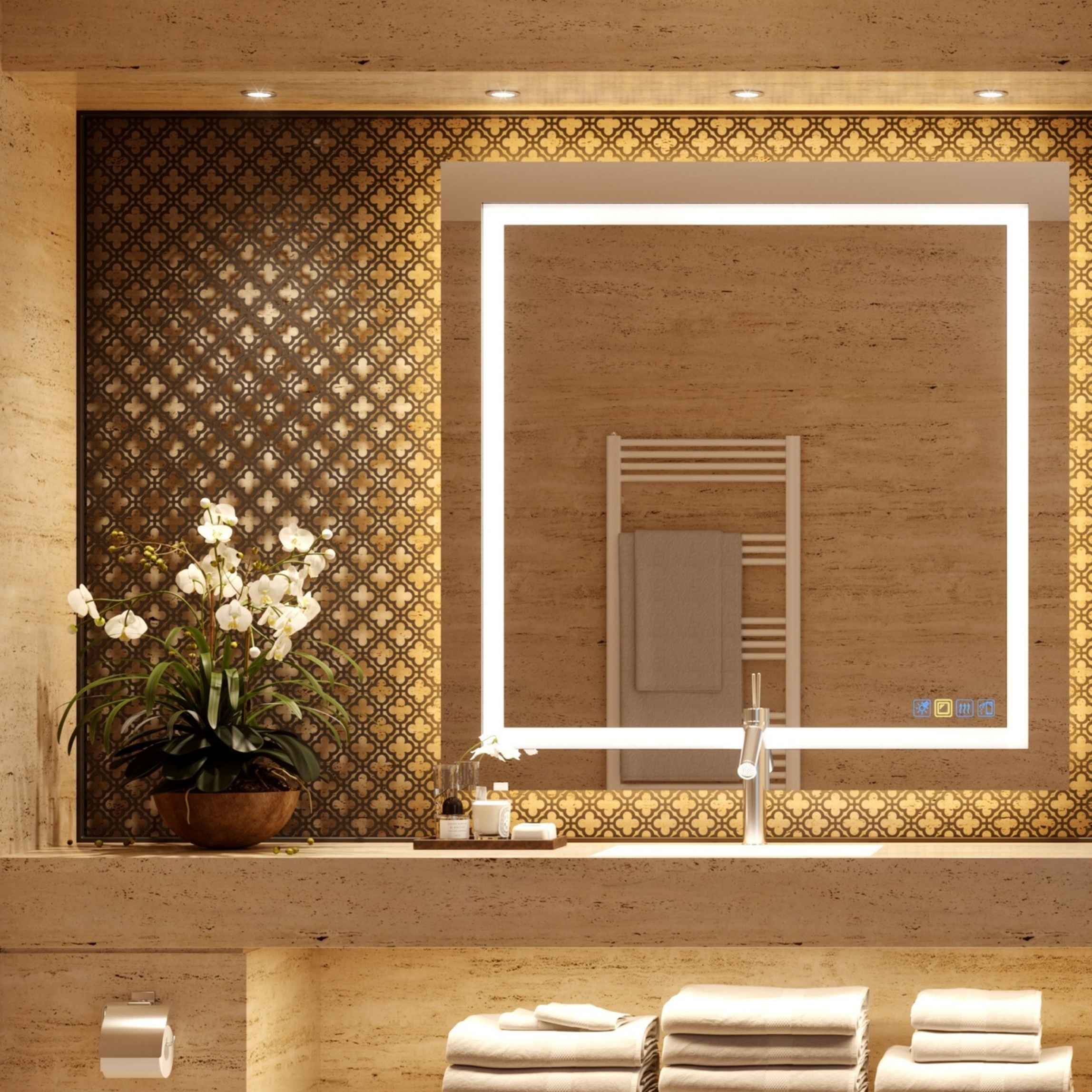
4. Statement Lighting and Backlit Mirrors
Lighting in the bathroom has evolved beyond basic overhead fixtures. Today’s designs incorporate a combination of decorative and functional elements.
LED bathroom mirrors with backlighting provide even illumination for daily tasks while adding a modern touch. Wall sconces placed on either side of the mirror introduce a layer of warmth and balance.
These bathroom lighting ideas enhance both usability and ambiance, making the space feel more refined.
5. Warm Metals and Mixed Finishes
The shift toward warmer finishes is evident in both kitchen and bathroom remodeling trends. Brass bathroom fixtures and other warm metal tones are replacing cooler chrome finishes.
Mixed metal bathroom design allows for a more curated look, combining finishes such as brushed brass, matte black, and polished nickel. This approach adds depth without feeling overly coordinated.
The result is a bathroom that feels timeless, with subtle variations that keep the design interesting.
How These Trends Come Together in Real Homes
Seeing these trends in real projects makes it easier to understand how they function beyond inspiration photos and showroom ideas. When applied thoughtfully, these design choices shape how a room feels, how it flows, and how well it supports everyday life. The following projects show how current kitchen and bathroom remodeling trends can be interpreted in distinct ways while still creating spaces that feel timeless and personal.
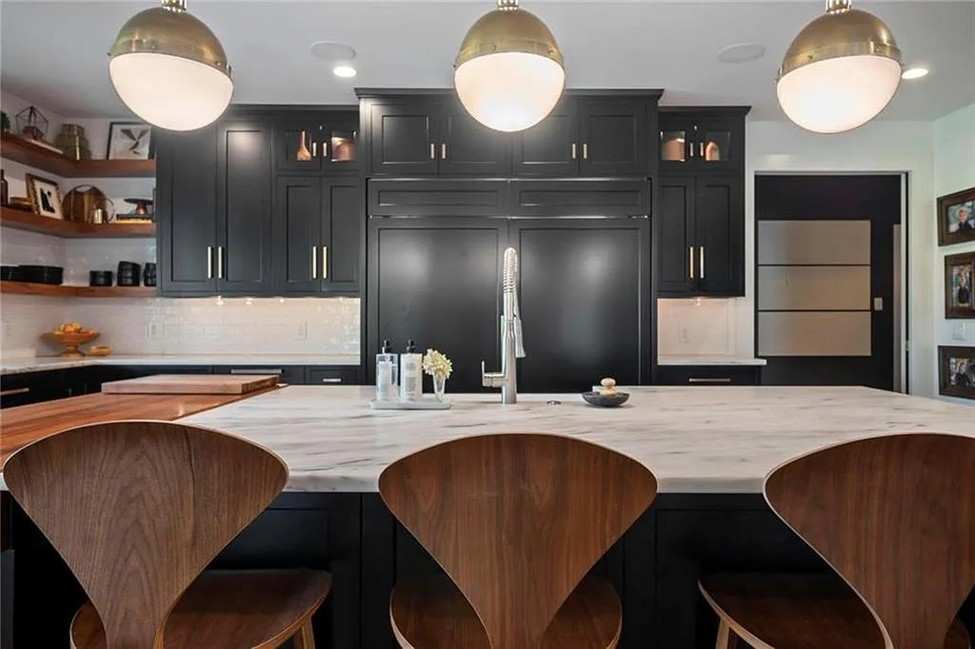
Black Cabinet Kitchen with Walnut Accents
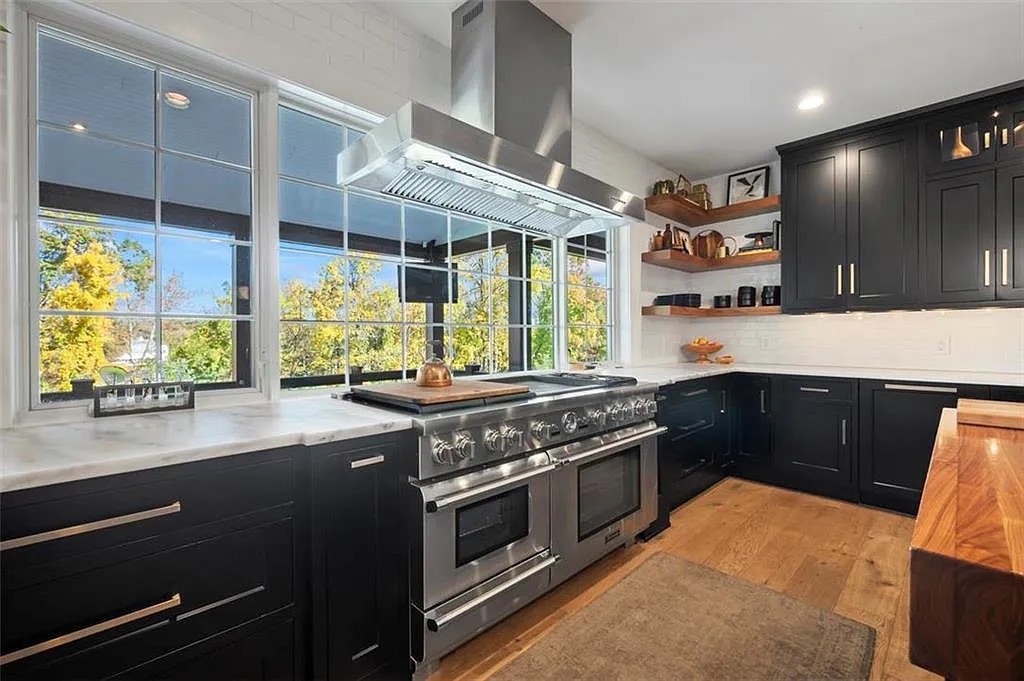
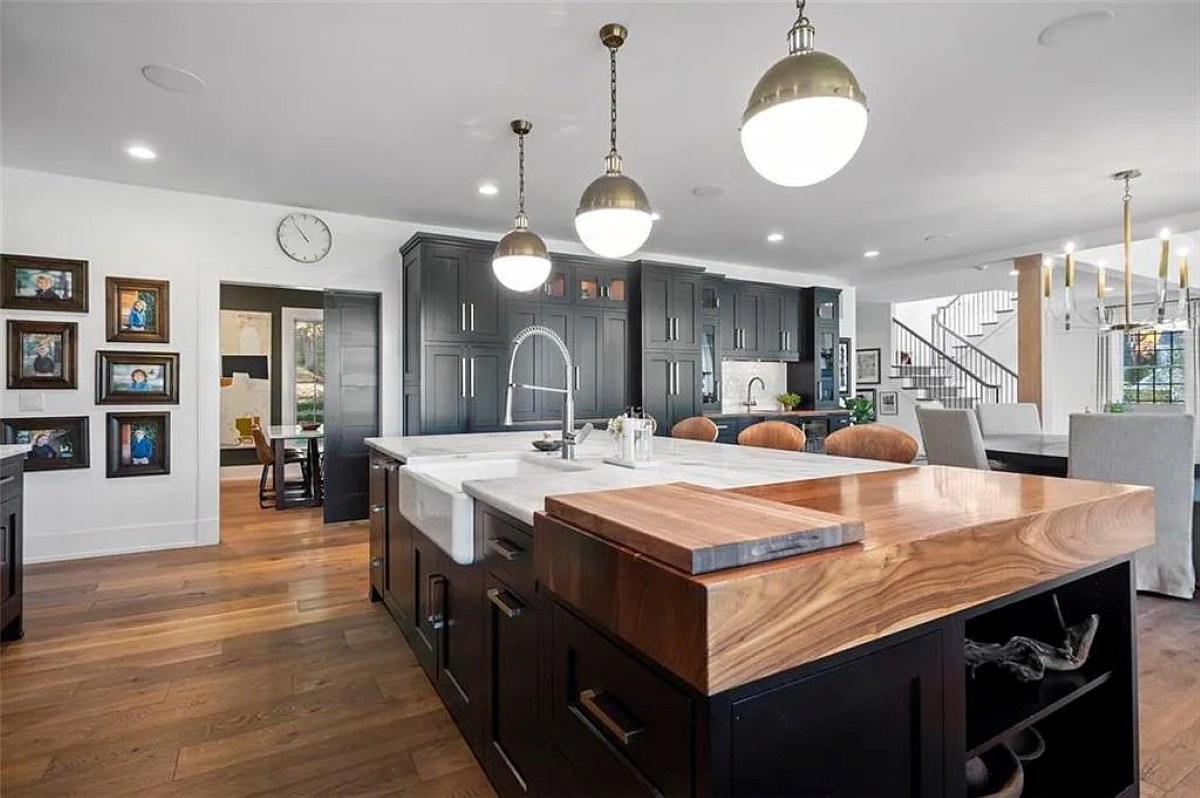
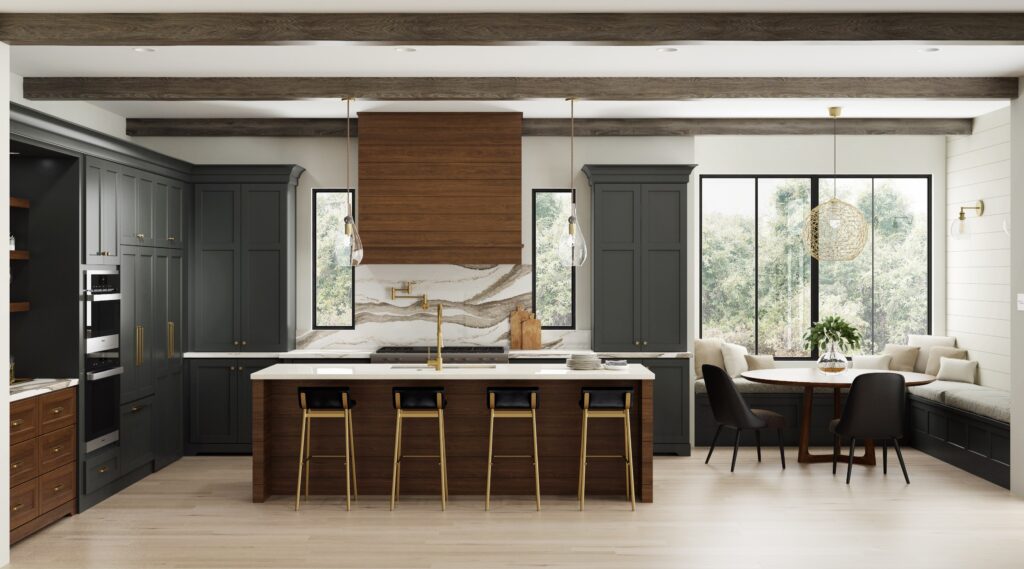
This Upper Saucon kitchen brings contrast and warmth together in a way that feels both grounded and modern. The black cabinetry creates a strong architectural backdrop, allowing the walnut shelving and partial island countertop to introduce warmth in a controlled, intentional way. The stainless steel range hood becomes a true focal point, reinforcing the trend toward statement features that anchor the space. A large island with an integrated sink supports everyday use and gathering, while layered lighting—from pendants to recessed and under-cabinet—ensures the kitchen functions as well as it looks.
Modern Colonial Kitchen with Integrated Design
In this Allentown kitchen, traditional influence is refined through modern execution. The custom range hood, built to match the cabinetry and conceal a television, reflects the growing preference for integrated, multi-functional design. Appliance integration continues with the Wolf microwave drawer, keeping surfaces clean while maintaining accessibility. The overall space feels composed and intentional, with layered lighting enhancing both task areas and ambiance, allowing the kitchen to transition easily from daily use to entertaining.
Coastal Kitchen with Light Finishes and Wood Accents
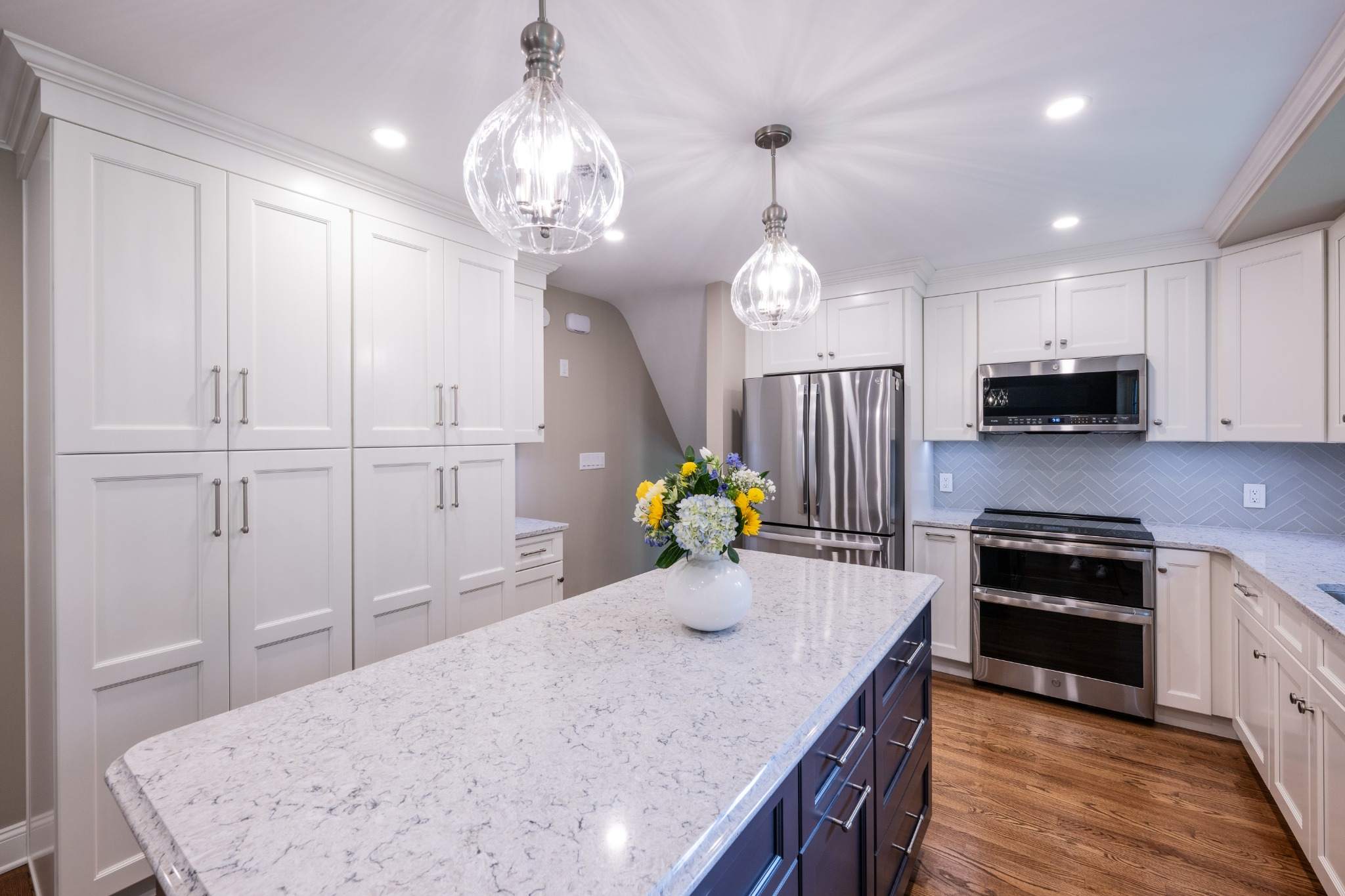
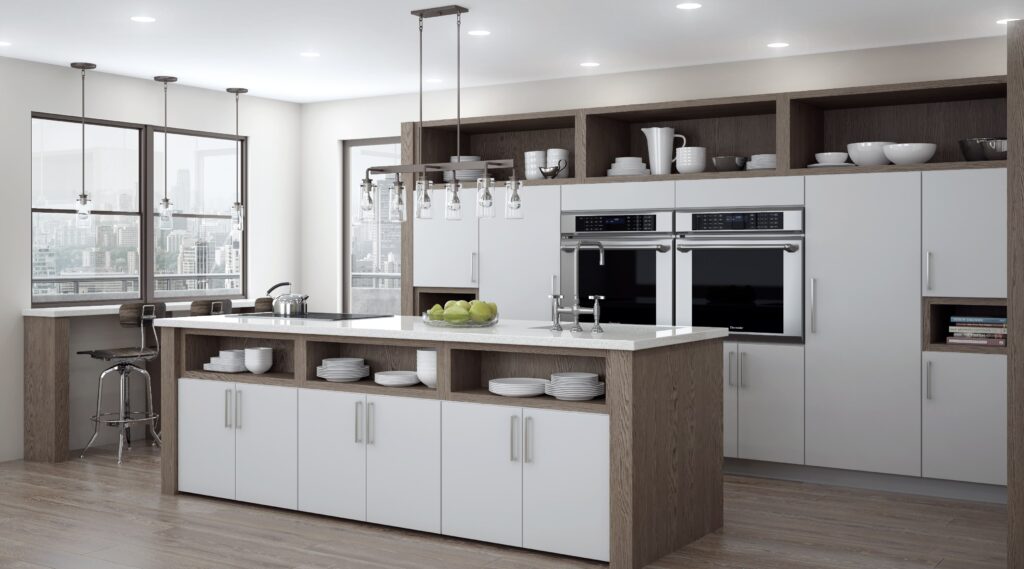
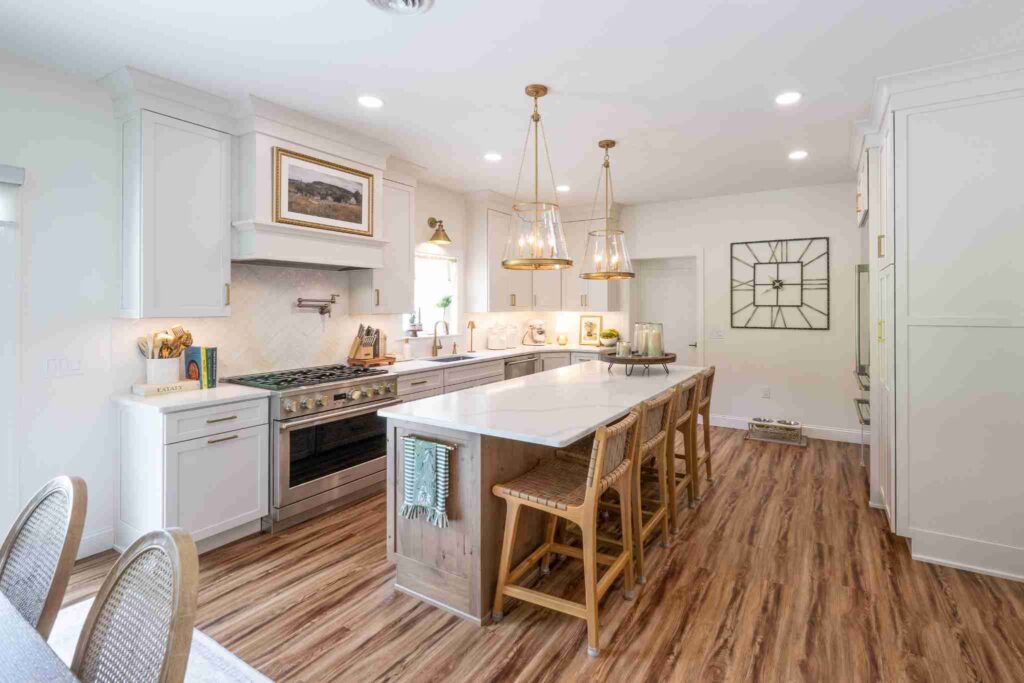
This coastal kitchen balances lightness and warmth through thoughtful material contrast. White upper cabinetry keeps the space bright and open, while the wood island and base cabinetry ground the design and add visual depth. The island serves as a central prep and gathering space, reinforcing the shift toward kitchens that support multiple functions. Layered lighting, including statement pendants and recessed fixtures, adds dimension without disrupting the relaxed, cohesive feel that defines the space.
Spa-Inspired Bathroom with Classic Marble Details
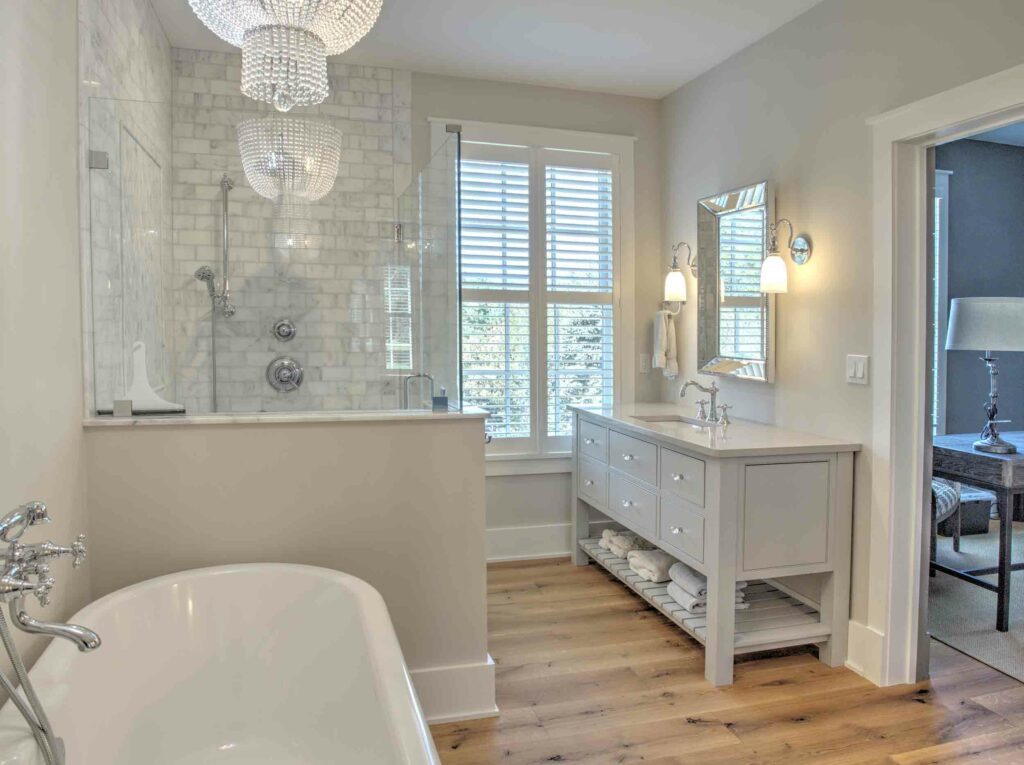
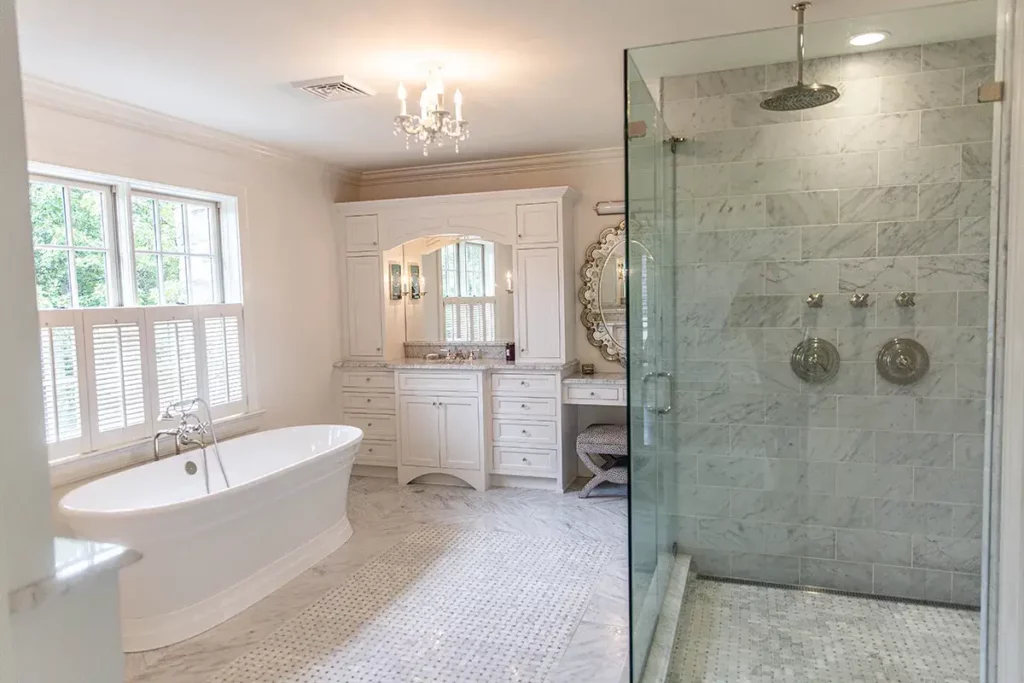
This Easton bathroom remodel brings together comfort and timeless material selection to create a space that feels both refined and approachable. The freestanding tub and frameless glass shower curate a spa-like environment, emphasizing openness and ease of use. Marble tile introduces natural variation and texture, reinforcing the continued preference for stone in bathroom design. Together, these elements create a balance between classic detail and modern simplicity.
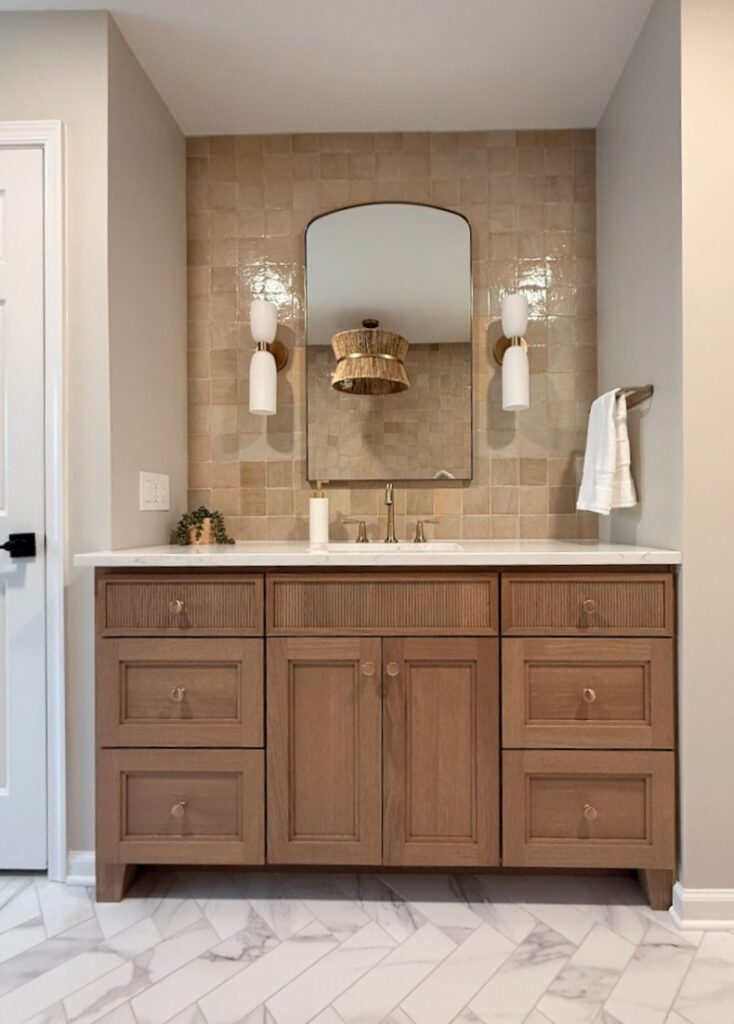
Modern Bathroom with Floating Walnut Vanity
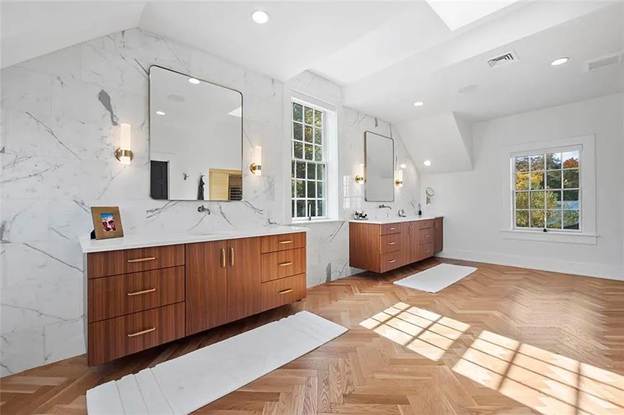
In this Upper Saucon bathroom, floating vanities define the overall structure of the space, creating openness while highlighting the craftsmanship of the cabinetry. The combination of warm wood tones and brass accents introduces a layered material palette that feels inviting without being overly detailed. Natural light, clean lines, and minimal visual interruption allow these elements to stand out, resulting in a bathroom that feels calm, modern, and thoughtfully composed.
What to Consider Before Starting a Remodel
Understanding current kitchen and bath remodel trends is a helpful starting point, but a successful project requires more than inspiration. Careful planning ensures that the final result aligns with both aesthetic goals and practical needs.
Homeowners should begin by identifying how they want the space to function. In the kitchen, this may include improving workflow, increasing storage, or creating better areas for entertaining. In the bathroom, it often involves enhancing comfort and simplifying daily routines.
Working with experienced professionals helps bring these ideas into focus. A well-structured process ensures that design intent, material selections, and construction details remain aligned from start to finish.
It is also important to consider long-term value. Choosing quality materials and thoughtful layouts will always outperform short-term trends.
Laslo Custom Kitchens—Your Trusted Partner for Kitchen and Bathroom Remodeling
Choosing the right partner for kitchen and bathroom remodeling is just as important as the design itself. In the Lehigh Valley and surrounding areas, Laslo Custom Kitchens has built a reputation for delivering spaces that are not only beautifully crafted, but thoughtfully executed from start to finish.
Laslo approaches each project with a clear understanding that no two homes or homeowners are alike. Every design begins with how you move throughout your space, followed by careful planning that aligns layout, materials, functionality, and budget. Whether you’re updating a kitchen, reimagining a bathroom, or transforming multiple rooms, the process is structured so that each decision feels informed and intentional.
What sets Laslo apart is the level of detail carried through every phase of the project. From custom cabinetry and storage solutions to lighting, finishes, and installation, each element is considered as part of a cohesive design. The result is a space that feels complete, balanced, and built to last.
If you’re considering a kitchen or bathroom remodel, it all starts with a simple conversation. Schedule a consultation with Laslo Custom Kitchens today and take the first step toward a space designed around you.
Conclusion
The most impactful kitchen and bathroom remodeling projects are those that balance current trends with timeless design principles. While styles may evolve, the underlying goal remains the same: creating spaces that feel comfortable, functional, and uniquely suited to the homeowner.
FAQ: Kitchen and Bathroom Remodeling
1. How much does kitchen and bathroom remodeling cost?
Kitchen and bathroom remodeling costs vary widely, but most projects fall within a range based on size, materials, and level of customization.
A kitchen remodel often represents a larger investment due to cabinetry, appliances, and layout considerations, while bathroom remodels can vary depending on tile, fixtures, and plumbing changes. Projects that include custom cabinetry, structural updates, or premium finishes will naturally fall on the higher end. The most accurate way to understand cost is to define your goals and receive estimates from reputable contractors.
2. How long does kitchen and bathroom remodeling take?
Most kitchen and bathroom remodeling projects take between 6 and 12 weeks once construction begins.
The timeline depends on the complexity of the design, material availability, and whether layout changes are involved. Kitchens typically require more coordination due to cabinetry and appliances, while bathrooms can vary based on tile work and plumbing updates. A well-organized process with clear communication helps keep the project moving efficiently from start to finish.
3. Is kitchen and bathroom remodeling worth the investment?
Kitchen and bathroom remodeling is widely considered one of the most valuable investments you can make in your home.
These spaces are used daily, which means improvements have an immediate impact on how the home feels and functions. In addition to enhancing your experience, well-executed updates can improve resale appeal and marketability. The greatest return comes from thoughtful design decisions that balance aesthetics, functionality, and long-term durability.
4. What adds the most value in a kitchen remodel?
The features that add the most value in a kitchen remodel are layout improvements, quality cabinetry, and well-planned storage.
Custom cabinetry and efficient organization make a significant difference in how the space functions over time. Upgrades like a larger island, integrated appliances, and layered lighting also contribute to both usability and visual appeal. When these elements work together, the kitchen becomes more than a cooking space—it becomes the center of the home.
5. What adds the most value in a bathroom remodel?
In a bathroom remodel, value comes from a combination of layout, material quality, and comfort-focused features.
Walk-in showers, well-designed vanities with storage, and durable surfaces tend to have the greatest impact. Thoughtful lighting and clean, cohesive finishes also elevate the space. A bathroom that feels simple, functional, and comfortable will always hold more long-term value than one focused only on trend-driven details.
6. Do I need permits for kitchen and bathroom remodeling?
Permits are often required for kitchen and bathroom remodeling, especially when plumbing, electrical, or structural changes are involved.
Even if the updates seem straightforward, local regulations may still apply depending on the scope of the work. Working with an experienced remodeling team ensures that all necessary permits and inspections are handled properly. This protects both the integrity of the project and the long-term value of your home.
7. Can I live in my home during a kitchen or bathroom remodel?
In many cases, you can live in your home during a remodel, but it depends on the scope of the project and your comfort level.
Kitchen remodels can be more disruptive since they affect daily routines like cooking and gathering. Bathroom remodels may require temporary adjustments if the space is out of use. Planning ahead and setting expectations for each phase of the project can make the experience much more manageable.
8. How do I choose the right kitchen and bathroom remodeling contractor?
Choosing the right remodeling contractor starts with experience, communication, and a clear, organized process.
Look for a team that can guide you through design, material selection, and construction while maintaining consistent communication. Reviewing past projects and understanding how the company manages timelines and details can also provide insight. The right partner will make the process feel structured and collaborative from the beginning.
9. What should I prioritize first in a kitchen or bathroom remodel?
The first priority in any remodel should be how the space functions before focusing on finishes.
Layout, storage, and workflow should be addressed early to ensure the design supports your daily routines. Once those elements are in place, material selections and visual details can be layered in with confidence. Starting with function leads to a more cohesive and successful final result.
10. How do I start planning a kitchen and bathroom remodeling project?
The best way to start planning is by identifying your goals, gathering inspiration, and speaking with a professional early in the process.
Understanding how you want the space to function will help guide decisions around layout and materials. A consultation allows you to refine ideas, set expectations, and develop a clear path forward. With the right planning in place, the entire remodeling process becomes more efficient and enjoyable.
When planning a kitchen remodel, homeowners often focus first on aesthetic decisions such as color palettes, cabinetry finishes, and material selections. Just as important, however, is how the kitchen will stay organized once the project is complete. Smart storage planning can make cooking easier, cleanup faster, and the entire room more functional.
This Allentown kitchen remodel is a perfect example of how thoughtful design can support intuitive movement and organization that’s easy to maintain. Below, we’re taking a closer look at several smart organization ideas you can borrow for your own kitchen remodel.
Organization Ideas for Your Next Kitchen Remodel
The best kitchen organization ideas are the ones that make daily routines feel easier without drawing attention to themselves. In this Allentown kitchen remodel, each storage solution was designed to improve accessibility, reduce clutter, and support a more natural workflow. Here are 12 smart features you can borrow for your next kitchen remodel.
1. Kitchen Spice Drawers Located Beside the Range
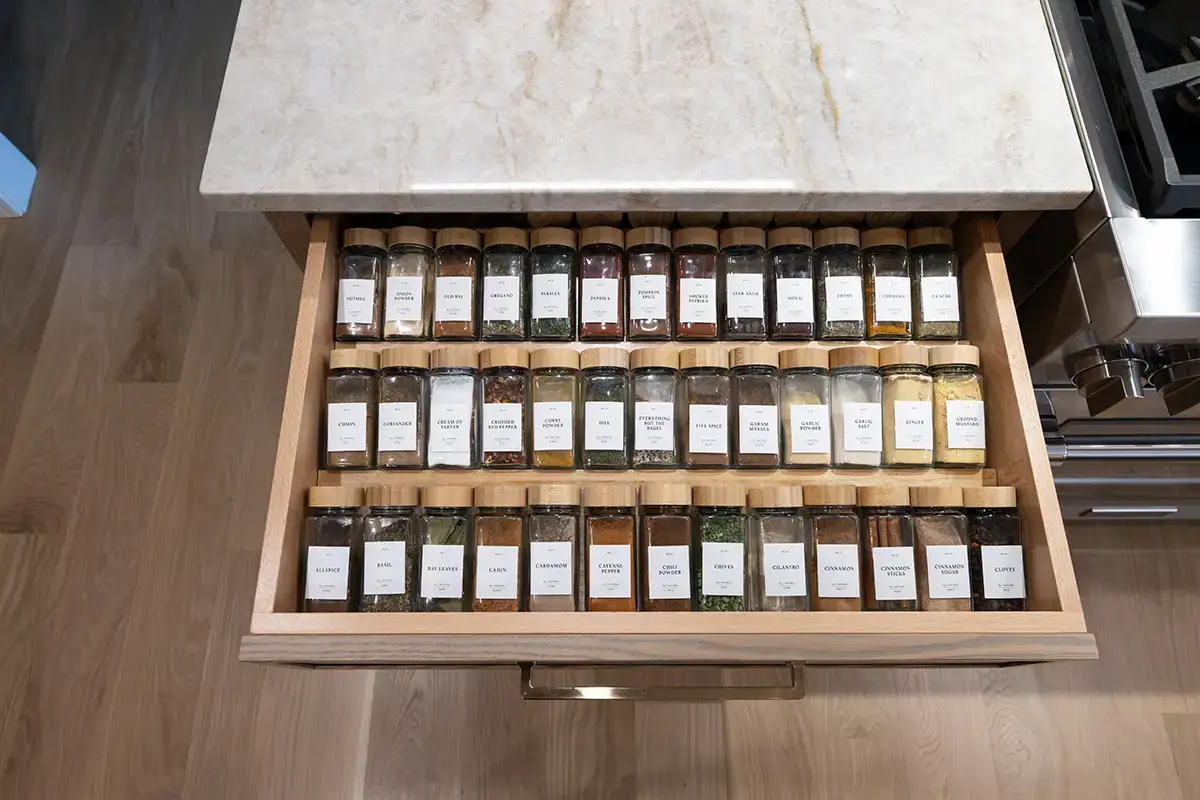
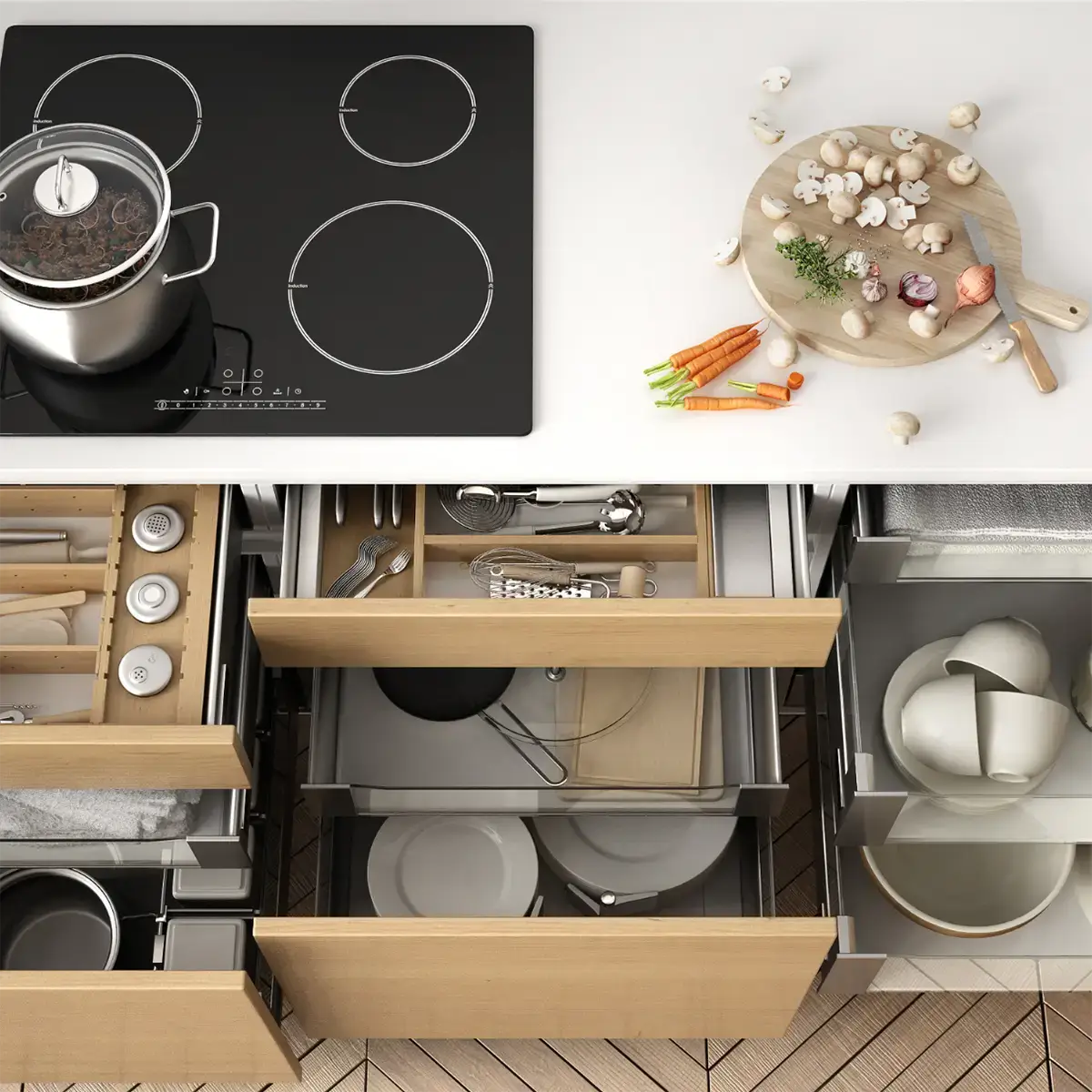
One of the most practical kitchen organization ideas in this Allentown remodel is the use of dedicated kitchen spice drawers placed directly beside the range. Instead of storing spices in a cabinet or cluttering the countertop, the designers incorporated a shallow drawer with custom inserts that allow spice jars to lie flat.
This layout allows the homeowners to easily read labels at a glance while cooking. No more digging through crowded cabinets looking for that one elusive spice. Because the drawer is located next to the range, it also supports a natural cooking workflow.
Small changes like this can dramatically improve the usability of a kitchen. During a kitchen remodel, placing spices exactly where they are used makes cooking smoother and more enjoyable.
2. Custom Utensil and Flatware Drawer Dividers
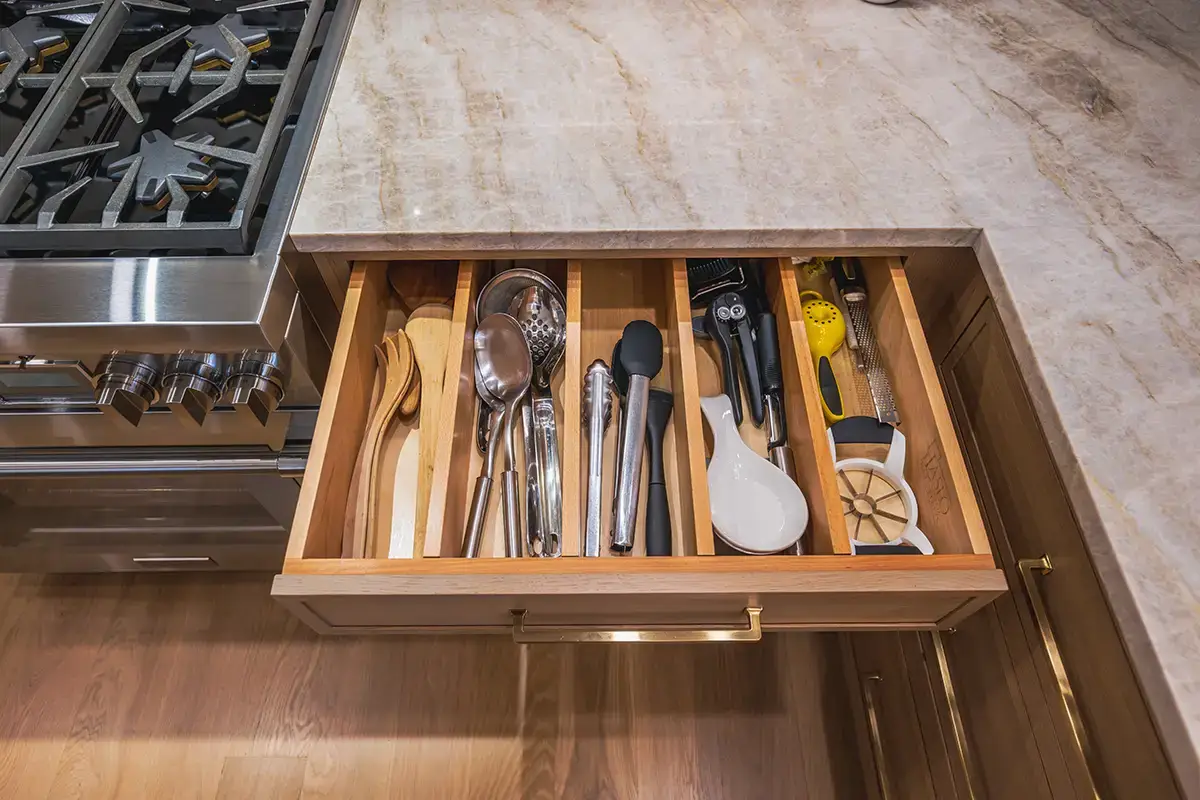
Another standout organizational feature is the use of custom drawer inserts for utensils and flatware. These dividers create designated spaces for forks, knives, spoons, and serving pieces, while separate compartments hold cooking tools like spatulas and peelers.
Without inserts, kitchen drawers quickly become cluttered. Items slide around and stack on top of one another, making it difficult to find what you need. Custom organizers eliminate this problem by giving every item a dedicated location.
During a kitchen remodel, designing drawers with built-in dividers is one of the simplest ways to create long-term organization.
3. KitchenAid Mixer Lift for Heavy Appliances
Many homeowners love their stand mixers but struggle with where to store them. Leaving them on the countertop consumes valuable workspace, but lifting them out of a cabinet can be inconvenient or even unmanageable.
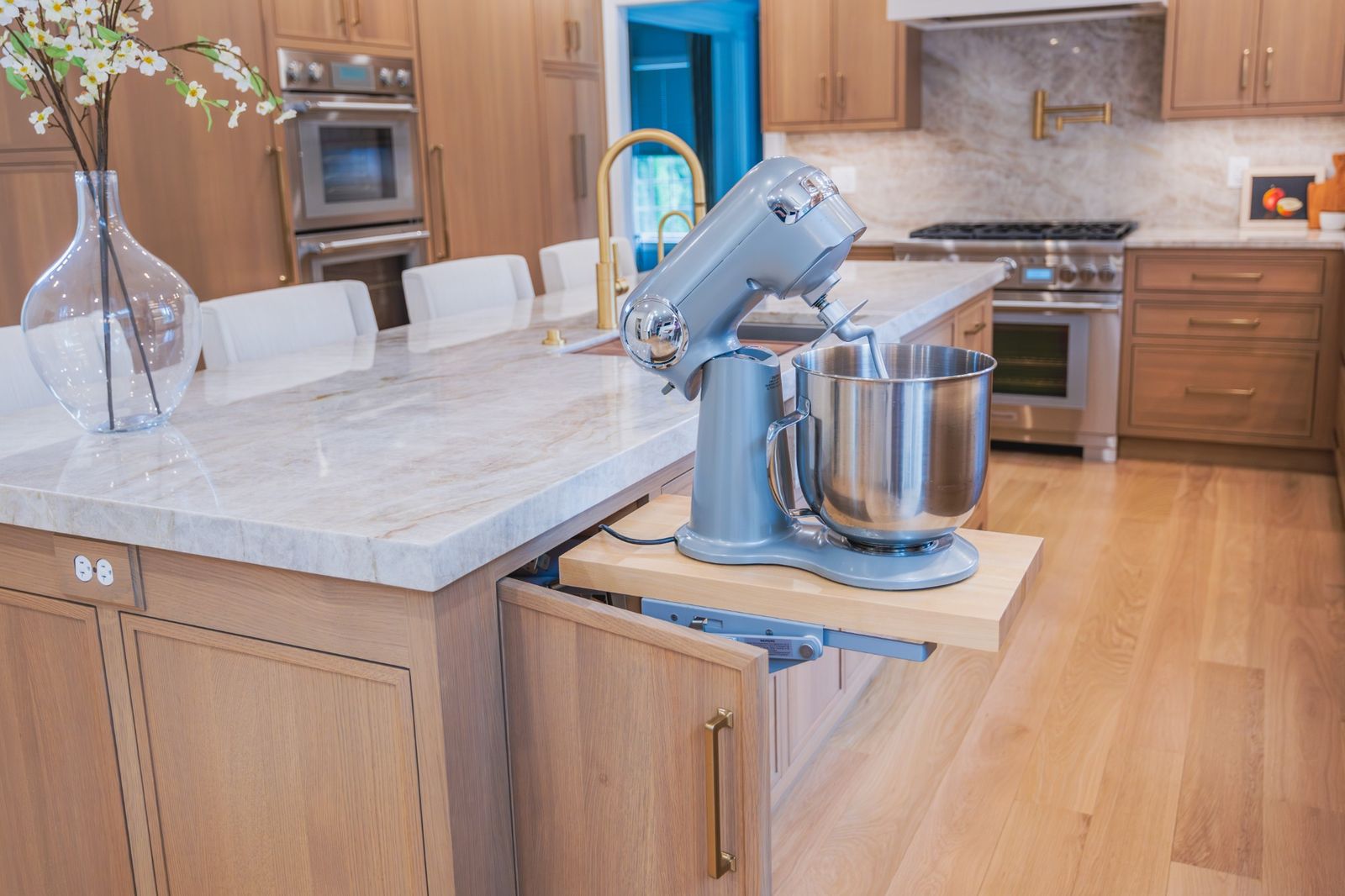
This Allentown kitchen solves that challenge with a KitchenAid mixer lift built into a base cabinet. The mixer sits on a mechanical platform that lifts up to counter height when needed. After use, it lowers smoothly back into the cabinet.
A KitchenAid mixer lift keeps countertops clear while ensuring the appliance remains easy to access. For homeowners who bake frequently, this feature can make a significant difference in everyday usability.
4. Galley Workstation Sink Systems
Both sinks in this kitchen remodel incorporate advanced workstation features designed to streamline food preparation. Integrated accessories such as cutting boards, colanders, and drying racks slide along built-in ledges within the sink.
This setup creates a compact preparation zone that keeps the countertop clear. Instead of spreading tools across the counter, the workstation allows many tasks to occur directly over the sink.
Workstation sinks are becoming increasingly popular in kitchen remodels because they combine preparation, rinsing, and cleanup into a single organized area.
5. Deep Drawer Storage Instead of Lower Cabinets
Traditional lower cabinets often make it difficult to reach items stored in the back. To solve this issue, this Allentown kitchen uses large deep drawers rather than cabinet doors for most base storage.
These drawers are ideal for storing pots, pans, mixing bowls, and baking dishes. Because the entire drawer pulls forward, everything inside becomes visible and accessible.
This type of storage improves both organization and ergonomics. When planning a kitchen remodel, replacing lower cabinets with deep drawers is one of the most impactful upgrades homeowners can make.
6. Under Sink Organization With Pull-Out Storage
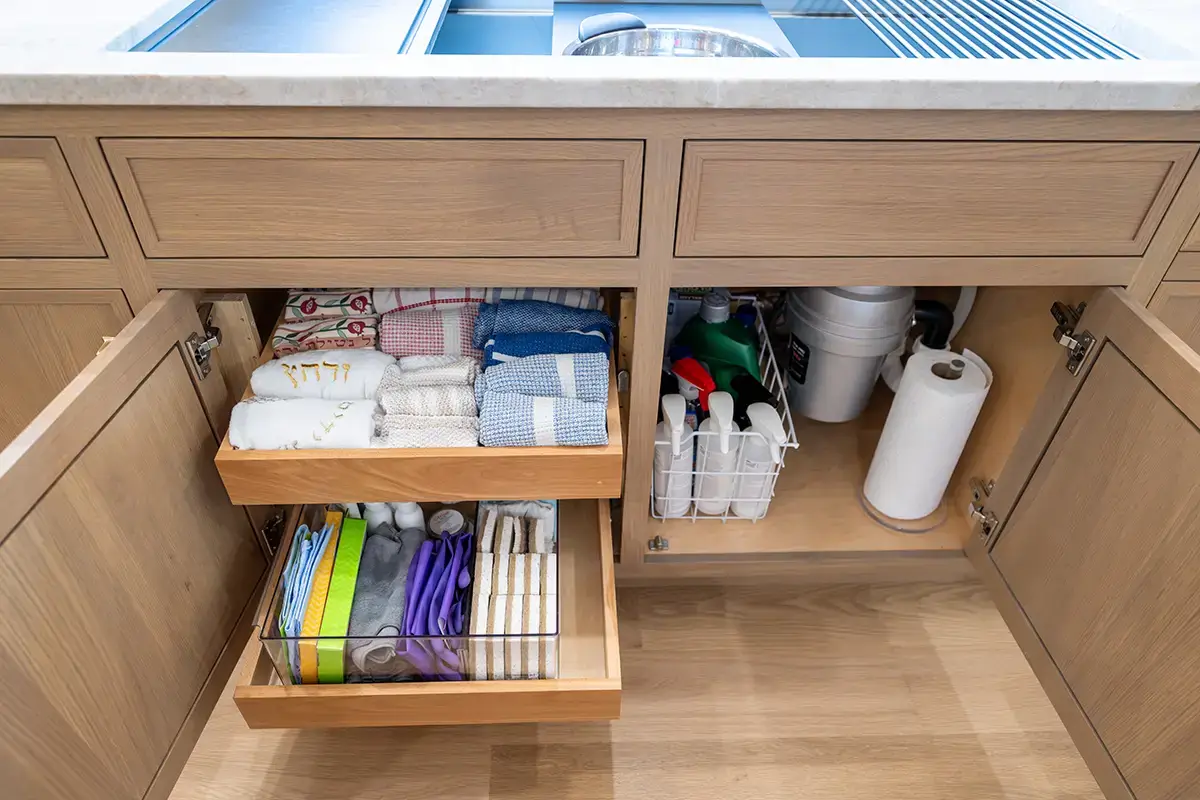
The space beneath the sink is often one of the most chaotic areas in a kitchen. Cleaning products, sponges, and supplies tend to pile up in the back of the cabinet, making it difficult to see what you have or reach items quickly.
In this kitchen remodel, that problem is solved with sliding storage systems installed beneath the sink. Pull-out trays allow the homeowners to organize cleaning products while keeping them easily accessible. Instead of crouching down and reaching into a dark cabinet, everything slides forward so items can be viewed and retrieved at a glance.
Thoughtful kitchen organization turns this typically awkward cabinet into a highly functional storage area. Pull-out storage keeps supplies neatly grouped, prevents items from getting lost in the back of the cabinet, and makes it easier to maintain order over time.
7. Appliance Larder Cabinet With Pull-Out Shelves
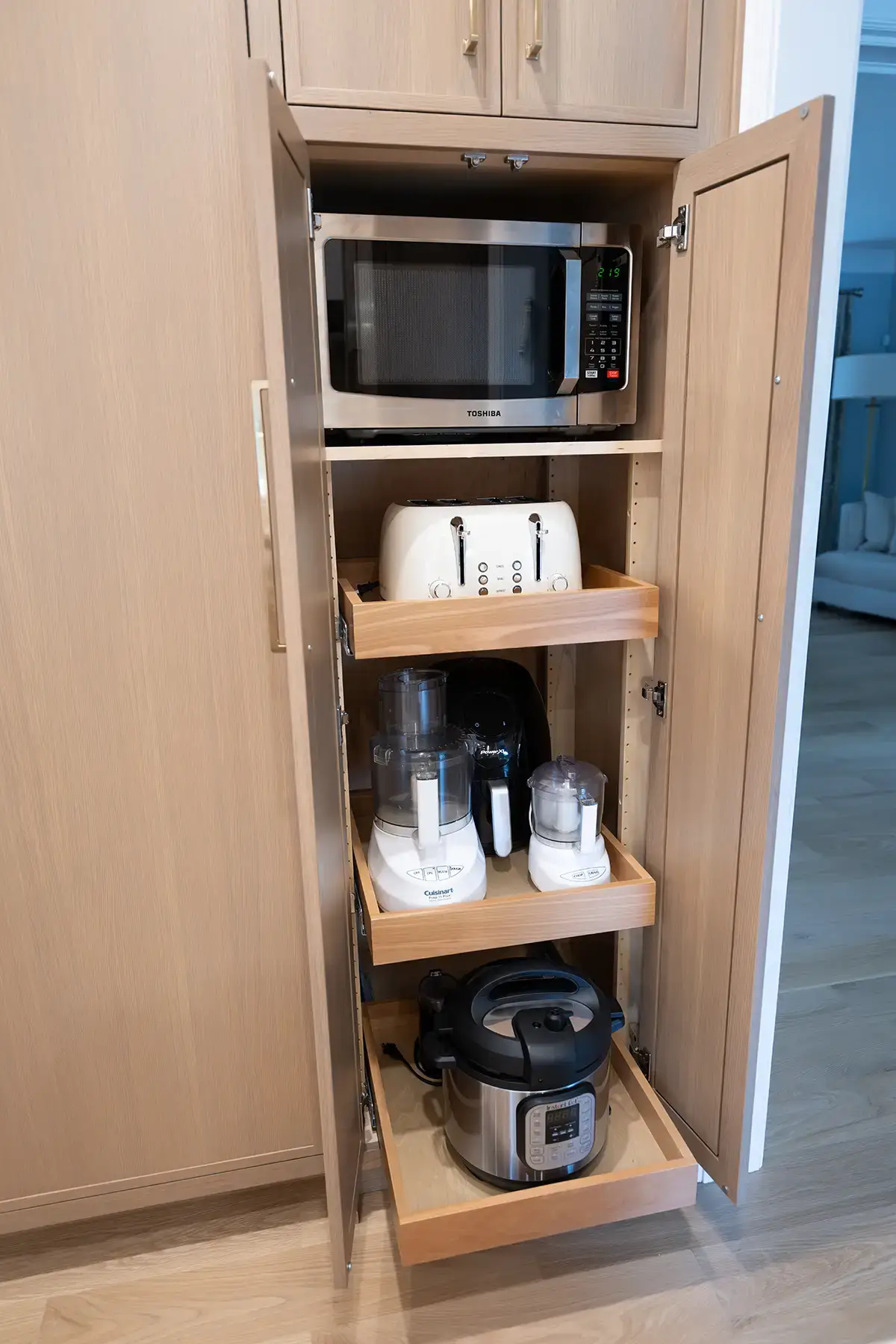
Small appliances can easily overwhelm a countertop. This kitchen includes a tall appliance cabinet with pull-out trays designed to store items such as blenders, food processors, and pressure cookers.
The shelves slide outward, allowing homeowners to access appliances without lifting them from deep cabinets. This type of storage keeps countertops uncluttered while maintaining convenience.
Incorporating dedicated appliance storage is a valuable kitchen organization idea during a custom kitchen remodel because it helps balance accessibility with visual simplicity. Homeowners can keep frequently used appliances nearby without allowing them to dominate the counter space.
8. Kitchen Pantry With Drawers and Zoned Storage
The pantry in this remodel demonstrates how thoughtful design can dramatically improve food storage. Rather than relying only on shelves, the kitchen pantry with drawers includes pull-out storage that allows homeowners to see everything clearly.
Drawers prevent items from being lost behind other products. Baskets and bins help group foods by category such as snacks, oils, condiments, and baking ingredients.
Organizing pantry items into clear zones makes it easier to maintain order and track inventory.
9. Built-In Beverage Station
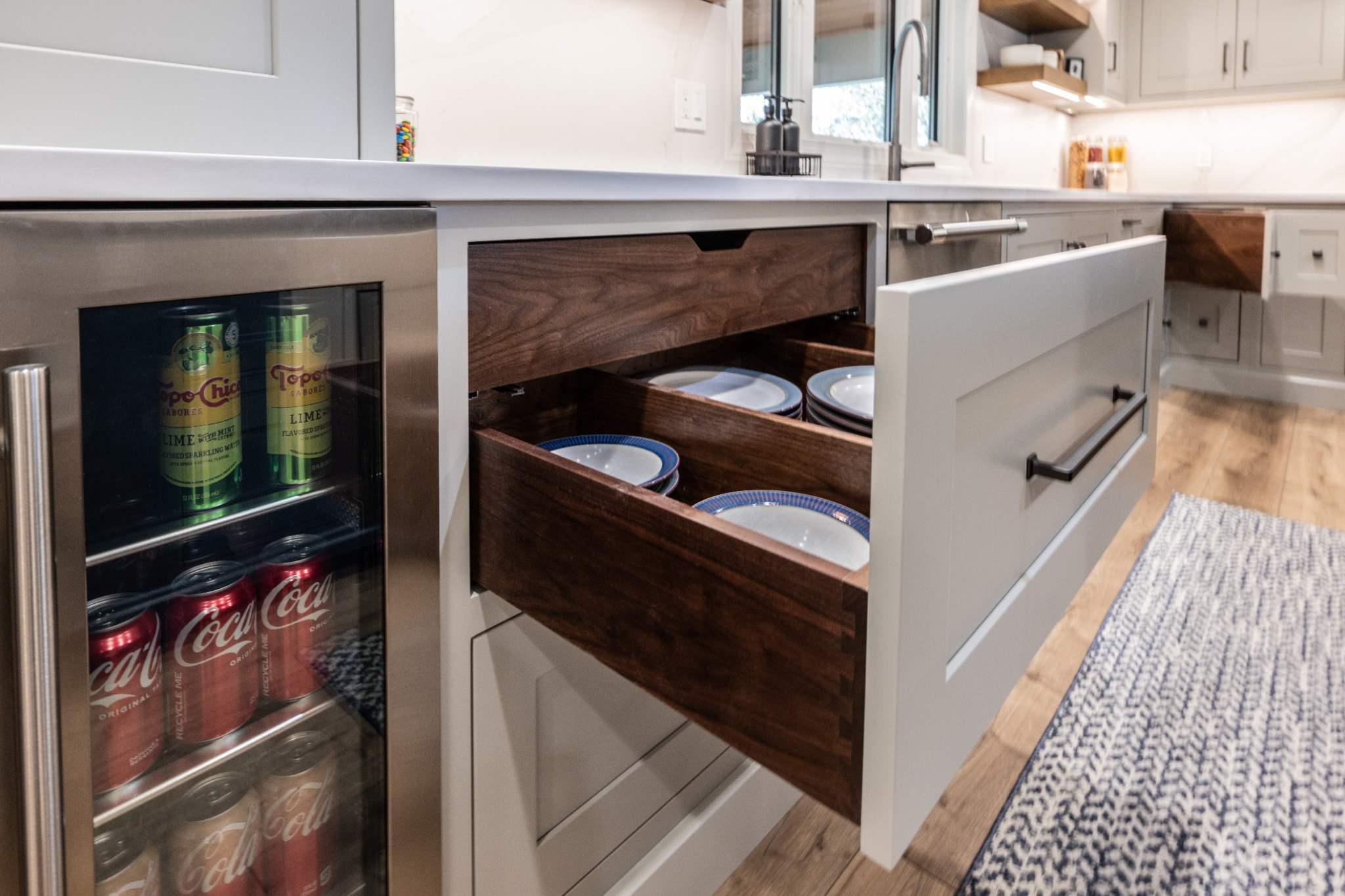
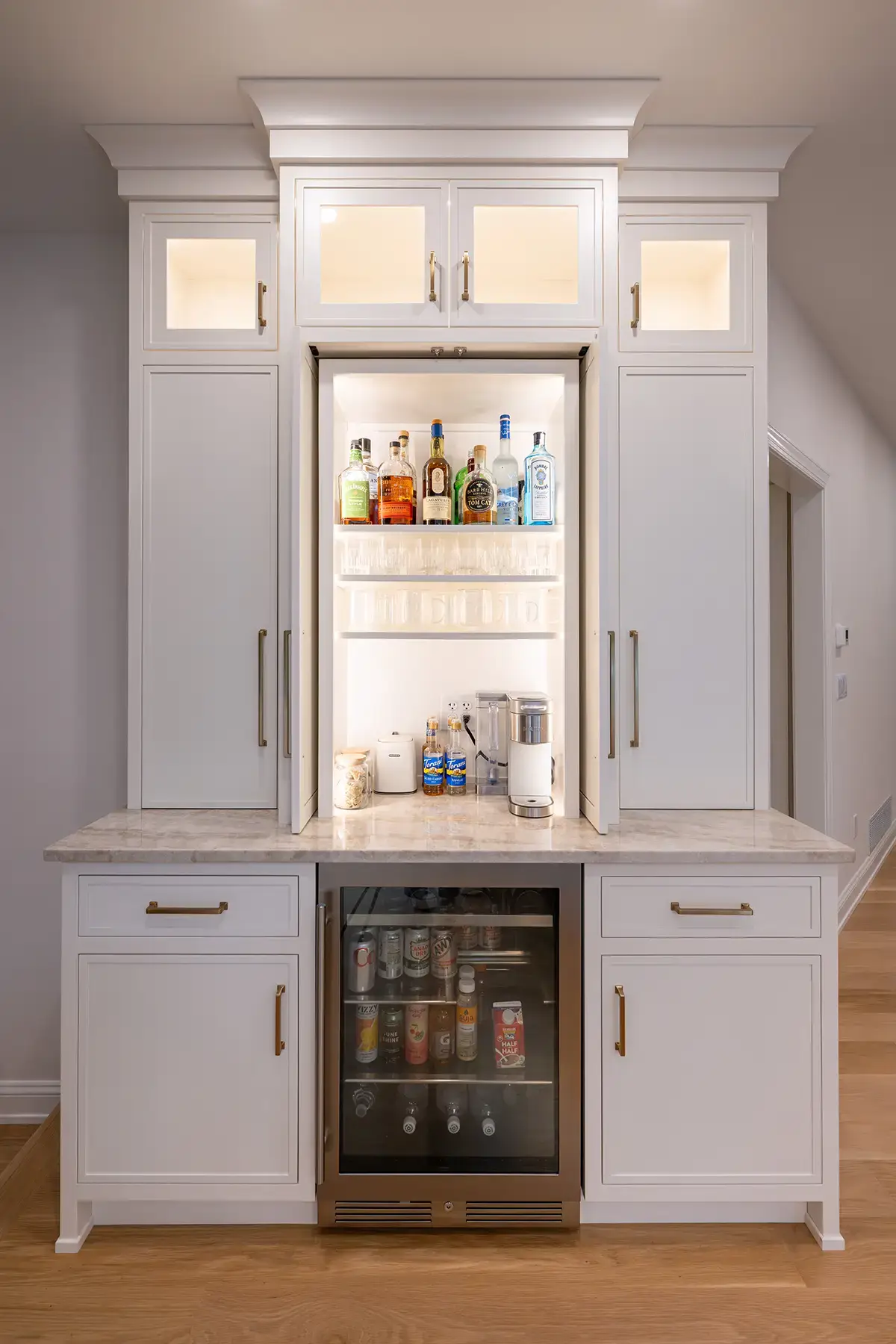
Another smart feature is the dedicated beverage area. A built-in beverage refrigerator keeps drinks easily accessible while nearby cabinets store glasses and bar accessories.
Separating beverage storage from the main cooking zone helps reduce congestion around the primary work areas of the kitchen. This type of feature is particularly helpful when entertaining guests.
A beverage station is a simple addition that can improve both organization and traffic flow during a kitchen remodel.
10. Panel-Ready Refrigeration With Surrounding Storage
Panel-ready appliances allow refrigerators and freezers to blend seamlessly into surrounding cabinetry. Beyond the visual benefits, this design also creates opportunities for additional storage.
Tall cabinets around the appliances can house trays, baking sheets, or pantry overflow. This approach allows homeowners to maximize vertical storage space without cluttering the kitchen.
11. Kitchen Cabinet Lighting for Visibility
Lighting plays an important role in organization. In this Allentown remodel, kitchen cabinet lighting is installed inside display cabinets and under shelving.
Illuminated interiors make it easier to see stored items and help maintain organized cabinets. Good lighting prevents items from disappearing into dark corners and improves overall usability. Under-cabinet and under-shelving lighting also improves visibility across the countertop below, giving homeowners better task lighting for food prep, serving, and cleanup.
During a kitchen remodel, cabinet lighting can dramatically enhance both functionality and ambiance.
12. Large Island Storage
The oversized island in this kitchen contains extensive storage through drawers and cabinets. Because the island sits in the center of the workspace, it becomes an ideal location for storing frequently used items.
Homeowners often use island drawers to store cooking utensils, prep tools, serving platters, or baking supplies. This centralized storage keeps essential items within easy reach.
Looking at the overall design, several key strategies make this kitchen exceptionally organized.
First, the layout emphasizes zone-based storage. Items are stored close to where they’re used. Spices sit beside the cooktop, cleaning supplies are beneath the sink, and beverage storage is separate from the main cooking area.
Second, the design prioritizes drawers over traditional cabinets. Drawers provide better visibility and easier access, helping homeowners maintain order.
Third, appliances and tools are intentionally hidden when not in use. Appliance cabinets, mixer lifts, and pantry storage keep countertops clear while ensuring everything remains accessible.
Finally, lighting and thoughtful cabinetry design ensure that every storage area remains visible and usable.
The Power of Built-In Organization
This kitchen remodel demonstrates how powerful thoughtful planning can be. Instead of adding storage randomly, each cabinet and drawer is designed around how the homeowners actually use their kitchen.
Spices are placed near cooking areas, utensils sit close to preparation zones, and appliances are stored where they can be accessed easily without cluttering the counters.
The result is a kitchen that feels calm and organized while still offering tremendous storage capacity. Every element of the design supports efficiency and daily functionality.
A successful kitchen remodel does more than create a beautiful space. It creates a kitchen that works better for the people who use it every day.
Designing Organized Kitchens for Lehigh Valley Homes
Designing a highly organized kitchen requires experience, creativity, and a deep understanding of how homeowners use their space. At Laslo Custom Kitchens, every kitchen remodel begins with careful planning to ensure storage solutions support real daily routines.
From kitchen spice drawers and appliance cabinets to a kitchen pantry with drawers and integrated kitchen cabinet lighting, custom cabinetry allows every detail to be tailored to your exact needs.
If you’re considering a kitchen remodel, our team can help you explore smart kitchen organization ideas that transform your kitchen into a space that works effortlessly.
Schedule a consultation with Laslo Custom Kitchens today to begin planning a kitchen designed specifically for your storage and organization needs.
Conclusion
A well-designed kitchen is about more than finishes and appliances. True success comes from thoughtful organization that supports the way homeowners cook, clean, and gather.
This Allentown kitchen remodel highlights how custom storage solutions such as kitchen spice drawers, appliance lifts, kitchen pantry drawers, workstation sinks, and kitchen cabinet lighting can dramatically improve everyday functionality.
By incorporating these ideas into your own kitchen remodel, you can create a space that looks beautiful while making daily life easier and more enjoyable. Thoughtful organization transforms a kitchen from simply a place to cook into a space that truly supports the rhythm of home life.
1. What organization features should I include in a kitchen remodel?
The best organization features in a kitchen remodel are storage solutions that keep frequently used items visible, accessible, and stored near where they are used. Examples include spice drawers, deep base drawers, pull-out pantry storage, appliance cabinets, and under-sink organizers.
A well-organized kitchen works because storage is designed around real daily routines. Instead of simply adding cabinets, a thoughtful remodel plans where cooking tools, ingredients, and appliances will live so movement through the space feels natural. When these storage features are integrated into custom cabinetry, the kitchen stays easier to maintain and significantly more enjoyable to use.
2. Are deep drawers better than lower kitchen cabinets in a kitchen remodel?
Yes, deep drawers are often more functional than traditional lower cabinets because they allow homeowners to see and reach everything stored inside. Instead of bending and reaching into the back of a cabinet, drawers bring the entire storage area forward.
Deep drawers are especially useful for storing cookware, mixing bowls, baking dishes, and food containers. During a kitchen remodel, replacing lower cabinets with full-extension drawers improves both accessibility and organization. The result is storage that is easier to manage and far less likely to become cluttered over time.
3. Are kitchen spice drawers worth adding to a kitchen remodel?
Yes, kitchen spice drawers are one of the most practical upgrades you can include in a kitchen remodel. They keep spices organized, easy to read, and conveniently located near the cooking area.
Unlike traditional spice cabinets where bottles get buried behind one another, spice drawers allow jars to lie flat in organized rows. Labels remain visible at a glance, which makes cooking more efficient and helps prevent duplicate purchases. For homeowners who cook regularly, this small design detail can make a surprisingly big difference in everyday usability.
4. What is a KitchenAid mixer lift and is it worth including?
A KitchenAid mixer lift is a cabinet mechanism that stores a stand mixer inside a base cabinet and lifts it to counter height when needed. It allows homeowners to access heavy appliances easily without storing them on the countertop.
For households that bake frequently, a mixer lift can be extremely valuable. Stand mixers are heavy and often used regularly, which makes them inconvenient to store in standard cabinets. By incorporating a lift during a kitchen remodel, homeowners can keep their counters clear while still having the mixer ready to use at any time.
5. How do I organize small appliances in a kitchen remodel?
Small appliances are best organized by storing them in dedicated cabinets designed specifically for that purpose. Appliance larder cabinets, pull-out shelves, and appliance garages help keep counters clear while maintaining easy access.
During a kitchen remodel, designers often create tall cabinets with sliding trays so appliances like blenders, mixers, and food processors can be stored neatly but accessed quickly. This approach reduces countertop clutter and creates a cleaner visual appearance while still supporting everyday cooking routines.
6. Is a kitchen pantry with drawers better than pantry shelves alone?
A kitchen pantry with drawers often provides better visibility and organization than shelves alone. Pull-out drawers allow homeowners to see everything inside the pantry instead of losing items in the back.
Drawers also help group foods by category, making it easier to organize snacks, baking ingredients, and packaged goods. When planning a kitchen remodel, combining shelves with pull-out drawers creates a more flexible pantry that supports both bulk storage and everyday accessibility.
7. What are the benefits of under-sink pull-out storage?
Under-sink pull-out storage makes it easier to organize cleaning supplies and access them quickly. Instead of reaching into a deep cabinet, sliding trays bring items forward where they can be easily seen.
This type of storage also prevents products from becoming lost behind plumbing lines or stacked in the back of the cabinet. During a kitchen remodel, adding pull-out storage beneath the sink transforms one of the most awkward cabinets into a practical and organized area.
8. Do workstation sinks make a kitchen more functional?
Yes, workstation sinks can significantly improve kitchen functionality by combining several preparation tasks into one compact area. Accessories like cutting boards, drying racks, and colanders fit directly into the sink.
This setup allows homeowners to chop, rinse, drain, and prep ingredients without spreading tools across the countertop. When included in a kitchen remodel, workstation sinks help streamline workflow and keep preparation areas cleaner and more organized.
9. Is kitchen cabinet lighting worth adding during a kitchen remodel?
Yes, kitchen cabinet lighting is both a functional and aesthetic upgrade during a kitchen remodel. It improves visibility inside cabinets and adds soft illumination to the kitchen.
Lighting inside cabinets or under shelves helps homeowners quickly locate stored items and prevents dark storage areas where things disappear. In addition to improving organization, cabinet lighting enhances the overall atmosphere of the kitchen, making the space feel more refined and inviting.
10. How can I make my kitchen remodel easier to keep organized?
The easiest way to maintain organization after a kitchen remodel is to design storage around daily habits. Items should be stored near where they are used, and cabinets should include built-in organizers whenever possible.
Features such as spice drawers, appliance storage, deep drawers, and pull-out pantry systems all contribute to a kitchen that stays organized naturally. When thoughtful planning is combined with custom cabinetry, homeowners spend less time managing clutter and more time enjoying the space.
A small kitchen remodel can be one of the most satisfying home projects because the results show up in your day-to-day routine right away. In a compact kitchen, thoughtful planning can make the space feel more functional, more open, and easier to use without changing the footprint. Today’s most popular small kitchen remodel choices aren’t about packing in more features, but about improving how the space works: clearer walkways, smarter storage, better lighting, and finishes that feel intentional instead of busy.
If you’re gathering small kitchen remodel ideas, the trends below will help you focus on upgrades that solve real problems: where things go, how you move through the room, and how the kitchen supports your routine. These are the small kitchen remodel trends homeowners keep gravitating toward because they make smaller kitchens feel organized, welcoming, and surprisingly capable.
Top 10 Small Kitchen Remodel Trends
Below are the top small kitchen remodel trends shaping how homeowners are improving storage, flow, and day-to-day function in compact spaces. Each one is designed to help you get more out of your kitchen without adding square footage.
1. Work Zones Replace “the Triangle”
In a compact room, the classic kitchen triangle can feel like a rule that forces awkward compromises. A more practical approach is “zoning.” Instead of focusing on distances between sink, fridge, and range, the kitchen is planned around how you actually use it.
This trend matters for small kitchen remodels because it reduces back-and-forth traffic. When frequently used items live where you use them, the space feels calmer and faster, even if it’s the same size.
2. Vertical Storage
When floor space is limited, the walls become your best opportunity for additional storage. Small kitchen remodels are looking up—taller cabinets, stacked uppers, and intentional use of the area above the refrigerator and around windows.
Popular vertical storage upgrades include:
Uppers that run to the ceiling (no dust shelf, more storage)
Stacked cabinetry with a second “top row” for lesser-used items
Tall pantry cabinets that replace a few short base cabinets
Integrated storage around a window or doorway to use “awkward” zones
Narrow pull-out pantry units for spices, oils, and baking supplies
The goal isn’t to just cram in more storage wherever you can find. It’s to create better places for what you already own, so counters stay open and the room feels less cluttered.
3. Deep Drawer Base Cabinets
One of the simplest upgrades that makes a major impact is switching base cabinets from doors-with-shelves to deep drawers. In a small kitchen remodel, drawers reduce wasted space because they keep items visible and reachable. You don’t have to crouch down, dig, and pull everything out to find what you need.
Small appliances that you want close, but not on the counter
If your current kitchen feels tight, drawers can make it feel bigger because you aren’t constantly pulling everything out to get to the back of a shelf.
4. Compact Islands and Peninsulas
A small kitchen doesn’t need a massive island to be functional. In fact, forcing a large island into a tight room often makes the kitchen feel even smaller. Current small kitchen remodel planning favors properly sized islands, narrow “furniture-style” islands, or a peninsula that provides work space without blocking pathways.
This trend shows up in a few practical ways:
Slim islands that still allow comfortable clearance
Islands designed for prep and storage, not oversized seating
Peninsulas that define the space and add landing room
Counter-height ledges or “tuck-in” seating for one or two stools
When it’s done right, these solutions add function and storage while keeping the room open. The best sign you sized it correctly: you never have to “sidestep” around it.
5. Hutch-Style Cabinetry
Small kitchens are embracing a “built-in furniture” look—hutches, glass-door uppers, open shelves in a controlled area, or a dedicated display niche. The reason this trend works is that it creates a focal point without requiring more square footage.
A hutch moment can provide:
A place for everyday dishes and glassware
A way to break up a wall of cabinets visually
A spot to show a little personality without cluttering counters
Extra storage for serving pieces or entertaining items
The key in small kitchen remodels is to keep this design feature intentional. Choose one focal storage moment and let the rest of the kitchen stay streamlined.
6. Strategic Use of Color
Small kitchens aren’t all-white by default anymore. Color is trending again, but the smartest designs use it in a controlled way so that the space feels lively without feeling busy.
Common approaches include:
A colored base cabinet run with lighter uppers
A single statement area (like a pantry wall) in a richer tone
Warm accent colors in hardware, lighting, or a feature cabinet
Color can also help visually organize a small kitchen layout. A darker tone can ground the room, while lighter surfaces keep the overall feel open.
7. Softer Shapes and Subtle Curves
Hard corners and sharp lines can make a small kitchen feel rigid. A growing trend is to soften the space with gentle curves or rounded details that make the room feel more fluid and easier to move through.
Examples include:
A rounded edge on a peninsula or countertop corner
Curved end panels on base cabinets to soften transitions
Arched details in open niches or shelf openings
Rounded shelving (or a radius on floating shelves) for a lighter look
Softened trim profiles and door styles that avoid hard angles
Curves work well in compact kitchens because they improve movement. Even a small rounded detail reduces the “tight hallway” feeling that can happen in narrow layouts.
8. Statement Surfaces
Small kitchen remodels are leaning toward fewer materials with more impact. Instead of mixing many patterns and finishes, the trend is to select one standout surface and keep the rest calm.
Examples include:
A slab backsplash that creates a clean, uninterrupted surface
A countertop with subtle veining that adds interest without feeling busy
A waterfall edge on a compact island or peninsula to create a polished focal point
Simple edges and streamlined transitions that keep the look continuous
This approach is a favorite because it makes the kitchen feel more cohesive. In a small room, cohesion is what reads as “high end.”
9. Layered Lighting and Light-Enhancing Finishes
Lighting is one of the fastest ways to make a compact kitchen feel larger. Small kitchen remodels are using reflective finishes and layered lighting to bounce light around the room.
Design choices that help:
Under-cabinet lighting that removes shadows on counters
Brighter backsplash tile or a finish that softly reflects light
Thoughtful overhead lighting placement to avoid dark corners
Glass-front storage or lighter cabinet colors to lift the room
A small kitchen doesn’t need to be bright-white to feel open. It just needs light placed where you actually work, plus finishes that don’t absorb everything.
10. Embracing Small Kitchen Layouts
Many small kitchens are galley kitchens, one-wall kitchens, or L-shapes with limited room for extra features. The trend is to stop treating those layouts as problems and work to optimize them instead.
For a functional small kitchen layout, priorities often include:
Clear landing space near the refrigerator and cooking area
Right-sized appliances for the footprint
Better placement of the dishwasher and trash pullout
Storage that matches your habits, not generic “standards”
Clean sightlines so the kitchen feels less boxed in
When you design around the layout you actually have, the remodel feels more comfortable because movement becomes intuitive.
Small Kitchen Remodel Photos: What to Look For When You’re Collecting Inspiration
When you’re scrolling small kitchen remodel photos, it helps to look past the pretty finishes and notice the functional choices. Ask yourself:
Where’s the pantry storage located?
Do you see deep drawers or pull-outs?
Is there a landing zone near the range and the refrigerator?
Are counters clear because storage is doing its job?
Is the lighting layered, or does it rely on one ceiling fixture?
This mindset helps you collect inspiration that translates into your home. Beautiful photos are useful, but only if the ideas fit the way you live.
How Much Does a Small Kitchen Remodel Cost?
One of the most pressing questions homeowners often have is, “How much does a small kitchen remodel cost?” The answer depends on layout changes, cabinet scope, materials, and the level of customization. A small kitchen remodel can sometimes cost less than a large one, but it can also cost more than people expect because compact spaces often require highly efficient solutions and careful planning.
As a baseline, prices start at $22,000 for a small kitchen remodel at Laslo Custom Kitchens. From there, the budget can increase based on factors like:
Whether you’re keeping the existing layout or moving plumbing and electrical
Cabinet type (stock, semi custom, or custom) and the amount of storage added
Countertop and backsplash selections
Flooring, lighting, and ventilation upgrades
New appliances and whether sizes need to change for the layout
If cost is a big concern, the most helpful approach is to identify what must improve: storage, workflow, lighting, or layout. When your priorities are clear, you can invest in the upgrades that move the needle instead of spending on details that don’t change daily function.
Laslo Custom Kitchens routinely receives praise from clients for keeping projects aligned with the budget from day one. Our estimates are clear and pressure-free, and our experienced team helps you sort through options, set smart priorities, and invest where it counts so your finished kitchen feels like a dream without surprise costs.
Laslo Custom Kitchens: The Lehigh Valley’s Small Kitchen Remodel Experts
If you’re planning a small kitchen remodel in the Lehigh Valley, PA or its surrounding areas, Laslo Custom Kitchens can help you turn tight square footage into a kitchen that feels organized, functional, and built around your routine. Our experienced team understands how to solve the challenges that come with a small kitchen. We know how to make storage work harder, refine the small kitchen layout, and select cabinetry details that create a clean, custom look without wasting space.
To see what’s possible, view our portfolio and visit our Facebook Page to explore past small kitchen remodel projects and gather ideas you can apply to your own home. When you’re ready to take the next step, schedule a consultation to discuss your space, share your goals, and develop a plan with one of our trusted experts.
Conclusion
Small kitchens don’t need more space—they need better planning. The trends shaping today’s small kitchen remodels all point to the same outcome: a kitchen that’s easier to move through, easier to keep tidy, and more enjoyable to use every day. Start with function, prioritize small kitchen storage, respect the realities of your small kitchen layout, and choose finishes that support a cohesive look. When the details align with the way you live, a small kitchen remodel can feel like a major upgrade.
A small kitchen remodel can start at $22,000, then scale up based on cabinets, layout changes, finishes, and how much work is happening behind the walls.
Most of the cost comes from cabinetry and labor, followed by countertops, appliances, lighting, and trades like plumbing and electrical. If you keep the existing footprint and reuse key elements that are in good shape, you can stay closer to the starting range. If you move the sink, add a peninsula, or upgrade to more custom storage, the budget can begin to rise.
2. How long does a small kitchen remodel take?
Many small kitchen remodels take several weeks, but the timeline depends more on complexity and product lead times than on room size.
A simple refresh with minimal layout changes can move faster, while projects with new cabinets, counters, and electrical updates take longer. Ordering cabinets and countertops, coordinating trades, and allowing time for inspections (when needed) often drive the schedule. A clear plan and early selections are what keep a timeline from stretching.
3. What’s the best small kitchen layout for my space?
The best small kitchen layout is the one that protects your walkways and creates clear landing space near the sink, range, and refrigerator.
Galley layouts work well when both sides are organized into zones and aisles stay comfortable. L shape kitchens often benefit from prioritizing one uninterrupted counter run for prep. One wall kitchens can feel surprisingly functional when storage goes vertical and the work zones are arranged in the order you actually cook.
4. Do I need permits for a small kitchen remodel?
You might need permits if your remodel involves electrical, plumbing, structural changes, or ventilation updates, even if the kitchen is small.
If you are replacing finishes and keeping everything in the same place, permits are less likely. The moment you move a sink, add circuits, relocate gas lines, or alter walls, your local building department may require permits and inspections. A good contractor will help you confirm what applies before work begins.
5. Can I stay in my home during the remodel?
Yes, many homeowners stay in their home during a small kitchen remodel, but you should plan for a period without a working kitchen.
Expect noise, dust, and limited access, plus days when water or power may be temporarily interrupted. Setting up a simple temporary kitchen with a microwave, coffee maker, and a dishwashing plan makes the process easier. Clear communication about daily work hours and cleanup helps the home stay livable.
6. What’s the most expensive part of a small kitchen remodel?
Cabinetry is often the biggest investment in a small kitchen remodel, even more than countertops or appliances.
Cabinets drive both material cost and labor because they set the foundation for the entire room. Layout changes can also add significant cost because moving plumbing, electrical, and ductwork stacks trades and time. If you want to control the budget, focus first on the cabinet plan and whether the layout is staying put.
7. Should I reface cabinets or replace them?
Refacing can make sense if your cabinet boxes are in great condition and the layout works well, but replacement is better when you need improved storage or a smarter layout.
Refacing updates doors, drawer fronts, and visible surfaces, so it improves the look without changing function much. Replacing cabinets lets you adjust sizes, add deep drawers and pull outs, and fix problem areas like wasted corners or missing pantry space. The right choice depends on whether your main issue is appearance or daily usability.
8. What are the best small kitchen storage ideas (drawers, pull outs, pantry options)?
The best small kitchen storage ideas prioritize easy access, vertical space, and keeping counters clear.
Deep drawers for dishes and cookware are usually the biggest upgrade because they prevent wasted space and make everything visible. Pull outs for trash and recycling, narrow spice pull outs, and a tall pantry cabinet can replace several awkward cabinets. Taking cabinets to the ceiling adds storage without shrinking the room, as long as the design stays visually clean.
9. What order should the remodel happen in?
Most kitchen remodels follow a sequence that protects finished materials and keeps measurements accurate, starting with demolition and ending with finishing details.
Typically, the process goes: demo, rough plumbing and electrical, any wall repairs, then cabinets. Countertops come after cabinets because they must be templated precisely. Backsplash and final plumbing fixtures follow, then trim, paint touch ups, and hardware. Flooring can happen earlier or later depending on the plan, but it should be scheduled to avoid damage.
10. How can I remodel a small kitchen on a budget without cutting the wrong corners?
To remodel a small kitchen on a budget, keep the footprint whenever you can and spend your money on the upgrades that improve daily function.
The best budget wins usually come from smart cabinet planning, like adding deep drawers and better pantry storage, rather than expensive decorative features. Choose durable, timeless materials that look great but are easy to maintain. A clear list of must haves versus nice to haves helps you make confident decisions when costs start to climb.
When you partner with Laslo Custom Kitchens for whole home cabinetry, you are never boxed into a single cabinet category. Because we are a true custom shop, we can build fully custom cabinetry, or thoughtfully combine our semi custom and stock lines with custom elements in a way many design firms simply cannot. That flexibility lets you invest where it matters most. We might use stock cabinetry for select wall runs, then design and build a custom island that becomes the showpiece, complete with furniture style details, specialty storage, and the exact proportions your room needs. The result is a kitchen that reads as fully custom, with meaningful savings built into the plan.
We can also customize stock pieces in smart ways that change the entire finished look, such as adding custom crown and light rail molding, building a one of a kind hood surround, creating tailored end panels and extended finished sides, designing a custom pantry wall or beverage center, or adjusting fillers and trim so everything lands cleanly from wall to wall. In other words, you get the design freedom and polished, built in look of custom cabinetry, while using stock pieces strategically to keep the budget working for you.
Below are four very different spaces from the Laslo Custom Kitchens portfolio. Each one shows how thoughtful design and custom shop craftsmanship can shape kitchens, baths, basements, and living spaces across the home.
A Snapshot into our Whole Home Cabinetry Portfolio
Cabinetry is one of the strongest tools in remodeling because it can change how a room functions and how it feels. In every project, Laslo focuses on three things: fit, flow, and finish. We help homeowners choose the right cabinet line for their goals, then refine the details with custom craftsmanship so the room looks cohesive and performs beautifully.
This Kosher kitchen is a perfect example of what truly bespoke spaces deliver. Designing for kashrut isn’t just about separating meat and dairy—it’s about creating a kitchen that supports daily routines, spiritual practice, and family rhythm.
What makes this design special isn’t simply that it includes two workstations or multiple dishwashing zones. It’s that every decision, from layout to workflow, reflects how the family moves through the kitchen. Prep happens in dedicated zones that help eliminate cross-contamination. Clean-up flows naturally from workspace to sink to storage. The circulation path is open and intuitive, eliminating congestion during busy cooking days or holidays.
Aesthetically, the space strikes a careful balance: warm enough to feel like home, refined enough to perform like a true culinary workspace. The palette is calm and timeless, allowing the homeowners to experience a sense of order and serenity even when the kitchen is at full capacity. The result is a space that honors tradition without sacrificing the comforts and expectations of modern living.
This is also where custom shop ability matters. When a kitchen needs very specific function, Laslo can modify cabinetry details and create custom components so the entire plan works as one system. The final space feels calm and timeless, with performance that matches the way the family lives.
A Primary Bath and Closet in Upper Saucon, PA
Moving to Upper Saucon, this primary bath and closet transformation shows how Laslo kitchen and bath remodeling extends beyond kitchens into spaces that support daily routines and well-being.
The bath’s floating walnut vanities instantly change your perception of the room. By lifting cabinetry off the floor, the entire space breathes—light moves freely, flooring is more visible, and the room feels larger than its square footage. The clean lines, warm wood, and uncluttered surfaces work together to create a spa-like environment where getting ready becomes a peaceful ritual rather than a rushed task.
What makes this design exceptional is its restraint. There is no unnecessary decoration. Every element contributes to a sense of calm: vertical wood grain that subtly draws the eye upward, simple hardware that warms without shouting, and a layout that gives each user a clear, comfortable place to begin and end their day.
The connected walk-in closet is compact, but Laslo turned that into an advantage. Instead of overfilling the room, the team designed storage that behaves thoughtfully:
Adjustable shelving that adapts as needs change.
Pull-out trays that bring items forward instead of forcing users to reach.
Lighting that illuminates contents without creating shadows.
The result feels like a boutique—not because it’s large, but because it’s curated, intentional, and easy to live with.
A Basement Bar in Bath, PA
This basement bar demonstrates how Laslo approaches whole home remodeling with the same level of thoughtfulness found in their kitchens. Rather than treating the basement as an afterthought, Laslo designed a space rooted in atmosphere and experience that invites people to gather.
What makes this basement special is its emotional tone. The darker palette, streamlined cabinetry, and monolithic island work together to create a mood that feels intimate yet sophisticated. It’s a room where conversations linger a little longer and guests naturally want to stay.
The layout reinforces the social purpose of the space. The island isn’t just a counter—it’s a gathering anchor. Seating positions face inward, encouraging interaction. The floating shelves add visual warmth and shift the balance away from the cabinetry’s bold color, creating harmony between strength and softness.
Two televisions facing different zones demonstrate how Laslo thinks through real-world use. Whether you’re mixing drinks, chatting at the island, or relaxing on the sofa, the room works for everyone without competing for attention. Storage is another quiet triumph. Wine cubbies, glass displays, and concealed cabinetry keep everything accessible but not exposed, letting the room stay clean and composed even during lively gatherings.
Living Room Cabinetry in Lehigh Valley, PA
This living room project is a masterclass in how Laslo built-in cabinetry can change not only a room’s function, but its architecture.
The homeowners began with a gorgeous space: tall ceilings, abundant natural light, and a stone fireplace. But it felt unfinished, visually disconnected and lacking warmth. Laslo’s solution was not simply to add cabinetry, but to create architecture through cabinetry.
By flanking the fireplace with symmetrical built-ins, Laslo established balance and defined a true focal wall. One side subtly integrates the television so the tech disappears into the design. The other side provides open shelving for meaningful displays, helping the homeowners personalize the room.
The real genius lies in the thoughtful details. The decision to wrap part of the stone chimney with wood battens accomplishes two key things. First, it conceals wiring cleanly. Second, it visually links the stone and cabinetry, making them feel like one cohesive structure rather than separate elements.
Ceiling beams and paneled trim complete the transformation, scaling the height of the room and adding warmth without overwhelming the architecture.
This space now feels grounded, welcoming, and intentional—exactly what a family living room should be.
• A full service approach that reduces stress • Clear proposals and guidance that respect the budget • A wide product range, including custom, semi custom, and stock cabinetry • The ability to add custom details so cabinetry looks built in and finished • Craftsmanship that holds up to daily life
Whether your whole home cabinetry project calls for full custom cabinetry or the smartest mix of cabinet lines for your goals, Laslo brings the same attention to fit, flow, and finish.
Start Your Laslo Project
If these projects sparked ideas for your own home, the next step is a conversation. Visit our showroom, browse the Laslo Custom Kitchens portfolio, or schedule a consultation to begin imagining your next space—whether it’s a kitchen, bath, basement, living room, or something entirely new.
Cabinetry should fit the room and the way you live. Laslo can help you get there, with a product range that meets your budget and a custom shop that brings the details to life.
Conclusion
Great cabinetry does not belong in just one room. When it is planned well and crafted with care, it can improve storage, simplify routines, and bring visual cohesion to the entire home. From kitchens and baths to basements, closets, and living spaces, Laslo helps homeowners design cabinetry for the whole home making each room feel intentional and comfortable every day.
1. What are the benefits of custom cabinetry compared to stock or semi custom?
Custom cabinetry is built to your exact space and preferences, which allows the best fit, function, and more design flexibility than stock or semi-custom options.
Unlike stock cabinets, which come in fixed sizes, custom cabinetry adapts to your home rather than forcing your home to adapt to it. You gain thoughtful storage solutions, higher-quality materials, and design details built specifically for your daily routines.
That said, many homeowners choose a mix. Laslo offers custom, semi custom, and stock cabinet lines, and our custom shop can add panels, trim, and built to fit details so the finished room looks cohesive and intentional.
2. Can a stock or semi custom cabinet line still look like a custom installation?
Yes. With the right design and custom shop finishing details, stock and semi custom cabinets can look built in and room specific.
Laslo can customize the surrounding elements such as extended stiles, furniture bases, end panels, molding packages, and one off pieces that solve awkward dimensions. Those details are often what separates a standard install from a custom look.
3. How much does whole home cabinetry or a remodel typically cost?
Cost depends on the room, the cabinet line you choose, and how much customization the plan requires.
A fully custom package is priced differently than stock or semi custom, but the best budget outcomes come from matching the cabinet line to the goals of the room. Laslo can help you prioritize where custom work matters most and where a curated cabinet line can deliver strong value.
4. How long does a kitchen or whole home remodel take?
Most remodels take several weeks to several months, depending on design scope, material lead times, and construction requirements.
A detailed design phase and clear selections help projects move smoothly. When cabinetry and custom details are planned early, the installation phase is more predictable and the experience is less disruptive.
Timelines vary because no two remodels are alike. A project involving structural changes or highly customized cabinetry will naturally take longer than a simple refresh. The most successful remodels begin with a thorough design process that anticipates challenges and coordinates every detail so installation is efficient and less disruptive to your daily life.
5. What should I ask when choosing a cabinet maker or remodeler?
Ask about product options, customization capabilities, installation standards, and how the team communicates. A reliable partner will answer openly and welcome your questions.
The best cabinet makers are transparent about their craft and confident in their process. Request examples of completed work and clarify who is responsible for measurements, fabrication, and installation. The right partner will make you feel informed and supported from the first meeting through final punch list.
6. Can cabinetry be used beyond the kitchen?
Absolutely. Cabinetry works beautifully in bathrooms, closets, basements, mudrooms, living rooms and more.
Cabinetry is one of the most versatile tools in home design, adding structure, organization, and beauty wherever it’s built. Thoughtful built-ins can anchor a living room, elevate a bathroom, streamline a closet, or turn a basement into an entertainment hub. This is why planning whole home cabinetry makes the entire home feel more intentional and unified.
7. Is custom cabinetry worth the investment long term?
Custom cabinetry often lasts longer and functions better because it is crafted from higher-quality materials and precise construction methods, it holds up beautifully over time. Storage becomes more efficient, maintenance is simpler, and the room functions better overall. Homebuyers also appreciate well-designed cabinetry, making it a feature that improves long-term value.
Though for many homeowners, the best answer is a smart mix. Use custom where it solves a real problem or creates a signature feature, and use a semi custom or stock line where it meets the need efficiently.
8. How do I choose finishes and styles that won’t feel dated in a few years?
Choose clean lines, balanced proportions, and timeless materials, then incorporate trends through smaller accents. Classic foundations keep the room relevant for years to come.
Spaces can age quickly when designed entirely around trends. Instead, anchor the room with neutral palettes, natural textures, and simple profiles that allow flexibility. This approach lets you update décor, lighting, or hardware later without redoing the cabinetry itself. Longevity comes from timeless structure paired with adaptable details.
9. Will a remodel disrupt daily life, and how can I prepare?
Some disruption is unavoidable, but thoughtful planning and proactive communication can minimize stress. A well-organized team will help you understand what to expect.
While you may temporarily lose access to certain rooms, the experience shouldn’t feel chaotic. Setting up temporary stations, organizing essentials, and knowing the timeline all help maintain normalcy. The right remodeler will coordinate trades efficiently, communicate clearly, and respect your home throughout the process.
10. How do I balance beauty and functionality in cabinetry design?
Start with function, then refine the look so it supports the way you use the room. Cabinetry should be planned around your routines—how you cook, store items, or get ready each day—beauty then naturally emerges through good proportions, pleasing colors and thoughtful details.
Great cabinetry feels effortless because storage is placed where you need it, clearances are considered, and materials are chosen for durability. When the plan works well, the finished design naturally feels more beautiful.