
Painted vs Stained Cabinets: How to Choose the Perfect Finish for Your Kitchen Remodel
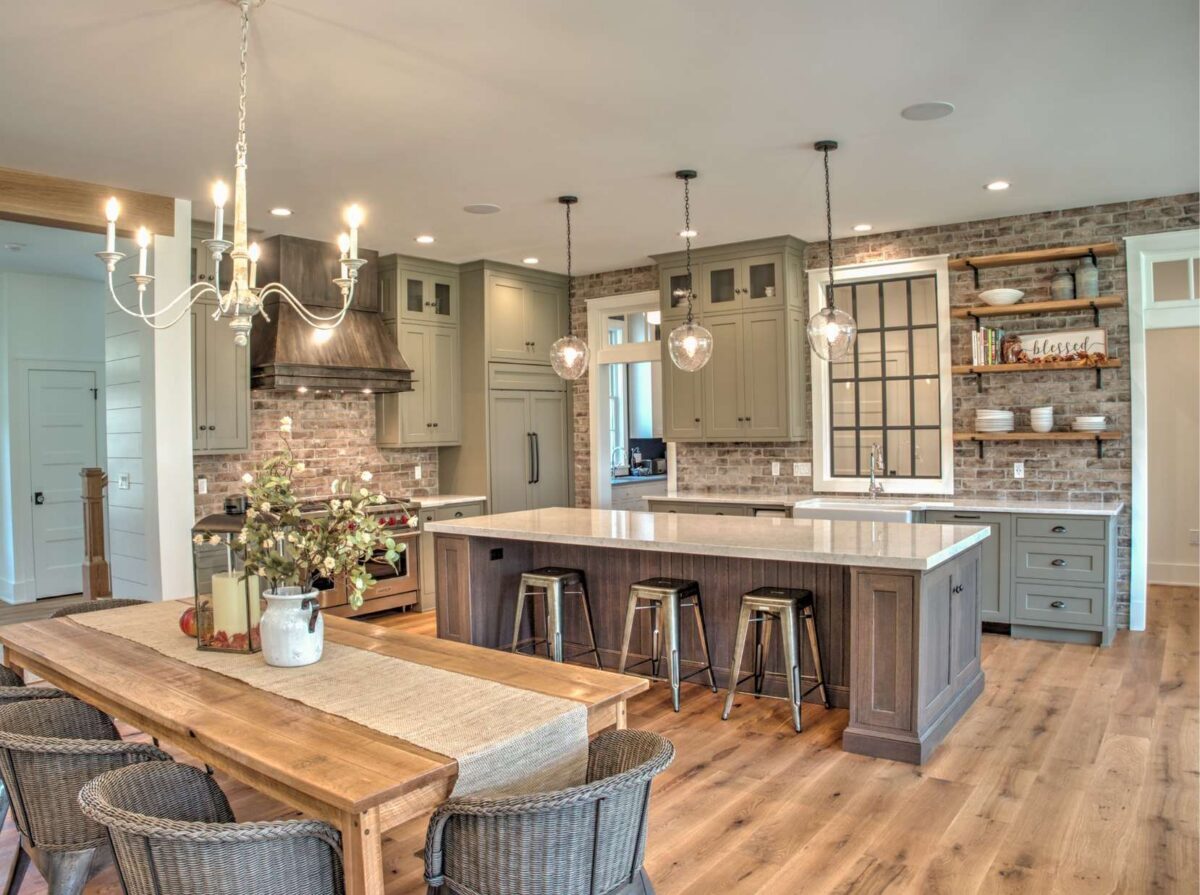
When deciding between painted vs stained cabinets, neither finish is universally superior. The ideal choice depends on your preferred aesthetic, wood species, room lighting, durability expectations, and overall kitchen design. Comparing cabinet construction, maintenance needs, and custom color options ensures a tailored renovation that perfectly suits your home.

Which Woods Work Best With Paint and Stain?
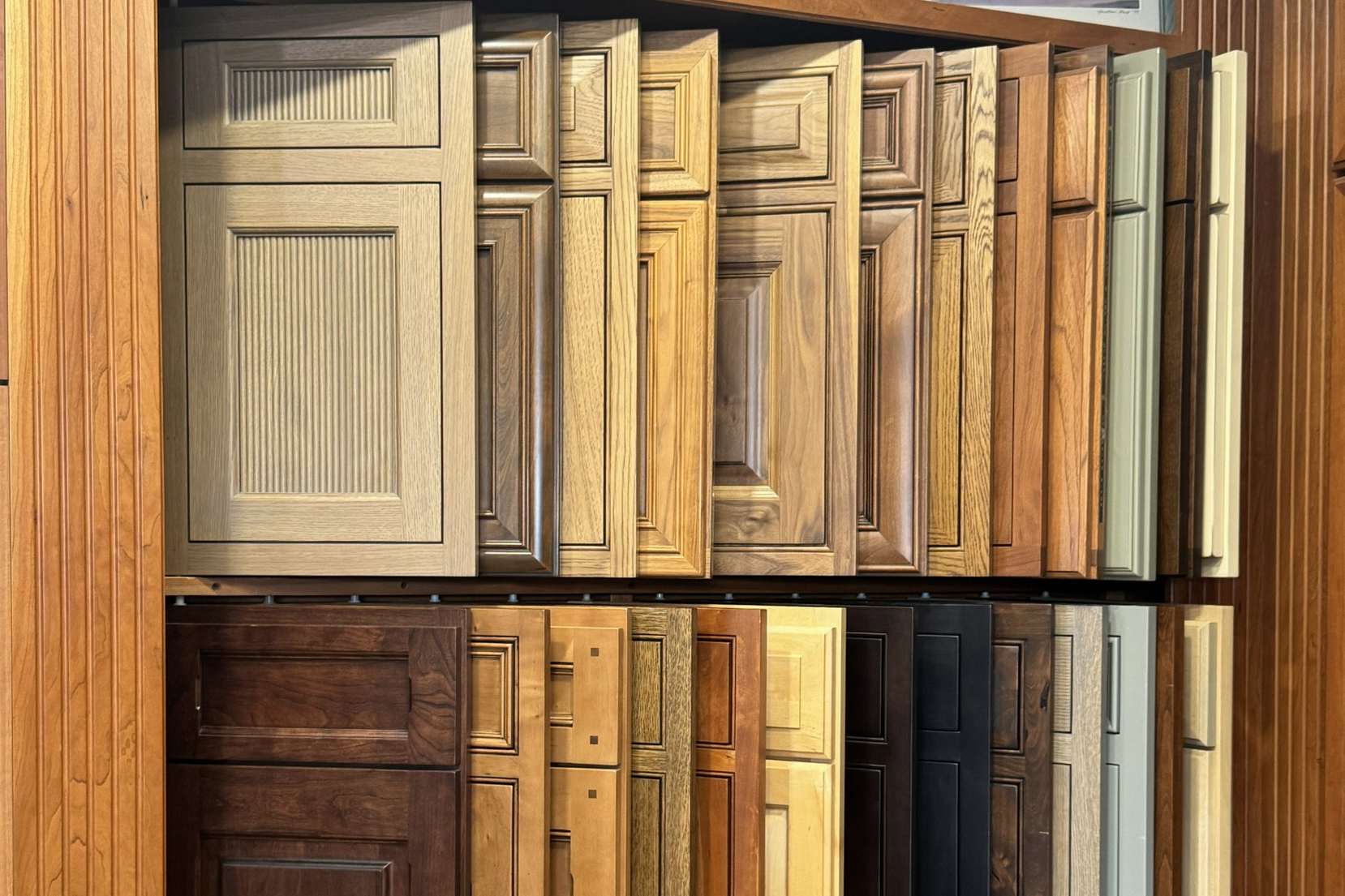
Selecting the finish for your kitchen cabinetry can’t be done in isolation from the wood species beneath it. When weighing painted vs stained cabinets, understanding how different hardwoods react to pigments and stains is critical. High-density hard maple offers an exceptionally smooth, uniform surface, making it the premier substrate for opaque painted finishes as well as subtle, even stains. Conversely, species with distinct, pronounced grain patterns—such as quarter-sawn white oak, walnut, and cherry—are natural candidates for stained applications where the organic texture of the wood takes center stage.
For instance, in our walnut and white oak kitchen remodel in Emmaus, PA, rich walnut base cabinets and quarter-sawn white oak uppers showcase how natural grain patterns bring architectural depth to a room.
To further explore the impact of wood species on painted vs stained cabinets, review our maple cabinets feature guide which highlights how maple excels across both painted and stained applications.
Painted vs Stained Kitchen Cabinets and Durability
Life in a busy Lehigh Valley kitchen places significant demands on cabinetry finishes. When evaluating painted vs stained cabinets, homeowners often ask how each finish handles daily wear, heavy cooking activity, and environmental changes.
Opaque paint creates a solid protective barrier over the wood substrate, but because solid wood naturally expands and contracts with seasonal humidity shifts, micro-fissures can occasionally appear along cabinet door joints over time.
Stained cabinetry, by contrast, absorbs deep into the wood grain rather than sitting on the surface. Consequently, minor scuffs, fingerprints, or small surface marks tend to blend naturally into the wood’s varied tonal patterns.
Understanding painted vs stained kitchen cabinets durability helps homeowners align their material choices with household activity levels, ensuring their custom cabinetry maintains its beauty for decades.
Cleaning, Maintenance and Touchups
Long-term satisfaction with your cabinetry depends heavily on routine maintenance expectations. When comparing painted vs stained cabinets, each finish requires a distinct approach to cleaning and care.
Painted kitchen cabinets provide a smooth, wipeable surface, though darker paint, saturated hues, or glossy finishes may show fingerprints and water spots more readily than satin sheens. Touchups on painted surfaces require precise color matching to blend seamlessly.
Stained surfaces, due to their natural variation and wood grain texture, are remarkably forgiving when it comes to everyday smudges and light dust. Touchups on stained kitchen cabinets can often be accomplished using specialized fill sticks or stain markers that blend into the wood’s natural grain.
How Kitchen Lighting Changes Painted and Stained Cabinet Colors
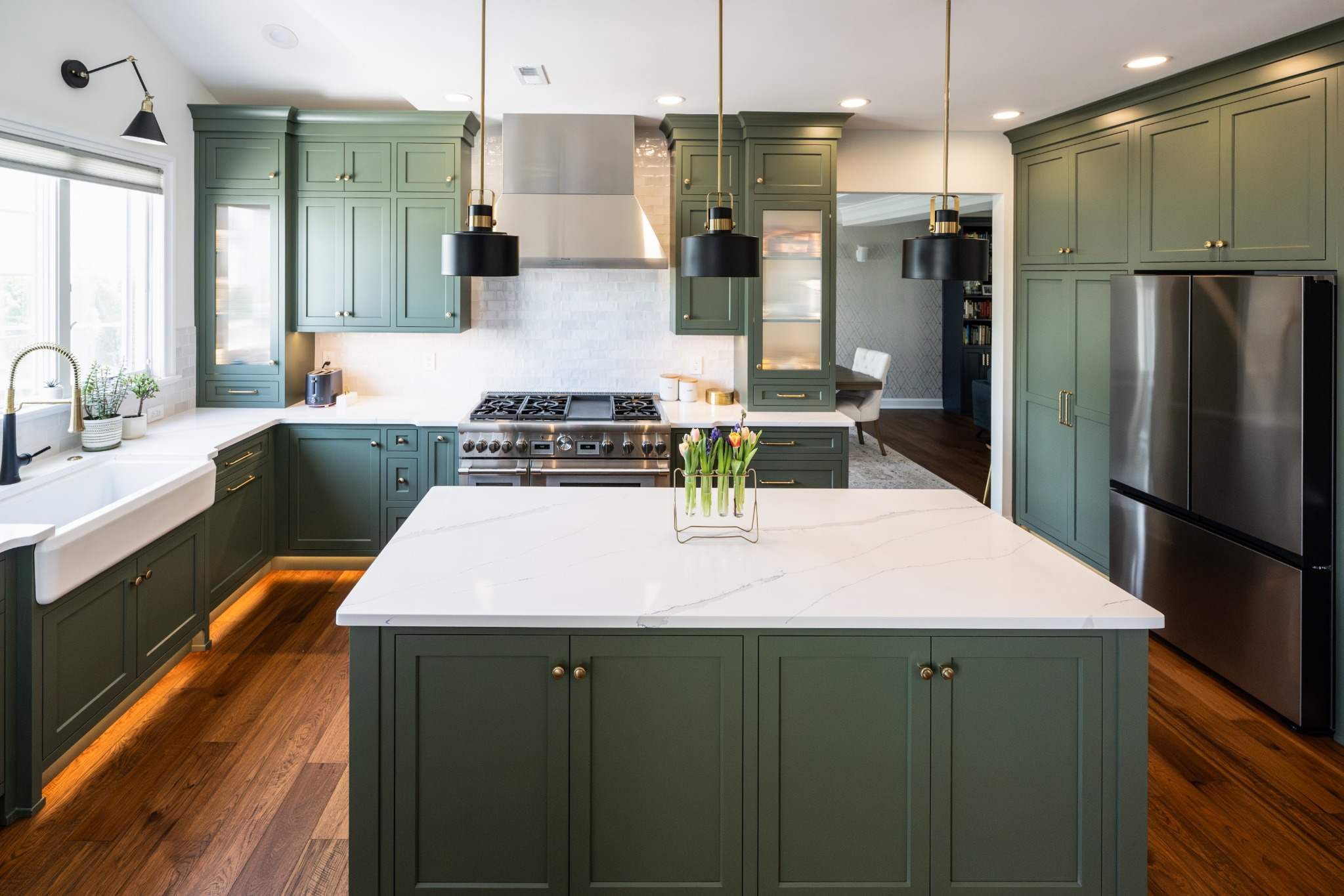
Lighting plays a transformational role in how cabinet finishes appear in your home. A finish sample that looks perfect under showroom lighting may look entirely different in your actual kitchen. When analyzing painted vs stained cabinets, it’s essential to observe sample doors under both natural daylight and warm artificial lighting at various times of the day.
Natural sunlight shifts continuously from morning to dusk, altering the perception of paint undertones and wood grain depth. Furthermore, surrounding elements like countertops, backsplashes, and flooring reflect color onto cabinetry surfaces. A striking example of lighting harmony can be seen in our green kitchen cabinets in Macungie, PA, where custom olive green painted cabinets were specifically chosen and tested to complement both ambient window light and layered brass light fixtures.
Current Kitchen Cabinet Finish Trends
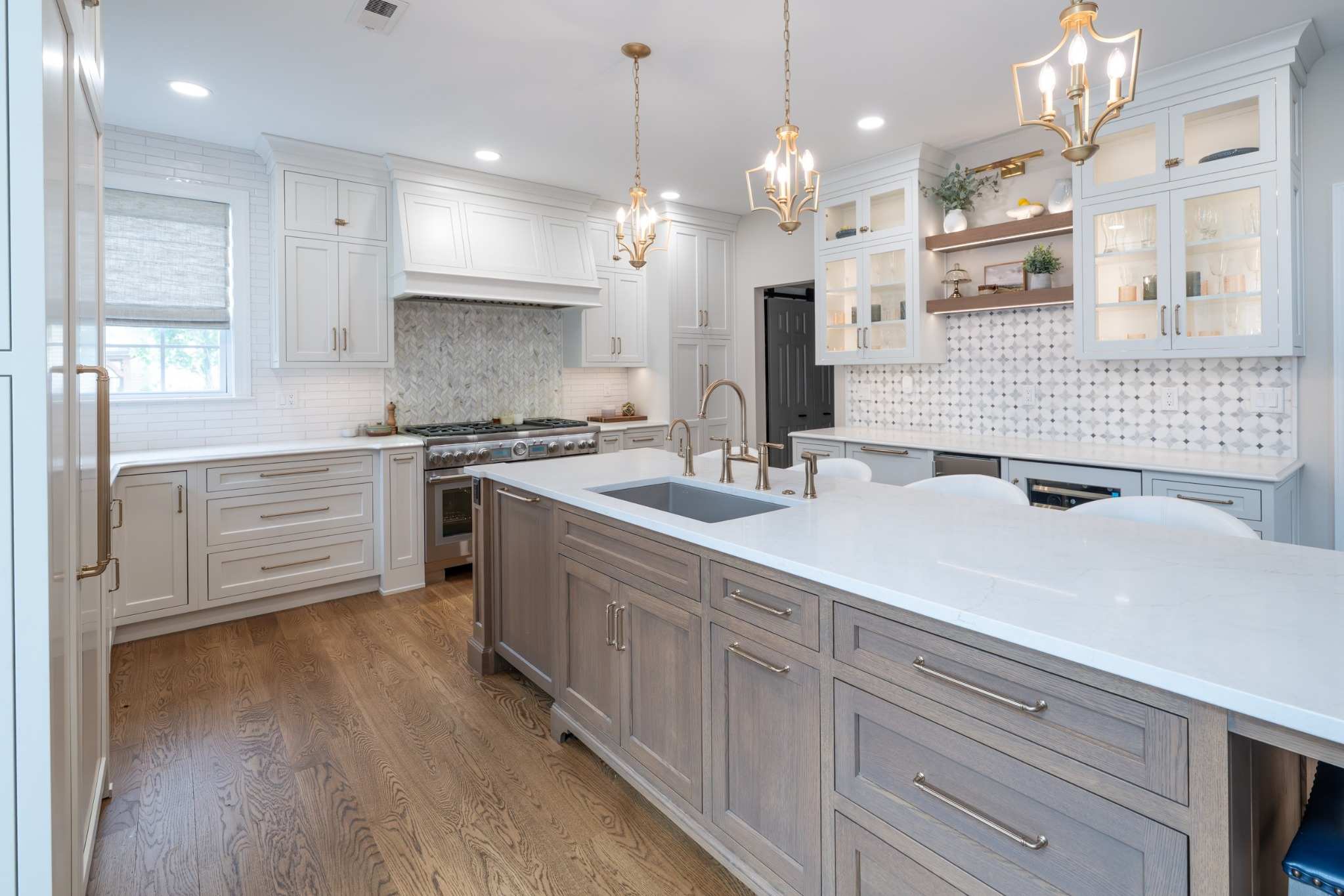
According to the 2026 U.S. Houzz Kitchen Trends Study, natural wood tones have now surpassed white as the leading color choice for kitchen cabinets. However, white remains a close second for homeowners seeking crisp, light-reflective spaces. The survey also says that nearly a quarter of participants opted for the best of both worlds, choosing to incorporate a mixture of painted and stained cabinetry in their kitchen design.
Incorporate these trends into your painted vs stained cabinets strategy to create a dynamic, layered look:
- Contrasting Upper and Lower Cabinets: Pairing crisp white upper cabinets with rich stained lower units grounds the room visually while keeping sightlines open and bright.
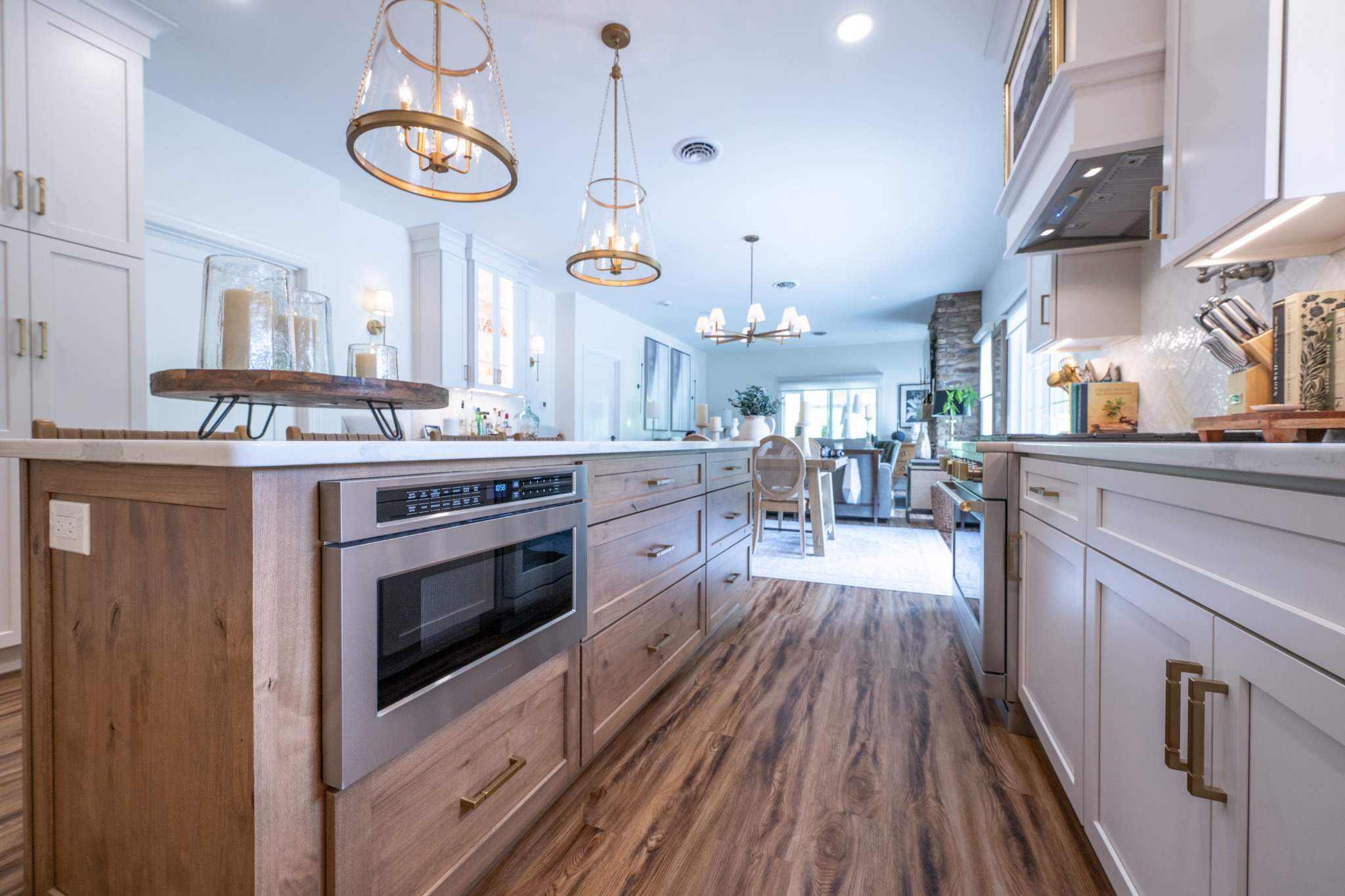
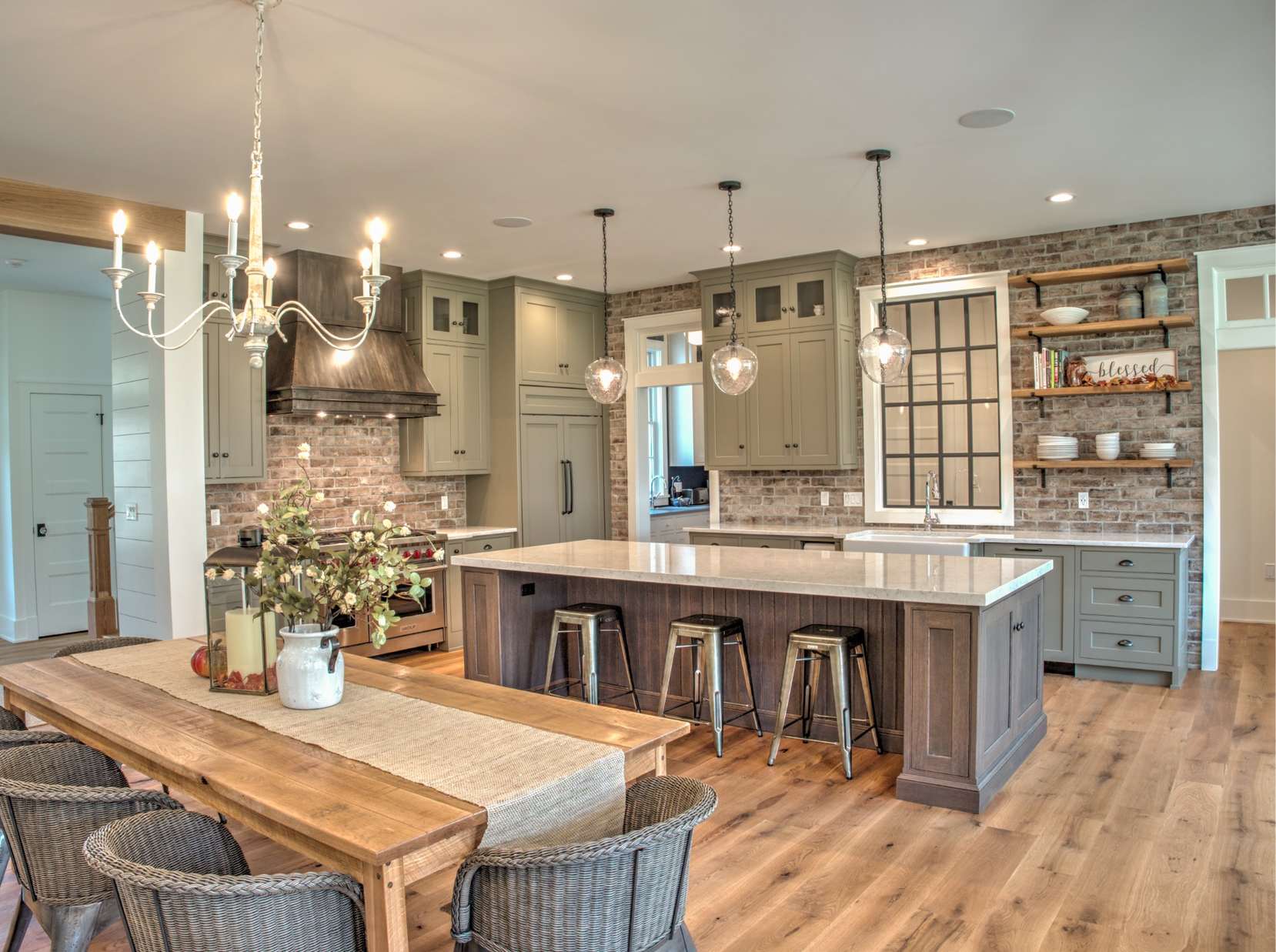
- Warm Wood Focal Islands: Utilizing a stained hardwood island surrounded by painted perimeter cabinets creates an inviting, furniture-like focal point.
- Nature-Inspired Color Palettes: Soft greens, warm khakis, and moody dark stains offer an organic alternative to monochromatic white kitchens.
What About Dark Stains and Bold Cabinet Colors?
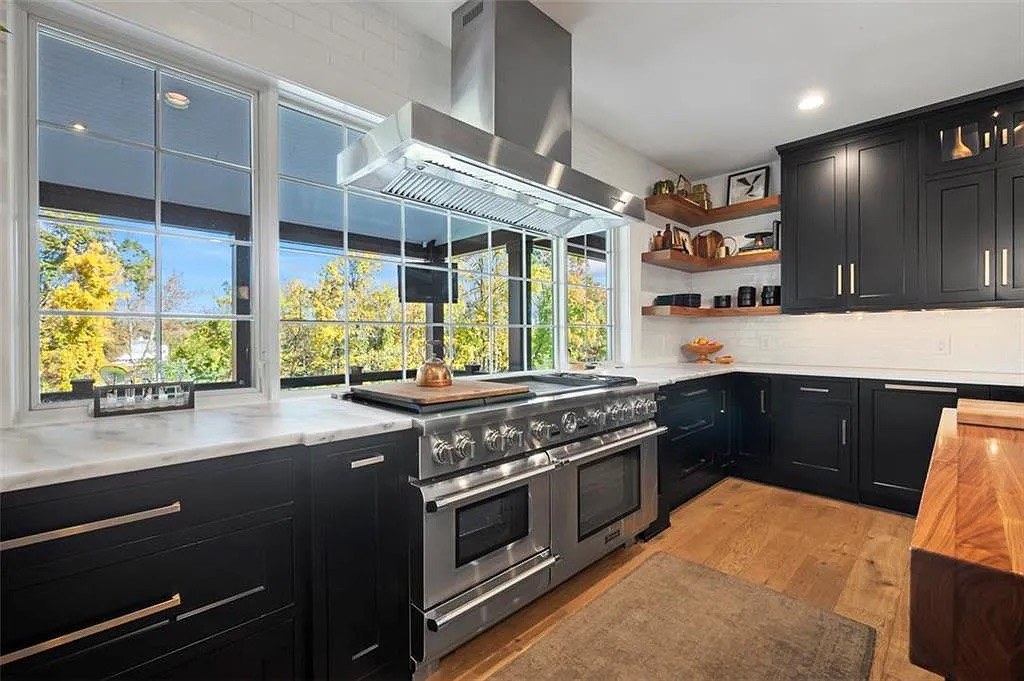
For homeowners seeking a bold statement beyond traditional white or natural wood tones, dark finishes offer dramatic sophistication. However, the debate over painted vs stained cabinets involves more than choosing between color and wood grain—it also encompasses specialized staining techniques.
A prime example is our Upper Saucon kitchen remodel with black cabinetry. While the cabinetry appears to be a deep, saturated black at first glance, it’s actually executed using a black dye-and-wipe stain on custom flush inset Shaker doors. This specialized process allows the authentic wood grain texture to remain visible beneath the dark tone. Paired with warm walnut accents, honed marble countertops, satin brass hardware, and layered lighting, this project illustrates how custom stains deliver extraordinary depth.
When a Custom Cabinet Color or Hand-Applied Stain Is Worth Considering
Selecting cabinetry for a luxury home renovation goes beyond choosing stock paint or stain samples. When evaluating painted vs stained cabinets, opting for custom cabinetry allows for bespoke color matching, hand-applied glazes, and multi-step finishing processes tailored to your home’s unique architecture.
Custom finishing allows designers to match existing architectural trim, blend historic woodwork, or create multi-tonal stained effects that factory-built cabinetry cannot replicate. Working with a dedicated workshop ensures your cabinetry finish is applied with precision, durability, and artistic care.
Cost of Painted vs Stained Cabinets
Understanding the financial investment of your renovation requires evaluating the entire cabinetry specification rather than comparing finishes in isolation. There is no universal price rule when comparing the cost of painted vs stained cabinets, as several interrelated factors shape the final quote.
Key specification variables that influence cabinetry pricing include:
- Wood Species Selection: Paint-grade hardwoods like maple provide a cost-effective substrate for paint, whereas rare woods like walnut or quarter-sawn oak carry higher raw material costs for stained finishes.
- Finishing Process Complexity: Opaque painted finishes require extensive priming, sanding, and multi-layer spray applications, while multi-step custom stains, glazes, or hand-wiped dyes add detailed artisan labor.
- Cabinetry Construction Style: Precision flush-inset and beaded-inset cabinet construction require higher manufacturing tolerances than standard overlay cabinetry, impacting total project cost.
Evaluating painted vs stained cabinets with your design team ensures your budget is allocated effectively across materials, craftsmanship, and finish details.
Does Paint or Stain Affect Resale Value?
Homeowners planning a major kitchen renovation naturally consider how their material choices impact future home value. When analyzing the reselling value painted vs stained cabinets bring to a property, both options offer strong returns when executed with high-quality craftsmanship.
Neutral painted cabinets, particularly in white, cream, or soft gray, appeal broadly to homebuyers seeking bright, move-in-ready spaces. Stained hardwood cabinetry, on the other hand, signals enduring luxury and timeless architectural quality to buyers who appreciate natural wood craftsmanship. Ultimately, choosing between painted vs stained cabinets based on quality, room architecture, and cohesive design yields the greatest long-term resale appeal.
How to Choose Between Painted and Stained Cabinets
To simplify your decision-making process when comparing painted vs stained cabinets, use this helpful design checklist:
Choose Painted Cabinets When:
- You desire a smooth, uniform color palette without visible wood grain.
- Natural wood grain is not central to your overall interior aesthetic.
- You want access to a virtually limitless spectrum of custom paint colors.
- Your kitchen design calls for a crisp, bright, or highly coordinated color scheme.
Choose Stained Cabinets When:
- You want to celebrate the natural texture, grain, and warmth of authentic hardwood.
- You prefer a finish that naturally disguises minor smudges, fingerprints, and daily wear.
- You are selecting premium wood species like walnut, white oak, or cherry.
- You want to create an organic, furniture-like feel that anchors the room.
Frequently Asked Questions (FAQ)
Are painted or stained cabinets better for a kitchen remodel?
Neither finish is universally better for a kitchen remodel. Painted cabinets offer smooth, vibrant colors and a crisp aesthetic, while stained cabinets showcase natural wood grain and organic warmth. The best choice depends on your home’s architecture, preferred wood species, and daily maintenance expectations.
Is it more expensive to paint or stain kitchen cabinets?
The cost difference between painted and stained cabinets depends on wood species and finishing complexity. Painting requires multi-step priming and sanding labor, while staining requires higher-grade hardwoods with consistent grain. Custom color matching and specialized hand-applied stains also influence the total cabinetry investment.
Can you combine painted and stained cabinets in the same kitchen?
Yes, combining painted and stained cabinets is a highly popular design approach. Pairing a painted perimeter with a stained wood island creates rich visual contrast, introduces natural texture, and establishes a furniture-like focal point while maintaining cohesive cabinet construction throughout the space.
Take the Next Step with Laslo Custom Kitchens
Ready to transform your home with custom cabinetry designed around how you live? At Laslo Custom Kitchens, our experienced design and install team brings over 50 years of local craftsmanship to homeowners throughout Easton and the Lehigh Valley. We guide you through material selection, construction styles, and custom finishes.
Schedule a consultation, visit our Easton showroom, or call 610-600-9528 to speak with our design experts today!