
Small Kitchen Remodel Trends
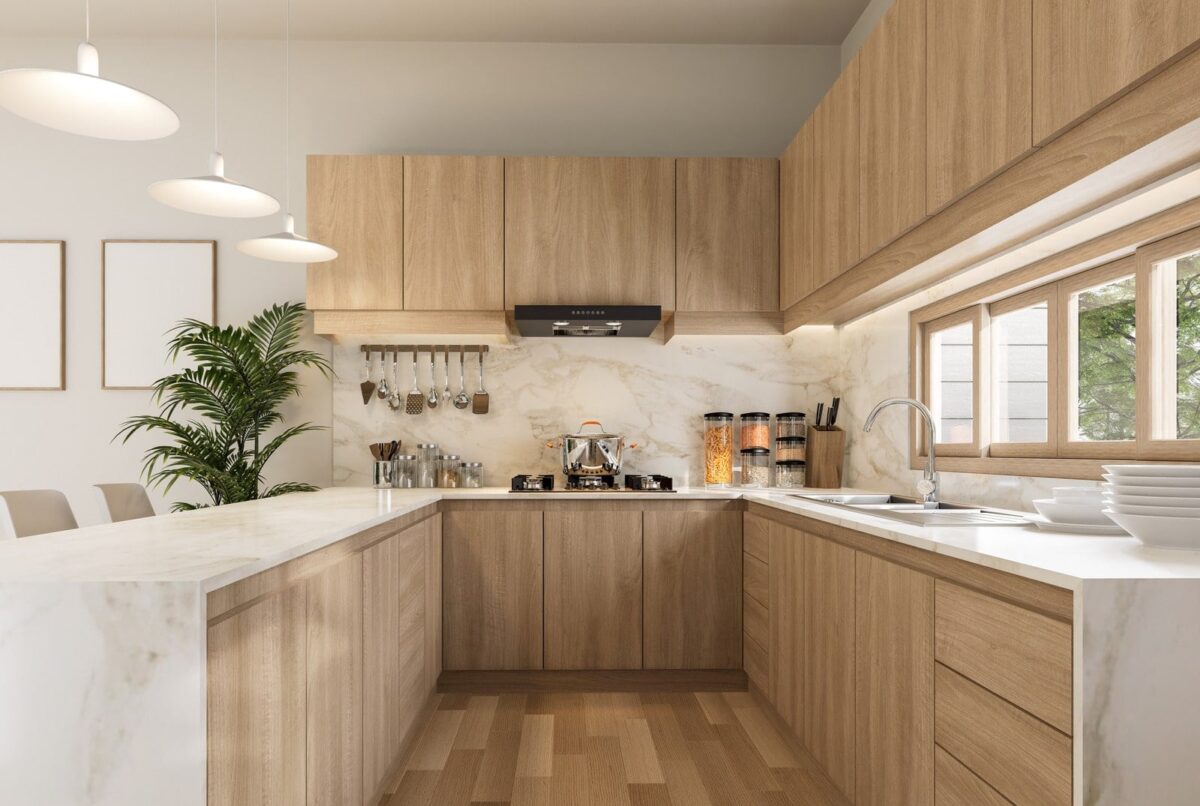
Tackling a Small Kitchen Remodel
A small kitchen remodel can be one of the most satisfying home projects because the results show up in your day-to-day routine right away. In a compact kitchen, thoughtful planning can make the space feel more functional, more open, and easier to use without changing the footprint. Today’s most popular small kitchen remodel choices aren’t about packing in more features, but about improving how the space works: clearer walkways, smarter storage, better lighting, and finishes that feel intentional instead of busy.
If you’re gathering small kitchen remodel ideas, the trends below will help you focus on upgrades that solve real problems: where things go, how you move through the room, and how the kitchen supports your routine. These are the small kitchen remodel trends homeowners keep gravitating toward because they make smaller kitchens feel organized, welcoming, and surprisingly capable.
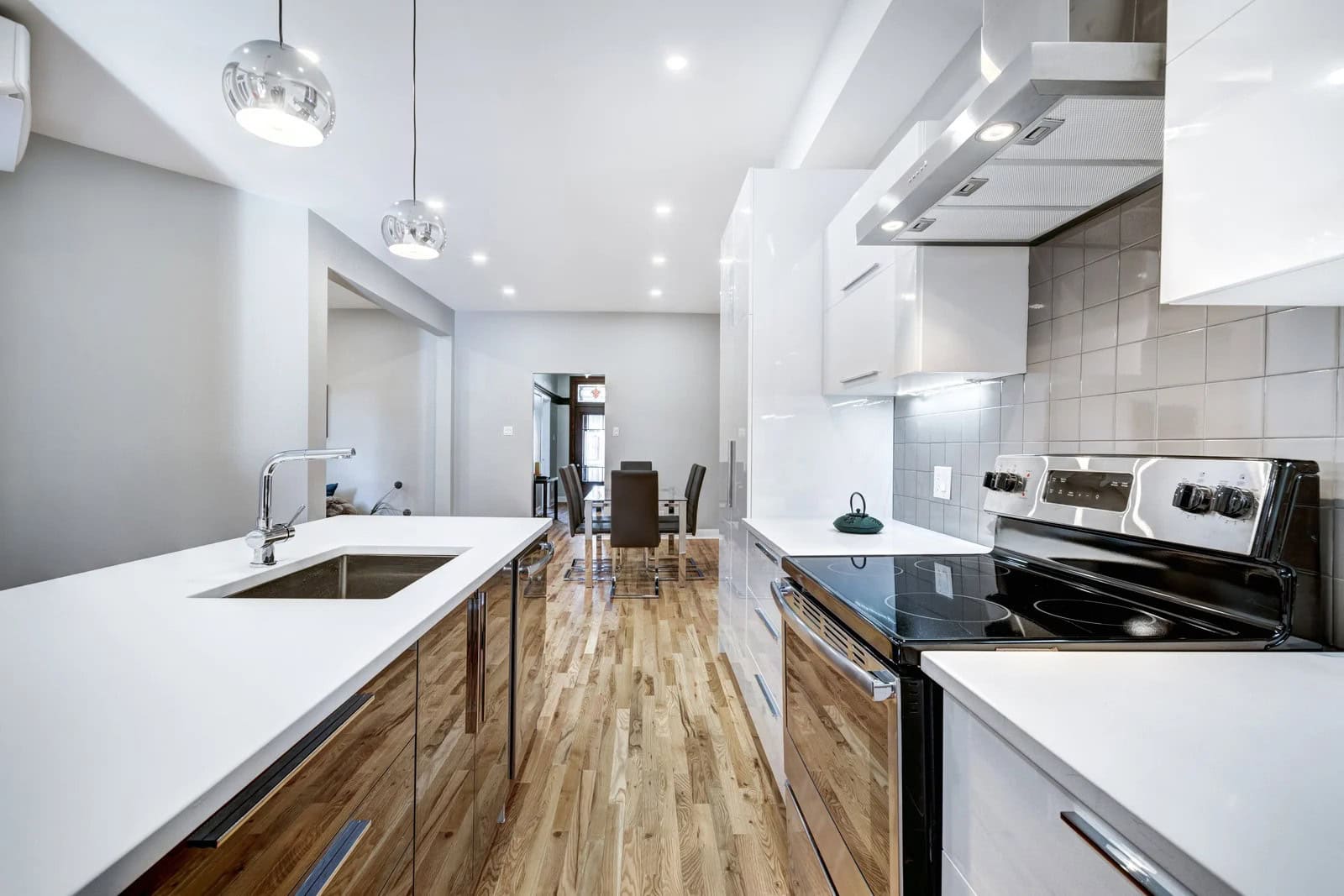
Top 10 Small Kitchen Remodel Trends
Below are the top small kitchen remodel trends shaping how homeowners are improving storage, flow, and day-to-day function in compact spaces. Each one is designed to help you get more out of your kitchen without adding square footage.
1. Work Zones Replace “the Triangle”
In a compact room, the classic kitchen triangle can feel like a rule that forces awkward compromises. A more practical approach is “zoning.” Instead of focusing on distances between sink, fridge, and range, the kitchen is planned around how you actually use it.
Think in stations:
- Prep zone: clear counter space, knives, cutting boards, trash pullout
- Cooking zone: range, utensils, spices, oils, pans
- Cleanup zone: sink, dishwasher, towels, recycling
- Coffee or beverage zone: mugs, pods or beans, sugar, small appliances
- Pantry zone: dry goods, snack storage, meal planning staples
This trend matters for small kitchen remodels because it reduces back-and-forth traffic. When frequently used items live where you use them, the space feels calmer and faster, even if it’s the same size.
2. Vertical Storage
When floor space is limited, the walls become your best opportunity for additional storage. Small kitchen remodels are looking up—taller cabinets, stacked uppers, and intentional use of the area above the refrigerator and around windows.
Popular vertical storage upgrades include:
- Uppers that run to the ceiling (no dust shelf, more storage)
- Stacked cabinetry with a second “top row” for lesser-used items
- Tall pantry cabinets that replace a few short base cabinets
- Integrated storage around a window or doorway to use “awkward” zones
- Narrow pull-out pantry units for spices, oils, and baking supplies
The goal isn’t to just cram in more storage wherever you can find. It’s to create better places for what you already own, so counters stay open and the room feels less cluttered.
3. Deep Drawer Base Cabinets
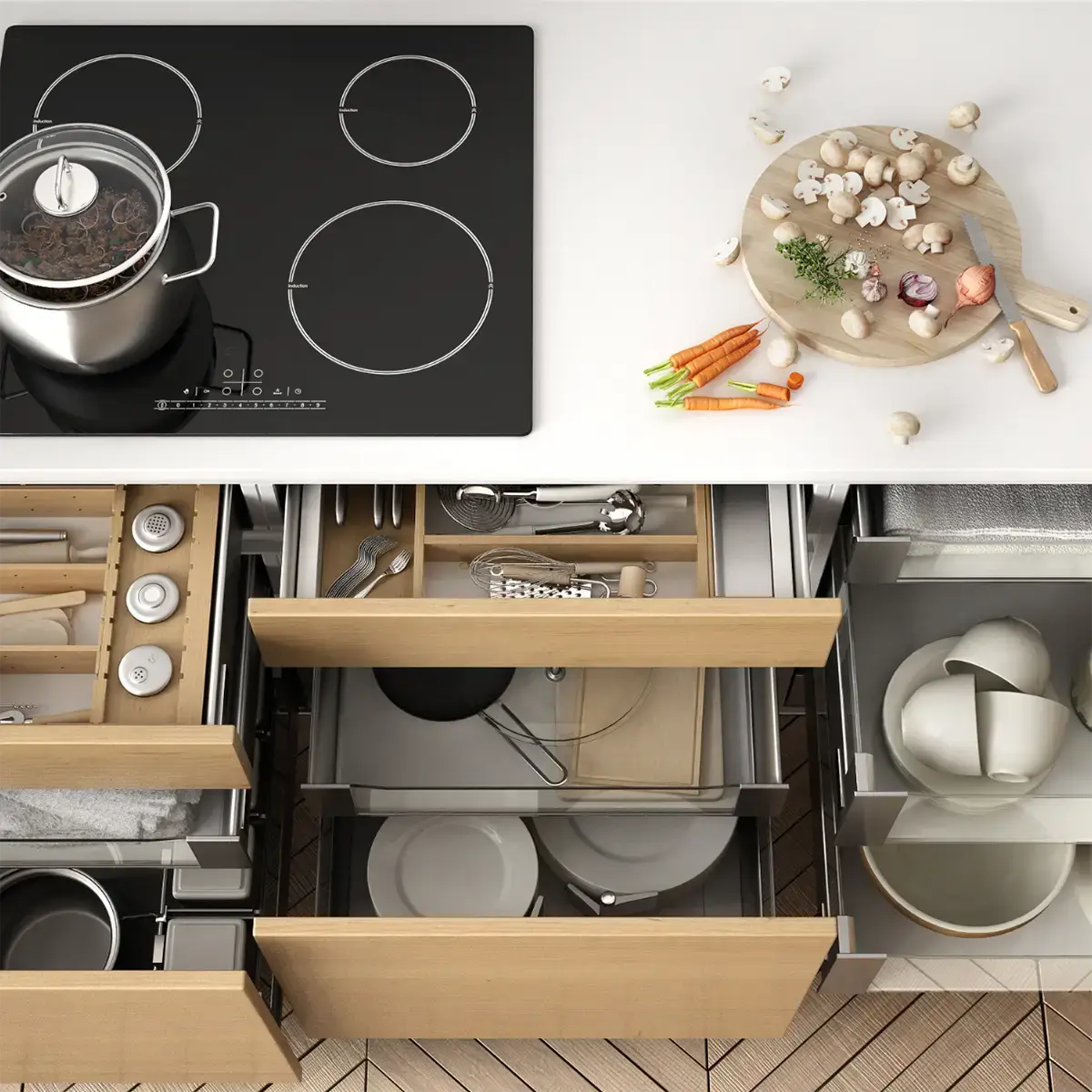
One of the simplest upgrades that makes a major impact is switching base cabinets from doors-with-shelves to deep drawers. In a small kitchen remodel, drawers reduce wasted space because they keep items visible and reachable. You don’t have to crouch down, dig, and pull everything out to find what you need.
Deep drawers work especially well for:
- Dishes and bowls (with pegs or organizers)
- Pots, pans, lids, and sheet trays
- Food containers and lunch prep
- Small appliances that you want close, but not on the counter
If your current kitchen feels tight, drawers can make it feel bigger because you aren’t constantly pulling everything out to get to the back of a shelf.
4. Compact Islands and Peninsulas
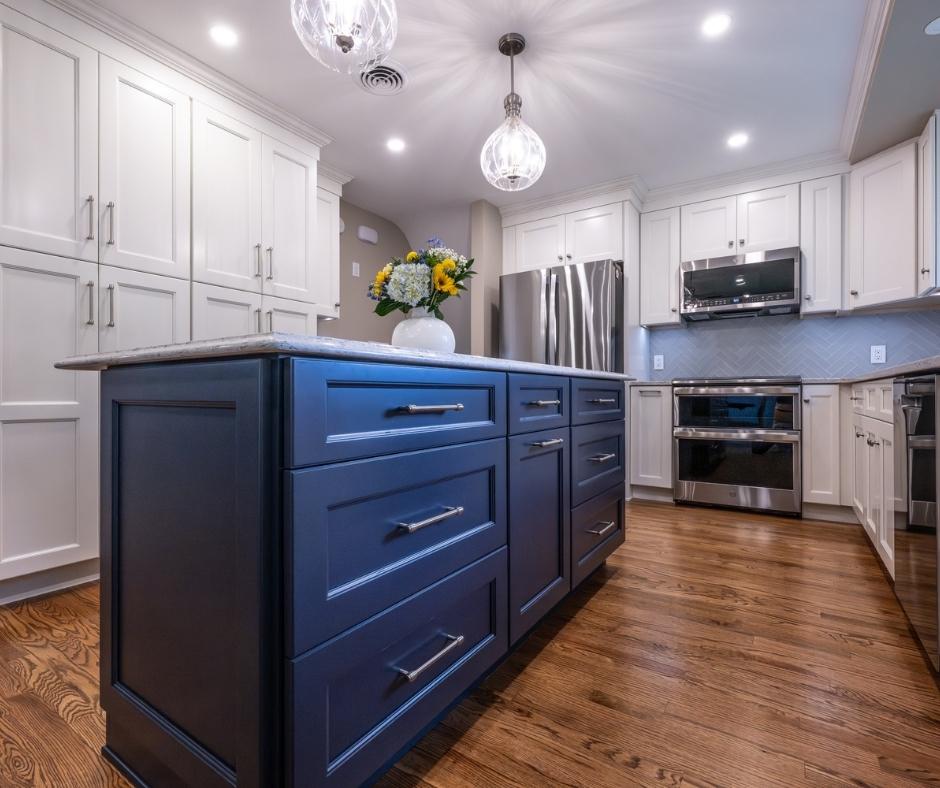
A small kitchen doesn’t need a massive island to be functional. In fact, forcing a large island into a tight room often makes the kitchen feel even smaller. Current small kitchen remodel planning favors properly sized islands, narrow “furniture-style” islands, or a peninsula that provides work space without blocking pathways.
This trend shows up in a few practical ways:
- Slim islands that still allow comfortable clearance
- Islands designed for prep and storage, not oversized seating
- Peninsulas that define the space and add landing room
- Counter-height ledges or “tuck-in” seating for one or two stools
When it’s done right, these solutions add function and storage while keeping the room open. The best sign you sized it correctly: you never have to “sidestep” around it.
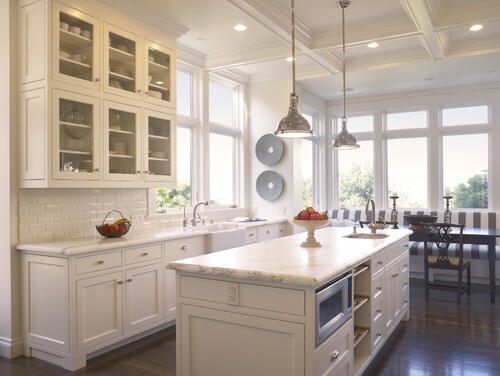
5. Hutch-Style Cabinetry
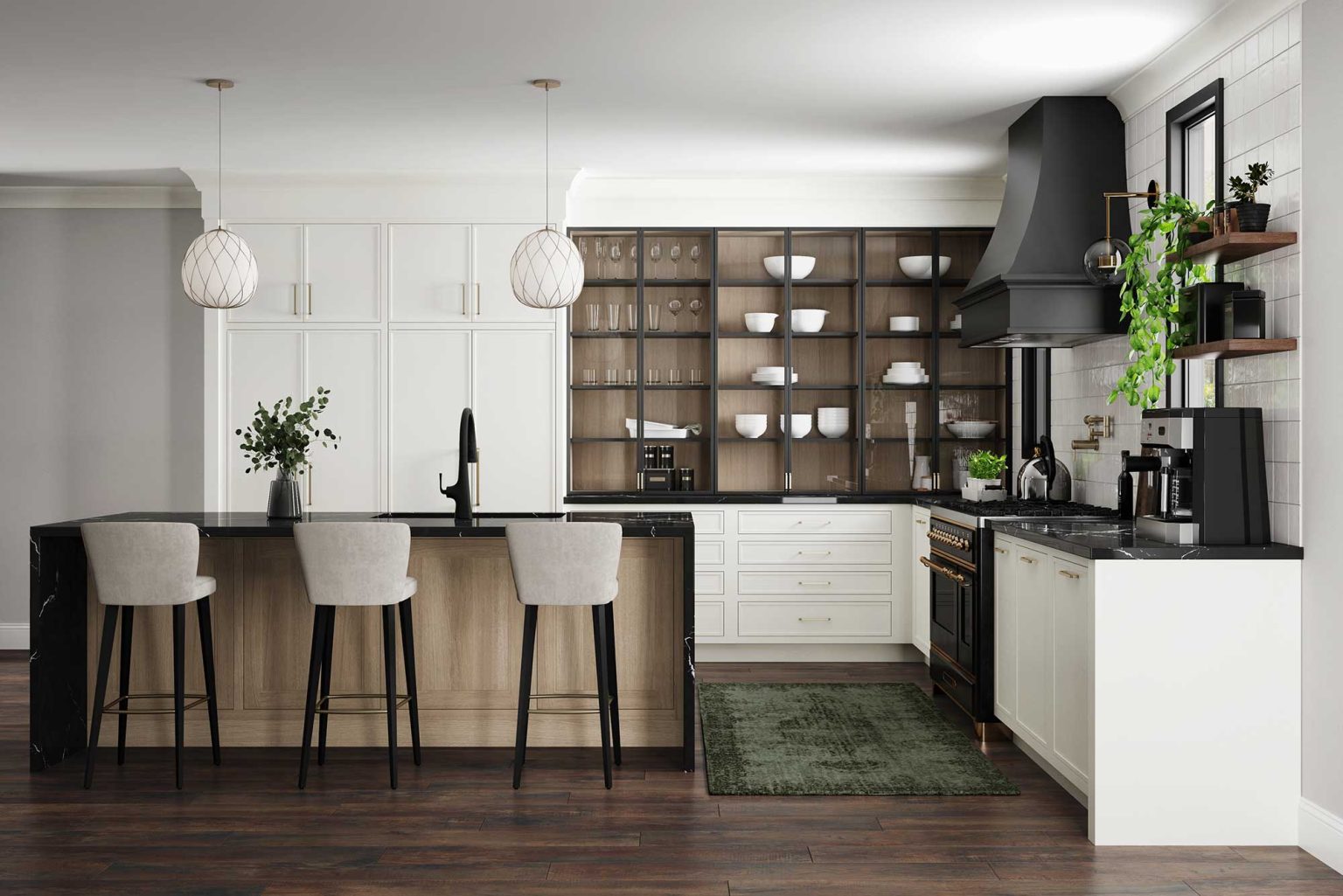
Small kitchens are embracing a “built-in furniture” look—hutches, glass-door uppers, open shelves in a controlled area, or a dedicated display niche. The reason this trend works is that it creates a focal point without requiring more square footage.
A hutch moment can provide:
- A place for everyday dishes and glassware
- A way to break up a wall of cabinets visually
- A spot to show a little personality without cluttering counters
- Extra storage for serving pieces or entertaining items
The key in small kitchen remodels is to keep this design feature intentional. Choose one focal storage moment and let the rest of the kitchen stay streamlined.
6. Strategic Use of Color
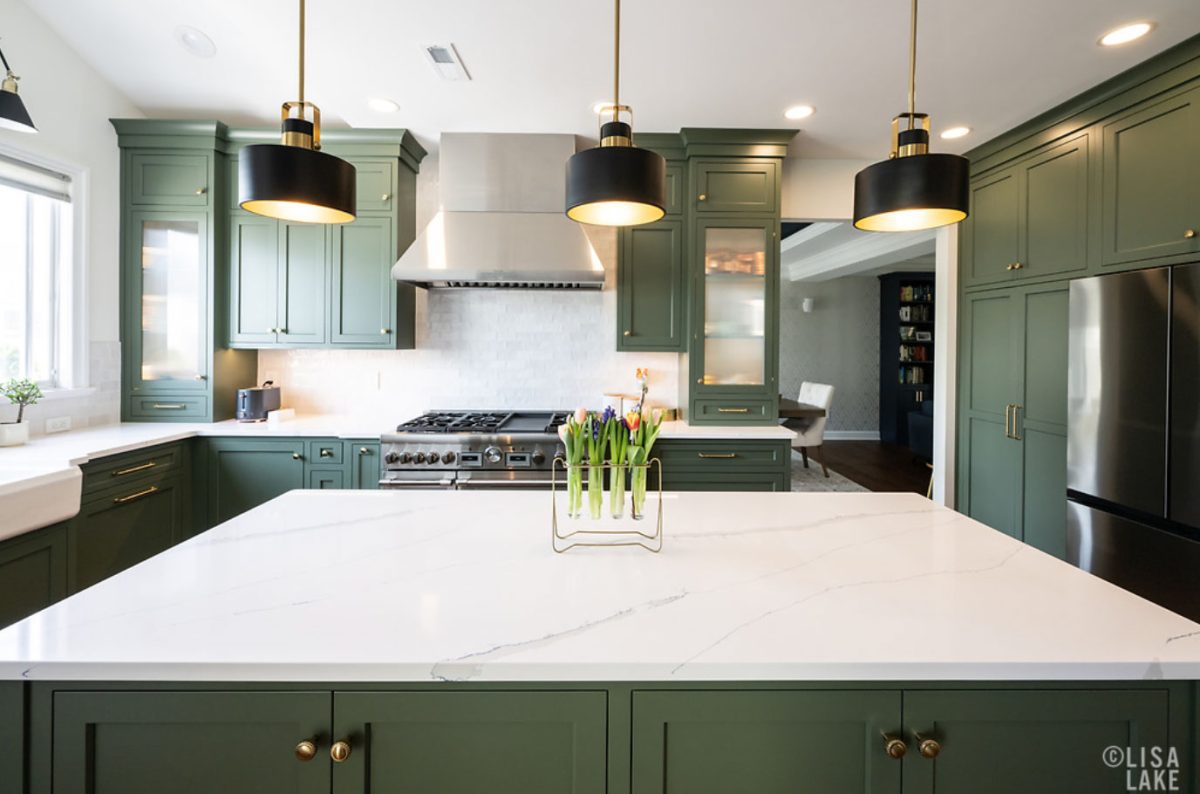
Small kitchens aren’t all-white by default anymore. Color is trending again, but the smartest designs use it in a controlled way so that the space feels lively without feeling busy.
Common approaches include:
- A colored base cabinet run with lighter uppers
- A single statement area (like a pantry wall) in a richer tone
- Warm accent colors in hardware, lighting, or a feature cabinet
- Natural wood tones paired with softer painted cabinetry
Color can also help visually organize a small kitchen layout. A darker tone can ground the room, while lighter surfaces keep the overall feel open.
7. Softer Shapes and Subtle Curves
Hard corners and sharp lines can make a small kitchen feel rigid. A growing trend is to soften the space with gentle curves or rounded details that make the room feel more fluid and easier to move through.
Examples include:
- A rounded edge on a peninsula or countertop corner
- Curved end panels on base cabinets to soften transitions
- Arched details in open niches or shelf openings
- Rounded shelving (or a radius on floating shelves) for a lighter look
- Softened trim profiles and door styles that avoid hard angles
Curves work well in compact kitchens because they improve movement. Even a small rounded detail reduces the “tight hallway” feeling that can happen in narrow layouts.
8. Statement Surfaces
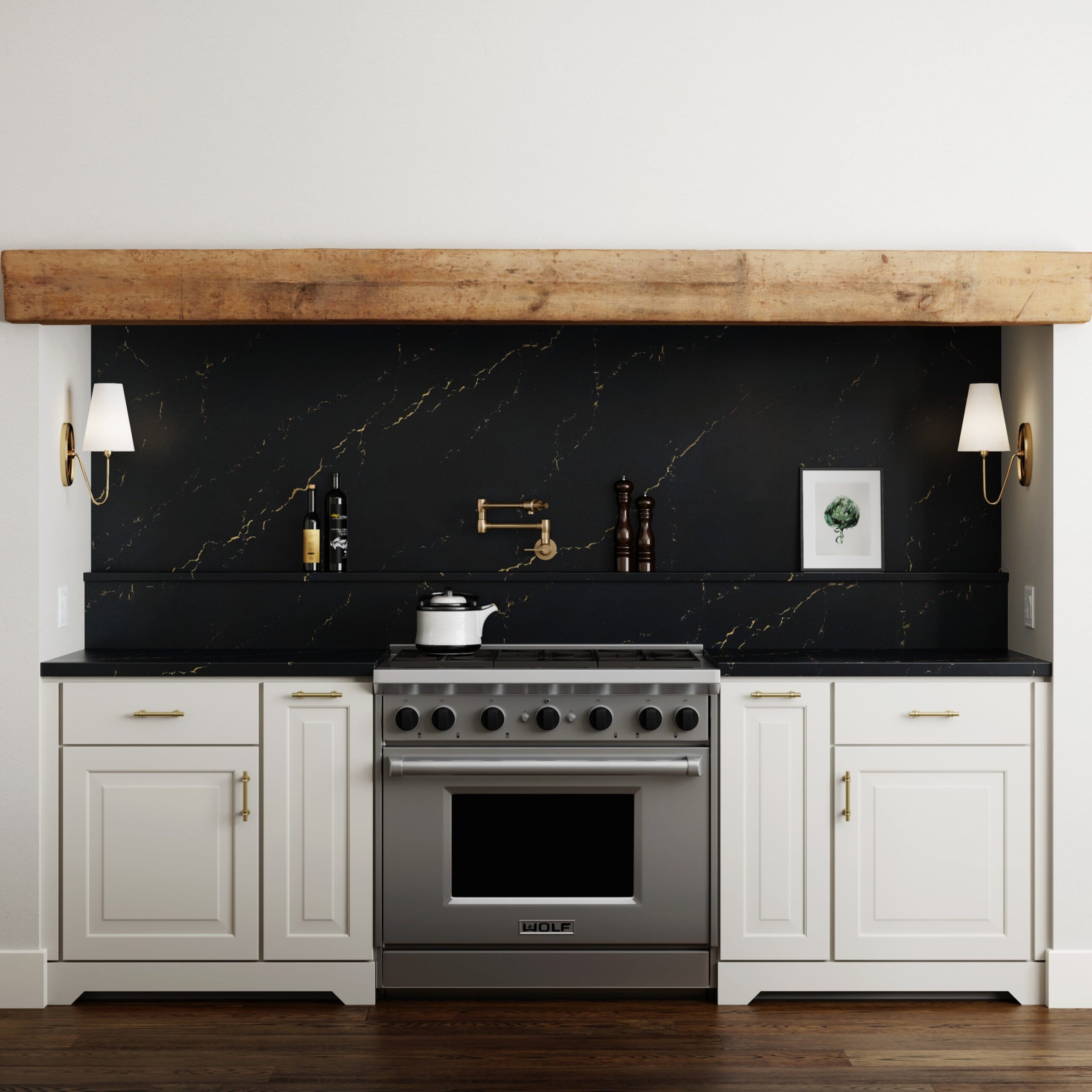
Small kitchen remodels are leaning toward fewer materials with more impact. Instead of mixing many patterns and finishes, the trend is to select one standout surface and keep the rest calm.
Examples include:
- A slab backsplash that creates a clean, uninterrupted surface
- A countertop with subtle veining that adds interest without feeling busy
- A waterfall edge on a compact island or peninsula to create a polished focal point
- Simple edges and streamlined transitions that keep the look continuous
This approach is a favorite because it makes the kitchen feel more cohesive. In a small room, cohesion is what reads as “high end.”
9. Layered Lighting and Light-Enhancing Finishes
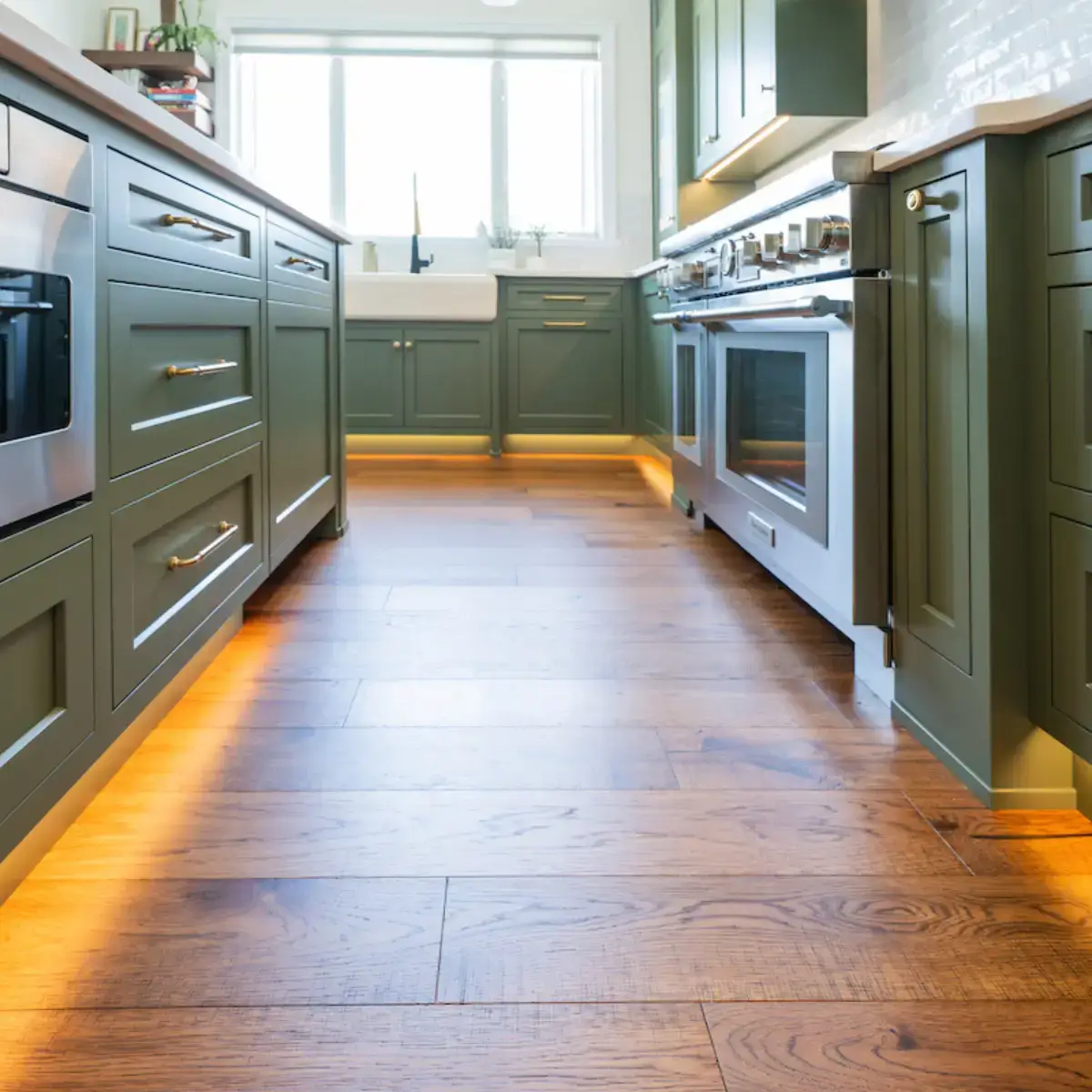
Lighting is one of the fastest ways to make a compact kitchen feel larger. Small kitchen remodels are using reflective finishes and layered lighting to bounce light around the room.
Design choices that help:
- Under-cabinet lighting that removes shadows on counters
- Brighter backsplash tile or a finish that softly reflects light
- Thoughtful overhead lighting placement to avoid dark corners
- Glass-front storage or lighter cabinet colors to lift the room
A small kitchen doesn’t need to be bright-white to feel open. It just needs light placed where you actually work, plus finishes that don’t absorb everything.
10. Embracing Small Kitchen Layouts
Many small kitchens are galley kitchens, one-wall kitchens, or L-shapes with limited room for extra features. The trend is to stop treating those layouts as problems and work to optimize them instead.
For a functional small kitchen layout, priorities often include:
- Clear landing space near the refrigerator and cooking area
- Right-sized appliances for the footprint
- Better placement of the dishwasher and trash pullout
- Storage that matches your habits, not generic “standards”
- Clean sightlines so the kitchen feels less boxed in
When you design around the layout you actually have, the remodel feels more comfortable because movement becomes intuitive.
Small Kitchen Remodel Photos: What to Look For When You’re Collecting Inspiration
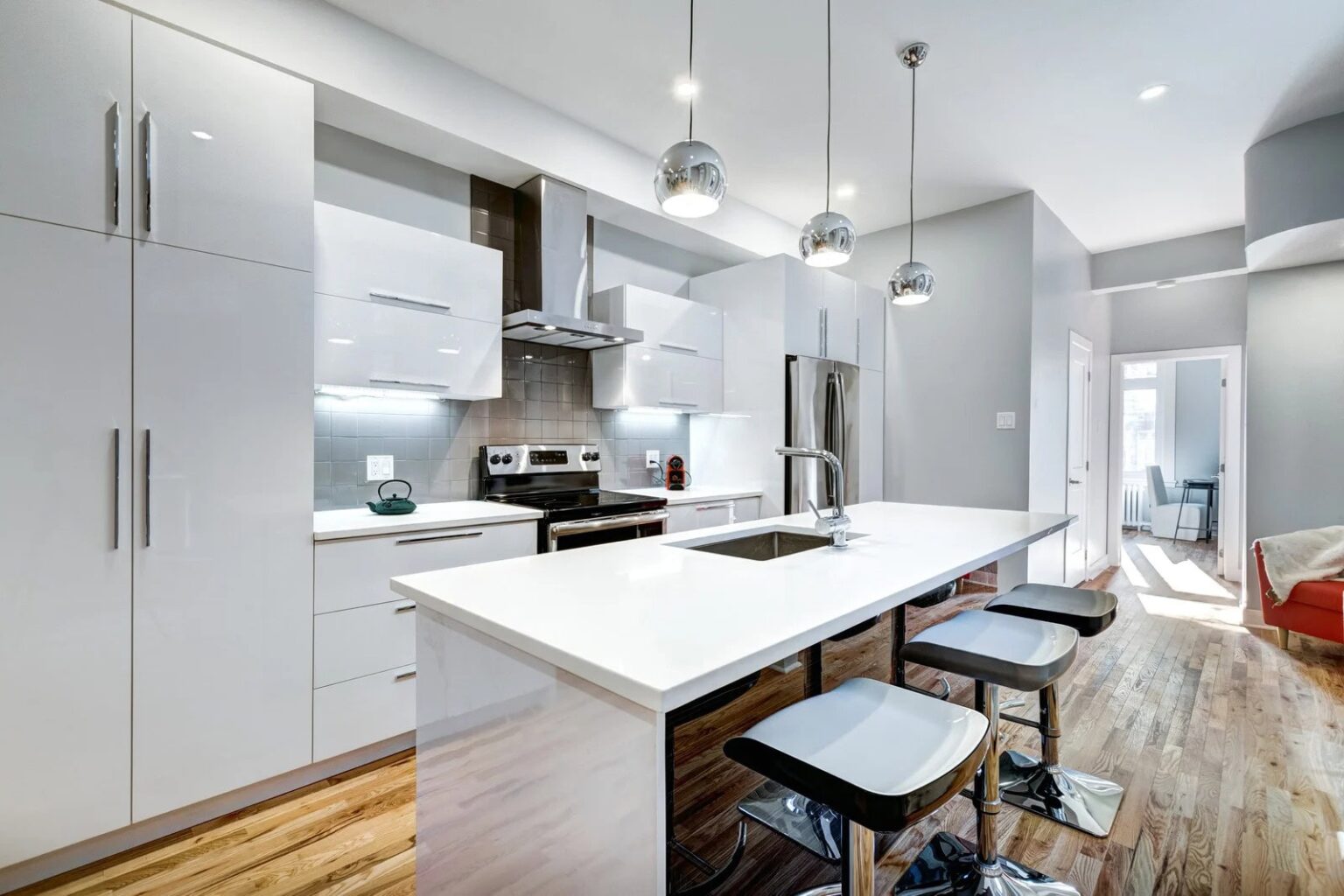
When you’re scrolling small kitchen remodel photos, it helps to look past the pretty finishes and notice the functional choices. Ask yourself:
- Where’s the pantry storage located?
- Do you see deep drawers or pull-outs?
- Is there a landing zone near the range and the refrigerator?
- Are counters clear because storage is doing its job?
- Is the lighting layered, or does it rely on one ceiling fixture?
This mindset helps you collect inspiration that translates into your home. Beautiful photos are useful, but only if the ideas fit the way you live.
How Much Does a Small Kitchen Remodel Cost?
One of the most pressing questions homeowners often have is, “How much does a small kitchen remodel cost?” The answer depends on layout changes, cabinet scope, materials, and the level of customization. A small kitchen remodel can sometimes cost less than a large one, but it can also cost more than people expect because compact spaces often require highly efficient solutions and careful planning.
As a baseline, prices start at $22,000 for a small kitchen remodel at Laslo Custom Kitchens. From there, the budget can increase based on factors like:
- Whether you’re keeping the existing layout or moving plumbing and electrical
- Cabinet type (stock, semi custom, or custom) and the amount of storage added
- Countertop and backsplash selections
- Flooring, lighting, and ventilation upgrades
- New appliances and whether sizes need to change for the layout
- Specialty storage solutions (pull-outs, pantry towers, drawer organizers)
If cost is a big concern, the most helpful approach is to identify what must improve: storage, workflow, lighting, or layout. When your priorities are clear, you can invest in the upgrades that move the needle instead of spending on details that don’t change daily function.
Laslo Custom Kitchens routinely receives praise from clients for keeping projects aligned with the budget from day one. Our estimates are clear and pressure-free, and our experienced team helps you sort through options, set smart priorities, and invest where it counts so your finished kitchen feels like a dream without surprise costs.
Laslo Custom Kitchens: The Lehigh Valley’s Small Kitchen Remodel Experts
If you’re planning a small kitchen remodel in the Lehigh Valley, PA or its surrounding areas, Laslo Custom Kitchens can help you turn tight square footage into a kitchen that feels organized, functional, and built around your routine. Our experienced team understands how to solve the challenges that come with a small kitchen. We know how to make storage work harder, refine the small kitchen layout, and select cabinetry details that create a clean, custom look without wasting space.
To see what’s possible, view our portfolio and visit our Facebook Page to explore past small kitchen remodel projects and gather ideas you can apply to your own home. When you’re ready to take the next step, schedule a consultation to discuss your space, share your goals, and develop a plan with one of our trusted experts.
Conclusion
Small kitchens don’t need more space—they need better planning. The trends shaping today’s small kitchen remodels all point to the same outcome: a kitchen that’s easier to move through, easier to keep tidy, and more enjoyable to use every day. Start with function, prioritize small kitchen storage, respect the realities of your small kitchen layout, and choose finishes that support a cohesive look. When the details align with the way you live, a small kitchen remodel can feel like a major upgrade.
Further Reading
- “Financing Your Kitchen Remodel”
- “AI Room Designer for Homeowners”
- “Common Kitchen Remodeling Mistakes – How To Avoid Them?”
FAQ: Small Kitchen Remodel
1. How much does a small kitchen remodel cost?
A small kitchen remodel can start at $22,000, then scale up based on cabinets, layout changes, finishes, and how much work is happening behind the walls.
Most of the cost comes from cabinetry and labor, followed by countertops, appliances, lighting, and trades like plumbing and electrical. If you keep the existing footprint and reuse key elements that are in good shape, you can stay closer to the starting range. If you move the sink, add a peninsula, or upgrade to more custom storage, the budget can begin to rise.
2. How long does a small kitchen remodel take?
Many small kitchen remodels take several weeks, but the timeline depends more on complexity and product lead times than on room size.
A simple refresh with minimal layout changes can move faster, while projects with new cabinets, counters, and electrical updates take longer. Ordering cabinets and countertops, coordinating trades, and allowing time for inspections (when needed) often drive the schedule. A clear plan and early selections are what keep a timeline from stretching.
3. What’s the best small kitchen layout for my space?
The best small kitchen layout is the one that protects your walkways and creates clear landing space near the sink, range, and refrigerator.
Galley layouts work well when both sides are organized into zones and aisles stay comfortable. L shape kitchens often benefit from prioritizing one uninterrupted counter run for prep. One wall kitchens can feel surprisingly functional when storage goes vertical and the work zones are arranged in the order you actually cook.
4. Do I need permits for a small kitchen remodel?
You might need permits if your remodel involves electrical, plumbing, structural changes, or ventilation updates, even if the kitchen is small.
If you are replacing finishes and keeping everything in the same place, permits are less likely. The moment you move a sink, add circuits, relocate gas lines, or alter walls, your local building department may require permits and inspections. A good contractor will help you confirm what applies before work begins.
5. Can I stay in my home during the remodel?
Yes, many homeowners stay in their home during a small kitchen remodel, but you should plan for a period without a working kitchen.
Expect noise, dust, and limited access, plus days when water or power may be temporarily interrupted. Setting up a simple temporary kitchen with a microwave, coffee maker, and a dishwashing plan makes the process easier. Clear communication about daily work hours and cleanup helps the home stay livable.
6. What’s the most expensive part of a small kitchen remodel?
Cabinetry is often the biggest investment in a small kitchen remodel, even more than countertops or appliances.
Cabinets drive both material cost and labor because they set the foundation for the entire room. Layout changes can also add significant cost because moving plumbing, electrical, and ductwork stacks trades and time. If you want to control the budget, focus first on the cabinet plan and whether the layout is staying put.
7. Should I reface cabinets or replace them?
Refacing can make sense if your cabinet boxes are in great condition and the layout works well, but replacement is better when you need improved storage or a smarter layout.
Refacing updates doors, drawer fronts, and visible surfaces, so it improves the look without changing function much. Replacing cabinets lets you adjust sizes, add deep drawers and pull outs, and fix problem areas like wasted corners or missing pantry space. The right choice depends on whether your main issue is appearance or daily usability.
8. What are the best small kitchen storage ideas (drawers, pull outs, pantry options)?
The best small kitchen storage ideas prioritize easy access, vertical space, and keeping counters clear.
Deep drawers for dishes and cookware are usually the biggest upgrade because they prevent wasted space and make everything visible. Pull outs for trash and recycling, narrow spice pull outs, and a tall pantry cabinet can replace several awkward cabinets. Taking cabinets to the ceiling adds storage without shrinking the room, as long as the design stays visually clean.
9. What order should the remodel happen in?
Most kitchen remodels follow a sequence that protects finished materials and keeps measurements accurate, starting with demolition and ending with finishing details.
Typically, the process goes: demo, rough plumbing and electrical, any wall repairs, then cabinets. Countertops come after cabinets because they must be templated precisely. Backsplash and final plumbing fixtures follow, then trim, paint touch ups, and hardware. Flooring can happen earlier or later depending on the plan, but it should be scheduled to avoid damage.
10. How can I remodel a small kitchen on a budget without cutting the wrong corners?
To remodel a small kitchen on a budget, keep the footprint whenever you can and spend your money on the upgrades that improve daily function.
The best budget wins usually come from smart cabinet planning, like adding deep drawers and better pantry storage, rather than expensive decorative features. Choose durable, timeless materials that look great but are easy to maintain. A clear list of must haves versus nice to haves helps you make confident decisions when costs start to climb.