Kitchen Remodel Inspiration: 12 Smart Kitchen Organization Ideas for Your Next Project
Kitchen Remodels with Built-In Organization 

When planning a kitchen remodel, homeowners often focus first on aesthetic decisions such as color palettes, cabinetry finishes, and material selections. Just as important, however, is how the kitchen will stay organized once the project is complete. Smart storage planning can make cooking easier, cleanup faster, and the entire room more functional.

This Allentown kitchen remodel is a perfect example of how thoughtful design can support intuitive movement and organization that’s easy to maintain. Below, we’re taking a closer look at several smart organization ideas you can borrow for your own kitchen remodel.

Organization Ideas for Your Next Kitchen Remodel

The best kitchen organization ideas are the ones that make daily routines feel easier without drawing attention to themselves. In this Allentown kitchen remodel, each storage solution was designed to improve accessibility, reduce clutter, and support a more natural workflow. Here are 12 smart features you can borrow for your next kitchen remodel.
spice drawer organizer

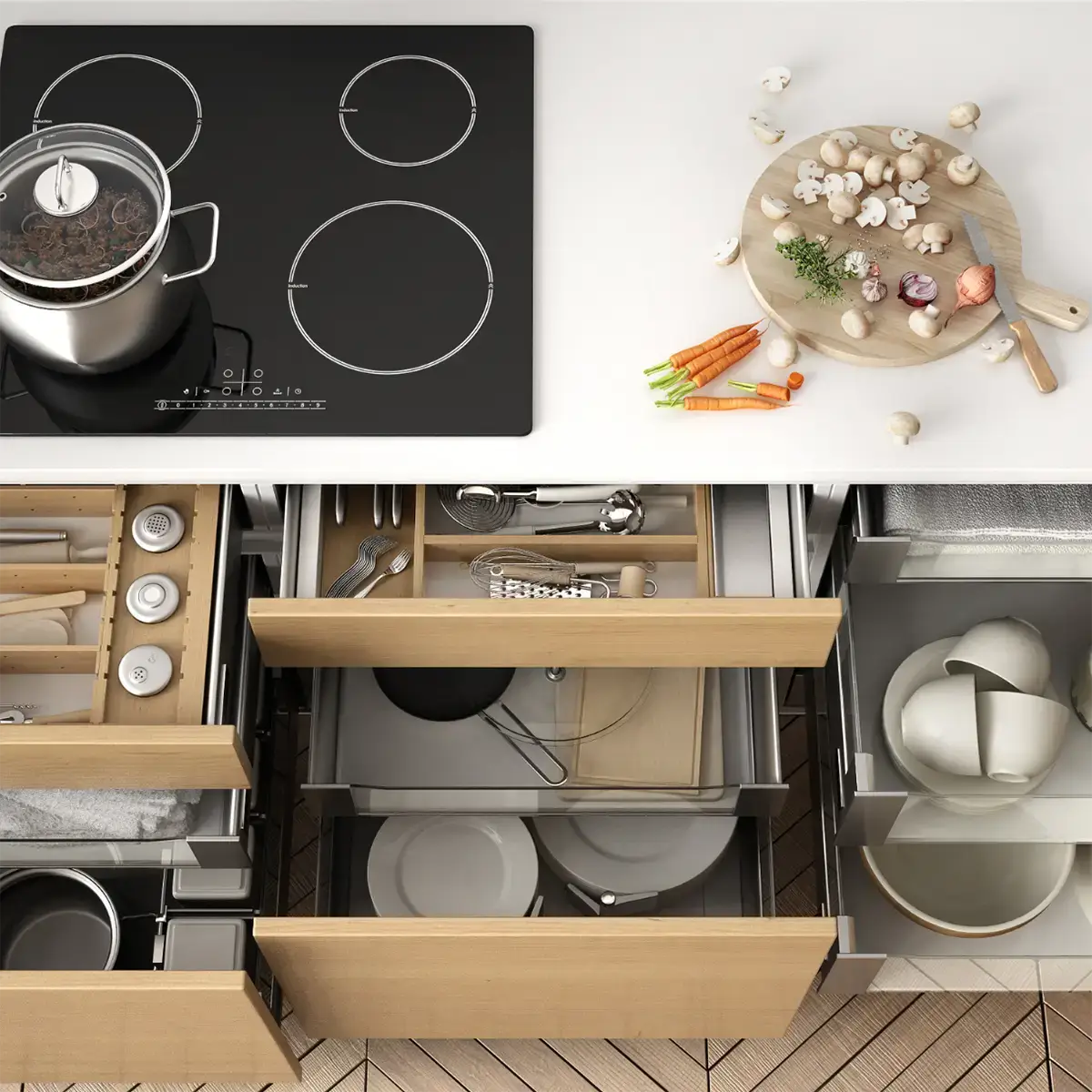
1. Kitchen Spice Drawers Located Beside the Range

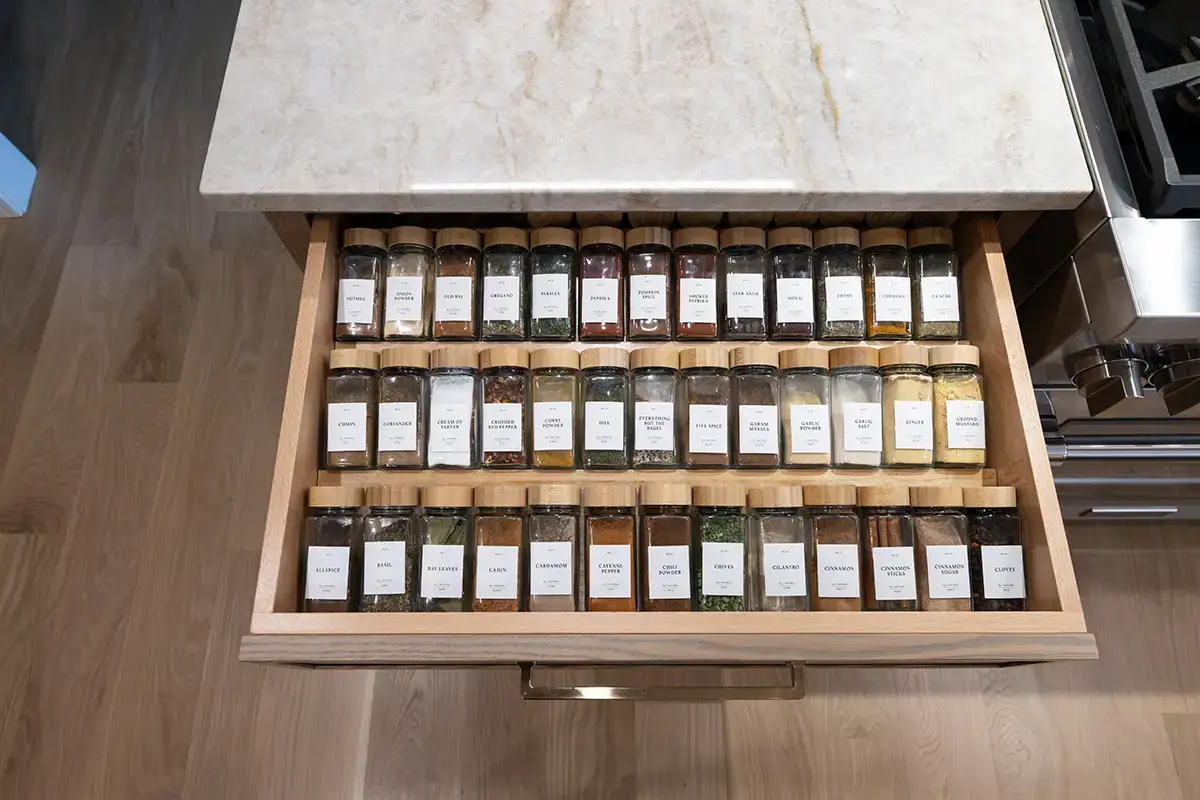
One of the most practical kitchen organization ideas in this Allentown remodel is the use of dedicated kitchen spice drawers placed directly beside the range. Instead of storing spices in a cabinet or cluttering the countertop, the designers incorporated a shallow drawer with custom inserts that allow spice jars to lie flat.

This layout allows the homeowners to easily read labels at a glance while cooking. No more digging through crowded cabinets looking for that one elusive spice. Because the drawer is located next to the range, it also supports a natural cooking workflow.

Small changes like this can dramatically improve the usability of a kitchen. During a kitchen remodel, placing spices exactly where they are used makes cooking smoother and more enjoyable.
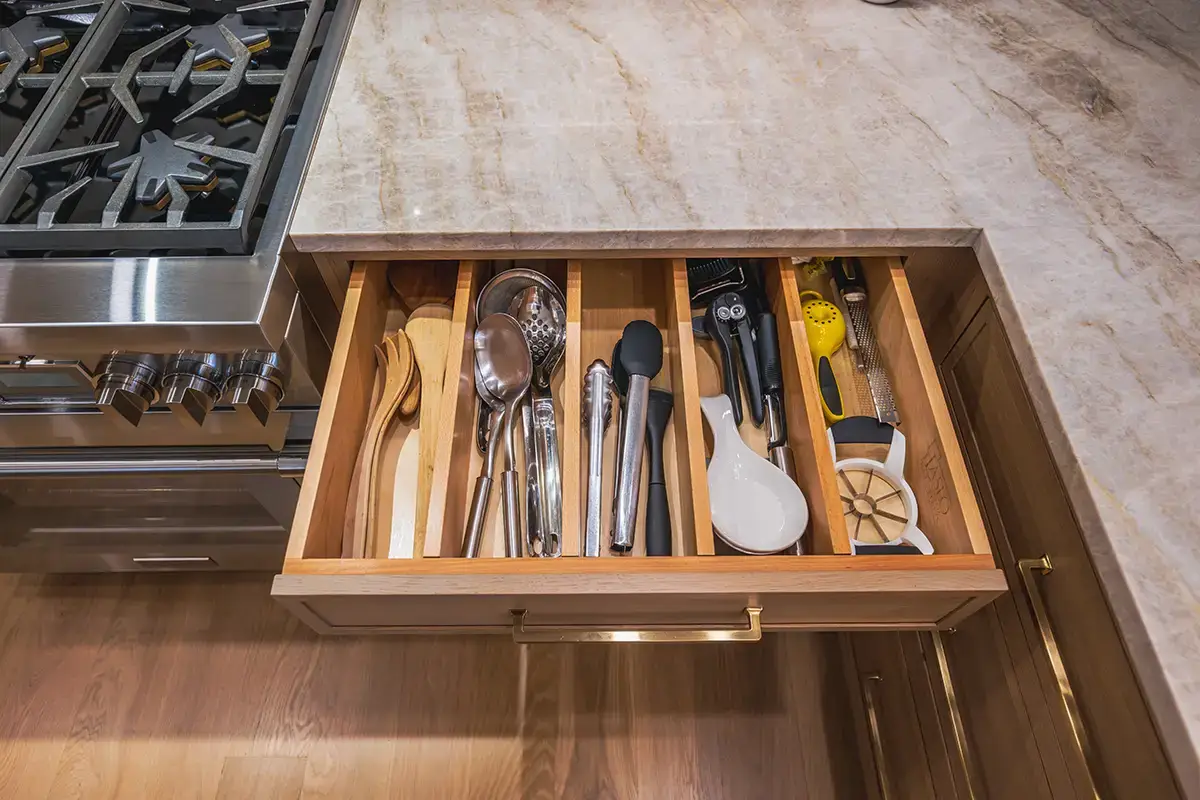
2. Custom Utensil and Flatware Drawer Dividers

Another standout organizational feature is the use of custom drawer inserts for utensils and flatware. These dividers create designated spaces for forks, knives, spoons, and serving pieces, while separate compartments hold cooking tools like spatulas and peelers.

Without inserts, kitchen drawers quickly become cluttered. Items slide around and stack on top of one another, making it difficult to find what you need. Custom organizers eliminate this problem by giving every item a dedicated location.

During a kitchen remodel, designing drawers with built-in dividers is one of the simplest ways to create long-term organization.

kosher kitchen renovation with a kitchenaid mixer pull out stand

3. KitchenAid Mixer Lift for Heavy Appliances

Many homeowners love their stand mixers but struggle with where to store them. Leaving them on the countertop consumes valuable workspace, but lifting them out of a cabinet can be inconvenient or even unmanageable.

This Allentown kitchen solves that challenge with a KitchenAid mixer lift built into a base cabinet. The mixer sits on a mechanical platform that lifts up to counter height when needed. After use, it lowers smoothly back into the cabinet.

A KitchenAid mixer lift keeps countertops clear while ensuring the appliance remains easy to access. For homeowners who bake frequently, this feature can make a significant difference in everyday usability.
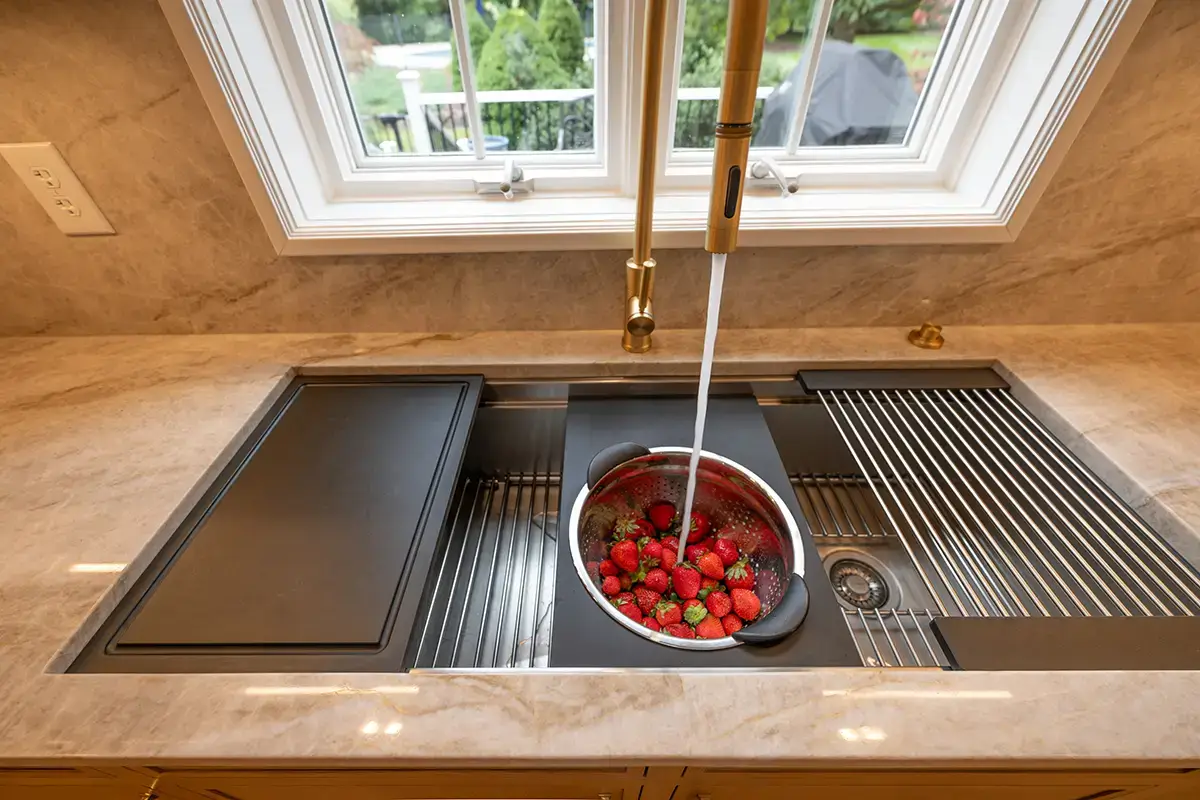
4. Galley Workstation Sink Systems

Both sinks in this kitchen remodel incorporate advanced workstation features designed to streamline food preparation. Integrated accessories such as cutting boards, colanders, and drying racks slide along built-in ledges within the sink.

This setup creates a compact preparation zone that keeps the countertop clear. Instead of spreading tools across the counter, the workstation allows many tasks to occur directly over the sink.

Workstation sinks are becoming increasingly popular in kitchen remodels because they combine preparation, rinsing, and cleanup into a single organized area.

5. Deep Drawer Storage Instead of Lower Cabinets

Traditional lower cabinets often make it difficult to reach items stored in the back. To solve this issue, this Allentown kitchen uses large deep drawers rather than cabinet doors for most base storage.

These drawers are ideal for storing pots, pans, mixing bowls, and baking dishes. Because the entire drawer pulls forward, everything inside becomes visible and accessible.

This type of storage improves both organization and ergonomics. When planning a kitchen remodel, replacing lower cabinets with deep drawers is one of the most impactful upgrades homeowners can make.
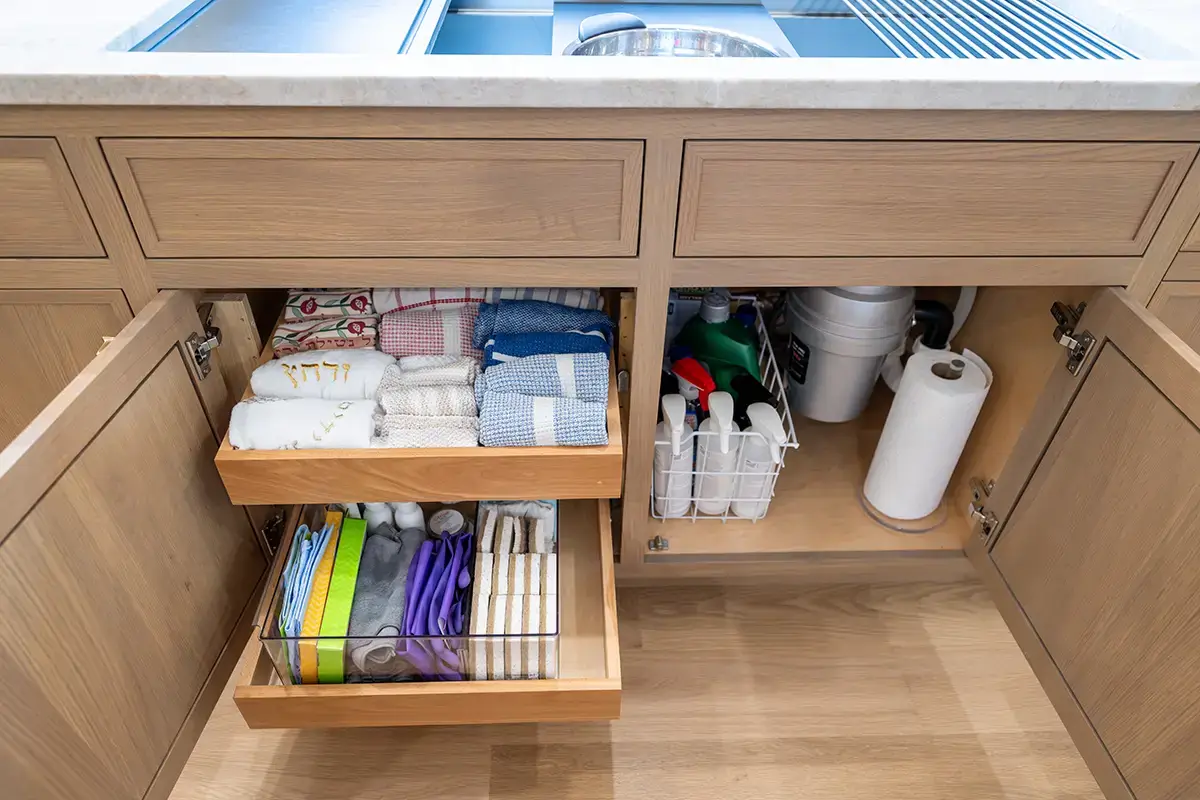
6. Under Sink Organization With Pull-Out Storage

The space beneath the sink is often one of the most chaotic areas in a kitchen. Cleaning products, sponges, and supplies tend to pile up in the back of the cabinet, making it difficult to see what you have or reach items quickly.

In this kitchen remodel, that problem is solved with sliding storage systems installed beneath the sink. Pull-out trays allow the homeowners to organize cleaning products while keeping them easily accessible. Instead of crouching down and reaching into a dark cabinet, everything slides forward so items can be viewed and retrieved at a glance.

Thoughtful kitchen organization turns this typically awkward cabinet into a highly functional storage area. Pull-out storage keeps supplies neatly grouped, prevents items from getting lost in the back of the cabinet, and makes it easier to maintain order over time.
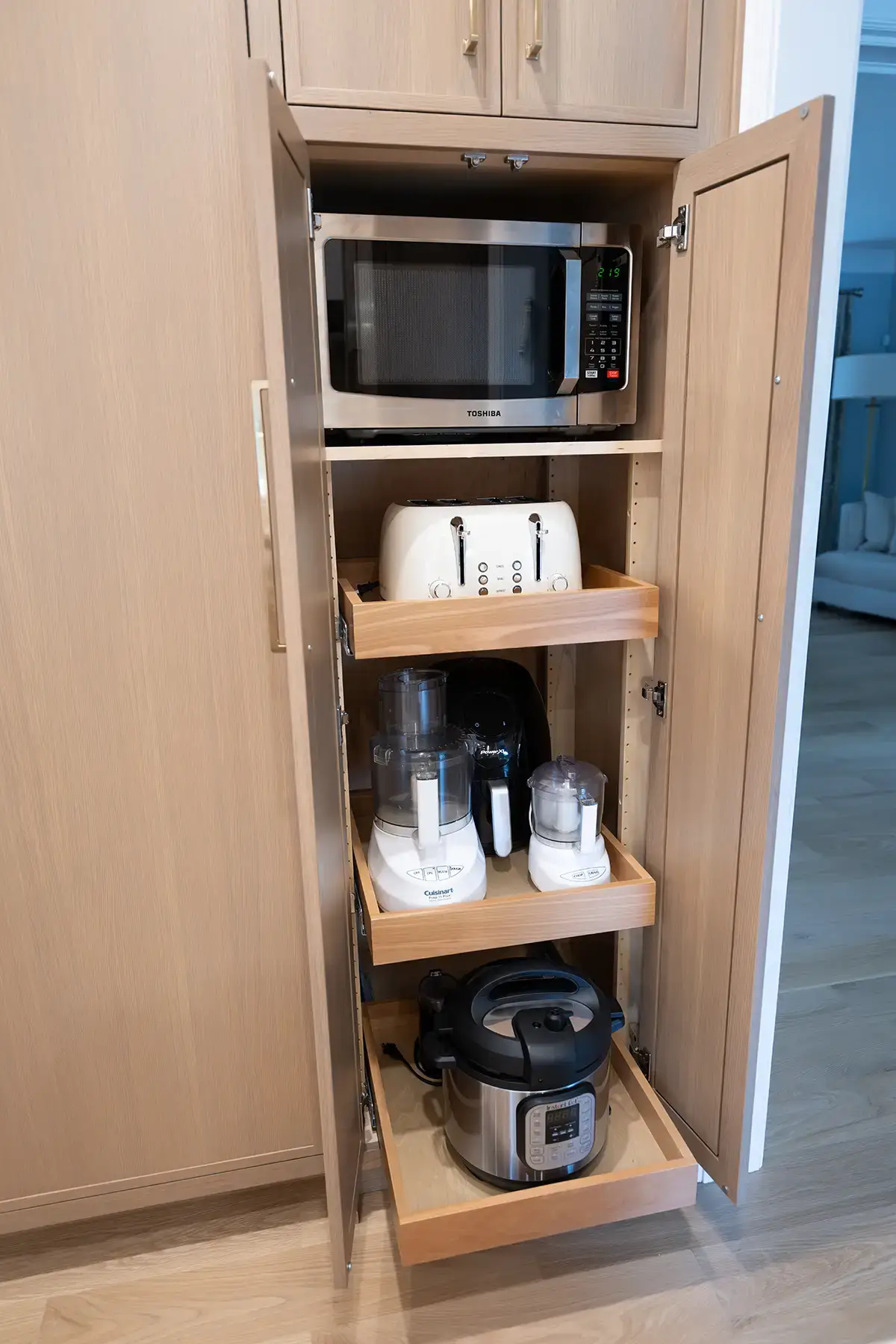
pantry with pull out shelving

7. Appliance Larder Cabinet With Pull-Out Shelves

Small appliances can easily overwhelm a countertop. This kitchen includes a tall appliance cabinet with pull-out trays designed to store items such as blenders, food processors, and pressure cookers.

The shelves slide outward, allowing homeowners to access appliances without lifting them from deep cabinets. This type of storage keeps countertops uncluttered while maintaining convenience.

Incorporating dedicated appliance storage is a valuable kitchen organization idea during a custom kitchen remodel because it helps balance accessibility with visual simplicity. Homeowners can keep frequently used appliances nearby without allowing them to dominate the counter space.

8. Kitchen Pantry With Drawers and Zoned Storage

The pantry in this remodel demonstrates how thoughtful design can dramatically improve food storage. Rather than relying only on shelves, the kitchen pantry with drawers includes pull-out storage that allows homeowners to see everything clearly.

Drawers prevent items from being lost behind other products. Baskets and bins help group foods by category such as snacks, oils, condiments, and baking ingredients.

Organizing pantry items into clear zones makes it easier to maintain order and track inventory.
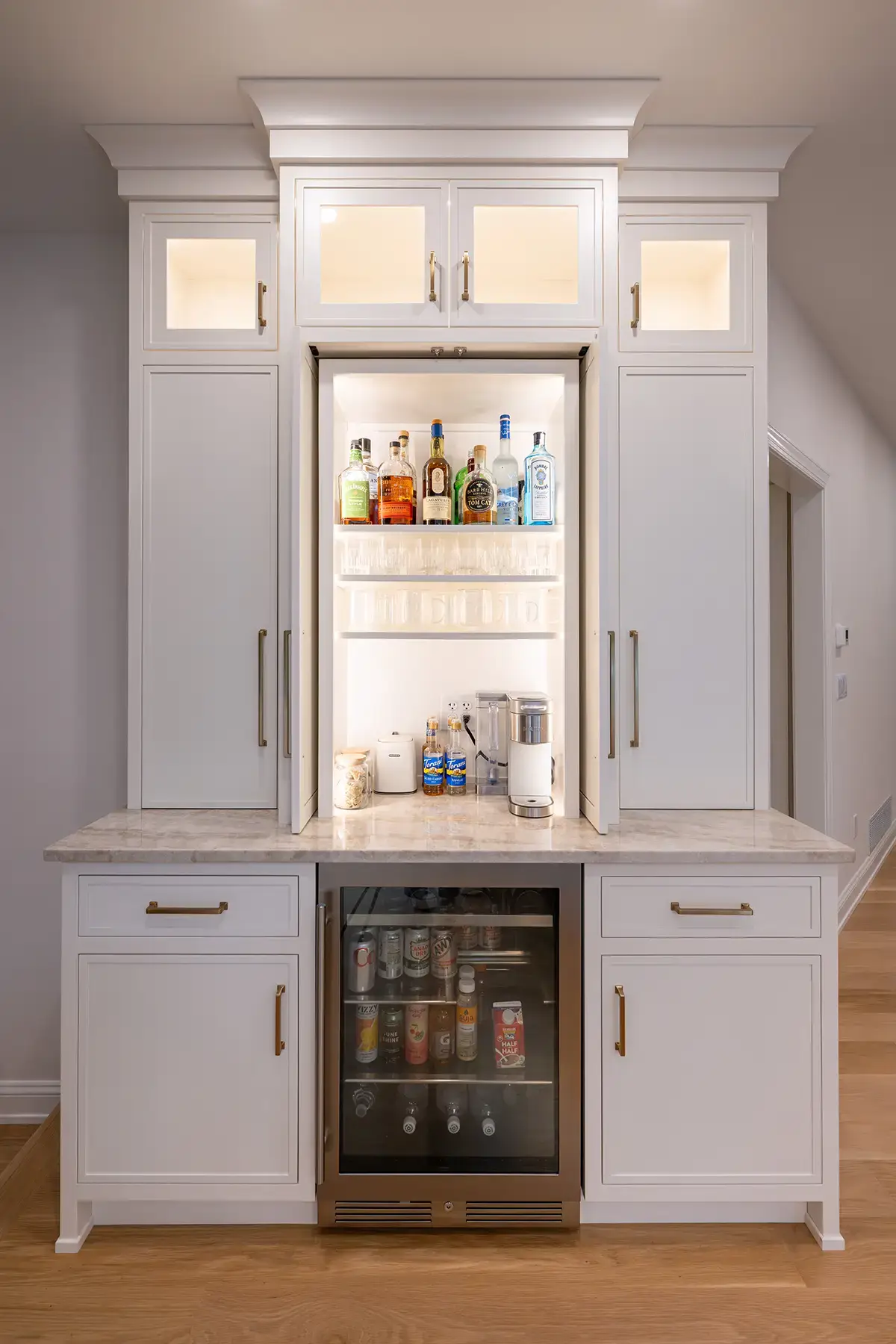
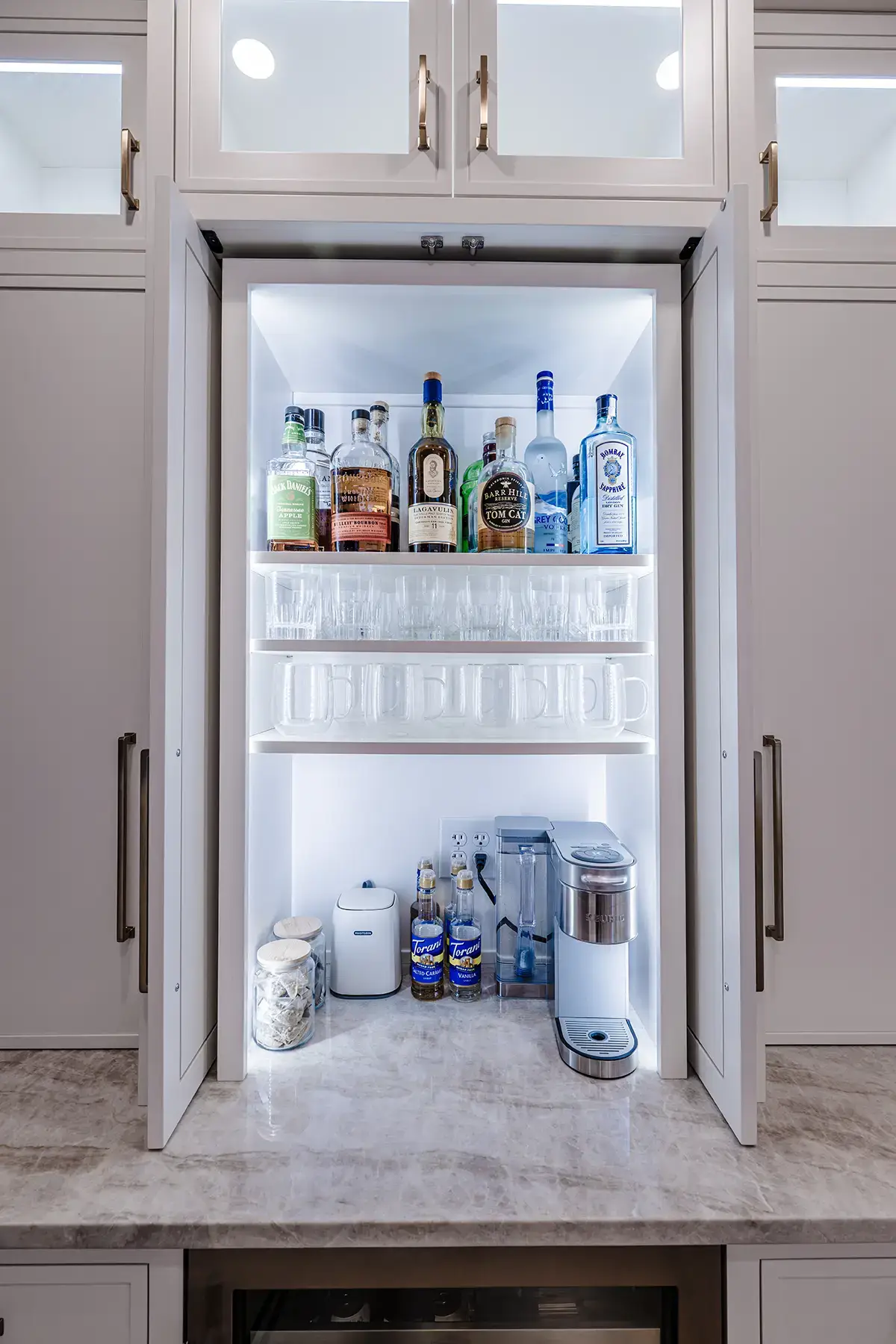
9. Built-In Beverage Station

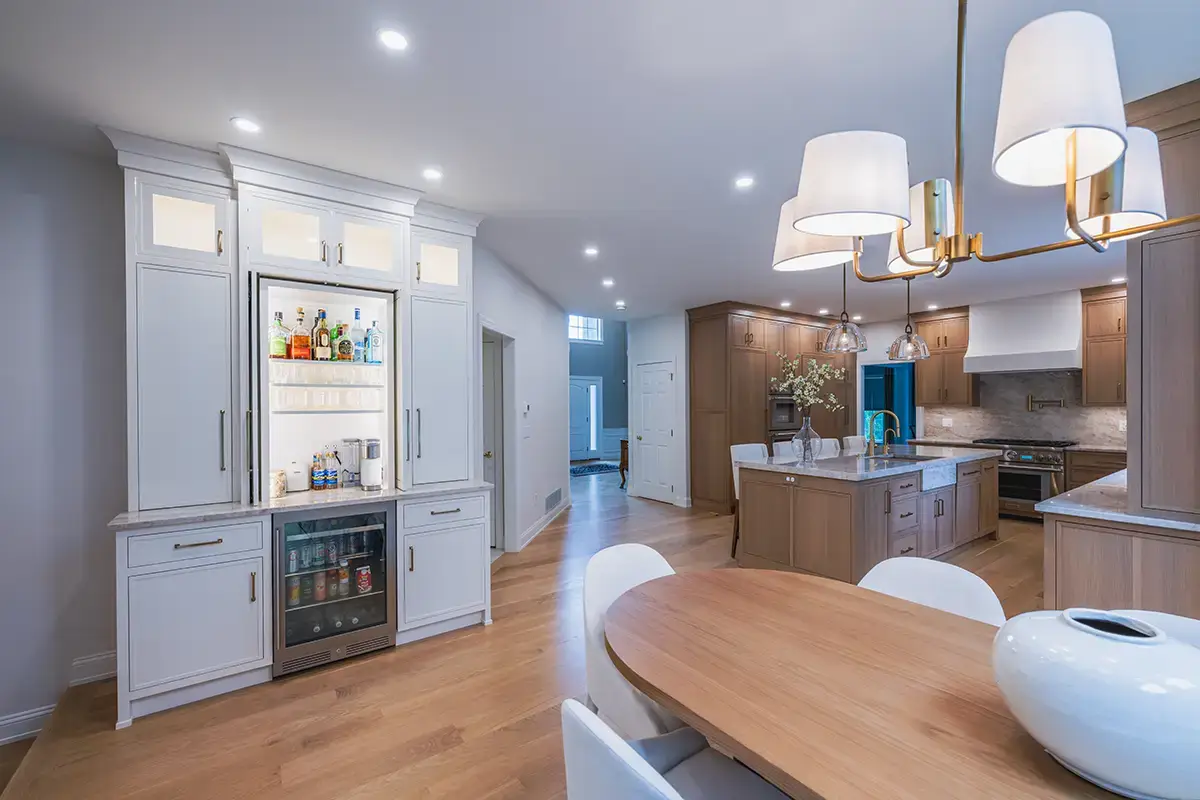
Another smart feature is the dedicated beverage area. A built-in beverage refrigerator keeps drinks easily accessible while nearby cabinets store glasses and bar accessories.

Separating beverage storage from the main cooking zone helps reduce congestion around the primary work areas of the kitchen. This type of feature is particularly helpful when entertaining guests.

A beverage station is a simple addition that can improve both organization and traffic flow during a kitchen remodel.
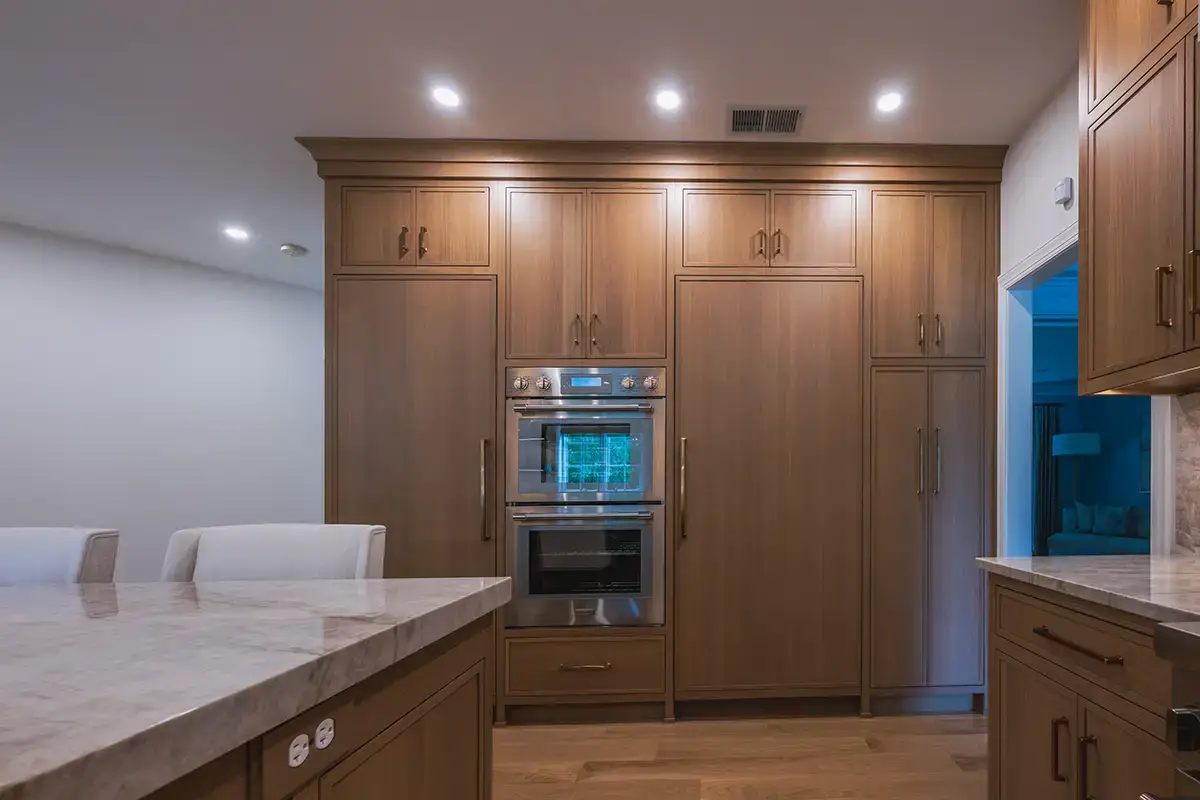
custom cabinet in a kosher kitchen

10. Panel-Ready Refrigeration With Surrounding Storage

Panel-ready appliances allow refrigerators and freezers to blend seamlessly into surrounding cabinetry. Beyond the visual benefits, this design also creates opportunities for additional storage.

Tall cabinets around the appliances can house trays, baking sheets, or pantry overflow. This approach allows homeowners to maximize vertical storage space without cluttering the kitchen.
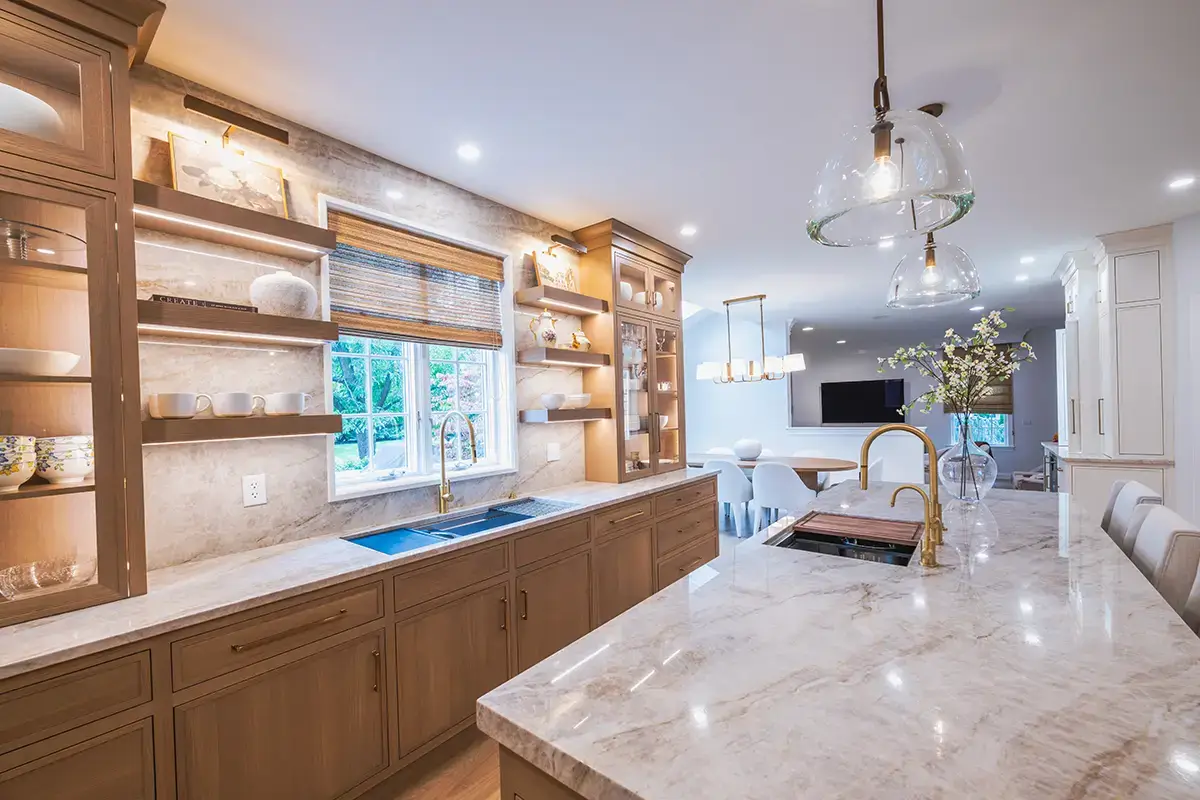
11. Kitchen Cabinet Lighting for Visibility

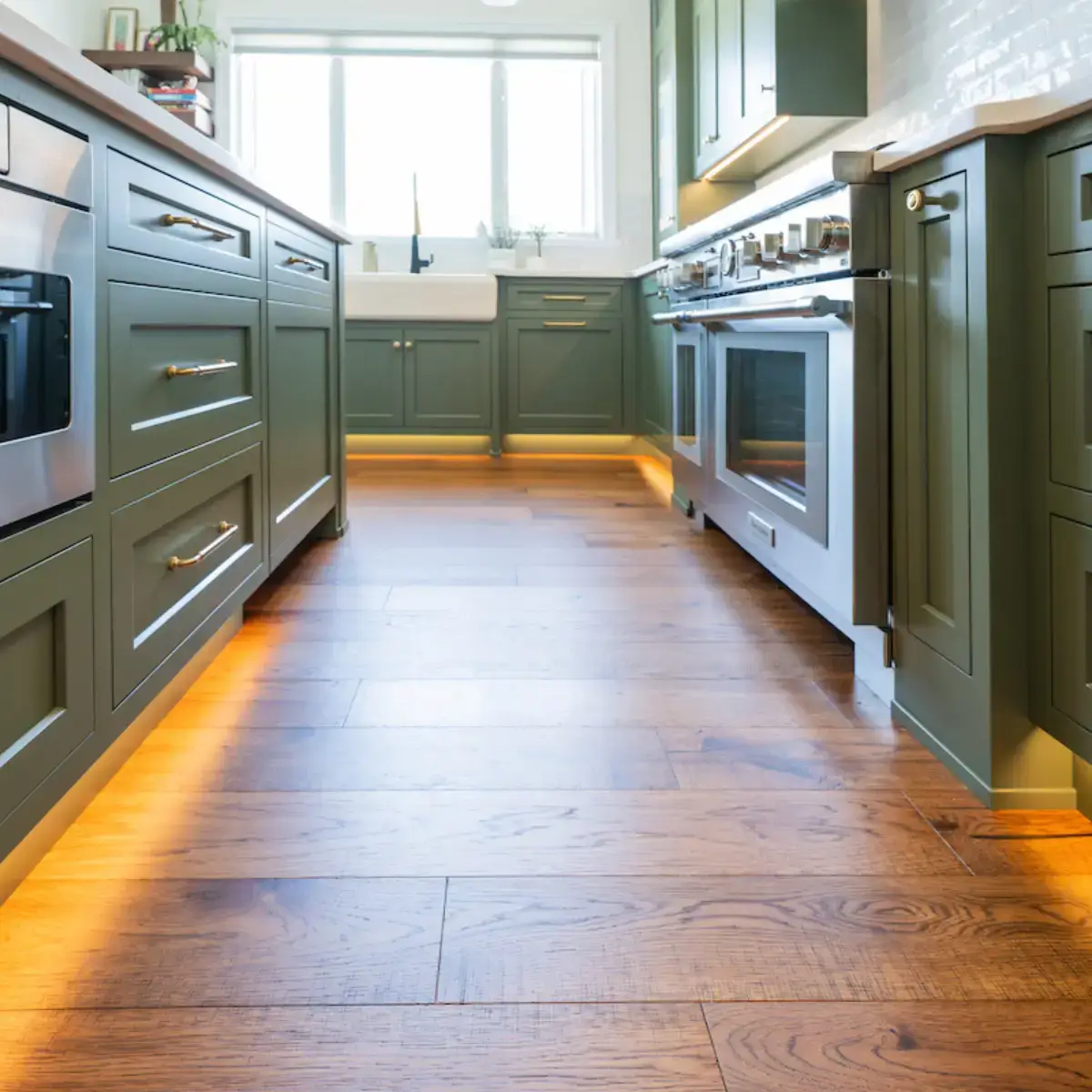
Lighting plays an important role in organization. In this Allentown remodel, kitchen cabinet lighting is installed inside display cabinets and under shelving.

Illuminated interiors make it easier to see stored items and help maintain organized cabinets. Good lighting prevents items from disappearing into dark corners and improves overall usability. Under-cabinet and under-shelving lighting also improves visibility across the countertop below, giving homeowners better task lighting for food prep, serving, and cleanup.

During a kitchen remodel, cabinet lighting can dramatically enhance both functionality and ambiance.
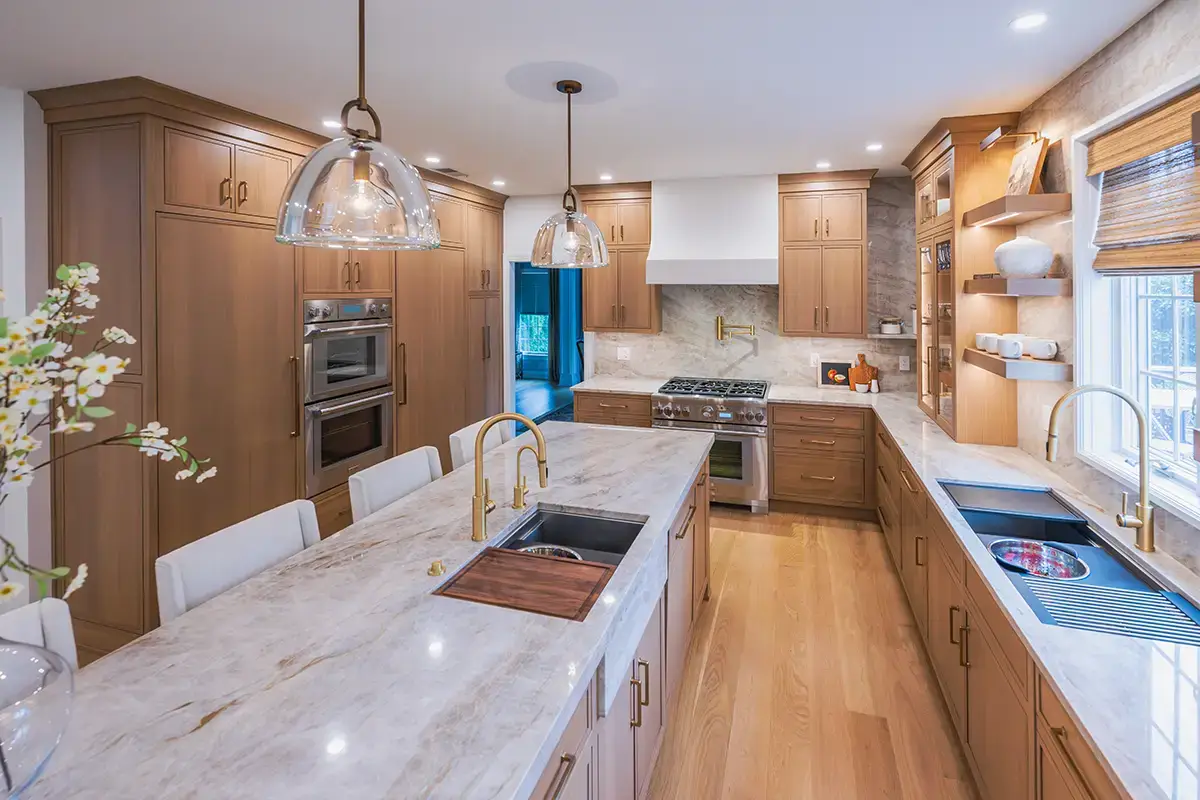
Kosher Kitchen Design Inspiration white countertops

12. Large Island Storage

The oversized island in this kitchen contains extensive storage through drawers and cabinets. Because the island sits in the center of the workspace, it becomes an ideal location for storing frequently used items.

Homeowners often use island drawers to store cooking utensils, prep tools, serving platters, or baking supplies. This centralized storage keeps essential items within easy reach.

A well-designed island is one of the most valuable organizational features in a modern kitchen remodel.

Key Organizational Themes in This Kitchen Remodel

Looking at the overall design, several key strategies make this kitchen exceptionally organized.

First, the layout emphasizes zone-based storage. Items are stored close to where they’re used. Spices sit beside the cooktop, cleaning supplies are beneath the sink, and beverage storage is separate from the main cooking area.

Second, the design prioritizes drawers over traditional cabinets. Drawers provide better visibility and easier access, helping homeowners maintain order.

Third, appliances and tools are intentionally hidden when not in use. Appliance cabinets, mixer lifts, and pantry storage keep countertops clear while ensuring everything remains accessible.

Finally, lighting and thoughtful cabinetry design ensure that every storage area remains visible and usable.

The Power of Built-In Organization

This kitchen remodel demonstrates how powerful thoughtful planning can be. Instead of adding storage randomly, each cabinet and drawer is designed around how the homeowners actually use their kitchen.

Spices are placed near cooking areas, utensils sit close to preparation zones, and appliances are stored where they can be accessed easily without cluttering the counters.

The result is a kitchen that feels calm and organized while still offering tremendous storage capacity. Every element of the design supports efficiency and daily functionality.

A successful kitchen remodel does more than create a beautiful space. It creates a kitchen that works better for the people who use it every day.
Designing Organized Kitchens for Lehigh Valley Homes

Designing a highly organized kitchen requires experience, creativity, and a deep understanding of how homeowners use their space. At Laslo Custom Kitchens, every kitchen remodel begins with careful planning to ensure storage solutions support real daily routines.

From kitchen spice drawers and appliance cabinets to a kitchen pantry with drawers and integrated kitchen cabinet lighting, custom cabinetry allows every detail to be tailored to your exact needs.

For homeowners throughout Allentown, Easton, Bethlehem, and the greater Lehigh Valley, Laslo Custom Kitchens has built a reputation for designing kitchens that are both beautiful and highly functional.

If you’re considering a kitchen remodel, our team can help you explore smart kitchen organization ideas that transform your kitchen into a space that works effortlessly.

Schedule a consultation with Laslo Custom Kitchens today to begin planning a kitchen designed specifically for your storage and organization needs.

Conclusion

A well-designed kitchen is about more than finishes and appliances. True success comes from thoughtful organization that supports the way homeowners cook, clean, and gather.

This Allentown kitchen remodel highlights how custom storage solutions such as kitchen spice drawers, appliance lifts, kitchen pantry drawers, workstation sinks, and kitchen cabinet lighting can dramatically improve everyday functionality.

By incorporating these ideas into your own kitchen remodel, you can create a space that looks beautiful while making daily life easier and more enjoyable. Thoughtful organization transforms a kitchen from simply a place to cook into a space that truly supports the rhythm of home life.

Further Reading

FAQ: Kitchen Remodel

1. What organization features should I include in a kitchen remodel?

The best organization features in a kitchen remodel are storage solutions that keep frequently used items visible, accessible, and stored near where they are used. Examples include spice drawers, deep base drawers, pull-out pantry storage, appliance cabinets, and under-sink organizers.

A well-organized kitchen works because storage is designed around real daily routines. Instead of simply adding cabinets, a thoughtful remodel plans where cooking tools, ingredients, and appliances will live so movement through the space feels natural. When these storage features are integrated into custom cabinetry, the kitchen stays easier to maintain and significantly more enjoyable to use.

2. Are deep drawers better than lower kitchen cabinets in a kitchen remodel?

Yes, deep drawers are often more functional than traditional lower cabinets because they allow homeowners to see and reach everything stored inside. Instead of bending and reaching into the back of a cabinet, drawers bring the entire storage area forward.

Deep drawers are especially useful for storing cookware, mixing bowls, baking dishes, and food containers. During a kitchen remodel, replacing lower cabinets with full-extension drawers improves both accessibility and organization. The result is storage that is easier to manage and far less likely to become cluttered over time.

3. Are kitchen spice drawers worth adding to a kitchen remodel?

Yes, kitchen spice drawers are one of the most practical upgrades you can include in a kitchen remodel. They keep spices organized, easy to read, and conveniently located near the cooking area.

Unlike traditional spice cabinets where bottles get buried behind one another, spice drawers allow jars to lie flat in organized rows. Labels remain visible at a glance, which makes cooking more efficient and helps prevent duplicate purchases. For homeowners who cook regularly, this small design detail can make a surprisingly big difference in everyday usability.

4. What is a KitchenAid mixer lift and is it worth including?

A KitchenAid mixer lift is a cabinet mechanism that stores a stand mixer inside a base cabinet and lifts it to counter height when needed. It allows homeowners to access heavy appliances easily without storing them on the countertop.

For households that bake frequently, a mixer lift can be extremely valuable. Stand mixers are heavy and often used regularly, which makes them inconvenient to store in standard cabinets. By incorporating a lift during a kitchen remodel, homeowners can keep their counters clear while still having the mixer ready to use at any time.

5. How do I organize small appliances in a kitchen remodel?

Small appliances are best organized by storing them in dedicated cabinets designed specifically for that purpose. Appliance larder cabinets, pull-out shelves, and appliance garages help keep counters clear while maintaining easy access.

During a kitchen remodel, designers often create tall cabinets with sliding trays so appliances like blenders, mixers, and food processors can be stored neatly but accessed quickly. This approach reduces countertop clutter and creates a cleaner visual appearance while still supporting everyday cooking routines.

6. Is a kitchen pantry with drawers better than pantry shelves alone?

A kitchen pantry with drawers often provides better visibility and organization than shelves alone. Pull-out drawers allow homeowners to see everything inside the pantry instead of losing items in the back.

Drawers also help group foods by category, making it easier to organize snacks, baking ingredients, and packaged goods. When planning a kitchen remodel, combining shelves with pull-out drawers creates a more flexible pantry that supports both bulk storage and everyday accessibility.

7. What are the benefits of under-sink pull-out storage?

Under-sink pull-out storage makes it easier to organize cleaning supplies and access them quickly. Instead of reaching into a deep cabinet, sliding trays bring items forward where they can be easily seen.

This type of storage also prevents products from becoming lost behind plumbing lines or stacked in the back of the cabinet. During a kitchen remodel, adding pull-out storage beneath the sink transforms one of the most awkward cabinets into a practical and organized area.

8. Do workstation sinks make a kitchen more functional?

Yes, workstation sinks can significantly improve kitchen functionality by combining several preparation tasks into one compact area. Accessories like cutting boards, drying racks, and colanders fit directly into the sink.

This setup allows homeowners to chop, rinse, drain, and prep ingredients without spreading tools across the countertop. When included in a kitchen remodel, workstation sinks help streamline workflow and keep preparation areas cleaner and more organized.

9. Is kitchen cabinet lighting worth adding during a kitchen remodel?

Yes, kitchen cabinet lighting is both a functional and aesthetic upgrade during a kitchen remodel. It improves visibility inside cabinets and adds soft illumination to the kitchen.

Lighting inside cabinets or under shelves helps homeowners quickly locate stored items and prevents dark storage areas where things disappear. In addition to improving organization, cabinet lighting enhances the overall atmosphere of the kitchen, making the space feel more refined and inviting.

10. How can I make my kitchen remodel easier to keep organized?

The easiest way to maintain organization after a kitchen remodel is to design storage around daily habits. Items should be stored near where they are used, and cabinets should include built-in organizers whenever possible.

Features such as spice drawers, appliance storage, deep drawers, and pull-out pantry systems all contribute to a kitchen that stays organized naturally. When thoughtful planning is combined with custom cabinetry, homeowners spend less time managing clutter and more time enjoying the space.
Small Kitchen Remodel Trends

Tackling a Small Kitchen Remodel

A small kitchen remodel can be one of the most satisfying home projects because the results show up in your day-to-day routine right away. In a compact kitchen, thoughtful planning can make the space feel more functional, more open, and easier to use without changing the footprint. Today’s most popular small kitchen remodel choices aren’t about packing in more features, but about improving how the space works: clearer walkways, smarter storage, better lighting, and finishes that feel intentional instead of busy.

If you’re gathering small kitchen remodel ideas, the trends below will help you focus on upgrades that solve real problems: where things go, how you move through the room, and how the kitchen supports your routine. These are the small kitchen remodel trends homeowners keep gravitating toward because they make smaller kitchens feel organized, welcoming, and surprisingly capable.

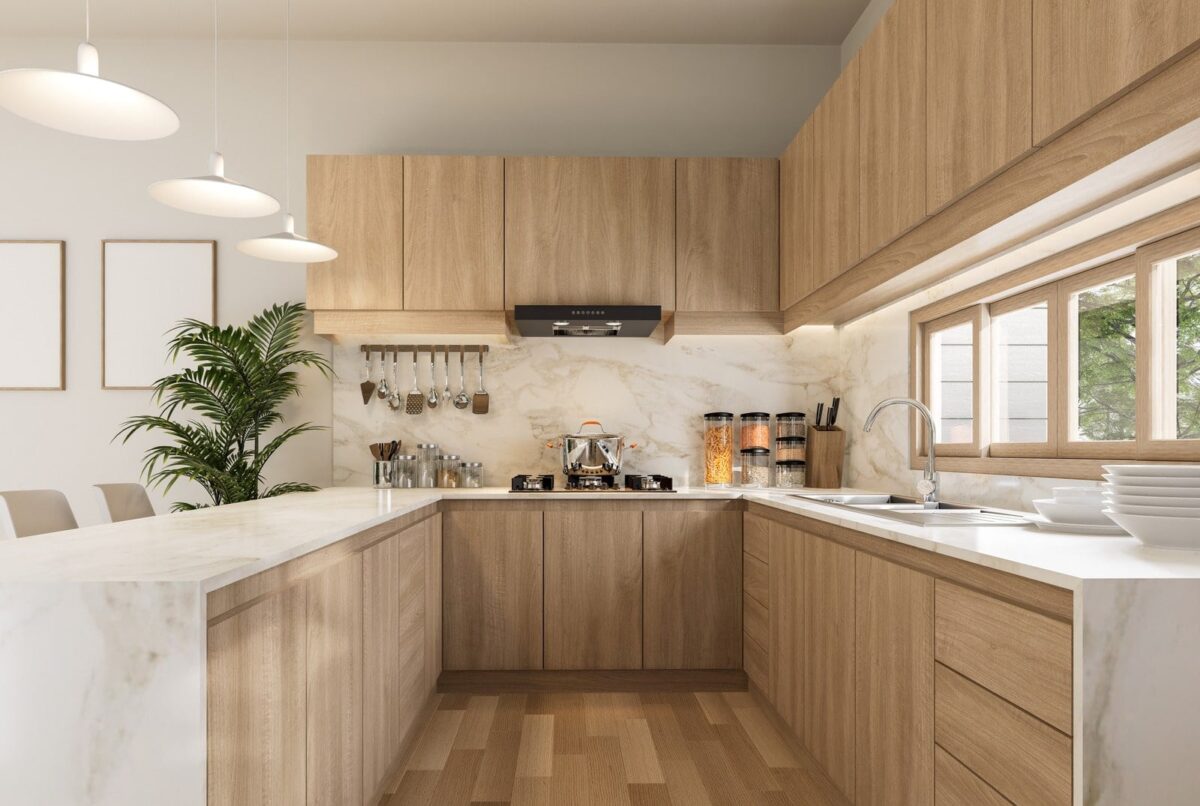
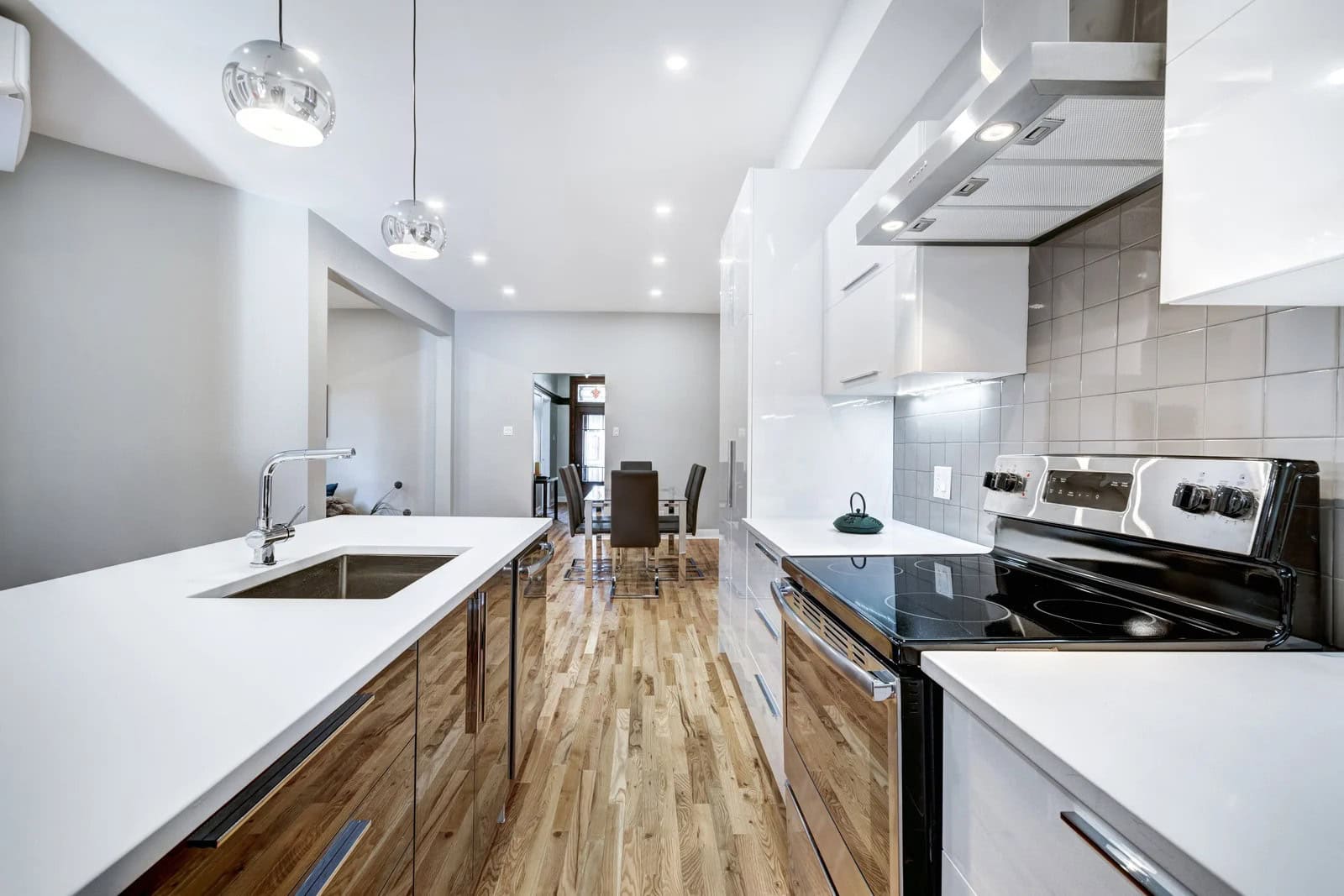
small kitchen remodeling ideas

Below are the top small kitchen remodel trends shaping how homeowners are improving storage, flow, and day-to-day function in compact spaces. Each one is designed to help you get more out of your kitchen without adding square footage.

1. Work Zones Replace “the Triangle”

In a compact room, the classic kitchen triangle can feel like a rule that forces awkward compromises. A more practical approach is “zoning.” Instead of focusing on distances between sink, fridge, and range, the kitchen is planned around how you actually use it.

Think in stations:

  • Prep zone: clear counter space, knives, cutting boards, trash pullout
  • Cooking zone: range, utensils, spices, oils, pans
  • Cleanup zone: sink, dishwasher, towels, recycling
  • Coffee or beverage zone: mugs, pods or beans, sugar, small appliances
  • Pantry zone: dry goods, snack storage, meal planning staples

This trend matters for small kitchen remodels because it reduces back-and-forth traffic. When frequently used items live where you use them, the space feels calmer and faster, even if it’s the same size.

2. Vertical Storage

When floor space is limited, the walls become your best opportunity for additional storage. Small kitchen remodels are looking up—taller cabinets, stacked uppers, and intentional use of the area above the refrigerator and around windows.

Popular vertical storage upgrades include:

  • Uppers that run to the ceiling (no dust shelf, more storage)
  • Stacked cabinetry with a second “top row” for lesser-used items
  • Tall pantry cabinets that replace a few short base cabinets
  • Integrated storage around a window or doorway to use “awkward” zones
  • Narrow pull-out pantry units for spices, oils, and baking supplies

The goal isn’t to just cram in more storage wherever you can find. It’s to create better places for what you already own, so counters stay open and the room feels less cluttered.

3. Deep Drawer Base Cabinets

One of the simplest upgrades that makes a major impact is switching base cabinets from doors-with-shelves to deep drawers. In a small kitchen remodel, drawers reduce wasted space because they keep items visible and reachable. You don’t have to crouch down, dig, and pull everything out to find what you need.

Deep drawers work especially well for:

  • Dishes and bowls (with pegs or organizers)
  • Pots, pans, lids, and sheet trays
  • Food containers and lunch prep
  • Small appliances that you want close, but not on the counter

If your current kitchen feels tight, drawers can make it feel bigger because you aren’t constantly pulling everything out to get to the back of a shelf.

An Indigo kitchen island with white counter in a kitchen with white cabinets.

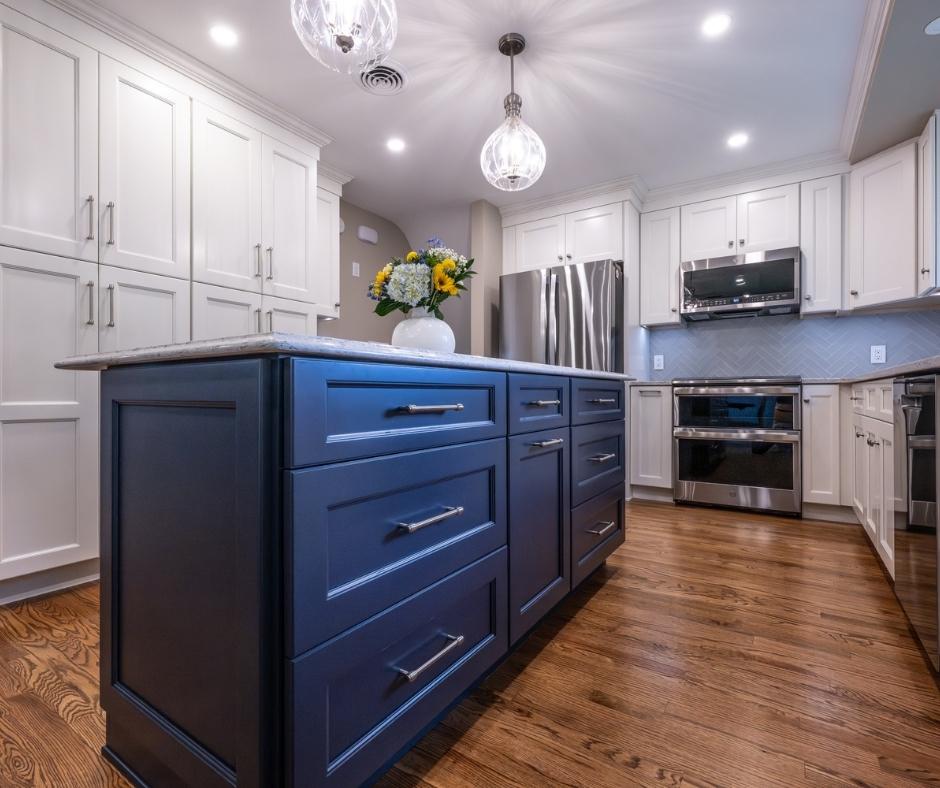
4. Compact Islands and Peninsulas

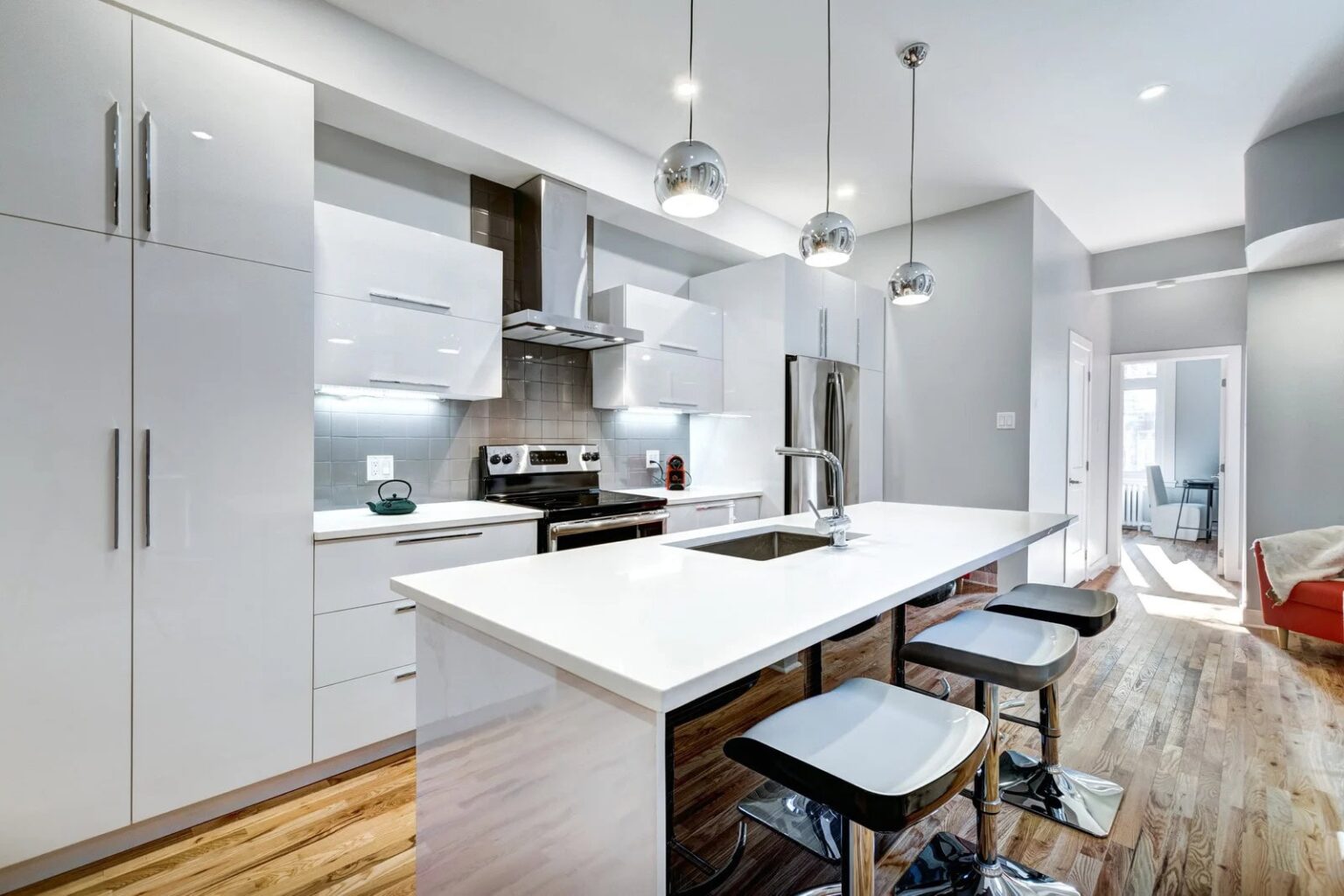
A small kitchen doesn’t need a massive island to be functional. In fact, forcing a large island into a tight room often makes the kitchen feel even smaller. Current small kitchen remodel planning favors properly sized islands, narrow “furniture-style” islands, or a peninsula that provides work space without blocking pathways.

This trend shows up in a few practical ways:

  • Slim islands that still allow comfortable clearance
  • Islands designed for prep and storage, not oversized seating
  • Peninsulas that define the space and add landing room
  • Counter-height ledges or “tuck-in” seating for one or two stools

When it’s done right, these solutions add function and storage while keeping the room open. The best sign you sized it correctly: you never have to “sidestep” around it.

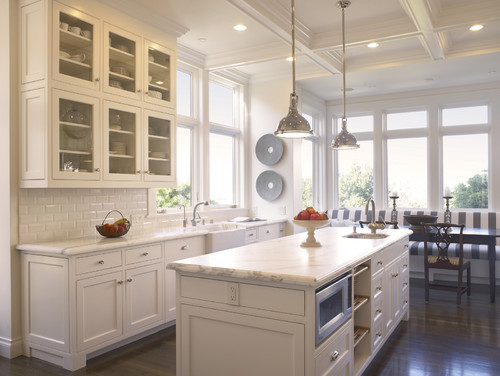
5. Hutch-Style Cabinetry

Small kitchens are embracing a “built-in furniture” look—hutches, glass-door uppers, open shelves in a controlled area, or a dedicated display niche. The reason this trend works is that it creates a focal point without requiring more square footage.

A hutch moment can provide:

  • A place for everyday dishes and glassware
  • A way to break up a wall of cabinets visually
  • A spot to show a little personality without cluttering counters
  • Extra storage for serving pieces or entertaining items

The key in small kitchen remodels is to keep this design feature intentional. Choose one focal storage moment and let the rest of the kitchen stay streamlined.

6. Strategic Use of Color

Small kitchens aren’t all-white by default anymore. Color is trending again, but the smartest designs use it in a controlled way so that the space feels lively without feeling busy.

Common approaches include:

  • A colored base cabinet run with lighter uppers
  • A single statement area (like a pantry wall) in a richer tone
  • Warm accent colors in hardware, lighting, or a feature cabinet
  • Natural wood tones paired with softer painted cabinetry

Color can also help visually organize a small kitchen layout. A darker tone can ground the room, while lighter surfaces keep the overall feel open.

7. Softer Shapes and Subtle Curves

Hard corners and sharp lines can make a small kitchen feel rigid. A growing trend is to soften the space with gentle curves or rounded details that make the room feel more fluid and easier to move through.

Examples include:

  • A rounded edge on a peninsula or countertop corner
  • Curved end panels on base cabinets to soften transitions
  • Arched details in open niches or shelf openings
  • Rounded shelving (or a radius on floating shelves) for a lighter look
  • Softened trim profiles and door styles that avoid hard angles

Curves work well in compact kitchens because they improve movement. Even a small rounded detail reduces the “tight hallway” feeling that can happen in narrow layouts.

8. Statement Surfaces

Small kitchen remodels are leaning toward fewer materials with more impact. Instead of mixing many patterns and finishes, the trend is to select one standout surface and keep the rest calm.

Examples include:

  • A slab backsplash that creates a clean, uninterrupted surface
  • A countertop with subtle veining that adds interest without feeling busy
  • A waterfall edge on a compact island or peninsula to create a polished focal point
  • Simple edges and streamlined transitions that keep the look continuous

This approach is a favorite because it makes the kitchen feel more cohesive. In a small room, cohesion is what reads as “high end.”

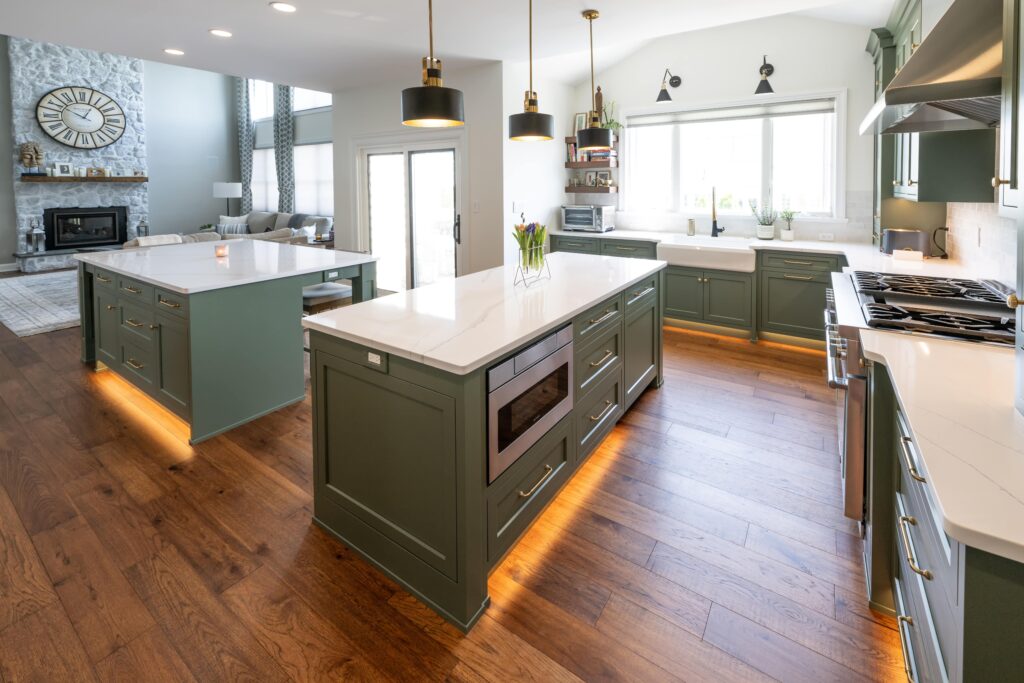
green kitchen cabinets with toe kick lighting

9. Layered Lighting and Light-Enhancing Finishes

Lighting is one of the fastest ways to make a compact kitchen feel larger. Small kitchen remodels are using reflective finishes and layered lighting to bounce light around the room.

Design choices that help:

  • Under-cabinet lighting that removes shadows on counters
  • Brighter backsplash tile or a finish that softly reflects light
  • Thoughtful overhead lighting placement to avoid dark corners
  • Glass-front storage or lighter cabinet colors to lift the room

A small kitchen doesn’t need to be bright-white to feel open. It just needs light placed where you actually work, plus finishes that don’t absorb everything.

10. Embracing Small Kitchen Layouts

Many small kitchens are galley kitchens, one-wall kitchens, or L-shapes with limited room for extra features. The trend is to stop treating those layouts as problems and work to optimize them instead.

For a functional small kitchen layout, priorities often include:

  • Clear landing space near the refrigerator and cooking area
  • Right-sized appliances for the footprint
  • Better placement of the dishwasher and trash pullout
  • Storage that matches your habits, not generic “standards”
  • Clean sightlines so the kitchen feels less boxed in

When you design around the layout you actually have, the remodel feels more comfortable because movement becomes intuitive.

Small Kitchen Remodel Photos: What to Look For When You’re Collecting Inspiration

When you’re scrolling small kitchen remodel photos, it helps to look past the pretty finishes and notice the functional choices. Ask yourself:

  • Where’s the pantry storage located?
  • Do you see deep drawers or pull-outs?
  • Is there a landing zone near the range and the refrigerator?
  • Are counters clear because storage is doing its job?
  • Is the lighting layered, or does it rely on one ceiling fixture?

This mindset helps you collect inspiration that translates into your home. Beautiful photos are useful, but only if the ideas fit the way you live.

How Much Does a Small Kitchen Remodel Cost?

One of the most pressing questions homeowners often have is, “How much does a small kitchen remodel cost?” The answer depends on layout changes, cabinet scope, materials, and the level of customization. A small kitchen remodel can sometimes cost less than a large one, but it can also cost more than people expect because compact spaces often require highly efficient solutions and careful planning.

As a baseline, prices start at $22,000 for a small kitchen remodel at Laslo Custom Kitchens. From there, the budget can increase based on factors like:

  • Whether you’re keeping the existing layout or moving plumbing and electrical
  • Cabinet type (stock, semi custom, or custom) and the amount of storage added
  • Countertop and backsplash selections
  • Flooring, lighting, and ventilation upgrades
  • New appliances and whether sizes need to change for the layout
  • Specialty storage solutions (pull-outs, pantry towers, drawer organizers)

If cost is a big concern, the most helpful approach is to identify what must improve: storage, workflow, lighting, or layout. When your priorities are clear, you can invest in the upgrades that move the needle instead of spending on details that don’t change daily function.

Laslo Custom Kitchens routinely receives praise from clients for keeping projects aligned with the budget from day one. Our estimates are clear and pressure-free, and our experienced team helps you sort through options, set smart priorities, and invest where it counts so your finished kitchen feels like a dream without surprise costs.

Laslo Custom Kitchens: The Lehigh Valley’s Small Kitchen Remodel Experts

If you’re planning a small kitchen remodel in the Lehigh Valley, PA or its surrounding areas, Laslo Custom Kitchens can help you turn tight square footage into a kitchen that feels organized, functional, and built around your routine. Our experienced team understands how to solve the challenges that come with a small kitchen. We know how to make storage work harder, refine the small kitchen layout, and select cabinetry details that create a clean, custom look without wasting space.

To see what’s possible, view our portfolio and visit our Facebook Page to explore past small kitchen remodel projects and gather ideas you can apply to your own home. When you’re ready to take the next step, schedule a consultation to discuss your space, share your goals, and develop a plan with one of our trusted experts.

Conclusion

Small kitchens don’t need more space—they need better planning. The trends shaping today’s small kitchen remodels all point to the same outcome: a kitchen that’s easier to move through, easier to keep tidy, and more enjoyable to use every day. Start with function, prioritize small kitchen storage, respect the realities of your small kitchen layout, and choose finishes that support a cohesive look. When the details align with the way you live, a small kitchen remodel can feel like a major upgrade.

Further Reading

FAQ: Small Kitchen Remodel

1. How much does a small kitchen remodel cost?

A small kitchen remodel can start at $22,000, then scale up based on cabinets, layout changes, finishes, and how much work is happening behind the walls.

Most of the cost comes from cabinetry and labor, followed by countertops, appliances, lighting, and trades like plumbing and electrical. If you keep the existing footprint and reuse key elements that are in good shape, you can stay closer to the starting range. If you move the sink, add a peninsula, or upgrade to more custom storage, the budget can begin to rise.

2. How long does a small kitchen remodel take?

Many small kitchen remodels take several weeks, but the timeline depends more on complexity and product lead times than on room size.

A simple refresh with minimal layout changes can move faster, while projects with new cabinets, counters, and electrical updates take longer. Ordering cabinets and countertops, coordinating trades, and allowing time for inspections (when needed) often drive the schedule. A clear plan and early selections are what keep a timeline from stretching.

3. What’s the best small kitchen layout for my space?

The best small kitchen layout is the one that protects your walkways and creates clear landing space near the sink, range, and refrigerator.

Galley layouts work well when both sides are organized into zones and aisles stay comfortable. L shape kitchens often benefit from prioritizing one uninterrupted counter run for prep. One wall kitchens can feel surprisingly functional when storage goes vertical and the work zones are arranged in the order you actually cook.

4. Do I need permits for a small kitchen remodel?

You might need permits if your remodel involves electrical, plumbing, structural changes, or ventilation updates, even if the kitchen is small.

If you are replacing finishes and keeping everything in the same place, permits are less likely. The moment you move a sink, add circuits, relocate gas lines, or alter walls, your local building department may require permits and inspections. A good contractor will help you confirm what applies before work begins.

5. Can I stay in my home during the remodel?

Yes, many homeowners stay in their home during a small kitchen remodel, but you should plan for a period without a working kitchen.

Expect noise, dust, and limited access, plus days when water or power may be temporarily interrupted. Setting up a simple temporary kitchen with a microwave, coffee maker, and a dishwashing plan makes the process easier. Clear communication about daily work hours and cleanup helps the home stay livable.

6. What’s the most expensive part of a small kitchen remodel?

Cabinetry is often the biggest investment in a small kitchen remodel, even more than countertops or appliances.

Cabinets drive both material cost and labor because they set the foundation for the entire room. Layout changes can also add significant cost because moving plumbing, electrical, and ductwork stacks trades and time. If you want to control the budget, focus first on the cabinet plan and whether the layout is staying put.

7. Should I reface cabinets or replace them?

Refacing can make sense if your cabinet boxes are in great condition and the layout works well, but replacement is better when you need improved storage or a smarter layout.

Refacing updates doors, drawer fronts, and visible surfaces, so it improves the look without changing function much. Replacing cabinets lets you adjust sizes, add deep drawers and pull outs, and fix problem areas like wasted corners or missing pantry space. The right choice depends on whether your main issue is appearance or daily usability.

8. What are the best small kitchen storage ideas (drawers, pull outs, pantry options)?

The best small kitchen storage ideas prioritize easy access, vertical space, and keeping counters clear.

Deep drawers for dishes and cookware are usually the biggest upgrade because they prevent wasted space and make everything visible. Pull outs for trash and recycling, narrow spice pull outs, and a tall pantry cabinet can replace several awkward cabinets. Taking cabinets to the ceiling adds storage without shrinking the room, as long as the design stays visually clean.

9. What order should the remodel happen in?

Most kitchen remodels follow a sequence that protects finished materials and keeps measurements accurate, starting with demolition and ending with finishing details.

Typically, the process goes: demo, rough plumbing and electrical, any wall repairs, then cabinets. Countertops come after cabinets because they must be templated precisely. Backsplash and final plumbing fixtures follow, then trim, paint touch ups, and hardware. Flooring can happen earlier or later depending on the plan, but it should be scheduled to avoid damage.

10. How can I remodel a small kitchen on a budget without cutting the wrong corners?

To remodel a small kitchen on a budget, keep the footprint whenever you can and spend your money on the upgrades that improve daily function.

The best budget wins usually come from smart cabinet planning, like adding deep drawers and better pantry storage, rather than expensive decorative features. Choose durable, timeless materials that look great but are easy to maintain. A clear list of must haves versus nice to haves helps you make confident decisions when costs start to climb.

Whole Home Cabinetry Designed to Fit Every Room

Meet Laslo Custom Kitchens

When you partner with Laslo Custom Kitchens for whole home cabinetry, you are never boxed into a single cabinet category. Because we are a true custom shop, we can build fully custom cabinetry, or thoughtfully combine our semi custom and stock lines with custom elements in a way many design firms simply cannot. That flexibility lets you invest where it matters most. We might use stock cabinetry for select wall runs, then design and build a custom island that becomes the showpiece, complete with furniture style details, specialty storage, and the exact proportions your room needs. The result is a kitchen that reads as fully custom, with meaningful savings built into the plan.

We can also customize stock pieces in smart ways that change the entire finished look, such as adding custom crown and light rail molding, building a one of a kind hood surround, creating tailored end panels and extended finished sides, designing a custom pantry wall or beverage center, or adjusting fillers and trim so everything lands cleanly from wall to wall. In other words, you get the design freedom and polished, built in look of custom cabinetry, while using stock pieces strategically to keep the budget working for you. 

Below are four very different spaces from the Laslo Custom Kitchens portfolio. Each one shows how thoughtful design and custom shop craftsmanship can shape kitchens, baths, basements, and living spaces across the home.

A Snapshot into our Whole Home Cabinetry Portfolio

Cabinetry is one of the strongest tools in remodeling because it can change how a room functions and how it feels. In every project, Laslo focuses on three things: fit, flow, and finish. We help homeowners choose the right cabinet line for their goals, then refine the details with custom craftsmanship so the room looks cohesive and performs beautifully.

Photo: Lisa Lake Photography

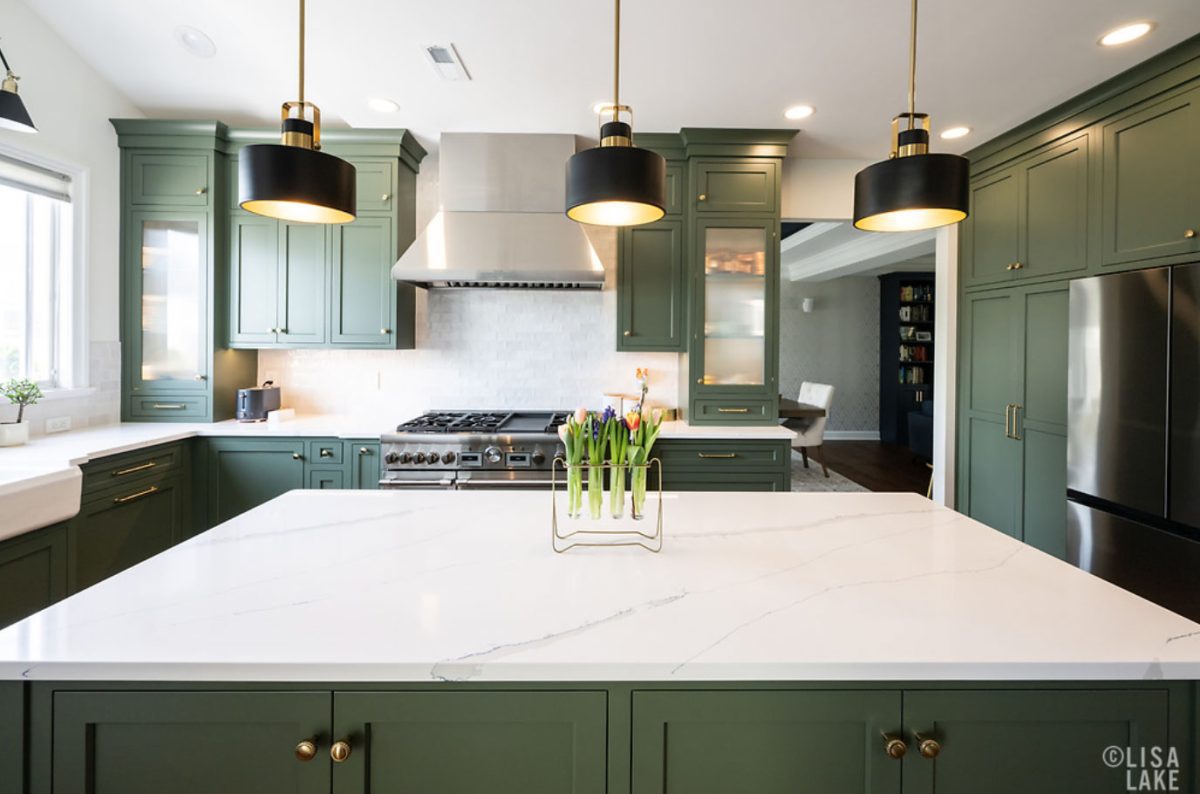
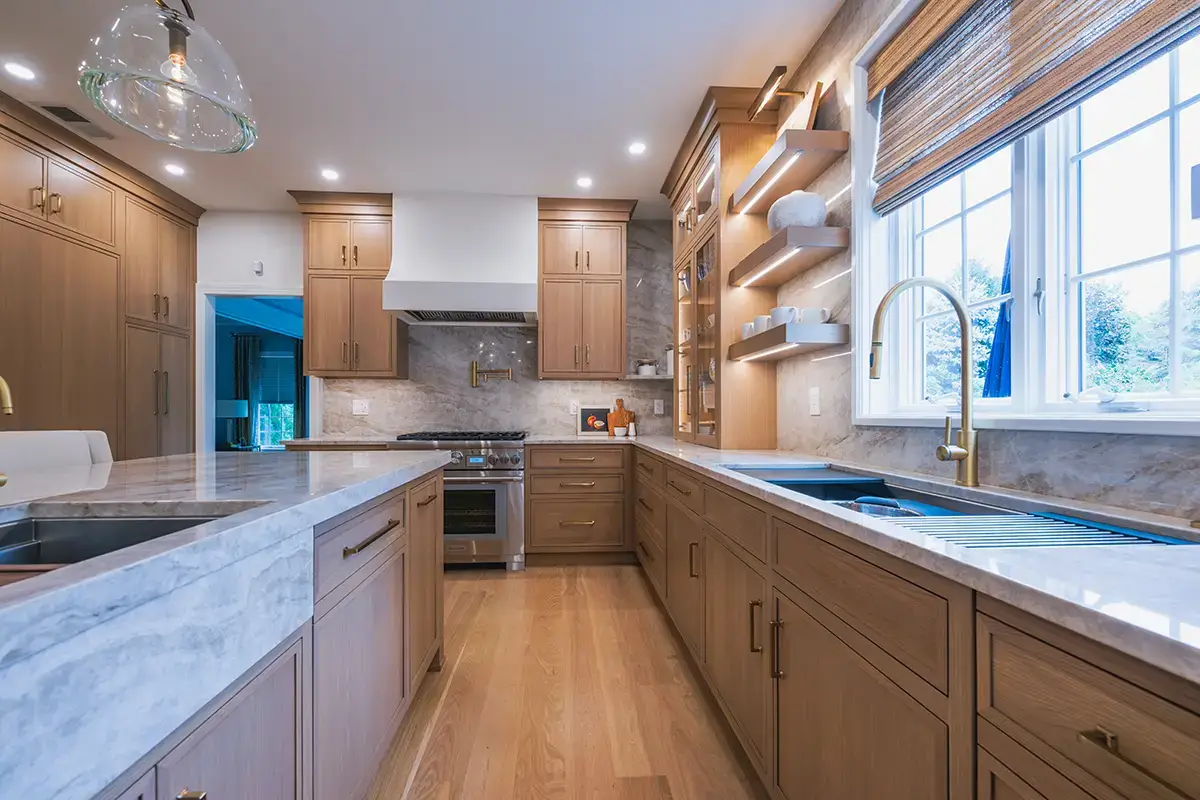
A Kosher Kitchen in Allentown, PA

This Kosher kitchen is a perfect example of what truly bespoke spaces deliver. Designing for kashrut isn’t just about separating meat and dairy—it’s about creating a kitchen that supports daily routines, spiritual practice, and family rhythm.

What makes this design special isn’t simply that it includes two workstations or multiple dishwashing zones. It’s that every decision, from layout to workflow, reflects how the family moves through the kitchen. Prep happens in dedicated zones that help eliminate cross-contamination. Clean-up flows naturally from workspace to sink to storage. The circulation path is open and intuitive, eliminating congestion during busy cooking days or holidays.

Aesthetically, the space strikes a careful balance: warm enough to feel like home, refined enough to perform like a true culinary workspace. The palette is calm and timeless, allowing the homeowners to experience a sense of order and serenity even when the kitchen is at full capacity. The result is a space that honors tradition without sacrificing the comforts and expectations of modern living.

This is also where custom shop ability matters. When a kitchen needs very specific function, Laslo can modify cabinetry details and create custom components so the entire plan works as one system. The final space feels calm and timeless, with performance that matches the way the family lives.

A Primary Bath and Closet in Upper Saucon, PA

Moving to Upper Saucon, this primary bath and closet transformation shows how Laslo kitchen and bath remodeling extends beyond kitchens into spaces that support daily routines and well-being.

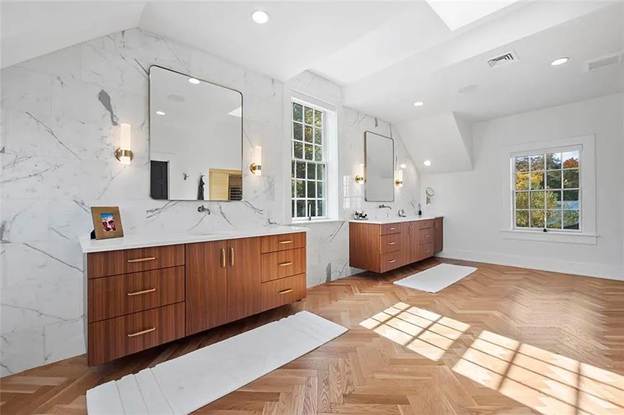
The bath’s floating walnut vanities instantly change your perception of the room. By lifting cabinetry off the floor, the entire space breathes—light moves freely, flooring is more visible, and the room feels larger than its square footage. The clean lines, warm wood, and uncluttered surfaces work together to create a spa-like environment where getting ready becomes a peaceful ritual rather than a rushed task.

What makes this design exceptional is its restraint. There is no unnecessary decoration. Every element contributes to a sense of calm: vertical wood grain that subtly draws the eye upward, simple hardware that warms without shouting, and a layout that gives each user a clear, comfortable place to begin and end their day.

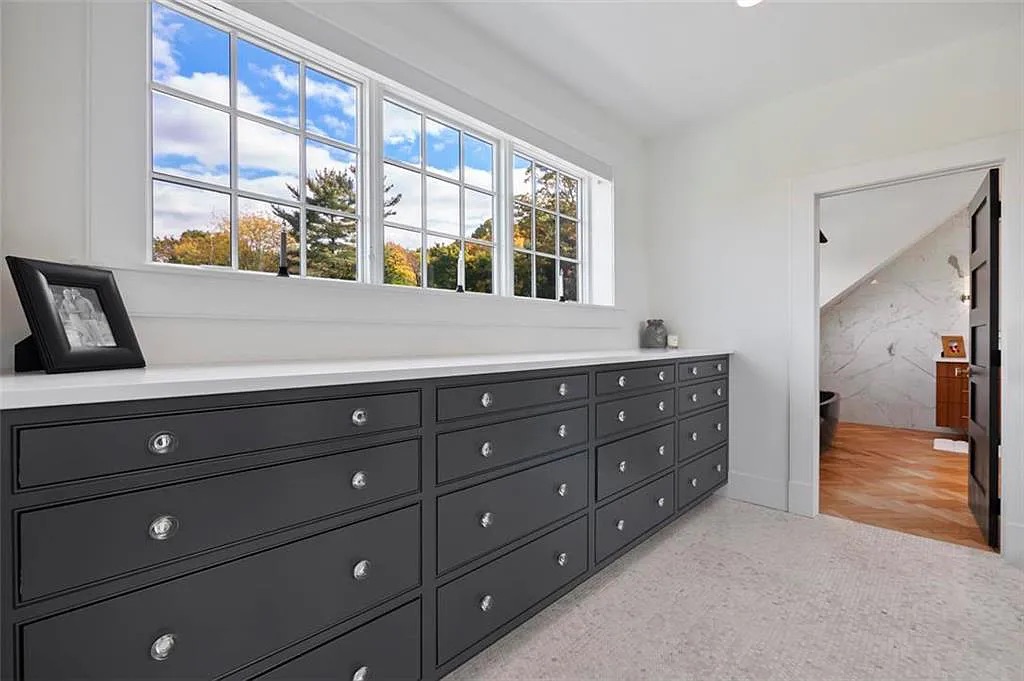
The connected walk-in closet is compact, but Laslo turned that into an advantage. Instead of overfilling the room, the team designed storage that behaves thoughtfully:

  • Adjustable shelving that adapts as needs change.
  • Pull-out trays that bring items forward instead of forcing users to reach.
  • Lighting that illuminates contents without creating shadows.

The result feels like a boutique—not because it’s large, but because it’s curated, intentional, and easy to live with.

A Basement Bar in Bath, PA

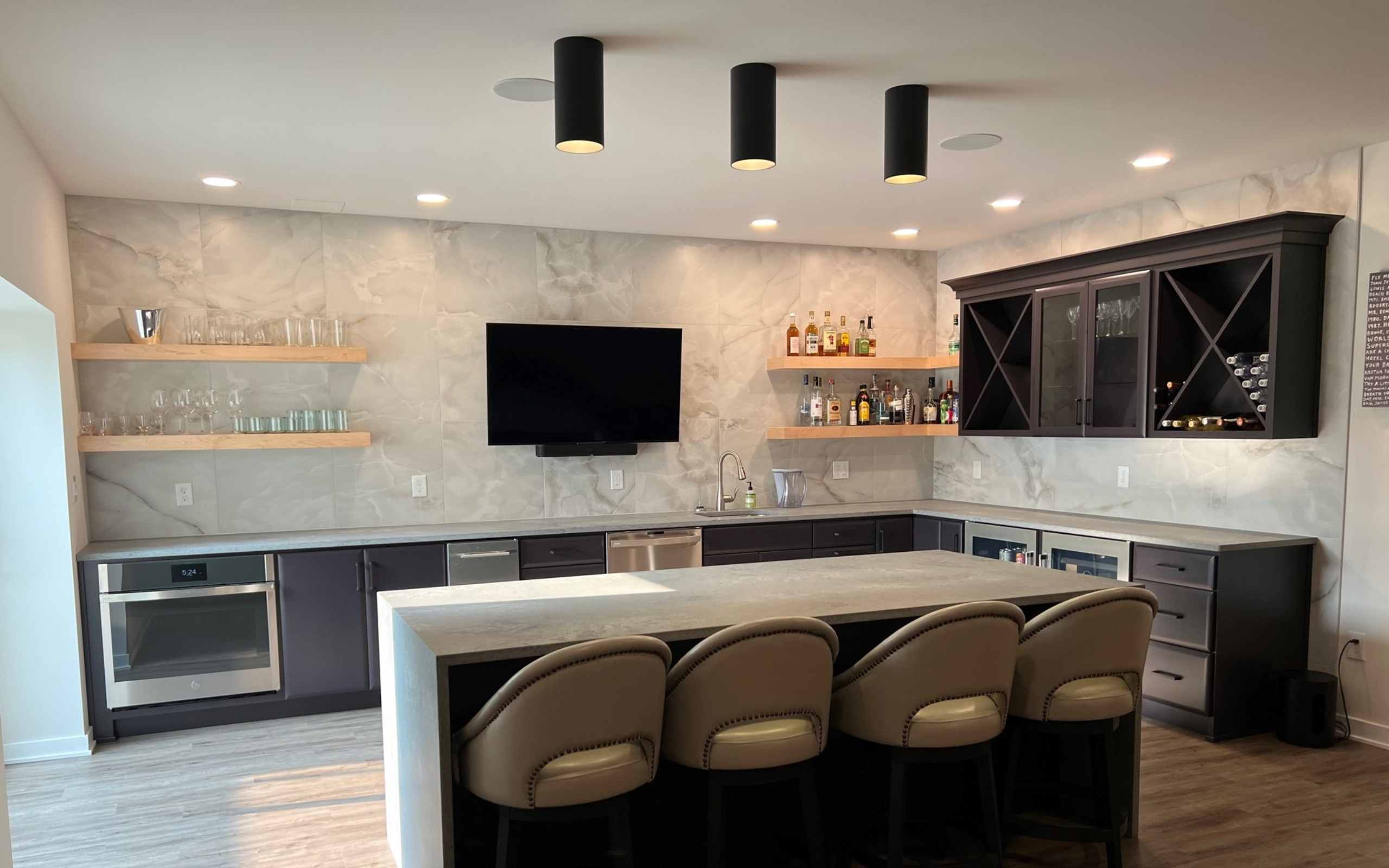
This basement bar demonstrates how Laslo approaches whole home remodeling with the same level of thoughtfulness found in their kitchens. Rather than treating the basement as an afterthought, Laslo designed a space rooted in atmosphere and experience that invites people to gather.

What makes this basement special is its emotional tone. The darker palette, streamlined cabinetry, and monolithic island work together to create a mood that feels intimate yet sophisticated. It’s a room where conversations linger a little longer and guests naturally want to stay.

The layout reinforces the social purpose of the space. The island isn’t just a counter—it’s a gathering anchor. Seating positions face inward, encouraging interaction. The floating shelves add visual warmth and shift the balance away from the cabinetry’s bold color, creating harmony between strength and softness.

Two televisions facing different zones demonstrate how Laslo thinks through real-world use. Whether you’re mixing drinks, chatting at the island, or relaxing on the sofa, the room works for everyone without competing for attention. Storage is another quiet triumph. Wine cubbies, glass displays, and concealed cabinetry keep everything accessible but not exposed, letting the room stay clean and composed even during lively gatherings.

Living Room Cabinetry in Lehigh Valley, PA

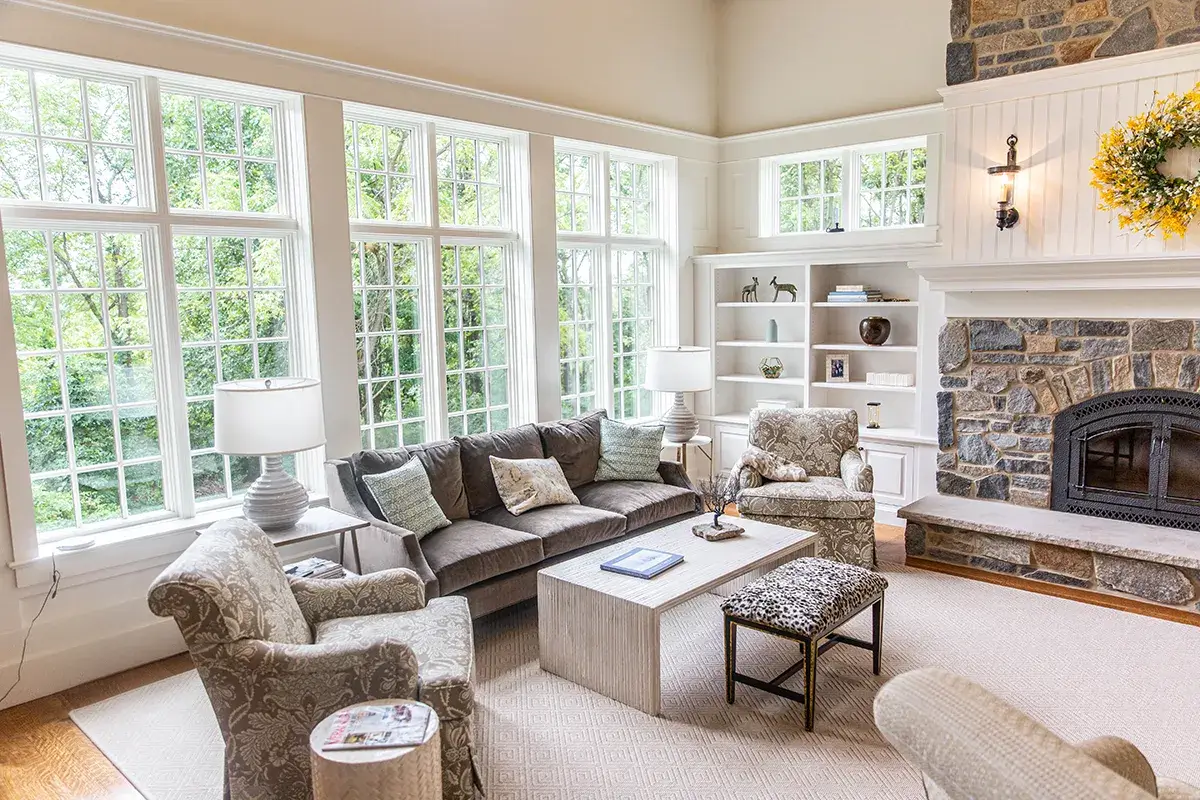
This living room project is a masterclass in how Laslo built-in cabinetry can change not only a room’s function, but its architecture.

The homeowners began with a gorgeous space: tall ceilings, abundant natural light, and a stone fireplace. But it felt unfinished, visually disconnected and lacking warmth. Laslo’s solution was not simply to add cabinetry, but to create architecture through cabinetry.

By flanking the fireplace with symmetrical built-ins, Laslo established balance and defined a true focal wall. One side subtly integrates the television so the tech disappears into the design. The other side provides open shelving for meaningful displays, helping the homeowners personalize the room.

The real genius lies in the thoughtful details. The decision to wrap part of the stone chimney with wood battens accomplishes two key things. First, it conceals wiring cleanly. Second, it visually links the stone and cabinetry, making them feel like one cohesive structure rather than separate elements.

Ceiling beams and paneled trim complete the transformation, scaling the height of the room and adding warmth without overwhelming the architecture.

This space now feels grounded, welcoming, and intentional—exactly what a family living room should be.

Why Homeowners Choose Laslo

Homeowners across the Lehigh Valley, Bucks County, and beyond choose Laslo because the process is designed to be clear, organized, and personal. Laslo Kitchens reviews often highlight:

• A full service approach that reduces stress
• Clear proposals and guidance that respect the budget
• A wide product range, including custom, semi custom, and stock cabinetry
• The ability to add custom details so cabinetry looks built in and finished
• Craftsmanship that holds up to daily life

Whether your whole home cabinetry project calls for full custom cabinetry or the smartest mix of cabinet lines for your goals, Laslo brings the same attention to fit, flow, and finish.

Start Your Laslo Project

If these projects sparked ideas for your own home, the next step is a conversation. Visit our showroom, browse the Laslo Custom Kitchens portfolio, or schedule a consultation to begin imagining your next space—whether it’s a kitchen, bath, basement, living room, or something entirely new.

Cabinetry should fit the room and the way you live. Laslo can help you get there, with a product range that meets your budget and a custom shop that brings the details to life.

Conclusion

Great cabinetry does not belong in just one room. When it is planned well and crafted with care, it can improve storage, simplify routines, and bring visual cohesion to the entire home. From kitchens and baths to basements, closets, and living spaces, Laslo helps homeowners design cabinetry for the whole home making each room feel intentional and comfortable every day.

Further Reading

FAQ

1. What are the benefits of custom cabinetry compared to stock or semi custom?

Custom cabinetry is built to your exact space and preferences, which allows the best fit, function, and more design flexibility than stock or semi-custom options.

Unlike stock cabinets, which come in fixed sizes, custom cabinetry adapts to your home rather than forcing your home to adapt to it. You gain thoughtful storage solutions, higher-quality materials, and design details built specifically for your daily routines.

That said, many homeowners choose a mix. Laslo offers custom, semi custom, and stock cabinet lines, and our custom shop can add panels, trim, and built to fit details so the finished room looks cohesive and intentional.

2. Can a stock or semi custom cabinet line still look like a custom installation?

Yes. With the right design and custom shop finishing details, stock and semi custom cabinets can look built in and room specific.

Laslo can customize the surrounding elements such as extended stiles, furniture bases, end panels, molding packages, and one off pieces that solve awkward dimensions. Those details are often what separates a standard install from a custom look.

3. How much does whole home cabinetry or a remodel typically cost?

Cost depends on the room, the cabinet line you choose, and how much customization the plan requires.

A fully custom package is priced differently than stock or semi custom, but the best budget outcomes come from matching the cabinet line to the goals of the room. Laslo can help you prioritize where custom work matters most and where a curated cabinet line can deliver strong value.

4. How long does a kitchen or whole home remodel take?

Most remodels take several weeks to several months, depending on design scope, material lead times, and construction requirements.

A detailed design phase and clear selections help projects move smoothly. When cabinetry and custom details are planned early, the installation phase is more predictable and the experience is less disruptive.

Timelines vary because no two remodels are alike. A project involving structural changes or highly customized cabinetry will naturally take longer than a simple refresh. The most successful remodels begin with a thorough design process that anticipates challenges and coordinates every detail so installation is efficient and less disruptive to your daily life.

5. What should I ask when choosing a cabinet maker or remodeler?

Ask about product options, customization capabilities, installation standards, and how the team communicates. A reliable partner will answer openly and welcome your questions.

The best cabinet makers are transparent about their craft and confident in their process. Request examples of completed work and clarify who is responsible for measurements, fabrication, and installation. The right partner will make you feel informed and supported from the first meeting through final punch list.

6. Can cabinetry be used beyond the kitchen?

Absolutely. Cabinetry works beautifully in bathrooms, closets, basements, mudrooms, living rooms and more.

Cabinetry is one of the most versatile tools in home design, adding structure, organization, and beauty wherever it’s built. Thoughtful built-ins can anchor a living room, elevate a bathroom, streamline a closet, or turn a basement into an entertainment hub. This is why planning whole home cabinetry makes the entire home feel more intentional and unified.

7. Is custom cabinetry worth the investment long term?

Custom cabinetry often lasts longer and functions better because it is crafted from higher-quality materials and precise construction methods, it holds up beautifully over time. Storage becomes more efficient, maintenance is simpler, and the room functions better overall. Homebuyers also appreciate well-designed cabinetry, making it a feature that improves long-term value.

Though for many homeowners, the best answer is a smart mix. Use custom where it solves a real problem or creates a signature feature, and use a semi custom or stock line where it meets the need efficiently.

8. How do I choose finishes and styles that won’t feel dated in a few years?

Choose clean lines, balanced proportions, and timeless materials, then incorporate trends through smaller accents. Classic foundations keep the room relevant for years to come.

Spaces can age quickly when designed entirely around trends. Instead, anchor the room with neutral palettes, natural textures, and simple profiles that allow flexibility. This approach lets you update décor, lighting, or hardware later without redoing the cabinetry itself. Longevity comes from timeless structure paired with adaptable details.

9. Will a remodel disrupt daily life, and how can I prepare?

Some disruption is unavoidable, but thoughtful planning and proactive communication can minimize stress. A well-organized team will help you understand what to expect.

While you may temporarily lose access to certain rooms, the experience shouldn’t feel chaotic. Setting up temporary stations, organizing essentials, and knowing the timeline all help maintain normalcy. The right remodeler will coordinate trades efficiently, communicate clearly, and respect your home throughout the process.

10. How do I balance beauty and functionality in cabinetry design?

Start with function, then refine the look so it supports the way you use the room. Cabinetry should be planned around your routines—how you cook, store items, or get ready each day—beauty then naturally emerges through good proportions, pleasing colors and thoughtful details.

Great cabinetry feels effortless because storage is placed where you need it, clearances are considered, and materials are chosen for durability. When the plan works well, the finished design naturally feels more beautiful.