Kitchen and Bathroom Remodeling Trends
The Latest Kitchen and Bathroom Remodeling Trends
When it comes to kitchen and bathroom remodeling, today’s homeowners are making decisions that go far beyond surface updates. They’re investing in spaces that feel tailored, functional, and designed for how they actually live. The latest kitchen and bath remodel trends reflect a shift toward warmth, thoughtful storage, and elevated details that hold long-term value.
Rather than chasing fleeting styles, homeowners are focusing on materials, layouts, and features that improve daily routines while creating a sense of comfort. From custom cabinetry trends to spa-inspired layouts, homeowners are seeking kitchen and bath renovation ideas that feel personal, practical, and built to last.
Top 5 Kitchen Remodeling Trends
The most notable kitchen remodeling trends center around creating spaces that feel inviting while working harder behind the scenes. Kitchens are no longer just places to cook; they’re gathering spaces, workspaces, and design statements all in one.
Here are the top 5 kitchen remodeling trends shaping current design choices:
1. Warm Wood Tones and Mixed Materials
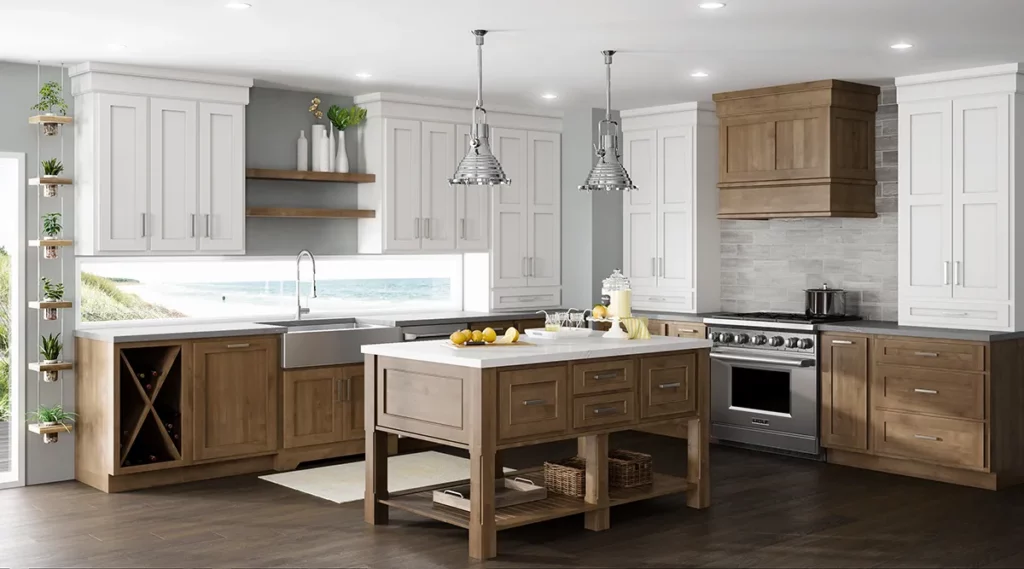
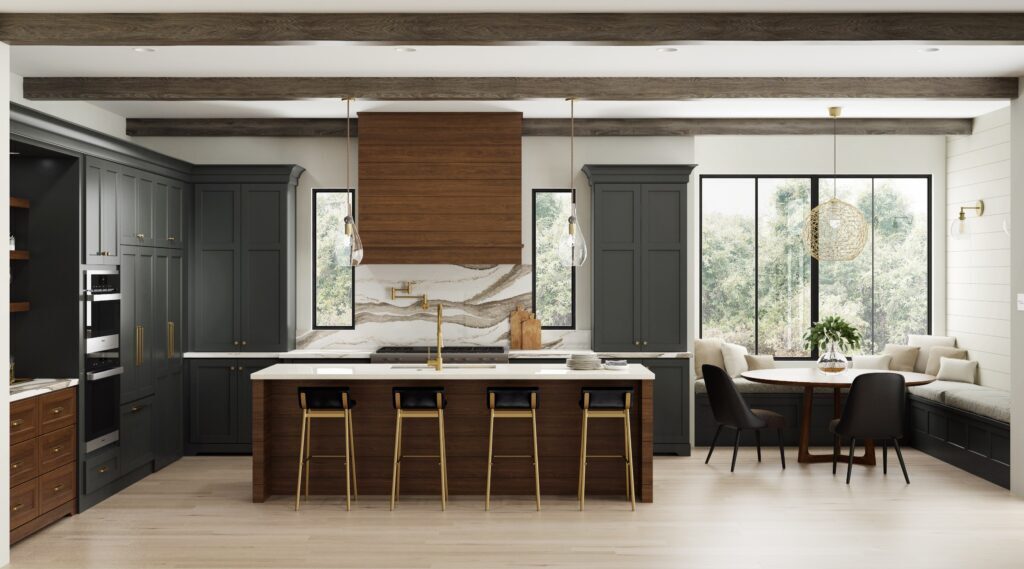
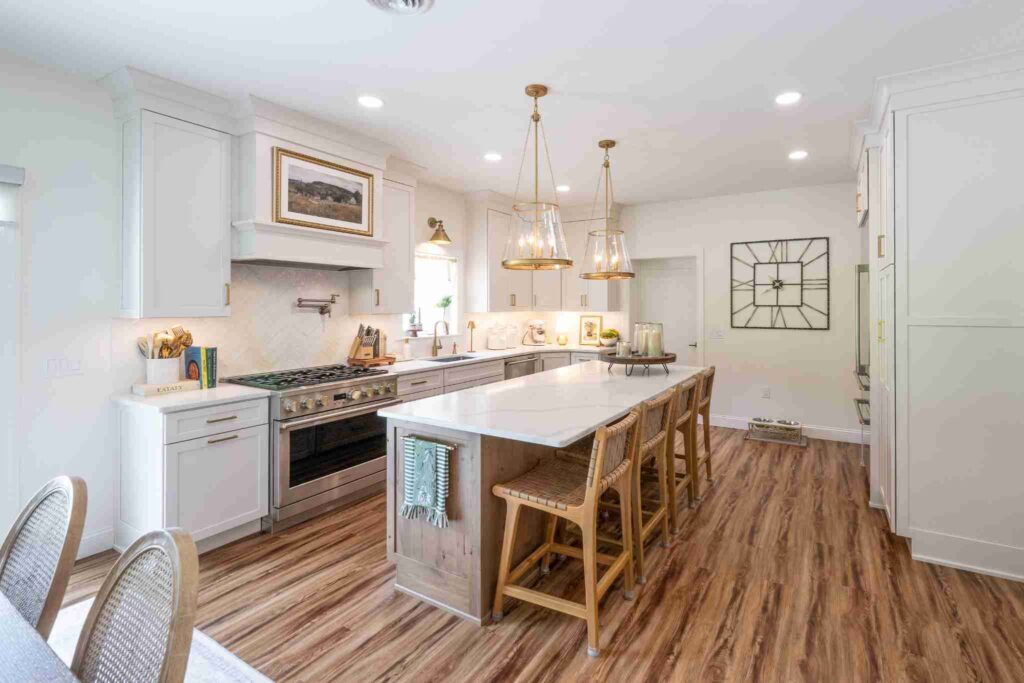
One of the most noticeable shifts in modern kitchens is the move away from stark, all-white designs toward warmer, more natural palettes. Wood kitchen cabinets, especially in white oak and walnut tones, are being paired with painted finishes to create contrast and depth.
These custom cabinetry trends reflect a desire for kitchens that feel grounded and timeless. A common approach includes perimeter cabinetry in a soft neutral tone with a wood island that anchors the space. This combination adds visual interest without overwhelming the design.
Homeowners are also embracing texture through natural finishes and subtle grain patterns, creating kitchens that feel lived-in rather than overly polished.
2. Statement Range Hoods
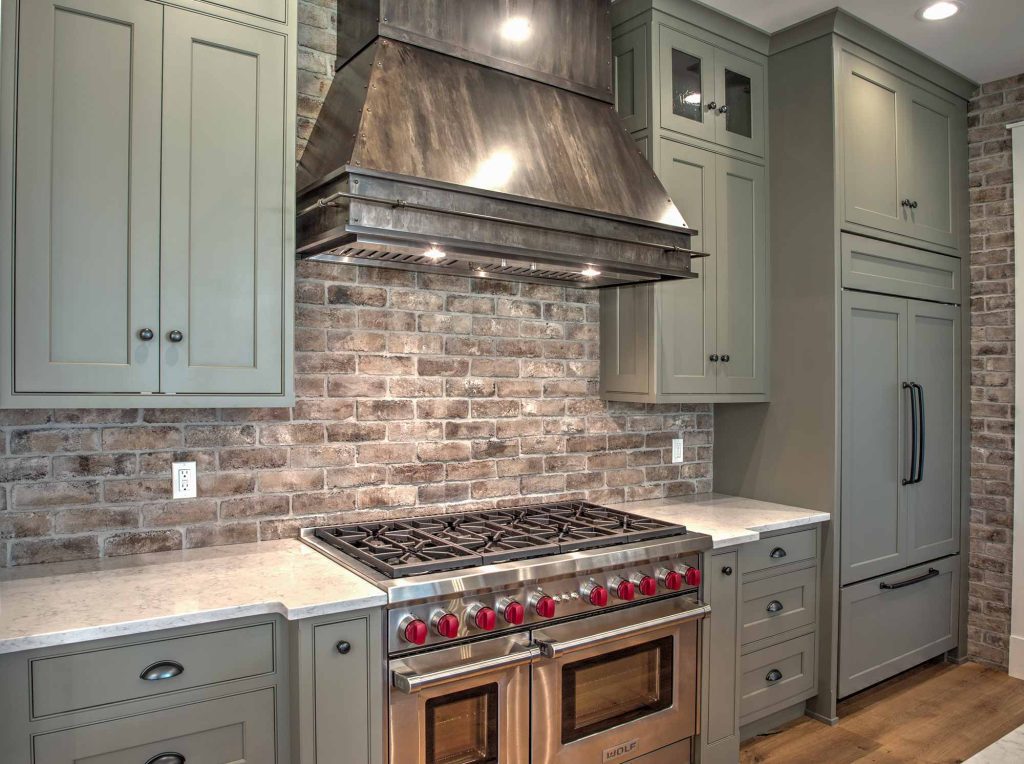
Range hoods have evolved into one of the most important visual elements in a kitchen. Instead of blending into the cabinetry, they’re now designed to stand out.
Custom range hood design often incorporates plaster, wood, or metal, shaped into architectural forms that draw the eye. Whether curved, tapered, or framed with trim details, the hood becomes a focal point that defines the entire cooking area.
This trend reflects a broader shift toward intentional design choices where each element contributes to the overall composition of the space.
3. Larger, Multi-Functional Islands
Among the most searched 2026 kitchen island design trends, larger islands continue to dominate. Today’s islands are designed to do more than provide prep space. They serve as the center of the home.
A large kitchen island with seating allows for casual dining, entertaining, and everyday gathering. Storage is often integrated below, along with appliances such as microwave drawers or beverage refrigerators.
In higher-end designs with ample square footage, double islands are becoming more common, offering dedicated zones for preparation and social interaction. This layout supports both functionality and flow, making the kitchen more versatile.
4. Hidden Storage and Seamless Appliance Integration
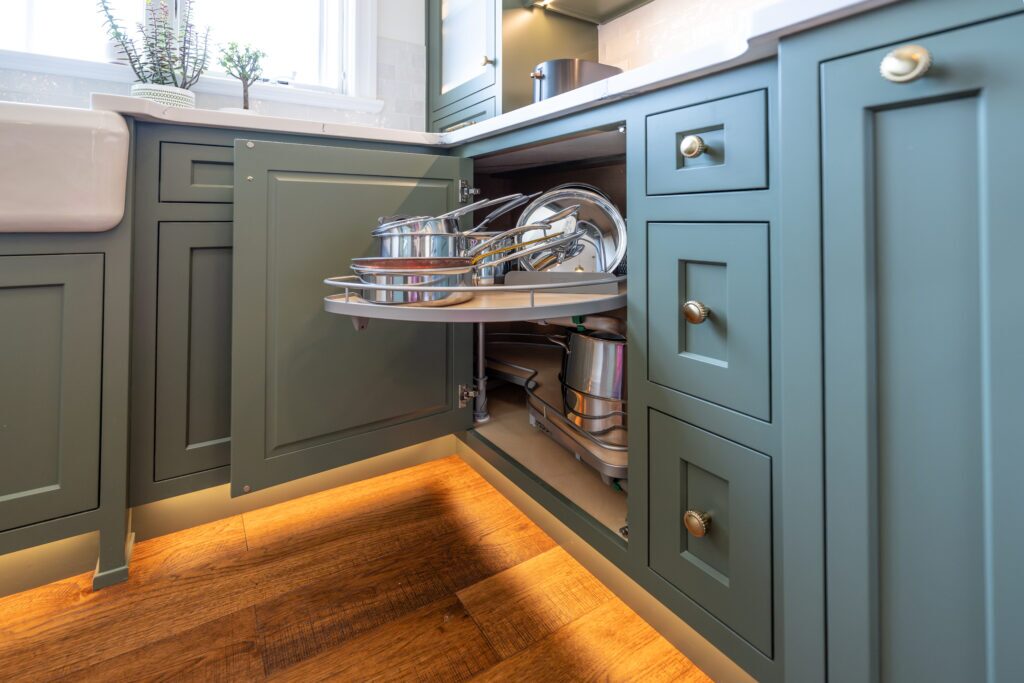
Clean lines and uncluttered surfaces are driving demand for hidden kitchen storage solutions. Appliance garages, concealed pantries, and panel ready appliances allow kitchens to maintain a streamlined appearance without sacrificing usability.
Appliance garage ideas are especially popular for housing coffee stations, small appliances, and charging areas. In custom kitchens, floor to ceiling kitchen cabinets are also being used to maximize storage while maintaining a clean, tailored look. These features keep countertops clear while ensuring everything remains easily accessible.
This approach aligns with the growing preference for kitchens that feel calm and organized, even when used heavily throughout the day.
5. Layered Lighting
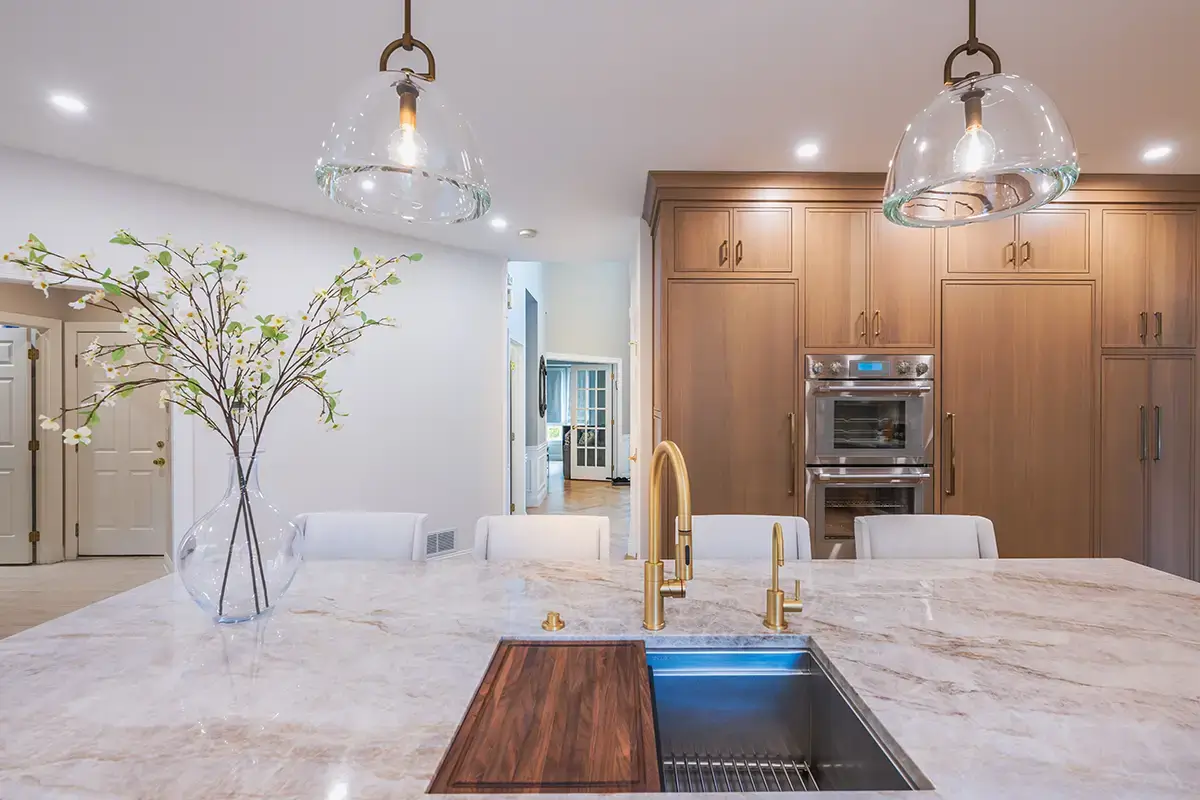
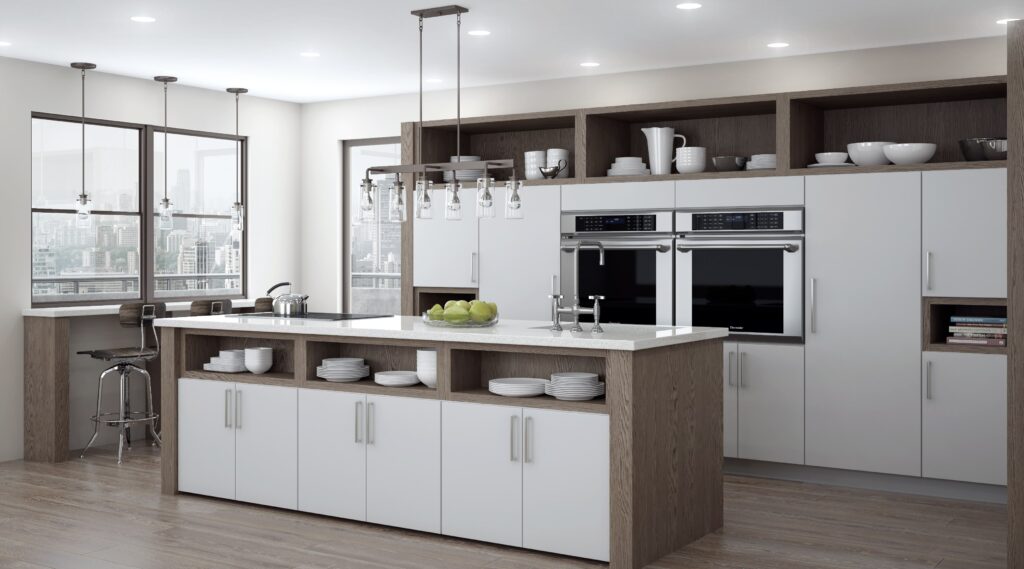
Lighting has become one of the most important elements in modern kitchen design. Current kitchen lighting trends emphasize layering different types of light to support both function and atmosphere.
Under cabinet lighting provides essential task illumination, while pendant lighting over the island adds a decorative element. Accent lighting, including toe kick or interior cabinet lighting, introduces warmth and depth.
This layered approach ensures that the kitchen feels inviting at all times of day, while also improving visibility for cooking and preparation.
Top 5 Bathroom Remodeling Trends
While kitchens are becoming more social and dynamic, bathroom remodeling trends are moving in a different direction. Bathrooms are being designed as places to unwind, with a focus on simplicity, comfort, and a spa-like experience.
Here are the top 5 bathroom remodeling trends currently driving design philosophy:
1. Spa-Like Layouts and Wet Room Concepts
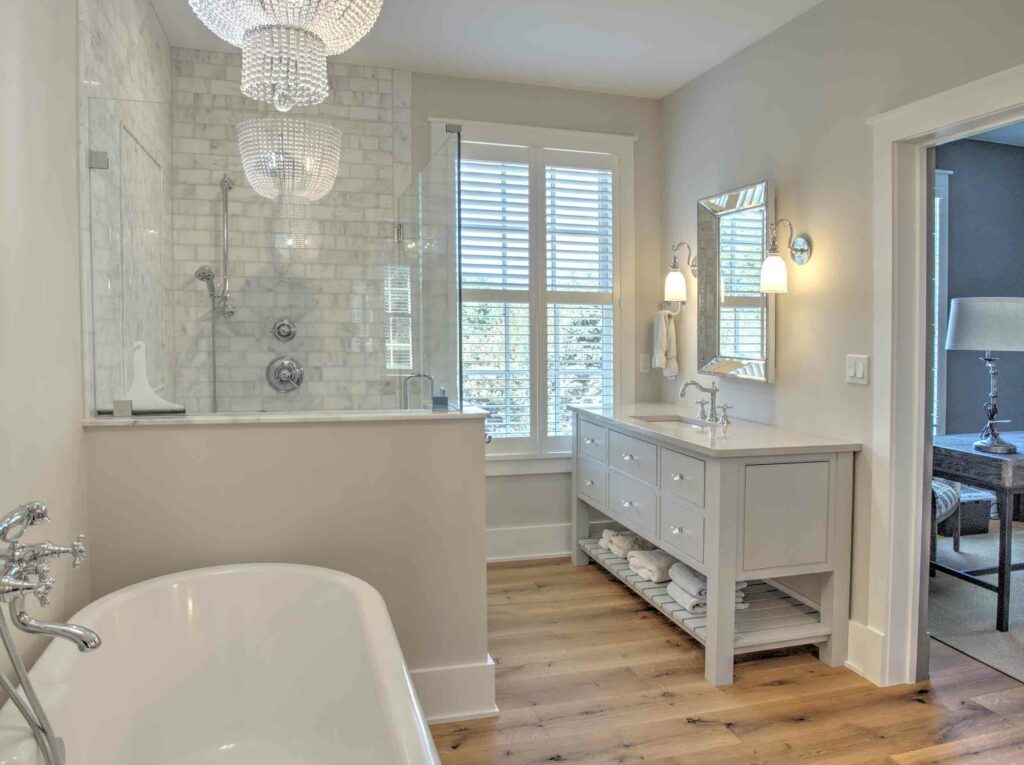
The concept of a spa-inspired bathroom remodel continues to gain traction. Homeowners are prioritizing layouts that feel open and relaxing, often incorporating wet room bathroom design principles.
Wet rooms combine a walk-in shower and freestanding tub within a single, open space. These bathroom shower design trends reflect a growing preference for open layouts that feel calm, spacious, and easy to maintain. By reducing visual barriers, these designs create a sense of calm and continuity.
Luxury bathroom remodel projects often include features such as rainfall showerheads, built-in niches, and minimal glass enclosures, all contributing to a clean and uncluttered look.
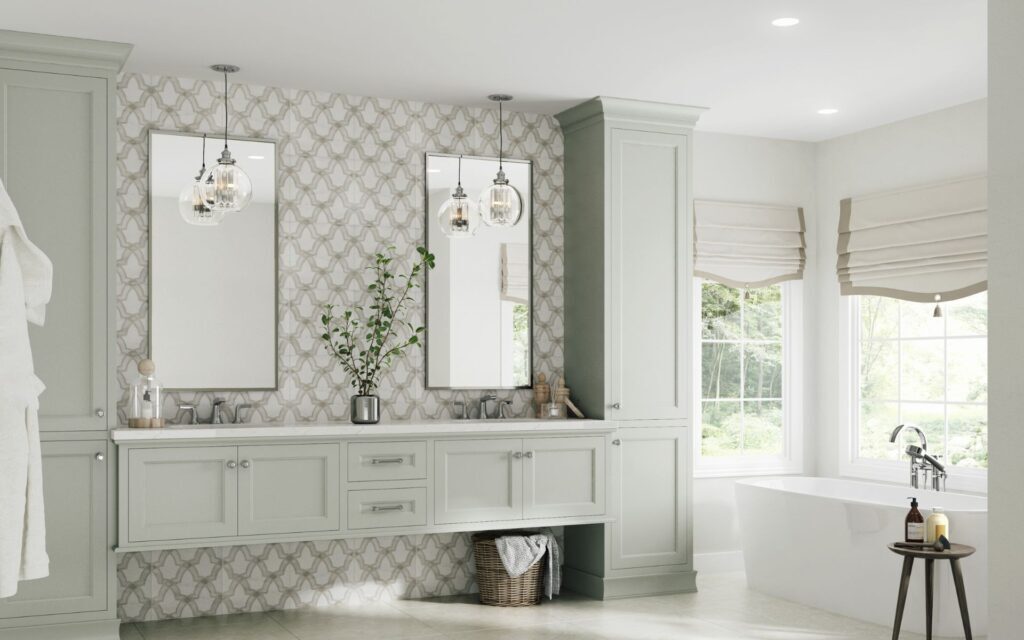
2. Natural Stone and Textured Surfaces
Material selection plays a significant role in shaping 2026 modern bathrooms. Stone bathroom design elements—including marble, travertine, and large format tile—are being used to create a cohesive and elevated environment.
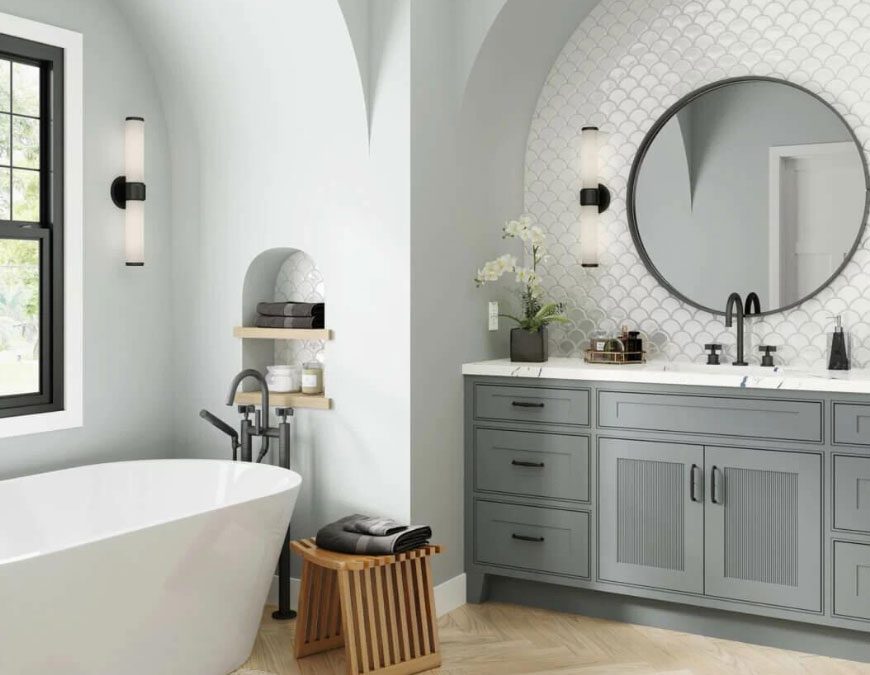
Large format tile shower installations reduce grout lines, resulting in a more seamless appearance. Textured tile bathroom features, such as fluted or dimensional surfaces, add subtle interest without overwhelming the space.
These materials not only enhance the visual appeal but also contribute to a sense of durability and permanence.
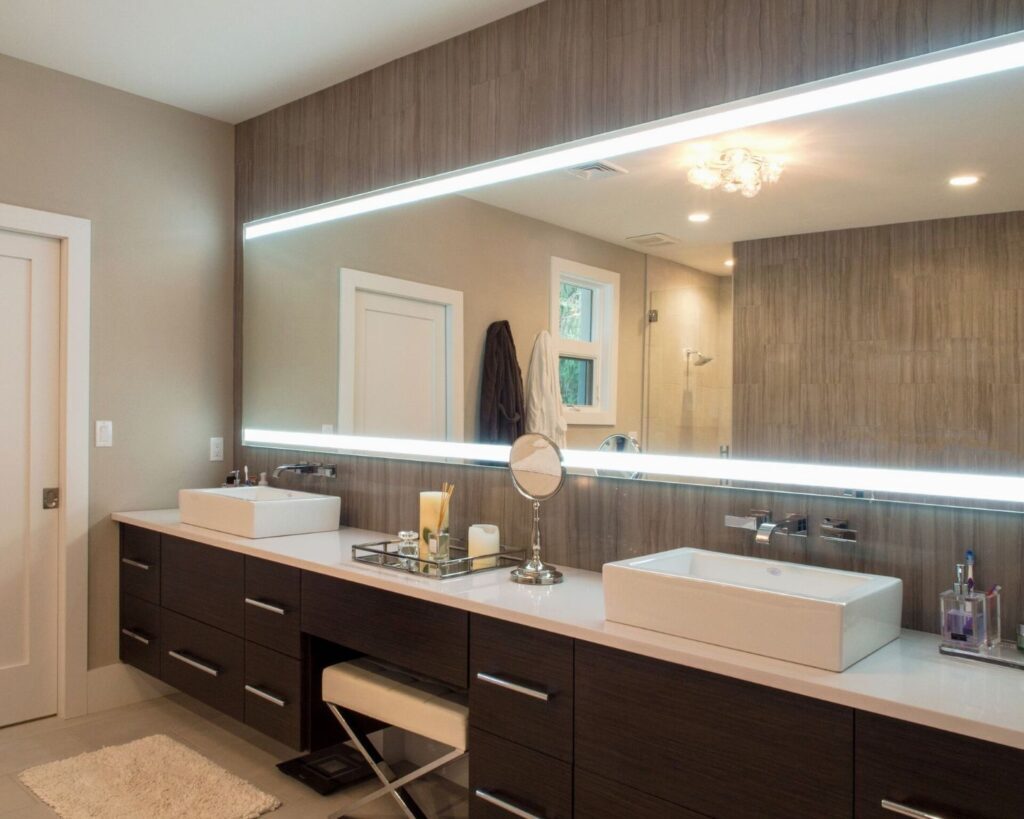
3. Floating Vanities and Streamlined Storage
Floating vanities are a defining feature of contemporary bathrooms. By mounting the vanity to the wall, the space feels more open and visually lighter.
These designs often incorporate smart bathroom vanity storage ideas, including integrated drawers, hidden compartments, and built-in organizers. The goal is to maintain a clean aesthetic while ensuring that everything has a place.
Modern bathroom storage solutions are designed to support daily routines without adding clutter, reinforcing the overall sense of calm and serenity.
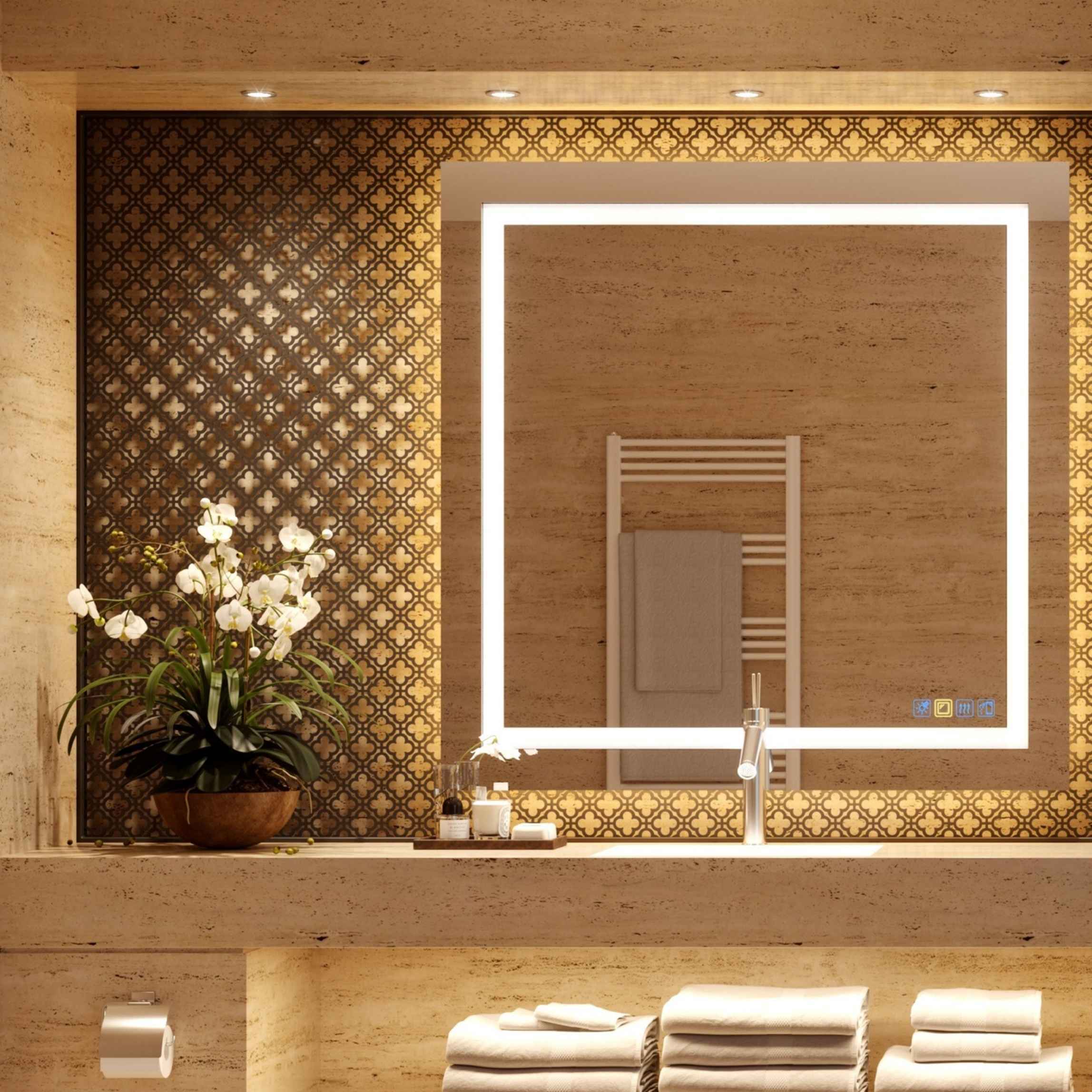
4. Statement Lighting and Backlit Mirrors
Lighting in the bathroom has evolved beyond basic overhead fixtures. Today’s designs incorporate a combination of decorative and functional elements.
LED bathroom mirrors with backlighting provide even illumination for daily tasks while adding a modern touch. Wall sconces placed on either side of the mirror introduce a layer of warmth and balance.
These bathroom lighting ideas enhance both usability and ambiance, making the space feel more refined.
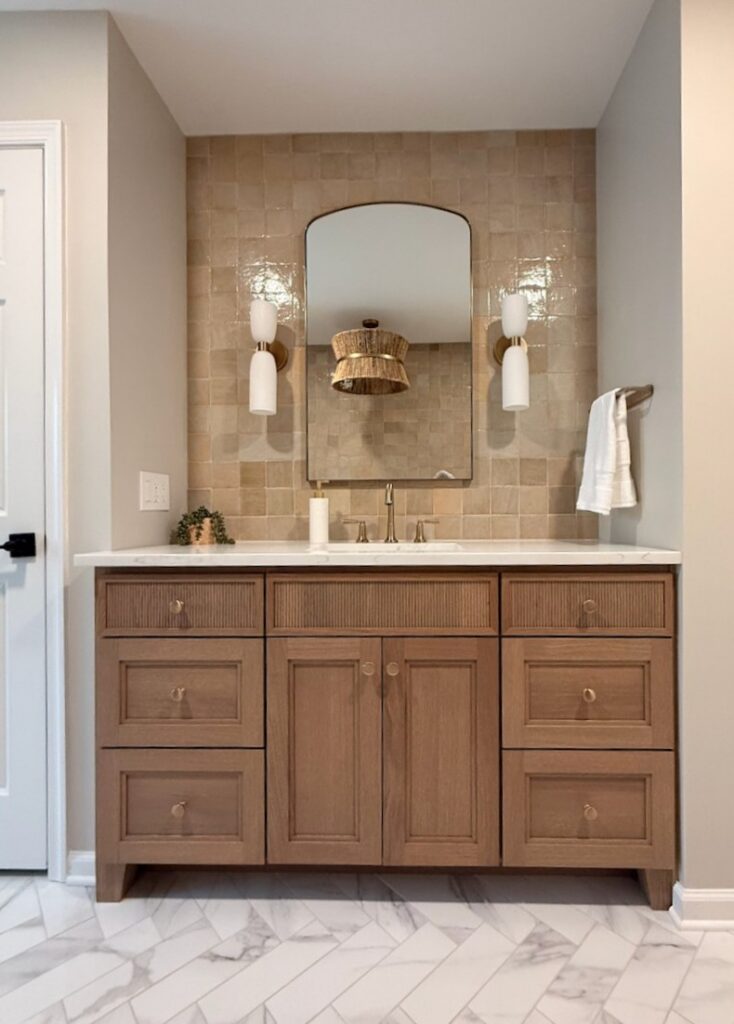
5. Warm Metals and Mixed Finishes
The shift toward warmer finishes is evident in both kitchen and bathroom remodeling trends. Brass bathroom fixtures and other warm metal tones are replacing cooler chrome finishes.
Mixed metal bathroom design allows for a more curated look, combining finishes such as brushed brass, matte black, and polished nickel. This approach adds depth without feeling overly coordinated.
The result is a bathroom that feels timeless, with subtle variations that keep the design interesting.
How These Trends Come Together in Real Homes
Seeing these trends in real projects makes it easier to understand how they function beyond inspiration photos and showroom ideas. When applied thoughtfully, these design choices shape how a room feels, how it flows, and how well it supports everyday life. The following projects show how current kitchen and bathroom remodeling trends can be interpreted in distinct ways while still creating spaces that feel timeless and personal.
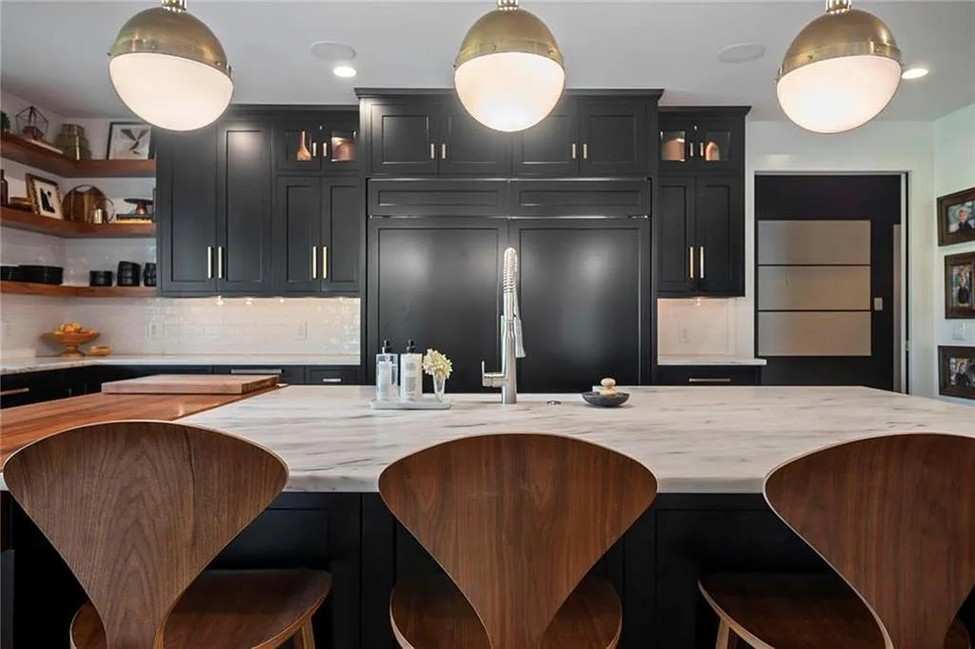
Black Cabinet Kitchen with Walnut Accents
This Upper Saucon kitchen brings contrast and warmth together in a way that feels both grounded and modern. The black cabinetry creates a strong architectural backdrop, allowing the walnut shelving and partial island countertop to introduce warmth in a controlled, intentional way. The stainless steel range hood becomes a true focal point, reinforcing the trend toward statement features that anchor the space. A large island with an integrated sink supports everyday use and gathering, while layered lighting—from pendants to recessed and under-cabinet—ensures the kitchen functions as well as it looks.
Modern Colonial Kitchen with Integrated Design
In this Allentown kitchen, traditional influence is refined through modern execution. The custom range hood, built to match the cabinetry and conceal a television, reflects the growing preference for integrated, multi-functional design. Appliance integration continues with the Wolf microwave drawer, keeping surfaces clean while maintaining accessibility. The overall space feels composed and intentional, with layered lighting enhancing both task areas and ambiance, allowing the kitchen to transition easily from daily use to entertaining.
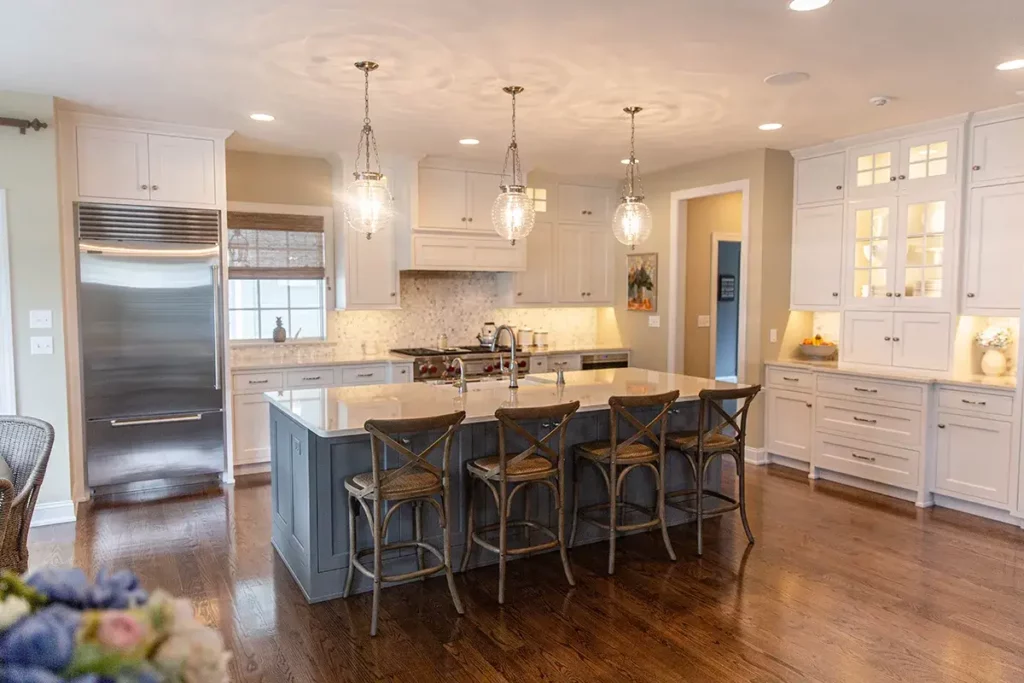
Coastal Kitchen with Light Finishes and Wood Accents
This coastal kitchen balances lightness and warmth through thoughtful material contrast. White upper cabinetry keeps the space bright and open, while the wood island and base cabinetry ground the design and add visual depth. The island serves as a central prep and gathering space, reinforcing the shift toward kitchens that support multiple functions. Layered lighting, including statement pendants and recessed fixtures, adds dimension without disrupting the relaxed, cohesive feel that defines the space.
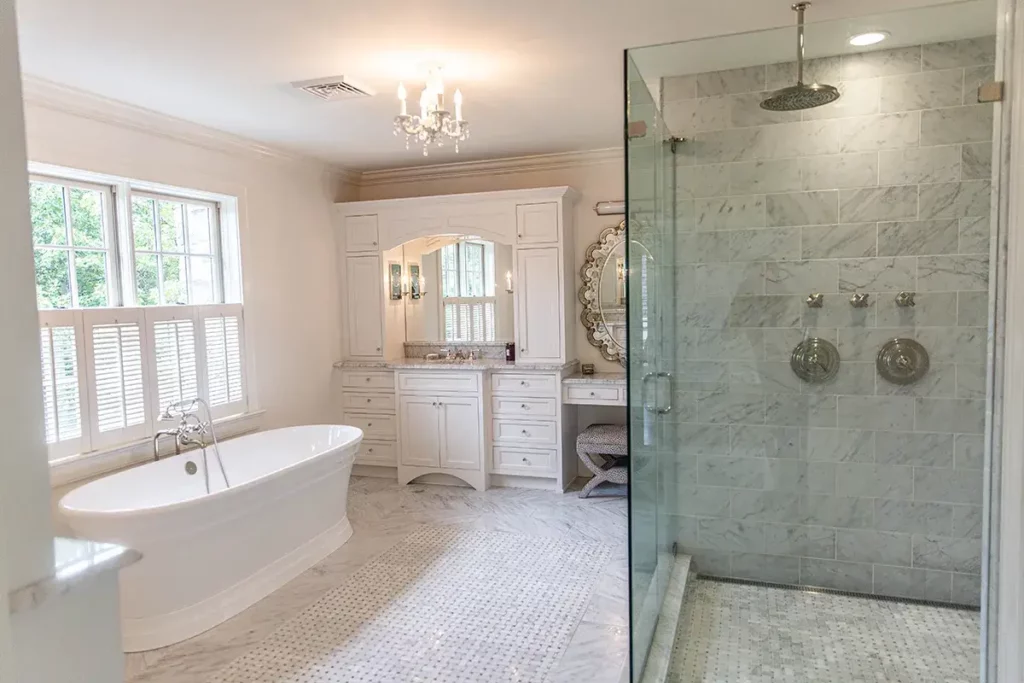
Spa-Inspired Bathroom with Classic Marble Details
This Easton bathroom remodel brings together comfort and timeless material selection to create a space that feels both refined and approachable. The freestanding tub and frameless glass shower curate a spa-like environment, emphasizing openness and ease of use. Marble tile introduces natural variation and texture, reinforcing the continued preference for stone in bathroom design. Together, these elements create a balance between classic detail and modern simplicity.
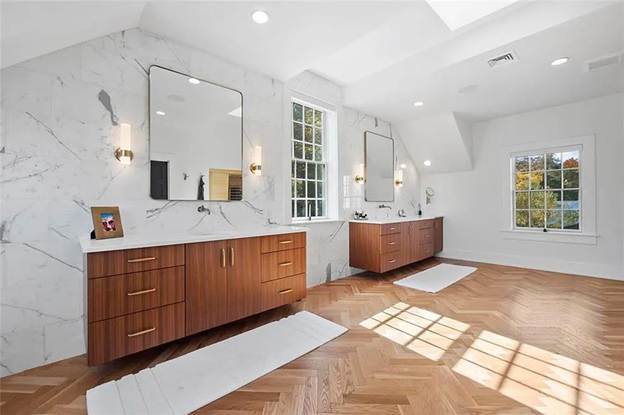
Modern Bathroom with Floating Walnut Vanity
In this Upper Saucon bathroom, floating vanities define the overall structure of the space, creating openness while highlighting the craftsmanship of the cabinetry. The combination of warm wood tones and brass accents introduces a layered material palette that feels inviting without being overly detailed. Natural light, clean lines, and minimal visual interruption allow these elements to stand out, resulting in a bathroom that feels calm, modern, and thoughtfully composed.
What to Consider Before Starting a Remodel
Understanding current kitchen and bath remodel trends is a helpful starting point, but a successful project requires more than inspiration. Careful planning ensures that the final result aligns with both aesthetic goals and practical needs.
Homeowners should begin by identifying how they want the space to function. In the kitchen, this may include improving workflow, increasing storage, or creating better areas for entertaining. In the bathroom, it often involves enhancing comfort and simplifying daily routines.
Working with experienced professionals helps bring these ideas into focus. A well-structured process ensures that design intent, material selections, and construction details remain aligned from start to finish.
It is also important to consider long-term value. Choosing quality materials and thoughtful layouts will always outperform short-term trends.
Laslo Custom Kitchens—Your Trusted Partner for Kitchen and Bathroom Remodeling
Choosing the right partner for kitchen and bathroom remodeling is just as important as the design itself. In the Lehigh Valley and surrounding areas, Laslo Custom Kitchens has built a reputation for delivering spaces that are not only beautifully crafted, but thoughtfully executed from start to finish.
Laslo approaches each project with a clear understanding that no two homes or homeowners are alike. Every design begins with how you move throughout your space, followed by careful planning that aligns layout, materials, functionality, and budget. Whether you’re updating a kitchen, reimagining a bathroom, or transforming multiple rooms, the process is structured so that each decision feels informed and intentional.
What sets Laslo apart is the level of detail carried through every phase of the project. From custom cabinetry and storage solutions to lighting, finishes, and installation, each element is considered as part of a cohesive design. The result is a space that feels complete, balanced, and built to last.
If you’re considering a kitchen or bathroom remodel, it all starts with a simple conversation. Schedule a consultation with Laslo Custom Kitchens today and take the first step toward a space designed around you.
Conclusion
The most impactful kitchen and bathroom remodeling projects are those that balance current trends with timeless design principles. While styles may evolve, the underlying goal remains the same: creating spaces that feel comfortable, functional, and uniquely suited to the homeowner.

FAQ: Kitchen and Bathroom Remodeling
1. How much does kitchen and bathroom remodeling cost?
Kitchen and bathroom remodeling costs vary widely, but most projects fall within a range based on size, materials, and level of customization.
A kitchen remodel often represents a larger investment due to cabinetry, appliances, and layout considerations, while bathroom remodels can vary depending on tile, fixtures, and plumbing changes. Projects that include custom cabinetry, structural updates, or premium finishes will naturally fall on the higher end. The most accurate way to understand cost is to define your goals and receive estimates from reputable contractors.
2. How long does kitchen and bathroom remodeling take?
Most kitchen and bathroom remodeling projects take between 6 and 12 weeks once construction begins.
The timeline depends on the complexity of the design, material availability, and whether layout changes are involved. Kitchens typically require more coordination due to cabinetry and appliances, while bathrooms can vary based on tile work and plumbing updates. A well-organized process with clear communication helps keep the project moving efficiently from start to finish.
3. Is kitchen and bathroom remodeling worth the investment?
Kitchen and bathroom remodeling is widely considered one of the most valuable investments you can make in your home.
These spaces are used daily, which means improvements have an immediate impact on how the home feels and functions. In addition to enhancing your experience, well-executed updates can improve resale appeal and marketability. The greatest return comes from thoughtful design decisions that balance aesthetics, functionality, and long-term durability.
4. What adds the most value in a kitchen remodel?
The features that add the most value in a kitchen remodel are layout improvements, quality cabinetry, and well-planned storage.
Custom cabinetry and efficient organization make a significant difference in how the space functions over time. Upgrades like a larger island, integrated appliances, and layered lighting also contribute to both usability and visual appeal. When these elements work together, the kitchen becomes more than a cooking space—it becomes the center of the home.
5. What adds the most value in a bathroom remodel?
In a bathroom remodel, value comes from a combination of layout, material quality, and comfort-focused features.
Walk-in showers, well-designed vanities with storage, and durable surfaces tend to have the greatest impact. Thoughtful lighting and clean, cohesive finishes also elevate the space. A bathroom that feels simple, functional, and comfortable will always hold more long-term value than one focused only on trend-driven details.
6. Do I need permits for kitchen and bathroom remodeling?
Permits are often required for kitchen and bathroom remodeling, especially when plumbing, electrical, or structural changes are involved.
Even if the updates seem straightforward, local regulations may still apply depending on the scope of the work. Working with an experienced remodeling team ensures that all necessary permits and inspections are handled properly. This protects both the integrity of the project and the long-term value of your home.
7. Can I live in my home during a kitchen or bathroom remodel?
In many cases, you can live in your home during a remodel, but it depends on the scope of the project and your comfort level.
Kitchen remodels can be more disruptive since they affect daily routines like cooking and gathering. Bathroom remodels may require temporary adjustments if the space is out of use. Planning ahead and setting expectations for each phase of the project can make the experience much more manageable.
8. How do I choose the right kitchen and bathroom remodeling contractor?
Choosing the right remodeling contractor starts with experience, communication, and a clear, organized process.
Look for a team that can guide you through design, material selection, and construction while maintaining consistent communication. Reviewing past projects and understanding how the company manages timelines and details can also provide insight. The right partner will make the process feel structured and collaborative from the beginning.
9. What should I prioritize first in a kitchen or bathroom remodel?
The first priority in any remodel should be how the space functions before focusing on finishes.
Layout, storage, and workflow should be addressed early to ensure the design supports your daily routines. Once those elements are in place, material selections and visual details can be layered in with confidence. Starting with function leads to a more cohesive and successful final result.
10. How do I start planning a kitchen and bathroom remodeling project?
The best way to start planning is by identifying your goals, gathering inspiration, and speaking with a professional early in the process.
Understanding how you want the space to function will help guide decisions around layout and materials. A consultation allows you to refine ideas, set expectations, and develop a clear path forward. With the right planning in place, the entire remodeling process becomes more efficient and enjoyable.