
A Home Office Study in Blue Lacquer
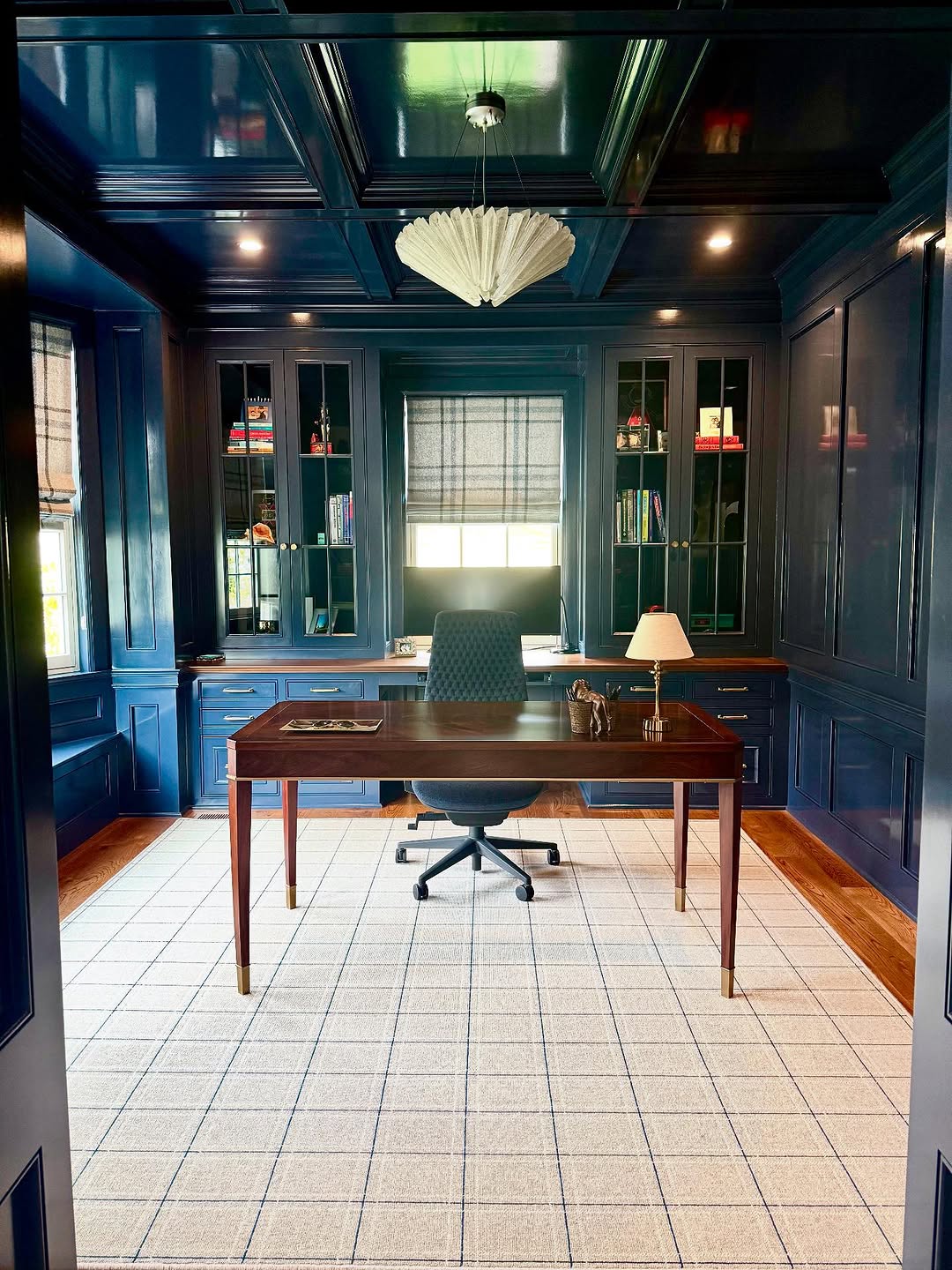
Design & photography by Greg Jagman
This home office study is designed to feel elegant, architectural, and fully integrated. Custom office cabinetry in a blue lacquer finish wraps the room, including a matching blue lacquer coffered ceiling. With the walls color drenched in the same hue, the space feels cohesive and tailored, while walnut elements add warmth and contrast.
Blue Lacquer Cabinetry and Color Drenched Walls
The cabinetry finish sets the tone for the entire space. By carrying the same blue across the walls, the design eliminates visual interruptions and creates a refined, wrapped in color effect that reads like a true study rather than a typical home office.
Key features include:
- Custom cabinetry finished in blue lacquer
- Walls finished to match for a color drenched look
- Lighted glass paneled cabinetry framing the window
- A balanced layout that feels intentional and elevated
Blue Lacquer Coffered Ceiling
The coffered ceiling is finished in the same blue lacquer, turning a classic architectural detail into a defining feature. The coffer geometry adds rhythm overhead, and the reflective lacquer finish helps the ceiling catch and shift light, which contributes to the room’s polished feel.
Walnut Desk and Wood Countertop Details
Walnut introduces warmth that keeps the blue lacquer from feeling too formal. The custom walnut desk brings furniture level character, while the wood countertop behind the desk adds a practical landing surface for books, a printer, or daily essentials.
Why a Gloss Lacquer Finish Signals Craftsmanship
A true gloss lacquer finish is one of the most demanding finishes to apply on cabinetry because it is measured, reflective, and highly revealing.
High gloss is defined by measurement. In coatings, gloss is measured in Gloss Units using standardized angles. Industry guidance commonly treats surfaces above about 70 GU at a 60 degree angle as high gloss, and recommends using a 20 degree angle for improved resolution on very glossy surfaces.
Higher gloss shows more, not less. As gloss increases, surfaces reflect more light, which tends to highlight defects and surface imperfections, and it can also shift how color is perceived. That is part of what makes a blue lacquer finish look crisp and saturated, but it is also why the underlying prep and application quality matter so much.
The finish requires a disciplined process. Achieving a uniform gloss look typically involves careful surface prep, controlled spray application, and then leveling or rubbing out the finish to remove dust nibs and minor imperfections so the final sheen reads consistent across panels, edges, and profiles.
It is also about performance. The KCMA A161.1 Quality Certification program includes finish related testing as part of its broader cabinet performance standards, which is helpful context when describing finish quality as a functional standard, not just a visual choice.
For a project like this, the gloss lacquer is not simply a color choice. It becomes part of the architecture. The fact that the cabinetry and coffered ceiling read smooth, consistent, and refined speaks directly to the craftsmanship and finishing control behind the work at Laslo Custom Kitchens.
Project Features at a Glance
- Custom blue lacquer cabinetry
- Matching blue lacquer coffered ceiling
- Color drenched walls in the same blue finish
- Custom walnut desk
- Wood countertop behind the desk
- Lighted glass paneled cabinetry flanking the window
1. What are high gloss cabinets, and what does “high gloss lacquer” mean?
High gloss describes the shine level of a finish, while lacquer describes the finish system itself. When people search “high gloss lacquer cabinets,” they are usually looking for cabinetry with a smooth, mirror like surface that reflects light and makes color look more saturated. High gloss can be achieved with different finishing systems, but lacquer is a common way to get that crisp, polished look.
2. Are high gloss cabinets a good idea, or are they too hard to maintain?
Searches like “high gloss cabinets pros and cons” and “are high gloss cabinets worth it” come up because the answer depends on how you use the room. High gloss cabinets bring a clean, modern feel and reflect light beautifully, which can help a space feel brighter and more open. The tradeoff is that the reflective surface tends to show fingerprints, smudges, and fine scratches more readily than matte or satin finishes, especially in darker colors. In a home office or study, high gloss can be an excellent choice because the space usually has less grease, heat, and heavy daily handling than a kitchen.
3. Do high gloss cabinets show fingerprints and scratches?
Yes, and that is one of the most common questions people type, including “do high gloss cabinets show fingerprints” and “do glossy cabinets scratch easily.” The shine reflects light, which makes marks easier to see. The upside is that many smudges wipe off quickly with the right cloth, but the finish does reward a lighter touch and consistent care. (fabuwood.com)
4. How do you clean high gloss cabinets without dulling the finish?
If you have searched “how to clean high gloss cabinets” or “best cleaner for glossy cabinets,” the safest approach is simple. Use a clean microfiber cloth with mild soap and water, then dry immediately with a second soft cloth to prevent streaking. Avoid abrasive pads and gritty cleaners because they can create tiny scratches that reduce clarity and make the surface look hazy over time.
5. What is the best wood or material for high gloss painted cabinet doors?
This is where searches like “best material for painted cabinet doors” and “MDF vs maple painted cabinets” are pointing. For a high gloss painted finish, stability and smoothness matter as much as strength.
MDF is commonly chosen for painted doors because it is uniform and smooth, so it reduces the risk of grain texture showing through the finish. Maple is also a popular paint grade hardwood because it is durable and finishes smoothly when prepared correctly. Many premium doors use a combination, such as hardwood frames with an MDF center panel, to balance crisp construction with a very smooth paint surface.
6. Why is high gloss cabinetry harder to paint than a lower sheen finish?
People search “why is high gloss paint so hard” because gloss is less forgiving. A high gloss surface reflects light, so it reveals small issues that lower sheen finishes can hide, such as tiny dust nibs, minor waviness, or subtle texture in the substrate. Achieving that clear, glassy look requires careful surface prep, a controlled spray environment, consistent application, and a finish that reads uniform across panels, edges, and profiles. In short, the shine is not only aesthetic, it is proof of process control.
7. Where are high gloss cabinets most commonly used in homes?
Searches like “high gloss kitchen cabinets modern” and “high gloss cabinets bathroom” reflect the most common placements. High gloss is often used in modern kitchens, bathrooms, bars, beverage centers, closets, and statement built ins because it creates a sleek, tailored look and reflects light well. It is also an excellent fit for a study or home office where the finish can feel elegant and furniture like, without the heavy wear that comes from cooking zones.
8. Are high gloss cabinets still in style?
This shows up as “are high gloss cabinets in style” and “are glossy cabinets outdated.” High gloss remains a strong choice in contemporary and European influenced interiors, and it is especially popular when used intentionally as a feature finish. Many homeowners mix finishes, such as using high gloss on a focal wall of cabinetry, a bar area, or a home office, while choosing a softer sheen in high traffic kitchen zones.
9. Can high gloss lacquer cabinets be repaired if they get chipped or scratched?
People often search “repair scratched high gloss cabinets” because repair is possible, but it is more exacting than with matte finishes. A small chip can sometimes be filled and touched up, but blending a high gloss sheen so the repair disappears is difficult because the surrounding surface reflects light so clearly. For noticeable damage, refinishing a larger area can be the best way to restore a consistent gloss level.
10. What does the Laslo warranty cover for custom cabinetry?
Laslo Custom Kitchens offers a Lifetime Limited Warranty for its custom cabinetry for the original purchaser, covering defects in materials and workmanship for as long as you own your home. The warranty is not transferable. The warranty coverage for third party components such as decorative hardware, lighting, and powered elements is limited to two years, and cabinetry supplied for builder or contractor spec homes is covered by a three year warranty. (Laslo Kitchens)
11. What is not covered under the Laslo warranty, especially with paint finishes?
The Laslo Lifetime Warranty can be found here. Homeowners often search “cabinet warranty what is covered” because exclusions matter. Laslo notes that normal wear and tear is excluded, including finish wear around handles and knobs. Excessive moisture damage at seams or backsplashes is not covered. Natural variations in wood grain, color, and texture are also not considered defects. The warranty PDF also explains that stress lines at corners and frame junctions can occur due to humidity variation, and paint finishes can magnify those lines, which is part of how wood behaves rather than a warrantable defect.
12. Does Laslo offer financing, and what do people mean when they search “kitchen remodel financing”?
Yes. GreenSky financing is offered through Laslo’s program, with options that may include promotional plans such as paying in full within 15 months to avoid interest, along with longer term installment options based on creditworthiness. Laslo also states it is the remodeling provider and not the lender, and that credit decisions and loan terms are determined by program lenders.
What are inset cabinets and why do homeowners choose them for bathrooms
Inset cabinetry means the doors and drawer fronts sit flush within the cabinet frame. Homeowners often choose inset construction because it looks tailored and high end, and it fits beautifully in transitional and classic offices. Inset drawers also create a clean, crisp face that makes the custom cabinetry add depth without overwhelming the space.
What cabinet options does Laslo offer for Home Offices?
Laslo offers multiple cabinetry lines so you can choose the right fit for your style, your space, and your budget. Options include Custom Cabinetry by Laslo, Dura Supreme, Fabuwood, and Bridgewood. During your consultation, we will help you compare construction details, storage options, finishes, and what makes sense for your specific bathroom.